

The Essential Characteristics of Ducks
The following is intended as a very concise summary of the characteristics of ducks that distinguish them from many other birds and aquatic organisms. It is provided as a guide to students, instructors, and the ornithologically curious who want to grasp the big picture of duck biology. It reflects general features of waterfowl in the family Anatidae, though individual species may vary in detail.
1. Ducks are aquatic, feathered birds adapted for life on water.
Ducks are members of the waterfowl family Anatidae and are highly adapted to aquatic environments. Their bodies are streamlined for swimming, with dense, waterproof plumage that traps air for insulation and buoyancy. Unlike many birds, ducks are equally comfortable on water and land, though most are most efficient in aquatic habitats such as lakes, rivers, wetlands, and coastal marshes.
2. Ducks possess specialized waterproof plumage maintained by glandular oils.
Ducks have a well-developed uropygial (preen) gland at the base of the tail, which secretes oils used in preening. This oiling process maintains feather structure and water resistance. The interlocking structure of feathers, combined with trapped air layers, provides insulation even in cold water, allowing ducks to remain active in environments that would be thermally challenging for many other animals.
3. Ducks are highly adapted to feeding in aquatic and semi-aquatic environments.
Many ducks are omnivorous, feeding on plants, seeds, aquatic invertebrates, and small animals. Dabbling ducks feed mainly at or near the water surface or by tipping forward in shallow water, while diving ducks forage underwater. Bill morphology is highly variable and often specialized, with lamellae (comb-like structures) that help filter food from water and mud.
4. Duck locomotion combines efficient swimming, walking, and flight.
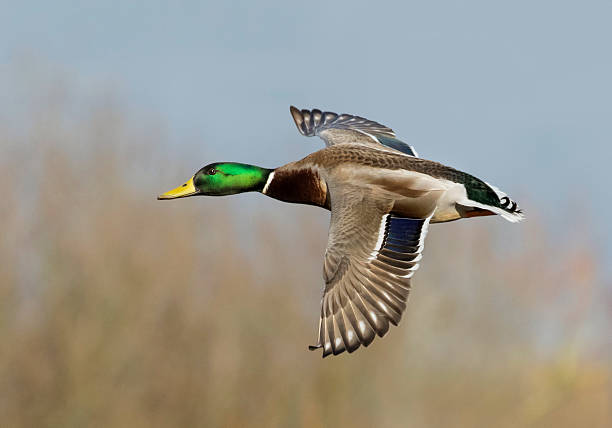
Ducks use webbed feet for propulsion in water, with strong lateral strokes that generate thrust. On land, they walk with a characteristic waddle due to leg placement adapted for swimming rather than running. Most duck species are also strong fliers, capable of sustained migratory flight powered by broad wings and relatively rapid wingbeats.
5. Ducks exhibit complex migratory and dispersal behaviors.
Many duck species undertake seasonal migrations between breeding and wintering grounds, sometimes covering thousands of kilometers. Migration is influenced by temperature, food availability, and breeding habitat conditions. Even non-migratory species may show local movements in response to seasonal water changes.
6. Ducks have reproductive systems adapted to seasonal breeding and aquatic nesting.
Ducks typically form seasonal pair bonds, though some species exhibit long-term monogamy or polygynous systems. Nesting commonly occurs near water in concealed ground sites, vegetation, or cavities. Females usually incubate eggs and care for ducklings, which are precocial—hatching with down feathers and the ability to walk and swim shortly after birth.
7. Ducks communicate using a variety of vocal and visual signals.
Ducks are highly vocal birds, using calls for mate attraction, flock coordination, alarm signaling, and parent-offspring communication. Visual signals such as plumage coloration, head movements, and courtship displays are especially important during breeding seasons. Sexual dimorphism is common in many species, with males often displaying more vivid plumage.
8. Ducks maintain ecological roles as both consumers and ecosystem engineers.
Ducks influence aquatic ecosystems through feeding, which helps control invertebrate populations and disperse plant seeds. Their movement between water bodies can contribute to nutrient cycling and habitat connectivity. As prey for many predators, ducks also form an important link in wetland food webs.
Duck Identification Posters/Charts
Celebrate the beauty of ducks with detailed, high-resolution identification posters designed for both learning and decor. Each chart features vibrant colors, sharp details, and a smooth premium finish that’s perfect for classrooms, study spaces, living rooms, or offices.

9. Ducks have powerful flight muscles but different species vary greatly in flight ability.
Most ducks rely on strong chest muscles to power rapid, continuous wingbeats during flight. Their wings are usually short and pointed, which helps them take off quickly from water. However, not all ducks fly well—some species are almost completely flightless and depend more on swimming and walking than flying.
10. Ducks go through periods where they cannot fly at all.
During moulting, when old feathers are replaced with new ones, many ducks temporarily lose their ability to fly. At this time, they usually move to quiet, safe habitats where food is easy to find. This flightless period often happens before migration, so timing is important for survival and movement.
11. Male ducks often change appearance depending on the season.
In many northern species, males look very colourful during the breeding season to attract mates. After breeding, they shed these bright feathers and grow duller ones that resemble females. This temporary change helps them become less visible and safer when they are not trying to attract a partner.

12. Duck appearance patterns vary depending on region and species.
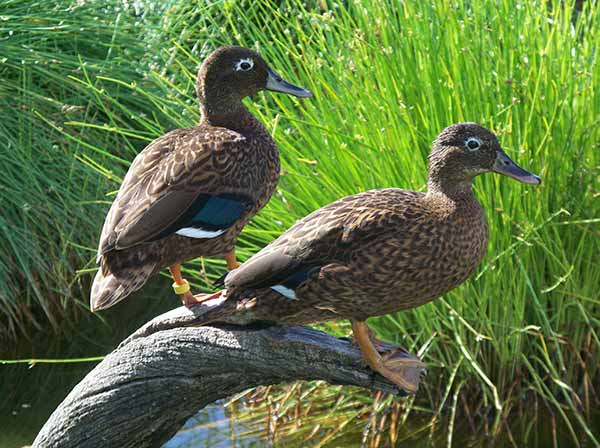
Some duck species show strong differences between males and females, while others look quite similar. In certain southern species, both sexes may have more balanced colouring. In rare cases, females can even be more brightly coloured than males, showing that appearance patterns in ducks are not the same across all environments.
13. Ducks face high predation pressure at all stages of life.
Ducklings are especially at risk because they cannot escape by flying. They are hunted by many predators, including birds of prey, large fish, reptiles, and other aquatic hunters. Adult ducks may also be targeted when sitting on nests, especially by mammals and birds that raid nesting sites.
14. Duck reproduction involves long incubation and strong parental protection.
Duck eggs take several weeks to hatch, with most species hatching in about a month, while some take slightly longer. After hatching, the mother keeps her ducklings close together and protects them as a group, helping them survive the early stages of life when they are most exposed to danger.
15. Ducks are widely used by humans and have been domesticated from wild ancestors.
Many domestic ducks come from the wild mallard, with only a few exceptions. Humans keep ducks for meat, eggs, and soft feathers like down. Some breeds have been specially developed for certain purposes, including very small breeds that were originally used as live decoys for hunting.
16. Ducks have a lifespan that varies depending on environment and care.
In the wild, many ducks live shorter lives due to predators and environmental risks. In safer conditions, such as captivity or protected environments, some ducks can live for many years, with lifespans reaching around two decades in certain cases.
17. Egg production in ducks is strongly influenced by daylight levels.
The number of eggs a duck lays is connected to how much daylight it receives. Longer days encourage higher egg production, which is why controlled lighting is sometimes used in farming environments. Eggs usually hatch after several weeks, though incubation time can vary between species.
18. Ducks have an extremely wide field of vision and strong visual awareness.
Their eyes are placed on the sides of the head, allowing them to see almost all the way around without turning. They can focus on both near and distant objects at the same time. Ducks can also move each eye separately and sometimes keep one eye open while resting, which helps them stay alert to danger even while asleep.
