
22 Ducks with Long Bills (with Photos for Quick ID)
Many birders focus on a duck’s overall plumage, the color of its bill and feet, wing markings, or even its behavior when identifying different species, but the length of the bill is often overlooked. Yet bill length and shape can completely change a duck’s silhouette. They can also offer clues about how a duck feeds and the kind of diet it survives on. And honestly, some long-billed ducks are just fun to look at!
If you are searching for ducks with long bills, you’ve come to the right place. We’ve put together a great list below. Keep in mind that no duck species has extremely long bills like the ones seen in hummingbirds or curlews. Instead, the ducks included here simply have noticeably longer bills compared to most other duck species.
1. Mergansers
One of the first ducks that comes to mind when talking about ducks with long bills is the mergansers. Their long, narrow bills stand out right away because they look very different from the broad, flat bills seen on most other ducks.
Unlike many duck species that mainly feed on plants or small insects, mergansers are skilled fish hunters. Their thin bills have tiny saw-like edges that help them grip slippery fish underwater, which is why they are sometimes nicknamed “sawbills.”
Mergansers are also excellent divers and spend much of their time on lakes, rivers, and coastal waters searching for prey. Their streamlined bodies help them move quickly beneath the surface while chasing fish.
Some well-known merganser species with long bills include:
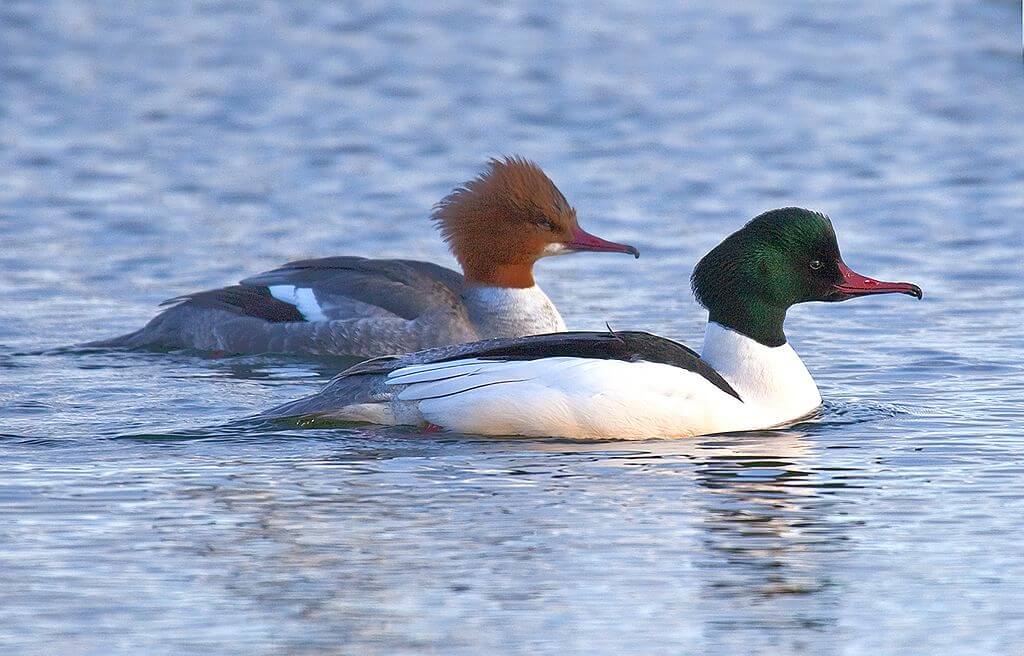
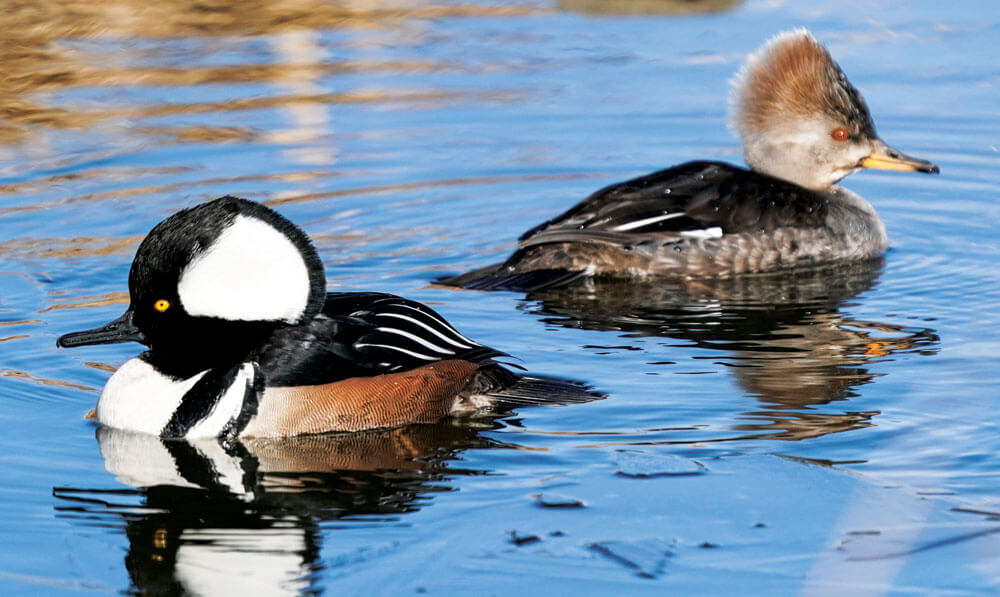
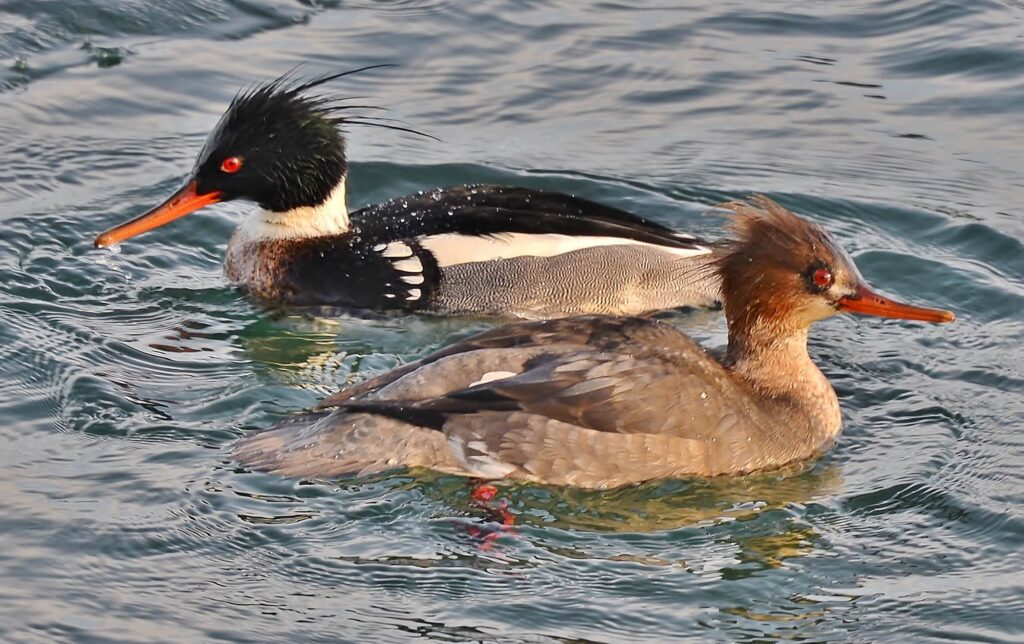
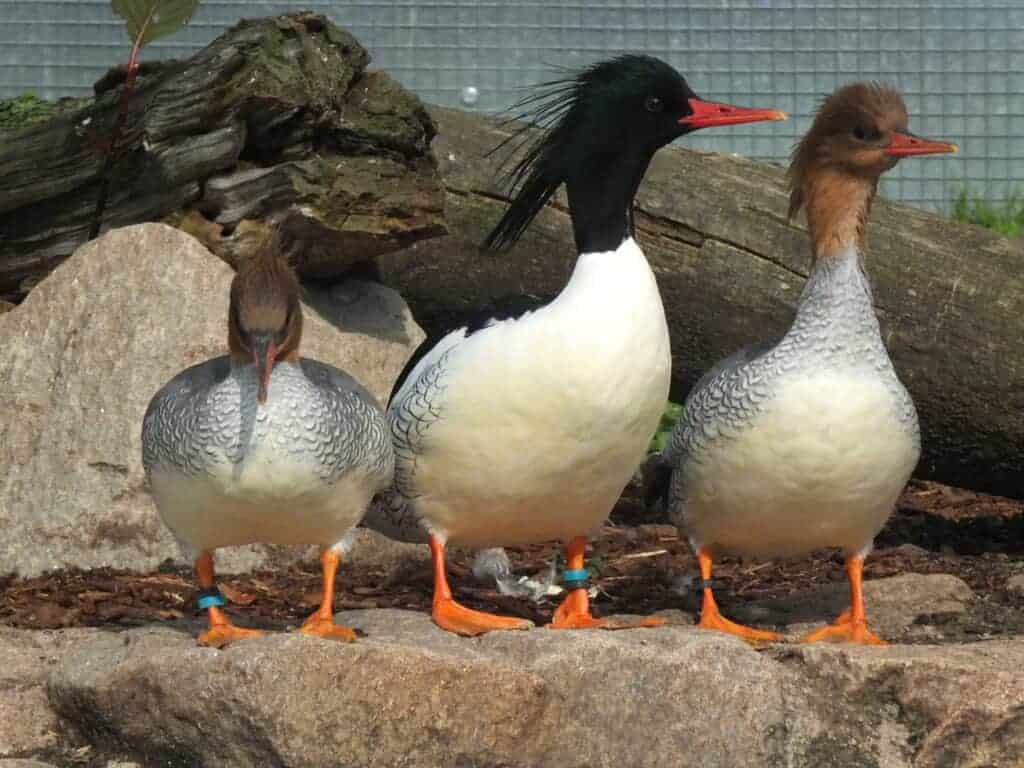
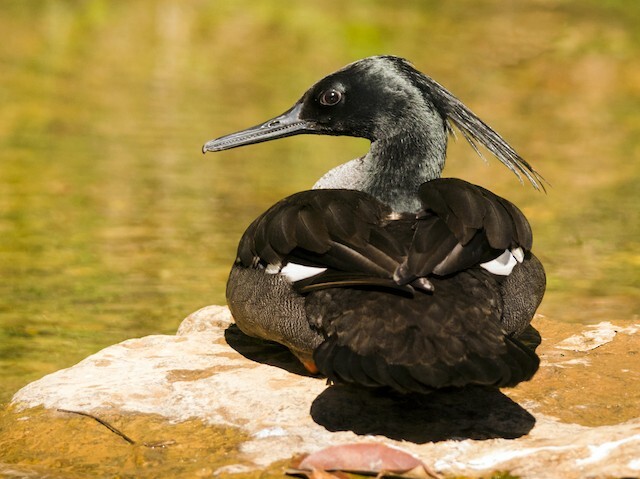
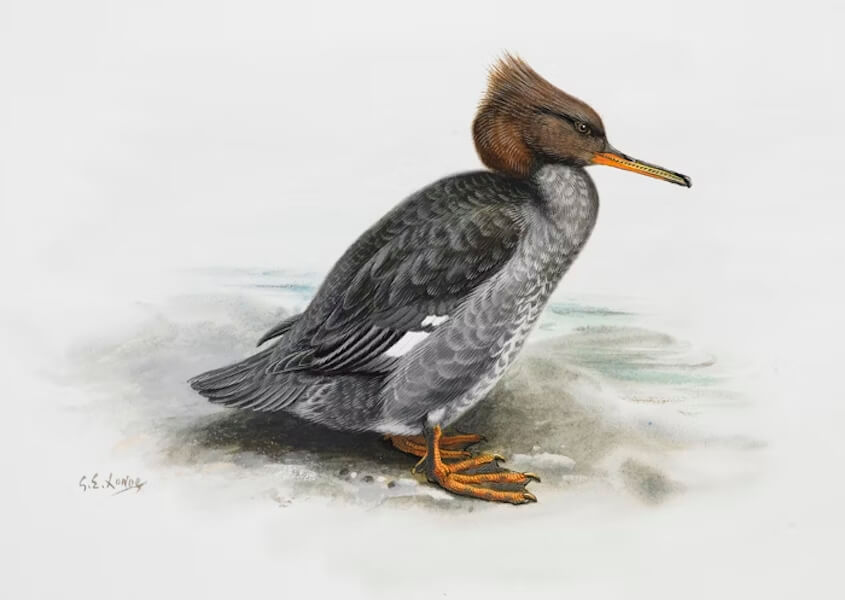
Auckland Island Merganser
2. Black-bellied Whistling Duck
Another duck that many people believe to have considerably long bills is the Black-bellied Whistling Duck. Its bill is not unusually long compared to some other ducks on this list, but its overall body shape creates that impression. With its long neck, lengthy legs, small head, and upright posture, the pinkish-red bill appears more prominent and elongated.
This species is easy to recognize thanks to its rich chestnut-brown body, pale gray face, black belly, and black tail. The combination of warm brown plumage and long pink bill gives it a very striking appearance, especially when standing tall near wetlands or perched in trees.
Black-bellied Whistling Ducks are highly social birds and are often seen in noisy flocks. Unlike many ducks that stay low to the ground, they commonly perch and nest in tree cavities, including palm trees in some parts of their range. They are also known for being fairly tame and approachable, even in the wild.
Learn more about these ducks: 20 Fun Facts About Black-bellied Whistling Ducks
3. Hook Bill

This is one of the most strange looking ducks on the planet, thanks to its oddly hooked bill that gives it look like it belongs to the prehistoric age. The unusual curve at the tip of the bill immediately separates it from other duck breeds and creates a very distinctive silhouette. While the bill itself is not extremely long, its dramatic shape makes it one of the most memorable duck bills you will ever see.
The Hook Bill is a domestic breed with a long history in Europe, where it was traditionally raised for both eggs and meat. Over time, many people also began keeping it for ornamental purposes because of its unique appearance.
This breed comes in several recognized color varieties. Some have dark mallard-like plumage with a glossy green-black head and grayish body feathers, while others feature a bold white bib on the chest. The pure white variety is especially striking, with bright white plumage, blue eyes, orange legs, and a pale pink bill that makes the unusual hook stand out even more.
4. Red Shoveler
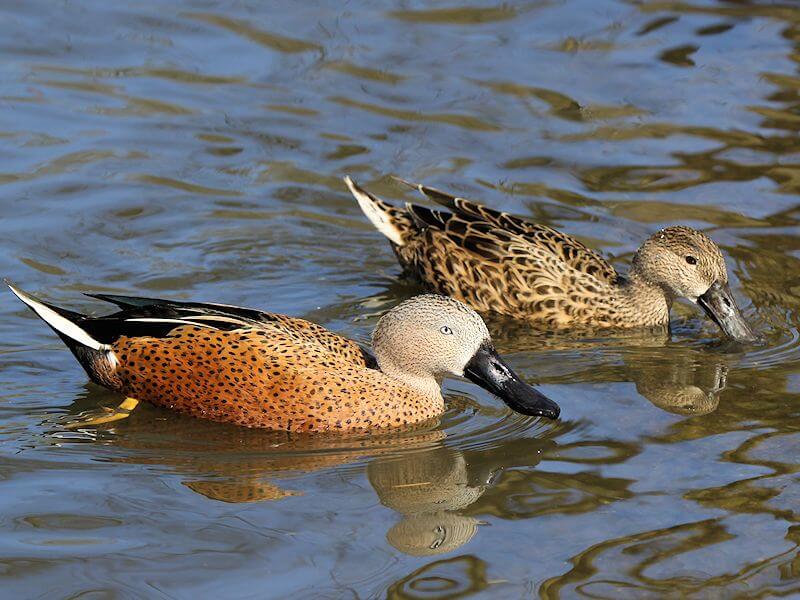
The spatula-shaped bill of the Red Shoveler is not only huge but also noticeably long, making it one of the species’ most defining features. The oversized bill is specially adapted for filter feeding and contains comb-like structures called lamellae that help the duck strain tiny food items from the water with ease.
Males are usually rich reddish or pinkish in color and are easy to spot, thanks to their bright overall appearance, green wing speculum, and pale blue upper wing feathers. Females look duller overall but still stand out because of their large dark bills.
This species is commonly found on shallow lakes, marshes, and lagoons, where it spends much of its time sweeping its long bill through the water in search of food. Its range stretches across much of southern South America, including Argentina, Chile, and even the Falkland Islands, with smaller isolated populations occurring farther north.
5. Northern Shoveler
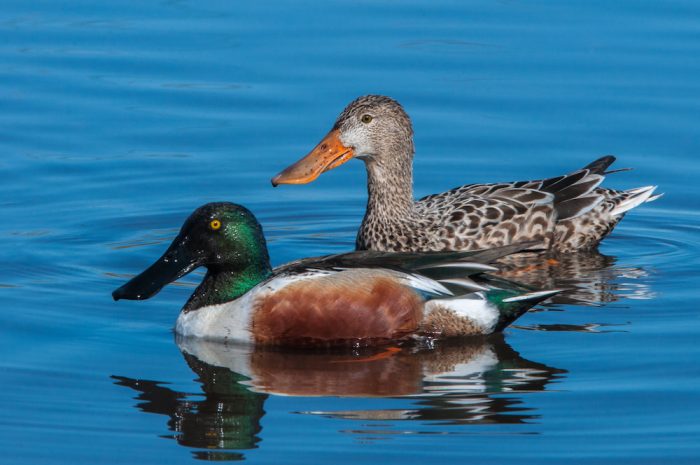
Like the Red Shoveler, the Northern Shoveler has a spatula-shaped bill that is not only weirdly huge but noticeably long as well. The oversized bill gives the bird a very distinctive profile and instantly makes it stand out among other dabbling ducks.
Its broad, flattened bill is specially designed for filter feeding. Along the edges are comb-like structures called lamellae that work like tiny sieves, helping the duck strain plankton, crustaceans, and other small food items from the water’s surface. Watching a Northern Shoveler feed is quite fascinating, as it often swings its bill side to side through shallow water while searching for food.
Breeding males are especially colorful, with glossy dark green heads, bright white breasts, rich chestnut sides, and dark bills. Females are much more subdued, showing mottled brown plumage similar to many other female ducks, but their long, broad bills make them much easier to identify.
Northern Shovelers are birds of open wetlands and are commonly found in marshes, shallow ponds, wet grasslands, and other calm freshwater habitats. They are widespread across Eurasia and North America, especially during the breeding season.
6. Pink-eared Duck
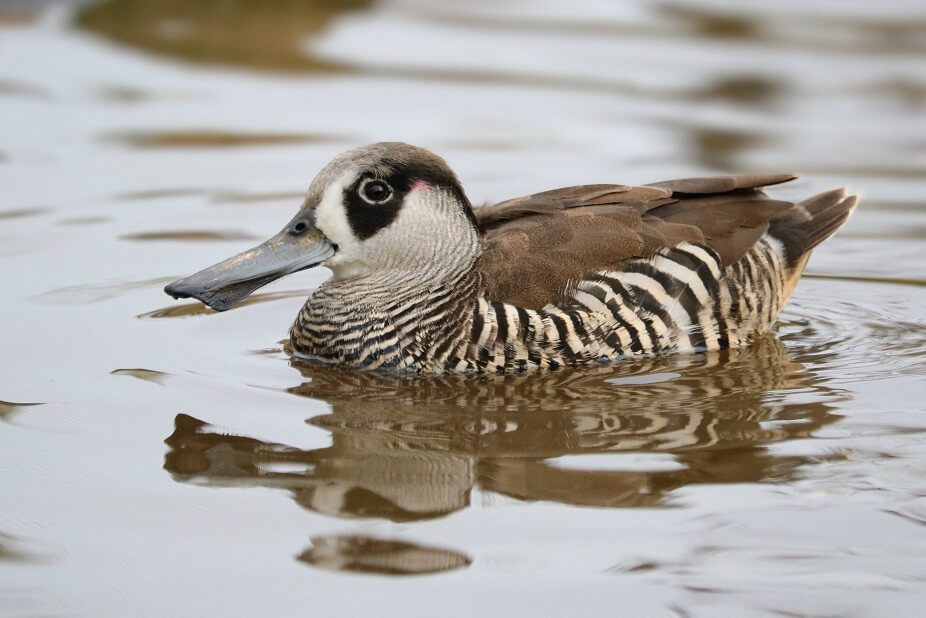
This is another strange looking duck not only because of its large spatulate bill but also its overall appearance, especially the bold black-and-white barred sides and striking black eye patches set against an otherwise pale face. The bill itself is also considerably long and plays a major role in the bird’s unique feeding style.
The Pink-eared Duck has a highly specialized bill adapted for filter feeding. Its flexible, comb-like structures help channel water through the bill in a way that efficiently traps tiny organisms such as algae and plankton. This allows the duck to feed by straining food from the water rather than picking it up individually.
Despite its name, the “pink ear” is actually a small, subtle spot of pink located near the edge of the dark head pattern. It is only visible at close range but gives the species its common name.
This duck is widely distributed across Australia and is known for being highly mobile. It can appear suddenly in almost any area with standing water, particularly in dry inland regions where rainfall is low and water sources are temporary.
7. Philippine Duck
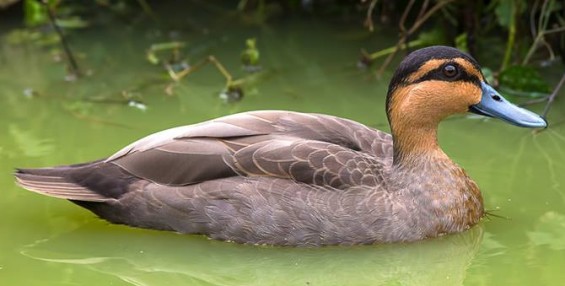
The Philippine Duck is a large conspicuous duck, and the length of its bill becomes especially noticeable when viewed up close against its compact head and strong facial markings. While not exaggeratedly long, the bill stands out clearly in proportion to its head and contributes to its clean, streamlined profile.
This species is the only duck endemic to the Philippines, making it a special resident of the region’s wetland ecosystems. It is typically found across major islands such as Luzon and Mindanao, although it also occurs on several smaller islands. On rare occasions, it has been recorded far outside its normal range, with vagrant individuals observed in places like Taiwan and Japan.
In terms of appearance, the Philippine Duck has a bold and distinctive look. It features a black crown, nape, and eye stripe that contrast sharply with its cinnamon-colored head and neck. The body is mostly grey-brown, accented by a bright green wing speculum that flashes in flight.
8. Indian Spot-billed Duck
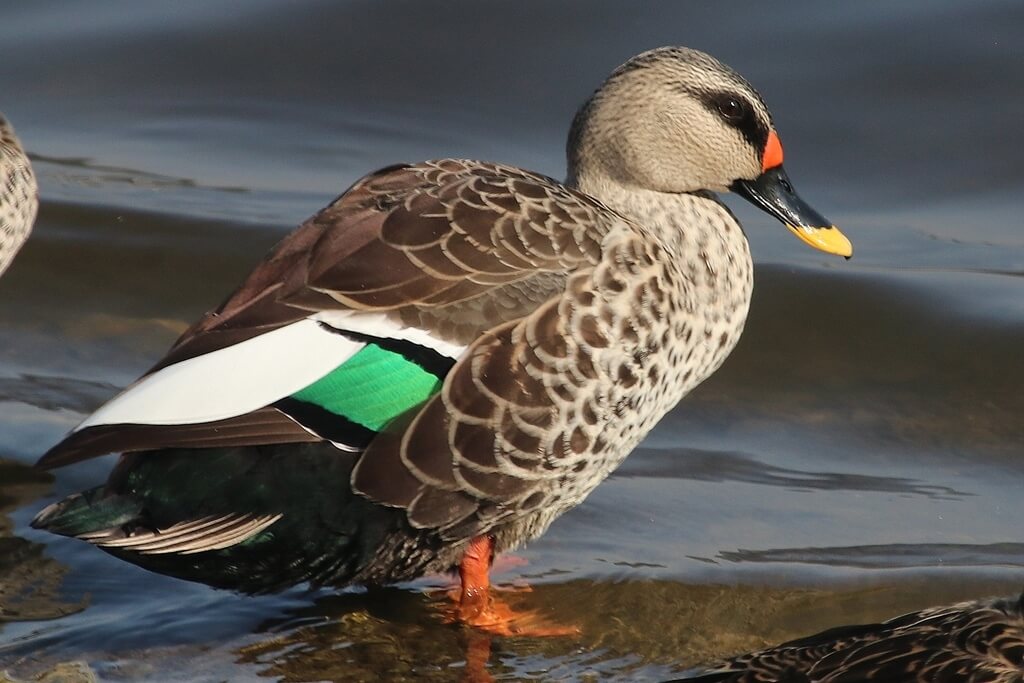
Named after the red spot at the base of their bills, especially among the mainland Indian population, the Indian Spot-billed Duck is a large dabbling duck with a noticeably long bill that becomes more apparent when seen in profile (from the side rather than from the front or above) against its fairly robust head shape.
This is a largely non-migratory species that breeds across freshwater wetlands throughout the Indian subcontinent. It is a resident bird in countries such as India and Pakistan, where it is commonly associated with ponds, lakes, and marshes that provide both cover and feeding opportunities. Unlike some open-water ducks, it tends to avoid very large expanses of exposed water, and prefers medium-sized wetlands with plenty of vegetation.
In the field, it can often be identified from a distance by the clean white tertials that form a noticeable stripe along the side of the folded wing. In flight, it shows a green speculum bordered by a broad white band, which makes it stand out even among other dabbling ducks in mixed flocks.
9. Rosy-billed Pochard
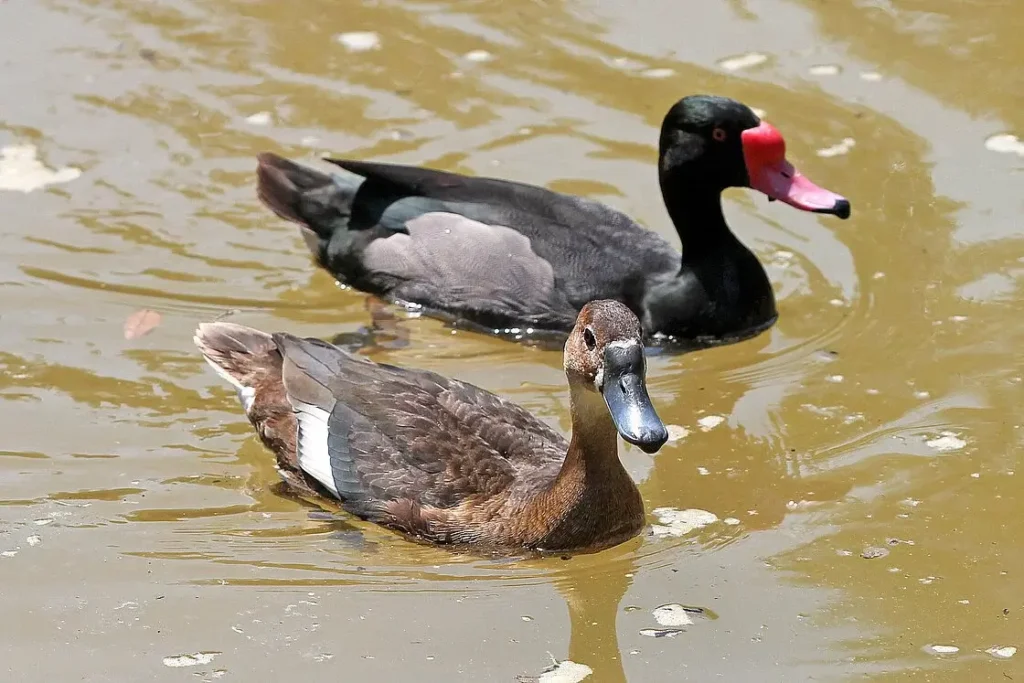
Also referred to as rosybill or rosybill pochard, the Rosy-billed Pochard is a distinctive South American duck with fairly long bill. In males, the bill is particularly bright red and noticeably robust, giving the head a bold, almost sculpted profile.
Another key feature of the male is the rounded knob at the base of the bill, which makes the facial profile even more striking. Combined with its rich plumage, this gives the species a very solid, heavy-headed appearance compared to many other ducks.
Although it is classified as a diving duck, the Rosy-billed Pochard often behaves more like a dabbling species when feeding. It regularly forages on seeds, roots, sedges, aquatic plants, and other wetland vegetation, adapting its feeding style depending on what is available.
This species is endemic to South America, found across Argentina, Uruguay, Paraguay, and southern Brazil, with some populations moving north during the austral winter. It is also a rare visitor to the Falkland Islands.
10. Mallard

This common duck species has also a fairly long bill, especially when compared with many other dabbling ducks. While not extreme, the bill is proportionally noticeable and contributes to the familiar, balanced shape of the species.
The Mallard is one of the most widely recognized ducks in the world. Males are famous for their glossy green heads, yellow bill, and clean grey body, while females are mottled brown, a camouflage pattern that helps them blend into wetland vegetation during nesting. Both sexes show a distinct wing speculum, an iridescent patch bordered in white that can appear blue, purple, or green depending on the light, with males typically showing the most vivid coloration.
The Mallard is also of great importance in the history of domestic ducks, as it is the primary wild ancestor of most domesticated breeds. Because of this, wild populations in many regions have experienced genetic mixing with escaped domestic and feral ducks, which has altered some local gene pools.
It is classified as a species of Least Concern globally due to its wide distribution and abundance. However, in some parts of the world outside its native range, it is considered invasive because of its adaptability and ability to establish strong populations in new environments.
Never confuse mallards with their lookalikes: 13 Ducks That Look Like Mallards
11. Meller’s Duck
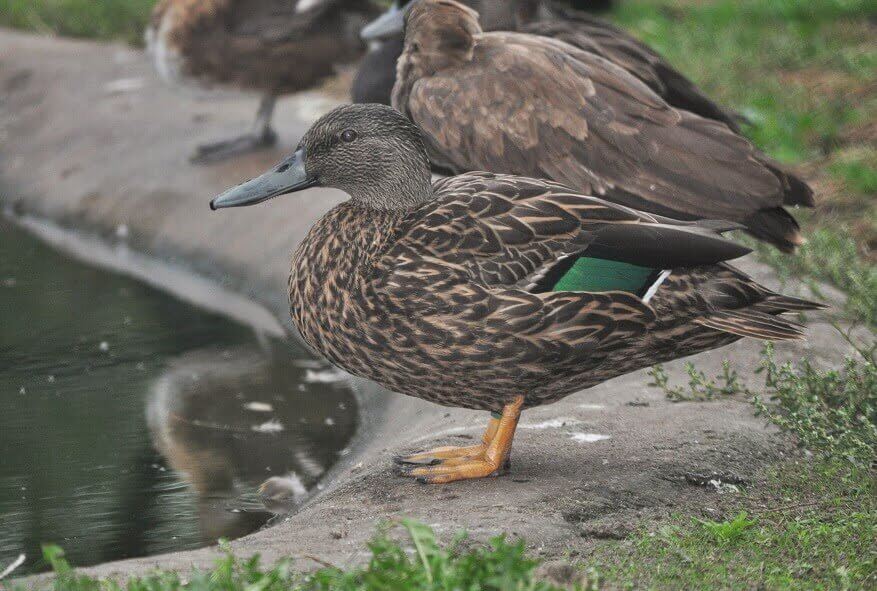
Named after the botanist Charles James Meller, the Meller’s Duck has a pale grey bill with darker patches near the base. The bill is fairly large and gives the head a solid, heavy appearance compared to many similar duck species.
This species is endemic to eastern Madagascar, where it inhabits freshwater wetlands. In general build, it looks much like a large female Mallard, although it is slightly bigger and more robust overall. The longer, broader bill helps give it a stronger facial profile when seen up close.
Meller’s Duck is listed as Endangered on the IUCN Red List due to habitat loss and genetic mixing with other ducks. A small introduced population once existed on Mauritius, but it has nearly disappeared because of wetland decline and competition with feral domestic ducks.
Discover other endangered duck species: 17 Most Endangered Ducks in the World According To IUCN Red List
12. Canvasback
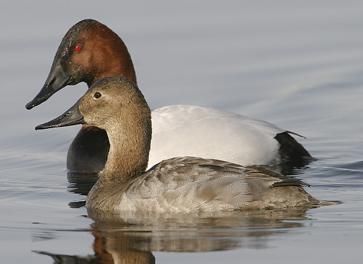
This is the largest diving duck in North America. It typically measures about 48–56 cm (19–22 in) in length and weighs between 862–1,588 g (1.900–3.501 lb), giving it a solid, streamlined build suited for powerful diving.
Its bill is blackish, fairly long, and blends smoothly into its wedge-shaped head, contributing to the species’ clean, sloping profile. The long, gently tapering head and neck line is one of its most recognizable structural features, especially when viewed in profile on open water. Legs and feet are bluish-grey, adding to its muted but elegant colour palette.
Canvasbacks breed mainly in North America’s prairie potholes, especially in freshwater marshes surrounded by emergent vegetation such as cattails and bulrushes, which provide both cover and nesting protection. Other important breeding areas include the subarctic river deltas of Saskatchewan and interior Alaska, where they nest over water in relatively undisturbed wetlands.
13. Cinnamon Teal

This is a small dabbling duck with a noticeably longer and more spatulate bill than many other teal species, giving its head a slightly broader, more elongated appearance in profile.
Male Cinnamon Teals have rich cinnamon-red plumage covering the head and body, a darker back, red eyes, and a dark bill that contrasts with the warm body tones. Females are much more subdued, showing mottled brown plumage, a pale brown head, and a grey bill.
At a glance, they can resemble female Blue-winged Teal, but the Cinnamon Teal generally looks richer in overall tone, with softer facial markings and a warmer, deeper brown coloration.
This species is found mainly in western North and South America. Its breeding habitat includes marshes and ponds across the western United States and extreme southwestern Canada, where it nests in shallow freshwater wetlands. It is only a rare visitor to the eastern parts of North America, far outside its usual range.
14. Eastern Spot-billed Duck
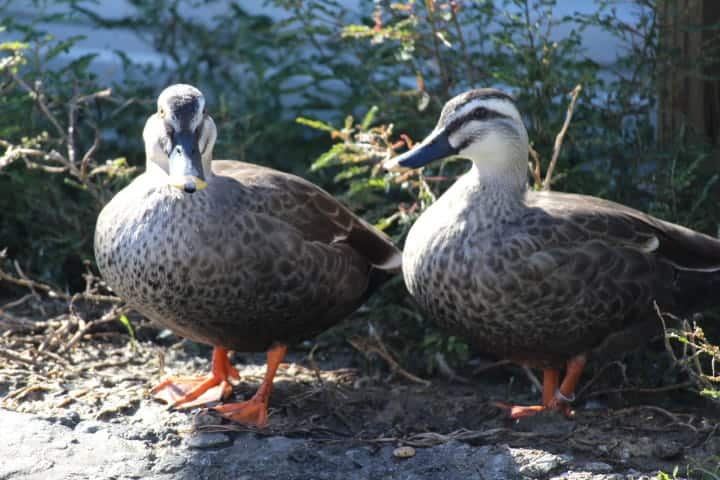
The Eastern Spot-billed Duck is a Mallard-sized duck with a fairly long, slightly heavy bill that ends in a bright yellow tip, making it one of its most noticeable facial features. The long neck and pale head also help give the bird a stretched, elegant profile, especially when seen in the field.
This species was formerly considered a subspecies of the Indian Spot-billed Duck and both were referred to as the spot-billed ducks. It is now treated as a separate species, though the two remain very similar in appearance.
The body is mostly grey with a fine scaly pattern, and a blue speculum on the wing. The head and neck are paler than the body, while the dark bill with its yellow tip provides a key contrast that helps with identification. In flight, the wings show a mix of white and dark feathers, with a clean white-bordered green speculum visible from above.
Outside the breeding season, the Eastern Spot-billed Duck is fairly social and can form small flocks on wetlands and lakes. It is migratory, wintering mainly in southern China and parts of Southeast Asia. Some populations in Japan and the Russian Far East have expanded their range northwards in recent decades.
15. Mexican Duck
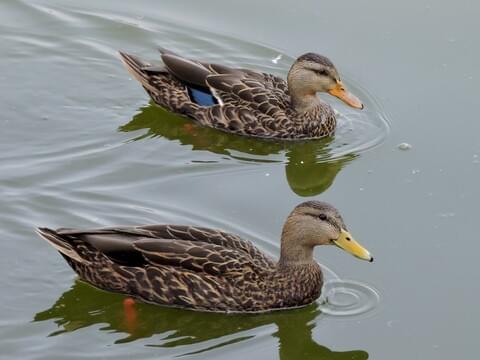
The Mexican Duck is another species with a fairly long yellow bill, which is more noticeable in males where the color is brighter and more uniform. The bill gives the face a clean, slightly elongated appearance, especially when compared to the darker tones of the head and body.
This duck breeds in Mexico and the southwestern United States, where it is commonly found in wetlands, rivers, and agricultural areas. It is particularly known for feeding at night in irrigated fields, often grazing on green shoots of crops such as alfalfa.
Both males and females closely resemble a female Mallard, though the overall plumage is generally darker and more uniformly brown. A blue speculum edged with white is visible on the wings, standing out clearly in flight or when the wings are folded at rest. Males typically show a brighter yellow bill than females, which is a subtle but useful field mark for identification.
Discover the key differences between Mallards, Mottled ducks and Mexican ducks:
Mexican Duck Vs Mallard: Notable Differences Between the Two Species
Mexican Duck Vs Mottled Duck: Quick Identification Guide for Birders
16. Puna Teal
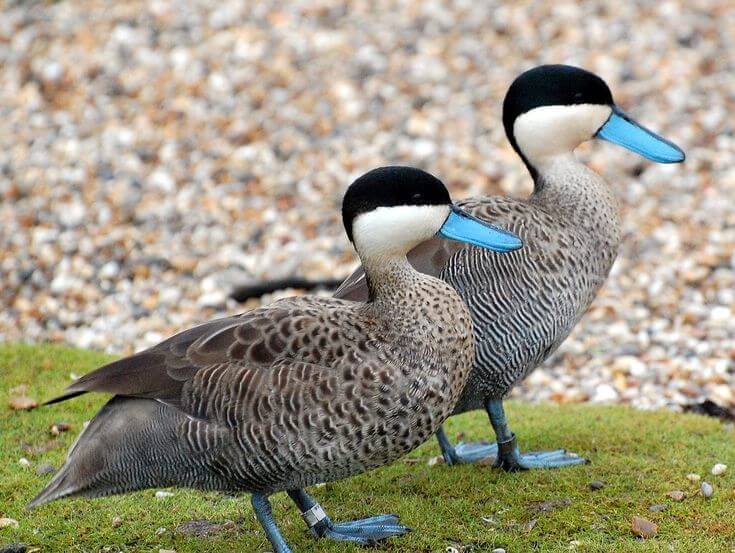
The Puna Teal has a relatively long bill measuring about 47–53 mm, which gives its face a slightly extended, narrow appearance compared to many other small dabbling ducks.
Puna Teals are best known for their distinctive head and facial pattern. Males show a dark brown to blackish cap that extends below the eye, contrasting sharply with a creamy white lower face and neck. The body is a warm coffee-brown on the chest and flanks, with darker tones toward the rear, creating a subtle but well-defined colour gradient. Females are more subdued, with duller plumage and less distinct barring along the flanks, making them harder to pick out in mixed groups.
This species is native to the high Andes and is typically found on large lakes and pools of the altiplano across Peru, Bolivia, northern Chile, and extreme northwestern Argentina. It is a resident species in these high-altitude wetlands, where it is well adapted to cold, open water environments.
17. Mottled Duck
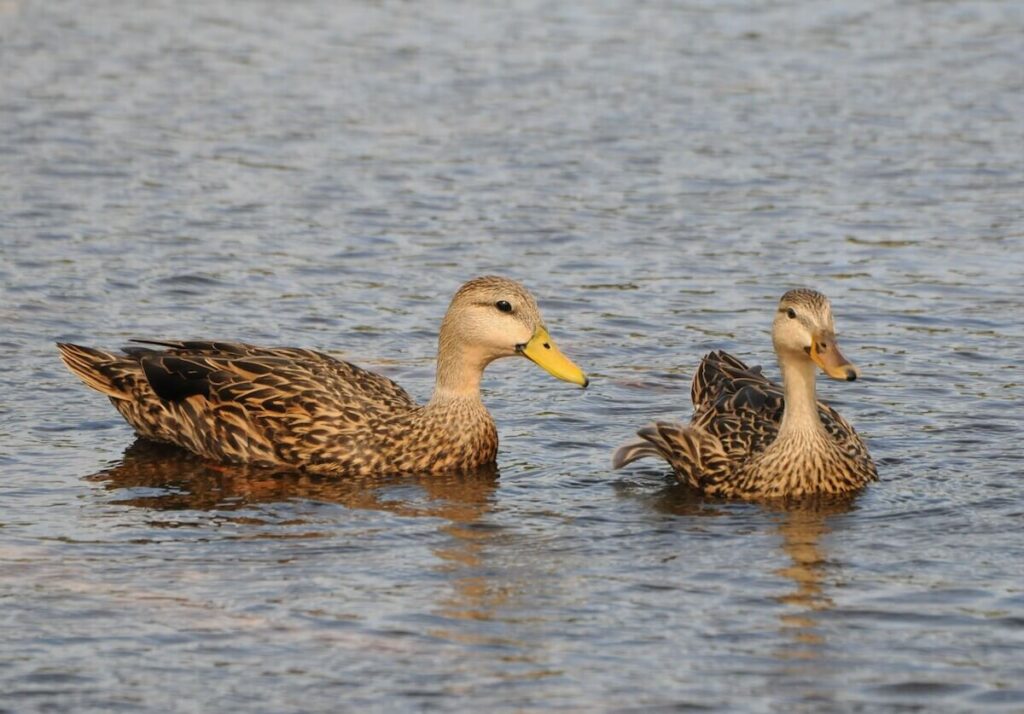
The final duck that we can also say has a noticeably long beak is Mottled Duck. Its bill is fairly long and slightly broad, giving the face a strong, clean profile that becomes especially noticeable in males where the color is bright yellow.
This species sits somewhere between a female Mallard and an American Black Duck in overall appearance. It has a dark, mottled brown body with a slightly paler head and neck, creating a soft contrast across the plumage. Both sexes show a shiny green-blue speculum on the wings, but unlike the Mallard, this patch is not bordered in white, which is a useful identification clue.
Males and females look quite similar overall, with the main difference being the bill color. Males typically have a bright yellow bill, while females show a deeper orange to pale orange bill that may have darker markings around the edges or base. Discover more sexing tips here: Identifying Mottled Duck Male Vs Female
The Mottled Duck is largely non-migratory and is most commonly found along the Gulf Coast, where it is one of the more frequently encountered and banded waterfowl species.
Never Confuse Mottled Ducks with American Black Ducks: Mottled Duck Vs Black Duck: A Complete Identification Guide
