
12 Ducks with Green Bills (including Pictures for Easy ID)
Like other birds, duck come in an incredible variety of shapes, sizes, and colors, and each species is unique and beautiful in its own way. If you’re trying to identify ducks with green or greenish bill coloration, take a look at these 12 species that showcase this distinctive feature, along with a few insightful facts about each one.
1. American Black Duck
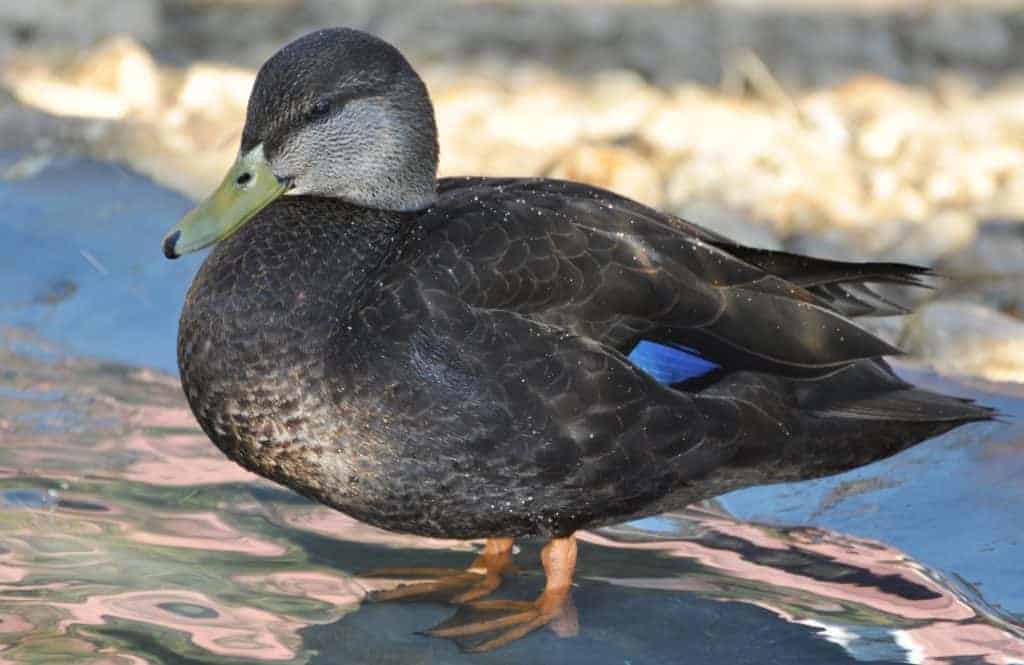
The American Black Duck is often confused with the female Mallard due to its overall brown appearance, though its plumage is typically darker and richer in tone. Males show a yellow to yellow-green bill, while females display a more subdued dull green bill, which is usually marked with dark patches along the upper mandible. This variation means that, regardless of sex, the species consistently presents some degree of greenish bill coloration, an important clue for field identification. Native to eastern North America, the American Black Duck is also known for frequently interbreeding with Mallards, which further adds to the challenge of differentiating the two species.
Check out more features you can use to tell male and female American black ducks apart besides bill color: How to Identify Drake Vs Hen Black Duck: Key Differences
2. Hawaiian Duck
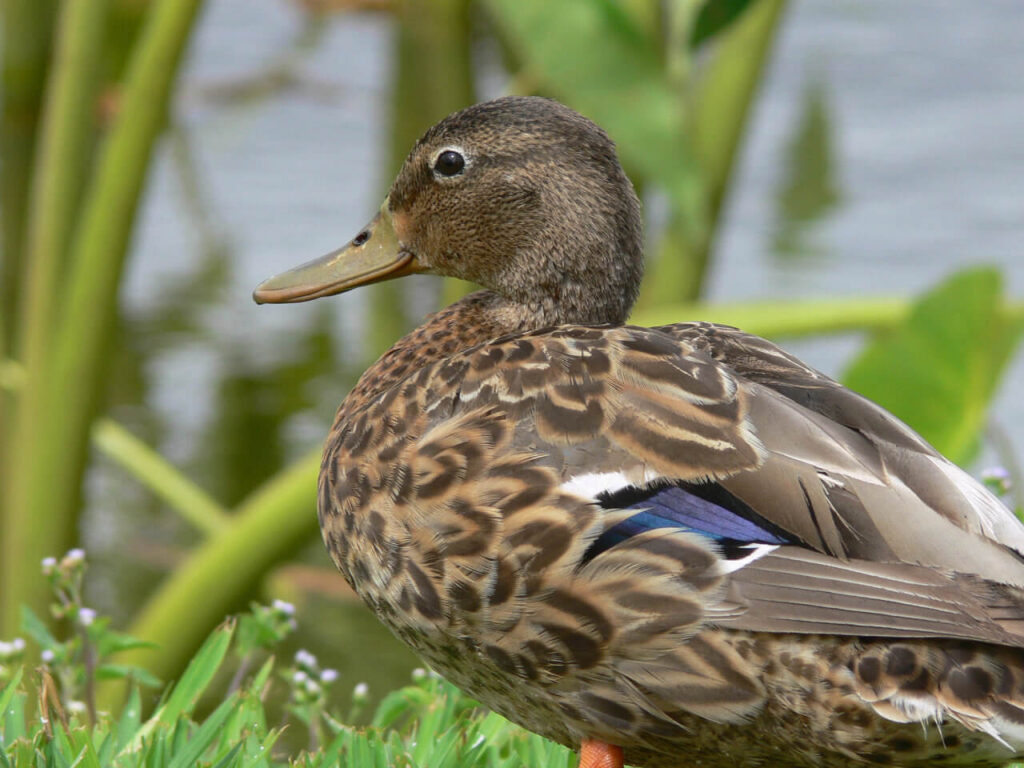
Known locally as koloa maoli (meaning “native duck”), the Hawaiian Duck is a true island endemic found only on the main Hawaiian Islands. Both sexes share a mottled brown appearance that closely resembles a female Mallard, though males are typically slightly larger. When it comes to bill coloration, males display an olive-green bill while females have a dull orange bill marked with darker patches. Like the American Black Duck, the Hawaiian Duck readily interbreeds with introduced Mallards in the island, making identification more challenging, as the resulting hybrids often blur the lines between the two species.
Here’s how you can differentiate the Hawaiian ducks from female mallards: Hawaiian Duck Vs Mallard: Notable Differences Explained
3. Abacot Ranger
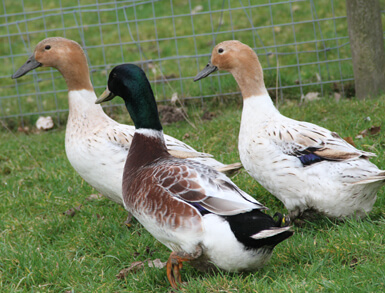
Another duck you will find with greenish bill coloration is the Abacot Ranger, a domestic breed originally developed for eggs and meat. Drakes typically show an olive-green bill, giving them that subtle green tone, while females contrast with a slate-gray bill. First known as the Hooded Ranger and later as Streicherente (“Ranger Duck”) in Germany, this breed was prized for both meat and egg production, and today it remains popular among keepers for its reliable laying ability and exhibition appeal.
4. Welsh Harlequin
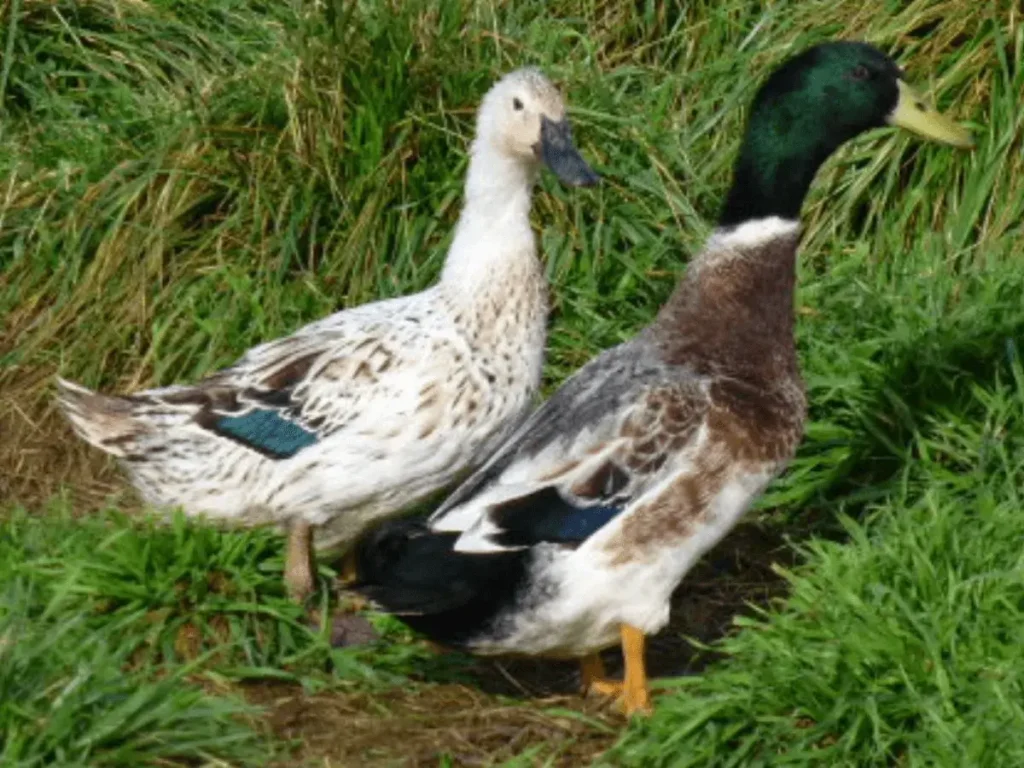
This domestic breed originates from Wales and is especially valued for its egg laying ability. Drakes display a yellow to greenish bill, adding a soft green tone to their overall appearance, while females have a darker, black bill. Both sexes resemble Mallards but appear noticeably “frosted,” with pale edging across the plumage, and females lack the typical eye stripe seen in female Mallards. Beyond looks, the Welsh Harlequin stands out for its excellent egg-laying ability and its natural tendency toward broodiness, which allows pairs to raise their young ones with little to no human assistance.
5. Duclair Duck
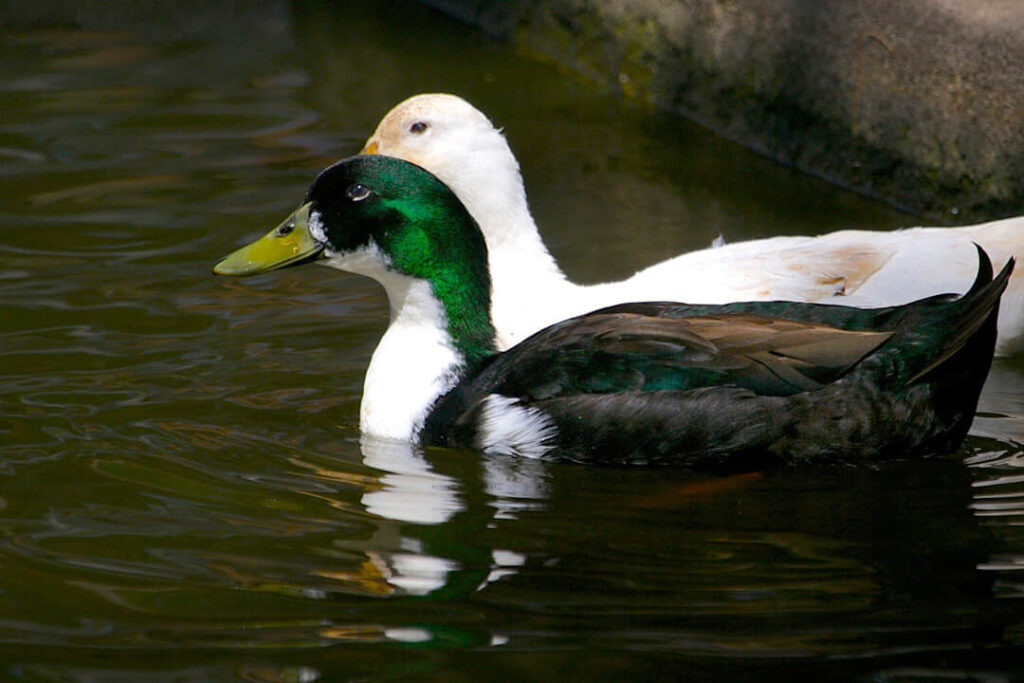
The Duclair Duck is a traditional French breed from Normandy, closely associated with the town of Duclair and long valued for both meat and egg production. Drakes typically show olive-green to dark green bills while females contrast with slate-black to nearly black bills. The breed comes in two color varieties, black and the rarer blue, with both varieties featuring a distinctive white bib and a single white feather on each wing. Known for its rich, slightly “gamy” flavor, the Duclair Duck is particularly perfect for whole roasting (or roast duck).
6. Laysan Duck
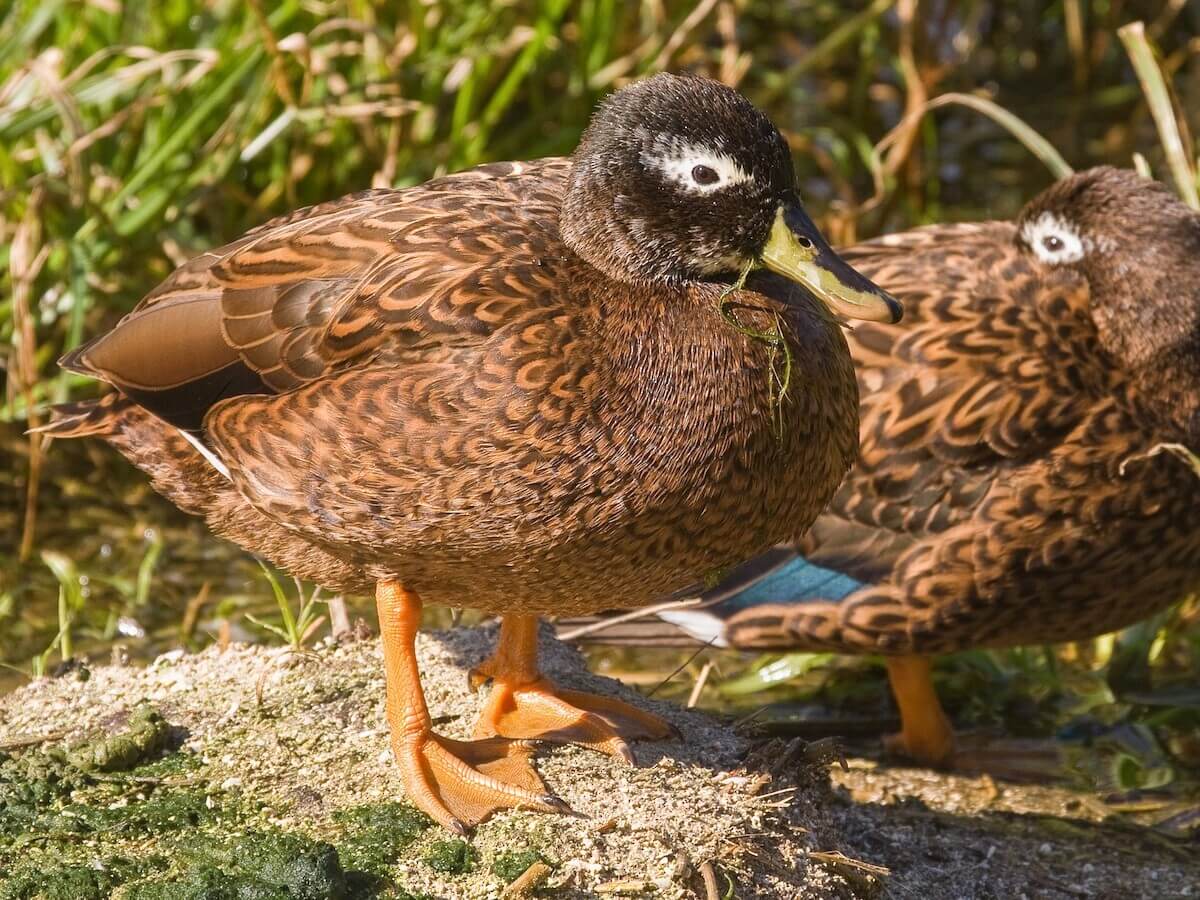
Also known as the Laysan teal or koloa pōhaka, the Laysan Duck is a small dabbling duck endemic to the Hawaiian Islands. This teal-sized species is mostly dark brown, highlighted by a bold white eye-ring that stands out clearly in the field. The male’s bill is dark green with irregular black blotching, giving it a distinctly green-toned appearance, while females show a dull orange bill with similar markings. Unlike many ducks, the Laysan Duck is a weak flyer but compensates with strong walking and running ability, supported by a pelvic structure well adapted for life on land.
Duck Identification Posters/Charts
Celebrate the beauty of ducks with detailed, high-resolution identification posters designed for both learning and decor. Each chart features vibrant colors, sharp details, and a smooth premium finish that’s perfect for classrooms, study spaces, living rooms, or offices.

7. Mexican Duck

The Mexican Duck is another duck species that’s often mistaken for a female Mallard, though it typically shows a slightly darker, richer brown body. Males display a dull yellowish to olive-green bill, giving them a subtle greenish tone, while females have a mottled dusky orange and black bill. This dabbling duck, found in Mexico and the southwestern United States, also shows a blue speculum edged with white (visible both in flight and at rest), which helps confirm its identity alongside the more understated bill coloration.
Here’s how you can differentiate the Mexican ducks from female mallards: Mexican Duck Vs Mallard: Here Are the Notable Differences Between the Two Species
8. Chubut Steamer Duck
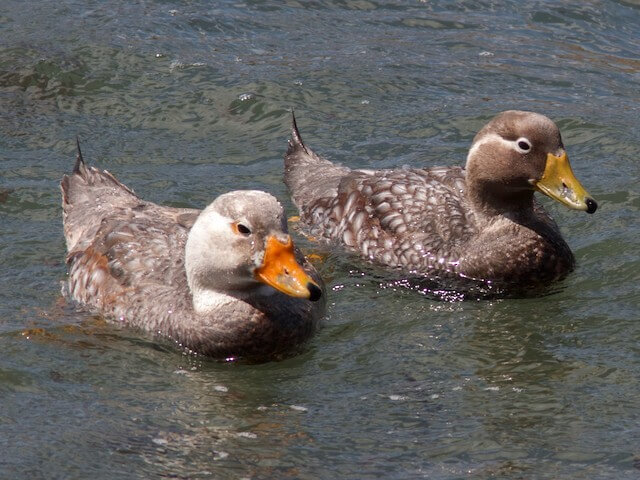
Steamer ducks are named after the way they paddle and splash on the water’s surface, which resembles an old-fashioned paddle steamer boat. The Chubut Steamer Duck, also known as the white-headed flightless steamer duck, is a distinctive coastal species endemic to Argentina. Adult females have greenish-yellow bills while males show a stark contrast with bright yellow to orange bills tipped with a black nail. Females are also brown-headed with a subtle white line extending from behind the eye toward the neck, whereas males are more striking with a white head. Once thought to be restricted to southern Chubut Province, the species is now known to occupy a broader stretch of the Argentine coast.
9. Common Eider
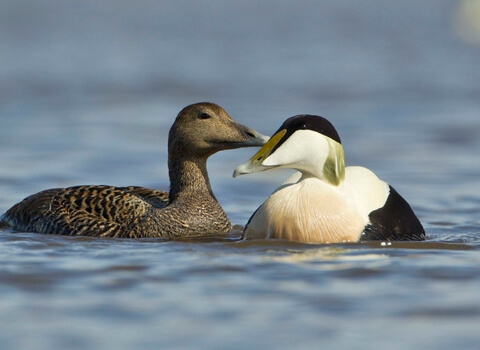
The Common Eider is a large, bulky sea duck of Arctic and northern temperate waters, well known for its distinctive wedge-shaped bill and dense, insulating plumage. Males are striking in black and white with a soft green nape, while females are uniformly brown but still easily recognized by their size, head shape, and overall structure compared to other ducks. Bill coloration varies across subspecies, adding an interesting layer of variation: the S. m. mollissima variant (or European Common Eider) shows a yellowish-green bill, while both S. m. dresseri (or American Common Eider) and smaller S. m. faeroeensis (or common eiders of the of the Faeroe Islands, British Northern Isles and Outer Hebrides) exhibit a greenish-grey bills. Other northern and Arctic forms may show brighter orange-yellow bills, highlighting the geographical diversity within the species. The Common Eider breeds in Arctic regions but moves southward in winter, often gathering in large coastal flocks.
10. Mottled Duck
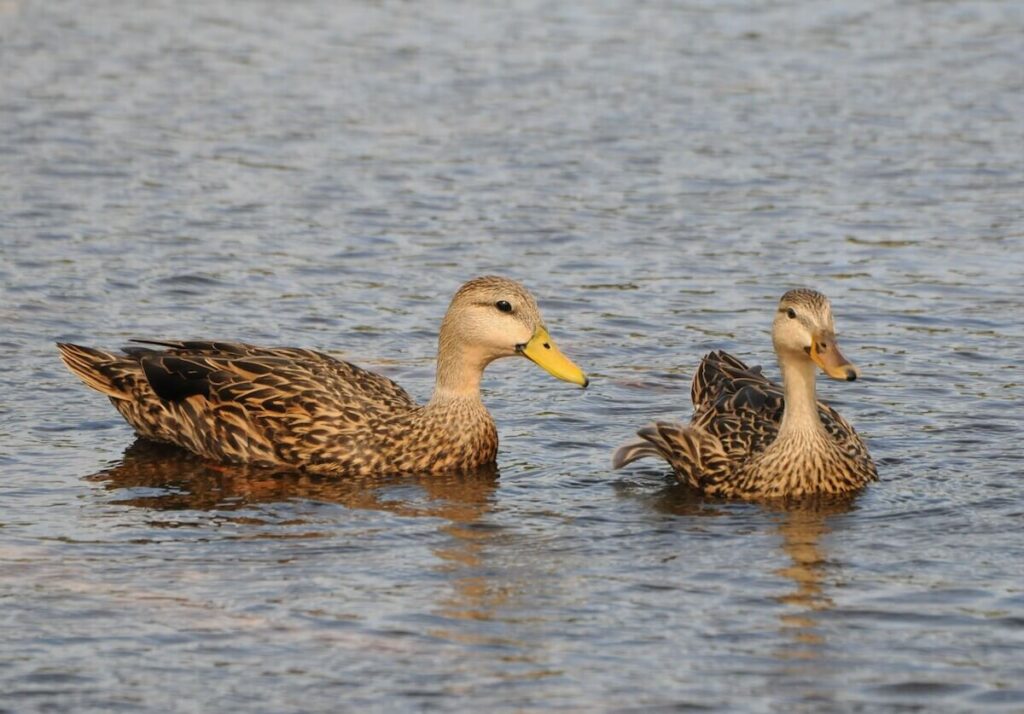
The Mottled Duck is a closely resembles both the Mallard and the American Black Duck, and often appear as an intermediate between the two and at times mistakenly treated as a Mallard subspecies (learn their key differences in the posts listed below). Males and females share a very similar overall plumage, which can make field separation challenging, but the bill provides a useful clue. Males typically show a bright yellow bill, while females display a more variable range of dull orange, yellow, or greenish-brown tones, which are often marked with dark spots or streaking along the edges and base. We have included it in our list because of this subtle greenish tint in some females. Most Mottled Ducks are banded, making them especially sought after among hunters.
Discover:
Identifying Mottled Duck Male Vs Female
Mexican Duck Vs Mottled Duck: Quick Identification Guide for Birders
11. Australian Spotted Duck
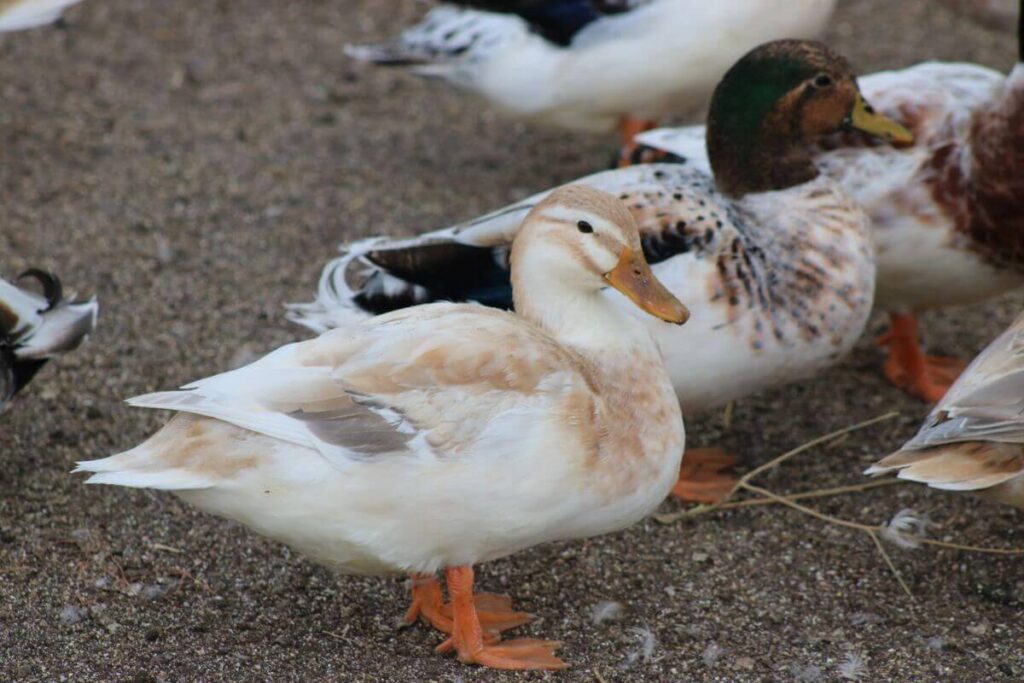
Despite its its “down under” name, this duck actually originated in the United States rather than Australia. It is a bantam-sized domestic duck with a distinctive teardrop-shaped body and centrally placed legs, giving it a near-horizontal carriage in the water. It has a greenish-yellow bill, which complements its orange legs and feet and brown eyes. Beyond its appearance, this breed is also valued for productivity, with hens capable of laying around 50 to 125 eggs per year in shades of cream, blue, or green. It is also known for its rapid maturity, with drakes showing early courtship behavior within just a few weeks of hatching.
12. Cayuga Duck
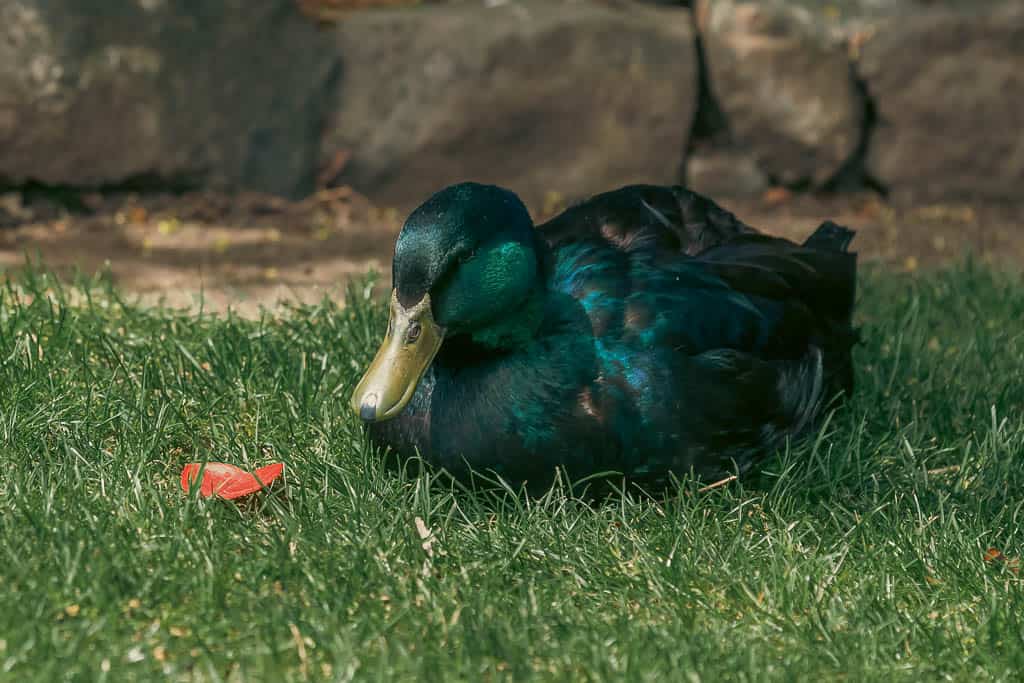
The final duck in our list that also shows greenish bills is the Cayuga Duck, an American breed developed in the Finger Lakes region of New York around 1840 and named after the Cayuga people of the area. This striking breed is best known for its glossy black plumage with an iridescent beetle-green sheen that gives it a shimmering appearance in the light. As both males and females age, their bills, feet, and legs may gradually shift from black to an olive-green tone, adding a subtle greenish bill feature in mature birds. Over time, some feathers may fade or turn white, which is considered undesirable in exhibition standards, but the breed remains valued for its unique coloration and historic background.
