
Swedish Blue
Scientific Name
Anas platyrhynchos domesticus
Alternative Names
Swedish, Blue Swedish, Svensk blå anka
Measurements:
| Feature | Drake | Duck |
|---|---|---|
| Weight | 3–4 kg (6.5–8 lb) | 2.5–3.5 kg |
| Egg Production | 100–150 eggs per year | 100–150 eggs per year |
| Egg Weight | 80–90 g | 80–90 g |
Status
Listed as “at risk/endangered” in Sweden (2023). Considered “watch” by the American Livestock Conservancy.
Average Life Span
8–12 years
Breed History
The Swedish Blue originated in the former dominion of Swedish Pomerania, now part of north-west Poland and north-east Germany. The first documented reference dates back to 1835. Blue ducks from this area were believed to be hardy, good meat producers, and well-camouflaged from predators. Some birds were exported to the United States in 1884, and the breed was officially recognized by the American Poultry Association in 1904. Development likely occurred in the 1830s and 1840s when the region was under Swedish rule.
Identification
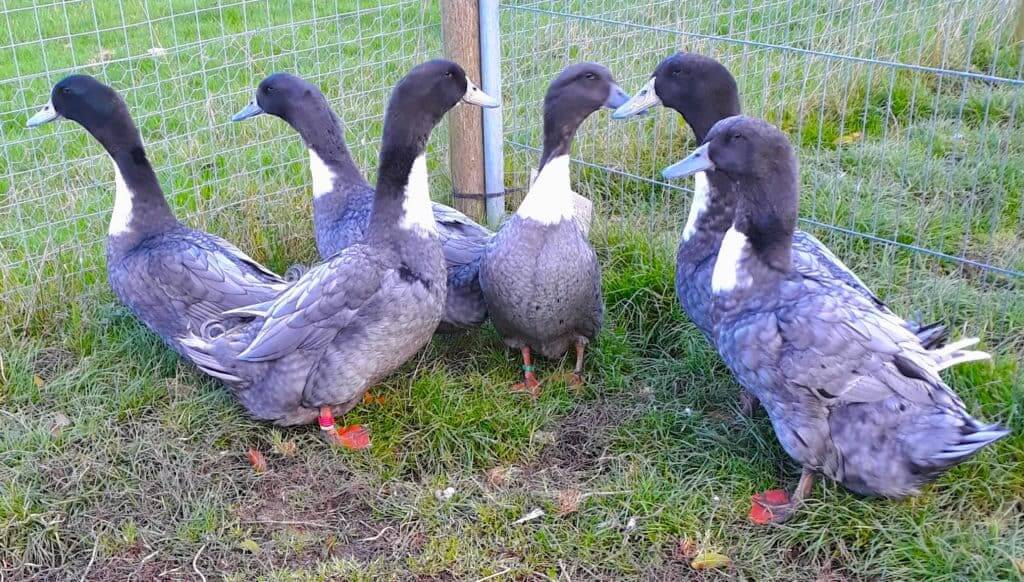
The Swedish Blue is a medium-sized, rounded, full-breasted duck with a straight back and an oval head. The body is shorter and broader than breeds like the Cayuga or Orpington, carried at an angle of about 20° to the horizontal.
Both sexes have bluish slate plumage with a white bib. The drake’s head is a darker blue with a greenish bill, while the duck’s head and bill are the same blue-slate color as the body. Their legs are reddish-brown with greyish-black markings. The breed’s defining feature is its white primary flight feathers, distinguishing it from the Pomeranian duck.
Purpose
The Swedish Blue is a utility breed valued for both meat and eggs. It forages well, matures slowly, and produces well-flavored meat. It thrives in free-range or orchard environments but does not perform as well in confinement. The breed also makes an excellent pet due to its calm temperament.
Breed Eggs
Swedish Blue ducks lay 100–150 white or lightly tinted blue or green eggs annually. Eggs are large, averaging 80–90 g in weight.
Temperament & Behavior
The Swedish Blue is calm, friendly, and hardy. It adapts well to colder climates and has a pleasant, manageable nature, making it suitable for small farms or ornamental flocks.
Color
There are three color varieties: black, blue, and silver (or splashed white), determined by a single dilution gene.
- 25% of offspring from blue × blue matings are black.
- 50% are the standard blue color.
- 25% are pale silver.
To produce all-blue offspring, breeders cross black and silver birds. Blue ducks may lighten with age, which disqualifies them from shows but does not affect breeding quality.
Conservation Note
The Swedish Blue remains endangered, with fewer than 300 birds reported in Sweden in 2021. Maintaining the breed requires precise color management and large breeding flocks, as color genetics make it difficult to meet show standards. Despite this, the breed continues to be cherished for its beauty, hardiness, and utility value.