
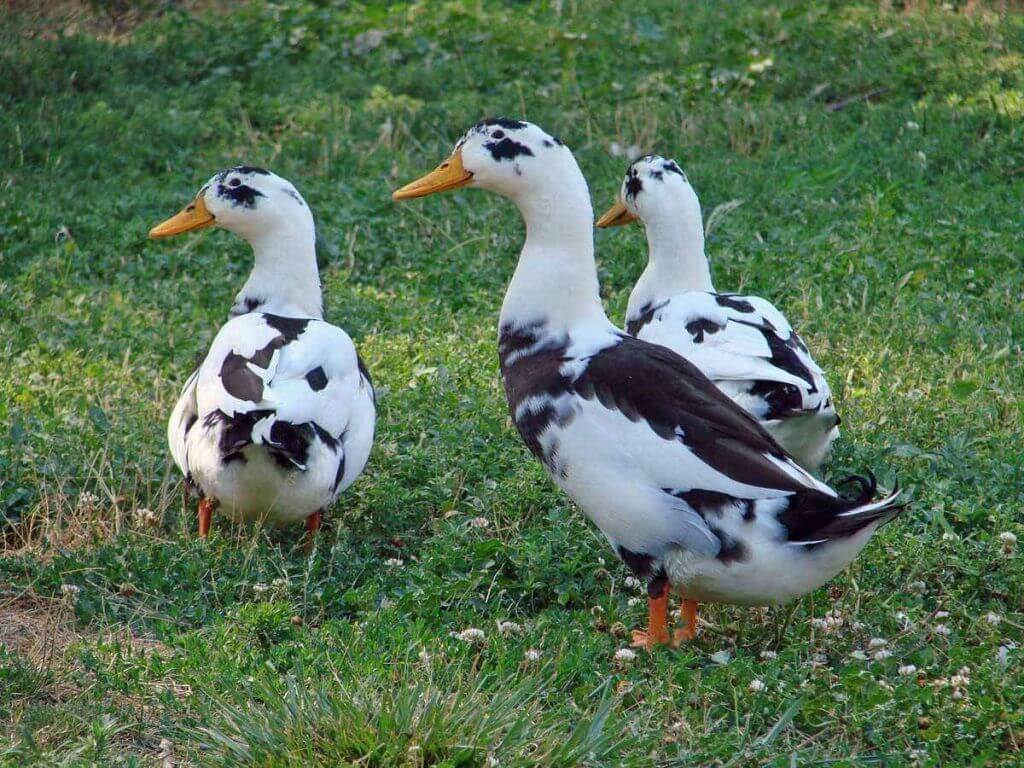
Ancona Duck

Alternative Names

Ancona Duck

Measurements

FeatureMaleFemale
Length60–66 cm (24–26 in)60–66 cm (24–26 in)
Weight2.7–2.9 kg (6–6.5 lb)2.3–2.7 kg (5–6 lb)
WingspanNot well documentedNot well documented

Status

The Ancona is a rare domestic duck breed. It is not recognized by major poultry associations and is considered at risk due to low breeding populations. Conservation breeders are encouraged to help preserve it.

Identification

A medium-sized duck with a sturdy body and a unique broken-color pattern. The feathers are mostly white with irregular patches of black, blue, chocolate, silver, or lavender. Each duck has a different pattern, making no two birds alike. The bill is usually yellow with dark spots, and the legs are orange with black markings.

Voice

They make soft quacking sounds. Females are louder and clearer, while males have a quieter, raspier call.

Diet

Omnivorous. They forage well and eat grasses, insects, snails, slugs (especially large banana slugs), and leftover grains. They also do well on regular poultry feed.

Distribution

Originally believed to come from England, but now most evidence shows the breed was developed in the United States in the early 1900s. Today, it is mainly found on small farms in North America and Europe.

Habitat

Lives comfortably on farms, homesteads, and near ponds or grassy areas. They like open spaces for foraging and calm water for swimming. They do not tend to wander far from home.

Breeding

Females lay around 210–280 eggs per year in colors like white, cream, blue, or green. They rarely go broody, so eggs are often hatched in incubators. They grow quickly and can also be raised for meat.

Wintering

They are hardy and can handle cold weather if given shelter from wind and frozen ground. They do not migrate or fly long distances.

Conservation

Their numbers are low, and they are considered a breed in need of protection. Their gentle nature, good egg production, and quality meat make them valuable for small farms and conservation programs.

Similar Posts

  • Bourbourg Duck

    Scientific Name Anas platyrhynchos domesticus Alternative Names: Canard de Bourbourg (French) Measurements Feature Male Female Weight 6½–7¾ lbs (3–3.5 kg) 6½ lbs (3 kg) Length 55–60 cm (22–24 in) 50–55 cm (20–22 in) Wingspan 75–80 cm (30–31 in) 70–75 cm (28–30 in) Status Once nearly extinct in the 1950s, the Bourbourg Duck has been successfully…

  • Saxony Duck

    Scientific Name Anas platyrhynchos domesticus Measurements: Feature Male (Drake) Female (Duck) Weight 3.5 kg 3.0 kg Bantam Weight ~1.1–1.2 kg ~1.0 kg Egg Weight 80 g 80 g Status The Saxony is a German domestic duck developed in the 1930s by Albert Franz in Saxony. It was almost wiped out during World War II but…

  • Aylesbury Duck

    Scientific Name: Amazonetta brasiliensis Alternative Names: Brazilian Duck, Amazonetta Measurements: Feature Male Female Length 38–43 cm (15–17 in) Slightly smaller Weight 500–700 g (1.1–1.5 lb) Slightly lighter Wingspan Around 65–75 cm (26–30 in) Around 65–75 cm Status Common and listed as Least Concern. Populations are stable across eastern South America. Identification A small, elegant duck…

  • Swedish Blue

    Scientific Name Anas platyrhynchos domesticus Alternative Names Swedish, Blue Swedish, Svensk blå anka Measurements: Feature Drake Duck Weight 3–4 kg (6.5–8 lb) 2.5–3.5 kg Egg Production 100–150 eggs per year 100–150 eggs per year Egg Weight 80–90 g 80–90 g Status Listed as “at risk/endangered” in Sweden (2023). Considered “watch” by the American Livestock Conservancy….

  • Aztec Bantam Duck

    Alternative Names Aztec Duck Status The Aztec is a very rare bantam duck breed created by Holderread Waterfowl Farm in 1983. It was designed to be a small, attractive duck that is hardy, easy to breed, and good for small keepers. Today, the breed is nearly extinct and only survives in a few private flocks….

  • Silver Bantam

    Scientific Name Anas platyrhynchos domesticus Alternative Names Miniature Silver Appleyard (original name), Silver Bantam Measurements Feature Male (Drake) Female (Duck) Weight 0.9 kg (2.0 lb) 0.8 kg (1.8 lb) Ring Size 12 mm 12 mm Eggs per Year 60–160 60–160 History The Silver Bantam was developed in Suffolk, England, in the late 1940s by Reginald…

Leave a Reply

Your email address will not be published. Required fields are marked *