
Musk Duck
Scientific Name
Biziura lobata
Measurements
| Feature | Male | Female |
|---|---|---|
| Length | 60–70 cm (24–28 in) | 47–55 cm (19–22 in) |
| Weight | 2,398 g (5.29 lb), up to 3,170 g (6.99 lb) | 1,551 g (3.42 lb), as low as 993 g (2.19 lb) |
Status
Musk ducks are not currently considered endangered. Hunting, wetland drainage, and rising salinity have impacted numbers, but the species is stable overall.
Identification
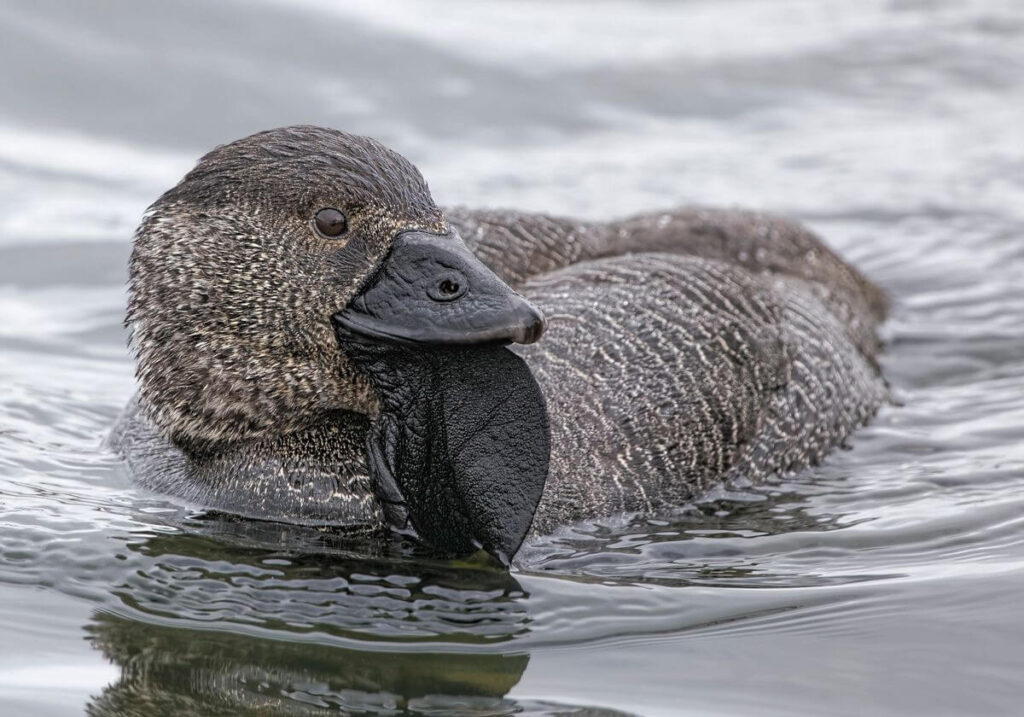
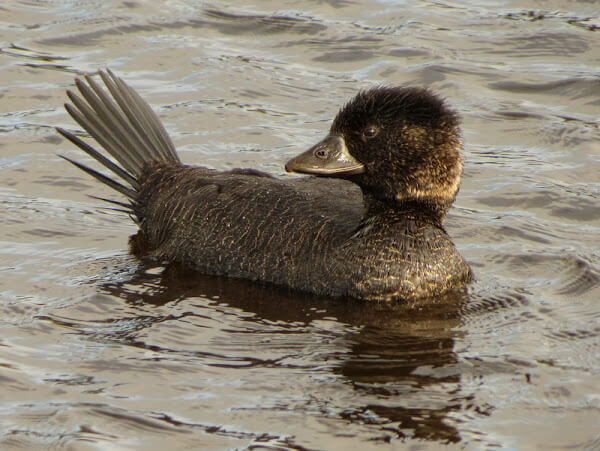
Moderately large, stiff-tailed duck with dark grey-brown, slightly pin-striped plumage. Males have a distinctive large, leathery lobe under the bill during breeding season. Both sexes have fanned tails, webbed feet positioned far back on the body, and float low in water. Ducklings are covered in dark brown down. Males are easily identified in breeding season, while females and non-breeding males look similar.
Voice
Males produce a repetitive sound sequence in breeding season: a splash with the feet on water, two soft “cuc cuc” calls, followed by a loud whistle and deep grunt. The species can also mimic sounds, as famously demonstrated by a musk duck named Ripper.
Diet
Feeds on aquatic animals and plants: water beetles, yabbies, freshwater snails, shellfish, small fish, and some aquatic vegetation.
Distribution
Native to southern Australia. Eastern subspecies (B. l. menziesi) occurs from South Australia through New South Wales, Victoria, and Tasmania. Western subspecies (B. l. lobata) is found in southwestern Western Australia.
Habitat
Prefers deep, still lakes and wetlands with open water and reed beds. Rarely leaves water; awkward on land and slow to take off in flight.
Breeding
Breeding season typically occurs between July and January. Males display with large bill lobe and musky scent, possibly using a lek mating system. Females build simple nests of reeds in secluded areas, often with a canopy of overhead reeds. Clutch size is usually 3–4 eggs, though up to 10 have been counted (likely from dump nesting). Ducklings are precocial, able to swim and dive within a few days, and stay close to the mother for several months.
Wintering
Mostly sedentary, but movements may occur within regions in response to water levels. Adults are generally solitary outside breeding season, while juveniles may form flocks.
Conservation
The species is not in danger. Habitat changes like wetland drainage and increased salinity have some impact, and hunting occurs, but musk ducks are generally stable and moderately common.