
Ferruginous Duck
Scientific Name
Aythya nyroca
Alternative Names
Ferruginous Pochard, Common White-eye, White-eyed Pochard
Measurements
| Feature | Male | Female |
|---|---|---|
| Length | About 38–42 cm (15–17 in) | About 38–42 cm (15–17 in) |
| Weight | Around 600–800 g (1.3–1.8 lb) | Around 600–800 g (1.3–1.8 lb) |
| Wingspan | 60–67 cm (24–26 in) | 60–67 cm (24–26 in) |
Status
A medium-sized diving duck found across Europe, Asia, and North Africa. Though once widespread, it has become scarce in parts of its western range. Listed as Near Threatened and protected under the Agreement on the Conservation of African-Eurasian Migratory Waterbirds (AEWA).
Identification
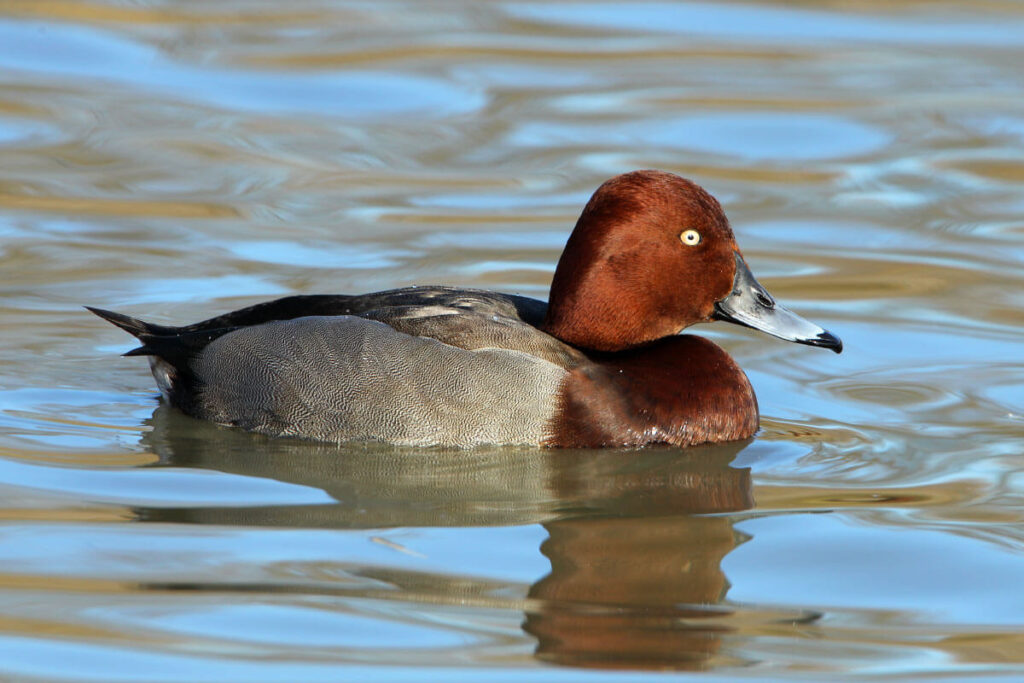
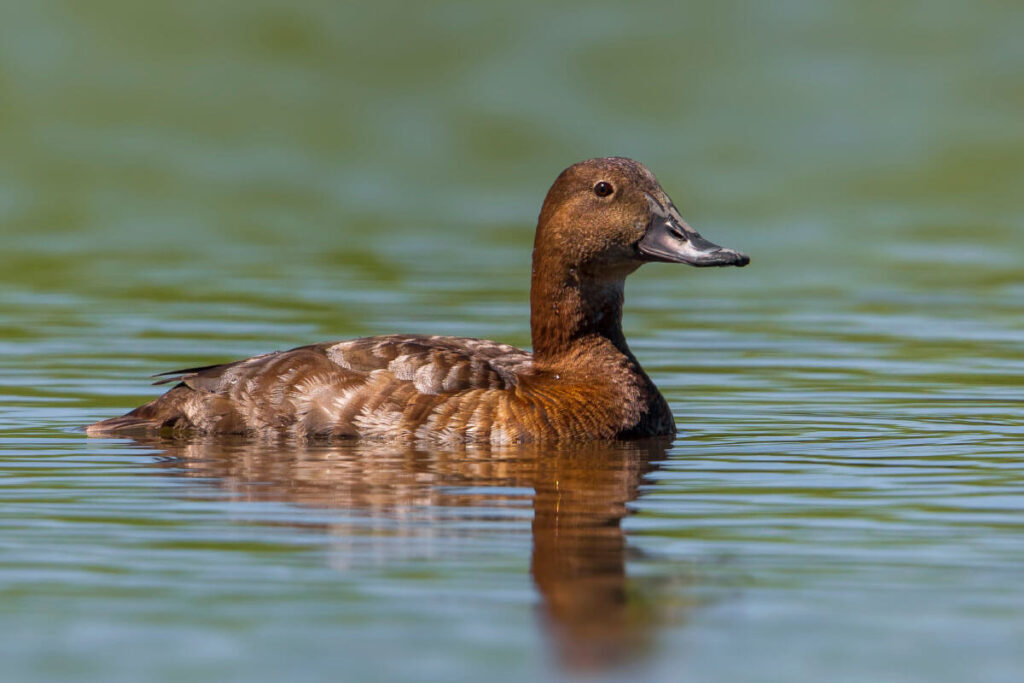
The breeding male has rich chestnut-brown plumage on the head, breast, and flanks, with a clean white belly and undertail. It also has a bright yellow eye. The female is duller brown with a darker eye. In flight, both sexes show white on the belly and underwings.
Voice
Generally quiet, though males may give soft whistling notes during courtship.
Diet
Feeds mainly by diving and dabbling. Eats aquatic plants, seeds, mollusks, insects, and small fish. Often forages at night and sometimes upends like dabbling ducks.
Distribution
Breeds from the Iberian Peninsula and North Africa through central and eastern Europe to western Mongolia. Winters around the Mediterranean, the Black Sea, sub-Saharan Africa (via the Nile Valley), and parts of South and Southeast Asia.
Habitat
Prefers shallow freshwater lakes, marshes, and ponds with dense vegetation along the edges. Also uses brackish lagoons and coastal wetlands during migration and winter.
Breeding
Nesting begins in late April or early May. Nests are built close to or floating on water among reeds or thick plants. The female lays several eggs and incubates them for 25–27 days. Ducklings take about 55–60 days to fledge.
Wintering
During the winter, the ferruginous duck gathers in flocks, sometimes mixed with other diving ducks like tufted ducks and common pochards. It prefers calm waters and sheltered wetlands.
Conservation
Faces threats from habitat loss, pollution, wetland drainage, and disturbance from human activity such as fishing and boating. Non-native species like grass carp have reduced food availability by damaging aquatic vegetation. Hunting—both legal and illegal—remains a problem along migration routes and in wintering areas. Conservation efforts include wetland protection under the Bern Convention and the creation of Emerald Sites in countries such as Armenia.