
Cinnamon Teal
Scientific name
Spatula cyanoptera
Alternative names
Also called Red Teal or Cinnamon Teal Duck.
Measurements
| Feature | Range |
|---|---|
| Length | 41 cm (16 in) |
| Weight | 400 g (14–15 oz) |
| Wingspan | 56 cm (22 in) |
Status
Listed as Least Concern on the IUCN Red List. It is managed as a migratory game bird in the United States and protected under the Migratory Bird Treaty Act. Population trends are stable, though local declines occur due to habitat loss and climate changes.
Identification
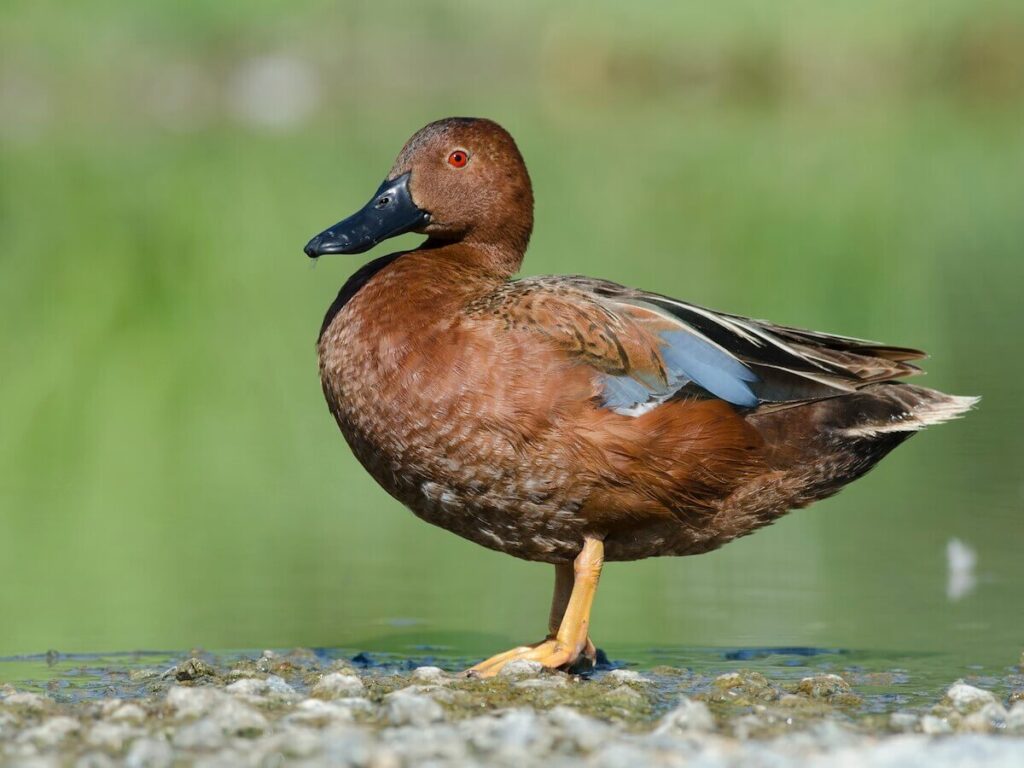
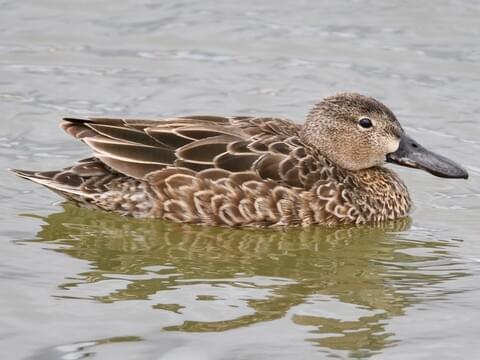
A small dabbling duck with a striking difference between sexes. Males have bright cinnamon-red plumage, red eyes, and a dark bill. Females are mottled brown with a pale head, brown eyes, and a grey bill, similar to female Blue-winged Teals but slightly richer in color. The bill is longer and more spoon-shaped. Juveniles look like females but have reddish eyes. Males go through two molts a year, with a duller “eclipse” plumage in winter.
Voice
Males give a soft, nasal whistle or “peep,” while females produce a low, raspy quack. They are generally quieter than most duck species, calling mainly during courtship or when alarmed.
Diet
Feeds mainly on aquatic plants, seeds, and algae. It also eats insects, molluscs, and small crustaceans. The Cinnamon Teal dabbles at the surface or filters food through its wide bill. During nesting, the diet includes more insects, while plant matter dominates before migration.
Behavior
Cinnamon Teals are dabbling ducks, taking food near the surface or by up-ending. They form pairs during breeding but gather in small flocks afterward. They are active during the day, resting on land or water in groups. Females often sleep close together while males remain alert for danger.
Distribution
Breeds in western North America—from southwestern Canada through the western United States to northern Mexico—and in parts of South America, especially along the Andes. Northern populations migrate south to winter in Central America, northern South America, and the Caribbean. Some remain year-round in California and Arizona.
Habitat
Prefers shallow freshwater wetlands, marshes, and ponds with plenty of vegetation. In South America, it also lives in high-elevation wetlands up to 4,600 meters. It often chooses sites with thick cover for nesting and open water for feeding.
Breeding
Nests near water in dense grasses or shrubs. Females lay 6–12 pale eggs in a simple nest lined with down. Incubation lasts about 23–25 days. Ducklings leave the nest soon after hatching and feed themselves, though the mother protects them. In North America, nesting peaks from mid-May to June.
Wintering
Migrates south after breeding, leaving northern areas by late summer. Most winter in Central and South America, where food-rich wetlands support large flocks. Some stay in mild western regions if conditions remain good.
Conservation
Populations are monitored under U.S. and Canadian migratory bird programs. Wetland drainage, pollution, and climate-related droughts threaten their habitat. Conservation groups work to restore breeding wetlands and track migration routes. In Washington and nearby regions, community-based waterfowl groups help protect teal habitats.
