
Freckled Duck
Scientific Name
Stictonetta naevosa
Alternative Names
Monkey Duck, Oatmeal Duck
Measurements
| Feature | Adult Male | Adult Female |
|---|---|---|
| Length | 50–60 cm | 50–60 cm |
| Weight | 700–1200 g | 600–1200 g |
Status / Origin
Endemic to Australia. Mostly found in inland eastern regions but disperses to coastal and subcoastal wetlands during drought. Population fluctuates and is affected by habitat loss, drought, and hunting.
Identification
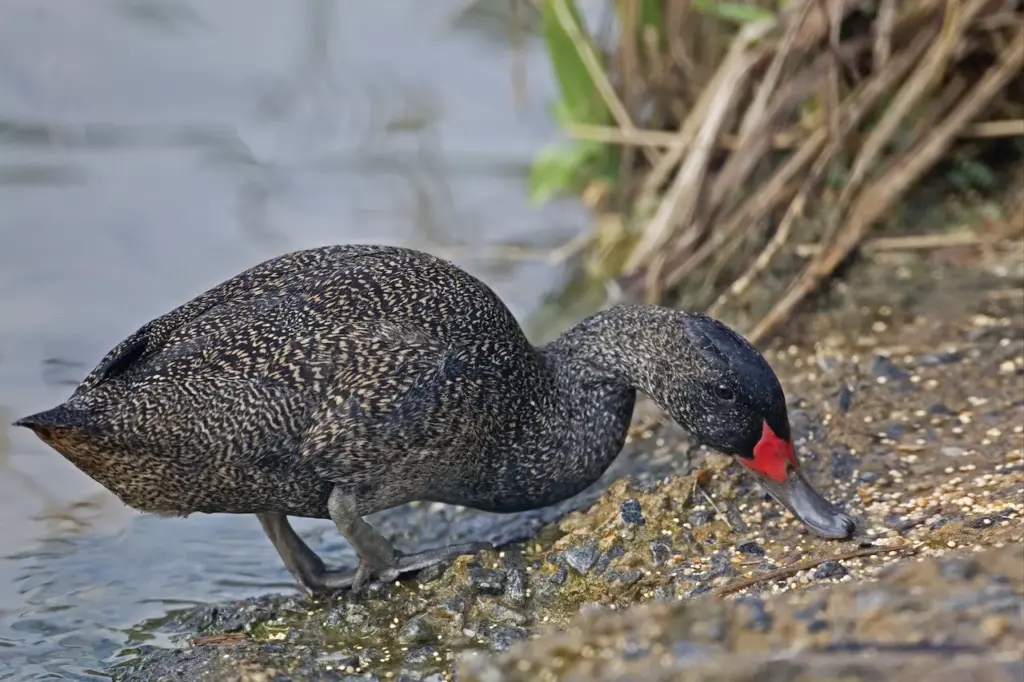
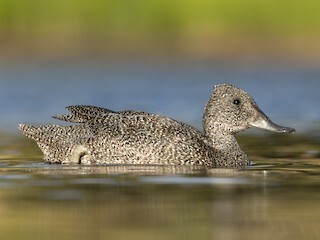
A medium-sized duck with dark grey to black plumage covered in fine white speckles, giving a ‘freckled’ appearance. Bill, legs and feet are slate grey. Males develop a reddish base to the bill (culmen) during breeding season; the deeper the red, the higher the dominance or breeding condition. Juveniles are pale grey and lack speckling until their first full moult at around 32 weeks.
Voice
Generally quiet. Occasional soft grunts or wheezy calls, but not highly vocal.
Diet
Specialist filter-feeder. Consumes aquatic vegetation, algae, seeds, insects, larvae, and small crustaceans, usually by straining food from shallow water or mud.
Distribution
Found mainly in New South Wales, Victoria, Queensland, South Australia and Western Australia. Concentrations often occur in the Paroo-Warrego, Eyre-Georgine-Mulligan, Cooper’s Creek and Bulloo River catchments, and Lake Gregory.
Habitat
Breeds in large freshwater wetlands, flooded swamps, and vegetated marshes. After breeding, moves to more permanent bodies of water like lakes, reservoirs and coastal wetlands with open water and little vegetation.
Breeding
Polygamous but forms short-term seasonal pairs. Breeding usually from September to December, but may occur after heavy rainfall at any time. Nests are built in dense vegetation near or over water. Clutch size is typically 7 eggs (range 4–14), with incubation by the female only for 26–28 days. Males leave before eggs are laid.
Ducklings are precocial and fledge at around 9 weeks. Females can breed annually up to and beyond 10 years of age.
Behaviour
Highly gregarious, often seen in flocks of 10–100 birds outside breeding. Displays minimal visible social interaction and is generally quiet within groups. Uses water for feeding, bathing, and preening; no evidence of dust-bathing.
Wintering
No true migration but travels long distances in response to rainfall and wetland availability. Moves to coastal or permanent wetlands in dry seasons.
Conservation / Threats
IUCN status: Least Concern. Estimated 7,300–17,000 mature individuals (2016). Threats include wetland drainage, drought, diversion of water systems, misidentification by hunters, and shooting. Conservation breeding programs exist in Australia and overseas, with mixed success.
