
New Zealand Scaup
Scientific name:
Aythya novaeseelandiae
Alternative names:
New Zealand Scaup, Black Teal, Pāpango (Māori)
Measurements:
| Feature | Male | Female |
|---|---|---|
| Length | ~40 cm (16 in) | ~40 cm (16 in) |
| Weight | ~695 g (24.5 oz) | ~610 g (22 oz) |
| Wingspan | ~70 cm (28 in) | ~70 cm (28 in) |
| Diving Depth | 3 m (9.8 ft) or more | 3 m (9.8 ft) or more |
| Dive Duration | Up to 60 seconds | Up to 60 seconds |
Status
Classified as Least Concern and fully protected since 1934. Once in decline due to hunting, habitat loss, and introduced predators, the population is now increasing—especially around Christchurch—thanks to predator control and wetland restoration.
Identification
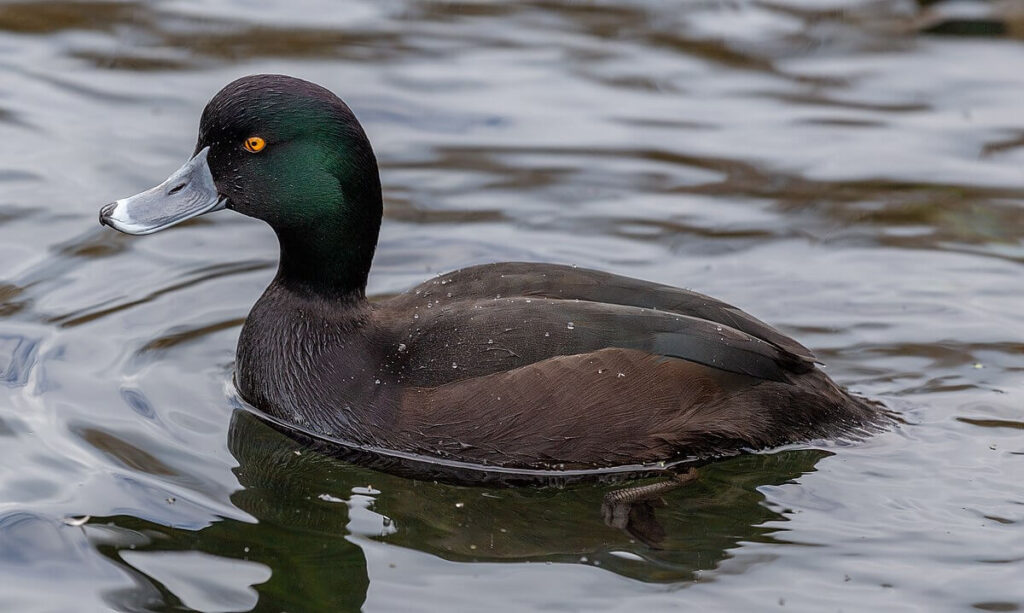
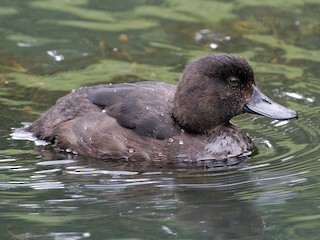
A small, round-bodied diving duck with dark plumage and black legs. Males are glossy black-brown with a greenish sheen on the head and striking yellow eyes. Females are chocolate-brown with brown eyes and a white patch at the base of the bill during breeding. Both sexes show a white wing bar in flight and have gray bills. Juveniles resemble females but lack the white bill patch.
Voice
Males produce a high-pitched whistle; females give a typical “quack.”
Diet
Feeds mainly by diving for aquatic plants, small fish, snails, mussels, and insects. Often forages alongside the Australian Coot, taking advantage of food disturbed by their movement.
Behavior
Highly aquatic and excellent divers—capable of staying submerged for up to a minute and traveling long distances underwater. Usually seen in flocks, especially in autumn and winter, sometimes numbering over 200 birds at traditional moulting and wintering sites like Lake Rotorua, Lake Taupō, and the Ashburton Lakes.
Distribution
Endemic to New Zealand, found across both North and South Islands. Populations are densest in Northland, Waikato, Rotorua, Taupō, Hawke’s Bay, the West Coast, North Canterbury, and the Southern Alps.
Habitat
Prefers deep freshwater lakes, ponds, and slow-moving rivers. Common in both natural and man-made environments, including hydroelectric lakes and oxidation ponds. Moves to open water when high-country lakes freeze in winter.
Breeding
Breeding begins in late October and continues through February. Nests are built near water in dense vegetation, lined with grass, sedge, and down. Clutches usually contain 6–8 creamy-white eggs, though communal nests can have 12 or more. Females incubate for ~30 days, and ducklings dive for food within a day of hatching. Broods are sometimes combined into large rafts of up to 50 birds.
Wintering
Non-migratory but gathers in large flocks at lowland lakes and wetlands during winter. Some movement occurs from frozen high-country lakes to open water areas.
Conservation
Populations declined sharply in the 19th century but rebounded following legal protection and predator control. Current estimates suggest 20,000 or more individuals, and the trend is upward. Continued success depends on maintaining predator-free habitats and clean freshwater ecosystems.

