
Mottled Duck
Scientific Name
Anas fulvigula
Alternative Names
Mottled Mallard
Measurements
| Sex | Length | Weight | Wingspan |
|---|---|---|---|
| Male | 50–57 cm (19.7–22.5 in) | 880–1,240 g (30.9–43.8 oz) | 83–87 cm (32.7–34.3 in) |
| Female | 47–53 cm (18.5–21.0 in) | 700–1,150 g (24.7–40.6 oz) | 80–83 cm (31.5–32.7 in) |
Status
Fairly common within its range. Populations are stable but closely monitored due to hybridization risks and habitat loss, especially in Florida.
Identification
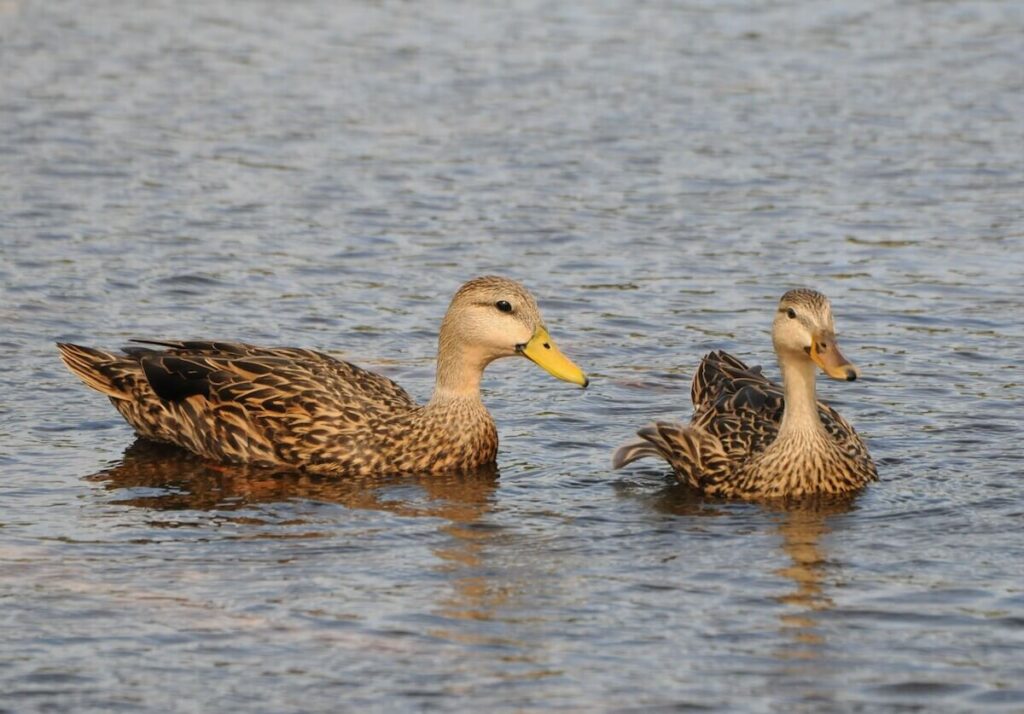
A medium-sized dabbling duck resembling a female mallard but darker overall. Both sexes have dark bodies, lighter heads and necks, orange legs, and dark eyes. The green-blue speculum lacks white borders—a key feature distinguishing it from the mallard. Males have bright yellow bills, while females have orange bills often marked with dark spots. The species looks similar to the American black duck but with a lighter tone and more blue in the wing patch.
Voice
The mottled duck’s voice and behavior closely resemble that of the mallard.
Diet
Feeds by dabbling in shallow water and grazing on land. Diet consists mostly of plant matter, with small amounts of mollusks and aquatic insects.
Distribution
Found along the Gulf of Mexico coast and in central and southern Florida. Also introduced to South Carolina and Georgia, where mixed populations exist.
Habitat
Prefers brackish and intermediate coastal marshes. Also breeds in human-modified habitats such as ponds, impoundments, agricultural lands, and pastures. Nests may be found in cordgrass marshes, spoil banks, levees, and small islands.
Breeding
Mostly non-migratory and breeds year-round within its range. Two subspecies exist:
- Gulf Coast Mottled Duck (A. f. maculosa) — from Alabama to northeastern Mexico, darker in color.
- Florida Mottled Duck (A. f. fulvigula) — lighter plumage, found in central and southern Florida.
Conservation
Main threats include habitat loss, excessive hunting, and hybridization with mallards. The Florida mottled duck population (50,000–70,000 individuals) faces particular concern due to wetland drainage and urban expansion. Conservation measures focus on habitat protection and genetic monitoring to maintain the species’ distinct identity.
