
Radjah Shelduck
Scientific Name
Radjah radjah
Alternative Names
Radjah shelduck, Raja shelduck, Black-backed shelduck, Burdekin duck
Measurement
| Measurement | Male | Female |
|---|---|---|
| Length | ~61 cm | ~61 cm |
| Weight | ~1 kg | ~1 kg |
Status and Origin
Native to northern Australia, New Guinea, and parts of the Moluccas in eastern Indonesia. It is protected in all Australian states and territories.
Identification
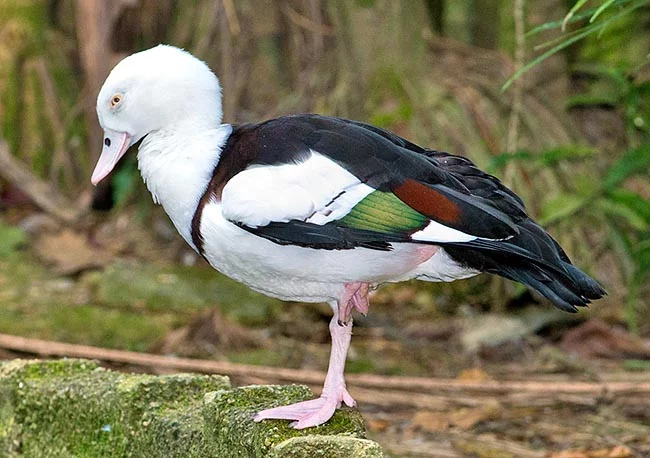
Mostly white plumage with dark wingtips and a dark chestnut-colored collar across the upper breast. In flight or when wings are spread, green bands appear on the upper wings. The bill and feet are pale pink. The rear body and tail are dark. Both sexes look similar. Eyes have distinct white irises.
Voice
Females produce a harsh rattling sound. Males emit a softer, breathy whistle that resembles a sore-throat tone.
Diet
Feeds on mollusks, insects, worms, algae, aquatic weeds, sedges, and sometimes small fish, crabs, larvae, and seeds. Forages by dabbling or grazing, mainly at night.
Distribution
Found in coastal and forested wetlands of northern Australia—from Queensland, across the Northern Territory including Kakadu National Park, to the Kimberley in Western Australia. Also inhabits New Guinea and some of the Moluccas islands.
Habitat
Prefers brackish mangroves, paperbark swamps, estuaries, shallow lagoons, lakes, river deltas, and inland billabongs during the wet season. Often remains in shallow waters less than 5 cm deep.
Wintering
During the dry season (May to October), they form flocks and move to smaller water bodies and ponds. Movements are local rather than long-distance migrations.
Breeding
Breeding begins during the wet season (November to April). Pairs form long-term bonds. Nests are built in tree hollows or dead branches near feeding areas, lined only with down feathers. Clutch size is 6–12 eggs. Eggs are cream-colored. Incubation lasts about 30 days, carried out by the female. Chicks fledge in about 50 days but remain with parents until the dry season.
Behaviour
Usually seen in bonded pairs or small groups. During the breeding season, males become aggressive and may attack mates or rivals. They are strong swimmers, flyers, and capable runners. They often feed at night and rest during the day.
Conservation
Populations are currently stable. Protected by law in Australia. Threats include habitat loss, wetland drainage, habitat fragmentation, and illegal hunting. Conservation efforts focus on habitat protection and legal enforcement.