
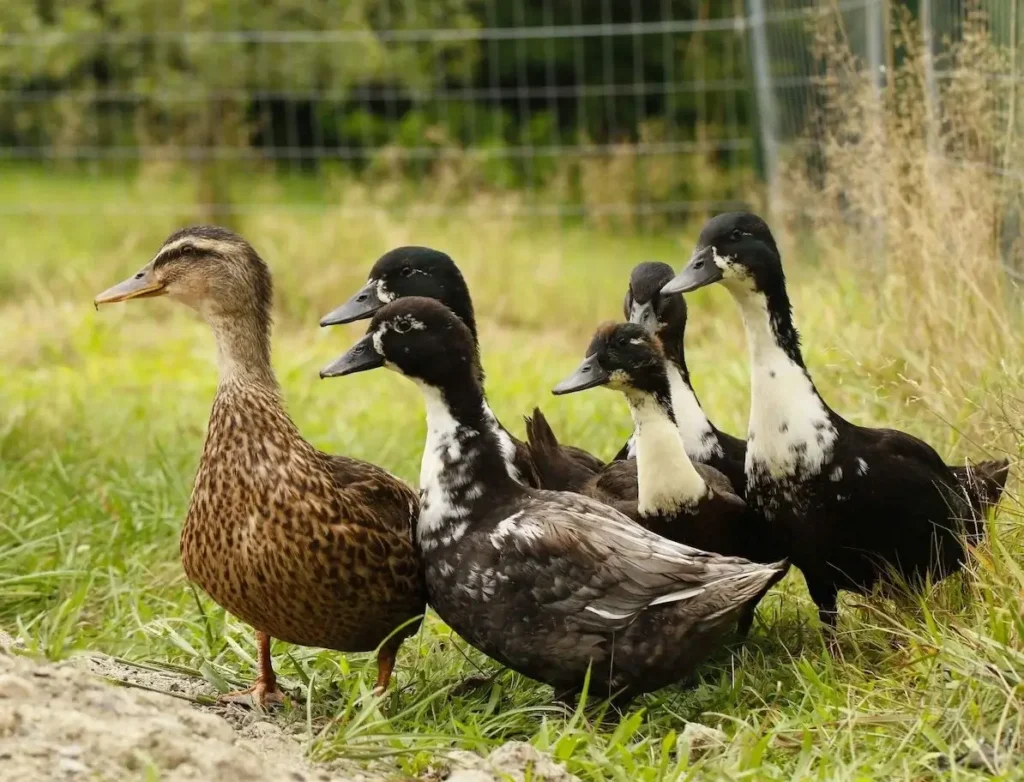
Silkie Duck

Scientific Name

Anas platyrhynchos domesticus


Alternative Names

Silkie Duck, Silky Duck, Bantam Silkie

Measurements

FeatureMale (Drake)Female (Duck)
Weight0.9–1.1 kg (32–38 oz)0.85–1 kg (30–36 oz)
Body TypeSmall, compact, bantamSmall, compact, bantam
Feather TypeSilky, fluffy, non-waterproofSilky, fluffy, non-waterproof

Status

A very rare bantam duck breed, not yet recognized by the American Poultry Association. They were first developed in the late 1980s in the United States by breeders like Darrel Sheraw and later refined by Dave and Millie Holderread.

Identification

Silkie Ducks are easy to spot thanks to their fluffy, fur-like feathers. Their plumage looks soft because their feathers lack barbicels—the tiny hooks that usually help feathers stay smooth and waterproof. They come in several colors like black, white, snowy, grey, chocolate, blue-bibbed, and wild-type.

Voice

These ducks have soft, distinct voices. They can be chatty and high-pitched, but not as loud as Call Ducks.

Diet

Excellent little foragers. They enjoy insects, slugs, snails, plants, and standard duck feed. They love wandering in gardens and orchards.

Distribution

Originally from the United States, they are now kept in small numbers by dedicated breeders in North America and a few other countries.

Habitat

They do well in backyards, small ponds, farms, or gardens. They need clean water, dry bedding, and safe housing because their feathers don’t repel water well.

Breeding

Hens are good mothers and often go broody. However, their eggs have thicker shells and membranes, which can make hatching tricky. The silky feather gene is recessive, so not all ducklings in a clutch will have fluffy feathers.

Wintering

They can handle cold weather but need dry shelters because their feathers don’t keep out water or cold as well as normal ducks.

Conservation

Very rare and only bred by a small number of enthusiasts. More breeders are needed to protect this unique duck from disappearing.

Similar Posts

  • Swedish Blue

    Scientific Name Anas platyrhynchos domesticus Alternative Names Swedish, Blue Swedish, Svensk blå anka Measurements: Feature Drake Duck Weight 3–4 kg (6.5–8 lb) 2.5–3.5 kg Egg Production 100–150 eggs per year 100–150 eggs per year Egg Weight 80–90 g 80–90 g Status Listed as “at risk/endangered” in Sweden (2023). Considered “watch” by the American Livestock Conservancy….

  • Crested Duck

    Scientific Name Anas platyrhynchos domesticus Alternative Names Crested Domestic Duck, Crested Mallard Measurements Feature Male Female Length About 50–60 cm (20–24 in) About 45–55 cm (18–22 in) Weight 2.5–3.2 kg (5.5–7 lb) 2–2.7 kg (4.4–6 lb) Wingspan 80–90 cm (31–35 in) 80–90 cm (31–35 in) Status A domestic breed believed to have originated from the…

  • Saxony Duck

    Scientific Name Anas platyrhynchos domesticus Measurements: Feature Male (Drake) Female (Duck) Weight 3.5 kg 3.0 kg Bantam Weight ~1.1–1.2 kg ~1.0 kg Egg Weight 80 g 80 g Status The Saxony is a German domestic duck developed in the 1930s by Albert Franz in Saxony. It was almost wiped out during World War II but…

  • Swedish Yellow Duck

    Scientific Name Anas platyrhynchos domesticus Alternative Names Svensk gul anka Measurements Feature Male Female Weight 3–3.5 kg 2.5–3 kg Length Medium-sized breed Medium-sized breed Lifespan Up to 28 years Up to 28 years Status The Swedish Yellow duck was once thought to be extinct in the 1970s but was rediscovered on a farm in Billinge,…

  • Ancona Duck

    Alternative Names Ancona Duck Measurements Feature Male Female Length 60–66 cm (24–26 in) 60–66 cm (24–26 in) Weight 2.7–2.9 kg (6–6.5 lb) 2.3–2.7 kg (5–6 lb) Wingspan Not well documented Not well documented Status The Ancona is a rare domestic duck breed. It is not recognized by major poultry associations and is considered at risk…

  • Rouen

    Scientific Name Anas platyrhynchos domesticus Alternative Names Rouen Foncé, Rouen Clair Measurements: Feature Production Variety Standard Variety Weight 6–8 lbs (2.7–3.6 kg) 9–12 lbs (4.1–5.4 kg) Maturity Age 6–8 months 6–8 months Status Domesticated; primarily bred for meat and exhibition rather than egg production. Average Life Span 8–12 years Breed History The Rouen breed originated…

Leave a Reply

Your email address will not be published. Required fields are marked *