
Saxony Duck

Scientific Name

Anas platyrhynchos domesticus

Measurements:

FeatureMale (Drake)Female (Duck)
Weight3.5 kg3.0 kg
Bantam Weight~1.1–1.2 kg~1.0 kg
Egg Weight80 g80 g

Status

The Saxony is a German domestic duck developed in the 1930s by Albert Franz in Saxony. It was almost wiped out during World War II but was revived from surviving birds and parent breeds. It was officially recognized in East Germany in 1957 and later worldwide. Today, it is considered “threatened” in North America and “at risk” in Australia. A bantam version also exists in Australia and is mostly used for shows.

Identification

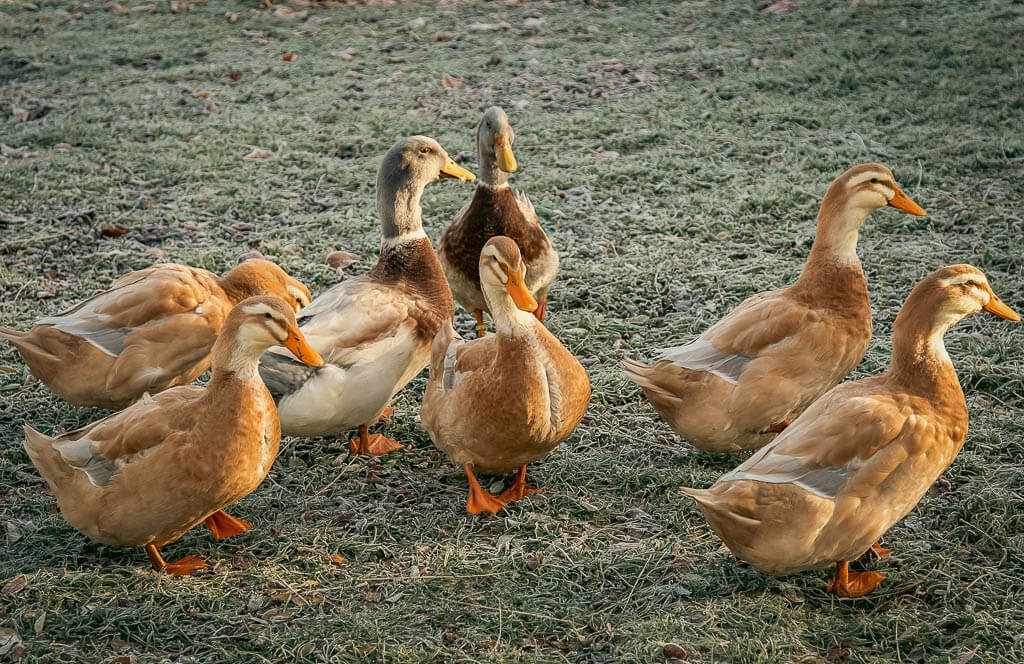
Saxony ducks are heavy, muscular birds with compact bodies held at a 25° angle. Drakes have a blue-grey head, white neck ring, rich chestnut breast, and cream underbody. Ducks are light buff with two white stripes on the face and a creamy underbody. Both have yellow–orange bills and orange legs.

Voice

Like most domestic ducks, females make a loud quacking sound, while drakes are much quieter with a soft rasping call.

Diet

They are omnivores and eat grasses, grains, insects, snails, and other small invertebrates. They also forage well when allowed to free-range.

Distribution

Originally from Germany. Now found in Europe, North America, and Australia. A bantam Saxony variety is mainly seen in Australia.

Habitat

They adapt well to farms, smallholdings, and grassy areas with access to clean water for swimming and foraging.

Breeding

Saxony ducks lay 80–100 white eggs each year. They are dual-purpose birds, raised for both meat and eggs. Bantam Saxonies share the same colour genetics but are smaller in size.

Wintering

They are hardy ducks and tolerate cold weather well, especially with shelter and access to unfrozen water.

Conservation

Their numbers remain low in several countries. They are listed as “threatened” by the American Livestock Conservancy and “at risk” in Australia. Conservation depends on dedicated breeders and small farms.

Similar Posts

  • Crested Duck

    Scientific Name Anas platyrhynchos domesticus Alternative Names Crested Domestic Duck, Crested Mallard Measurements Feature Male Female Length About 50–60 cm (20–24 in) About 45–55 cm (18–22 in) Weight 2.5–3.2 kg (5.5–7 lb) 2–2.7 kg (4.4–6 lb) Wingspan 80–90 cm (31–35 in) 80–90 cm (31–35 in) Status A domestic breed believed to have originated from the…

  • Welsh Harlequin

    Scientific Name Anas platyrhynchos domesticus Alternative Names Silver Harlequin, Golden Harlequin Measurements Feature Male Female Weight 4.5–5.5 lb (2–2.5 kg) 4.5–5.5 lb (2–2.5 kg) Length Light-weight, streamlined body Light-weight, streamlined body Lifespan 8–12 years 8–12 years Status The Welsh Harlequin was admitted to the American Poultry Association’s Standard of Perfection in 2001. In North America,…

  • Abacot Ranger

    Scientific Name Anas platyrhynchos domesticus Alternative Names Hooded Ranger, Streicherente (German for “Ranger Duck”) Measurements Feature Male Female Length 50–60 cm (20–24 in) 50–60 cm (20–24 in) Weight 3 kg (6.6 lb) 2.5 kg (5.5 lb) Wingspan About 80–90 cm (31–35 in) About 80–90 cm (31–35 in) Status Once extinct in the United Kingdom but…

  • Rouen

    Scientific Name Anas platyrhynchos domesticus Alternative Names Rouen Foncé, Rouen Clair Measurements: Feature Production Variety Standard Variety Weight 6–8 lbs (2.7–3.6 kg) 9–12 lbs (4.1–5.4 kg) Maturity Age 6–8 months 6–8 months Status Domesticated; primarily bred for meat and exhibition rather than egg production. Average Life Span 8–12 years Breed History The Rouen breed originated…

  • Silver Bantam

    Scientific Name Anas platyrhynchos domesticus Alternative Names Miniature Silver Appleyard (original name), Silver Bantam Measurements Feature Male (Drake) Female (Duck) Weight 0.9 kg (2.0 lb) 0.8 kg (1.8 lb) Ring Size 12 mm 12 mm Eggs per Year 60–160 60–160 History The Silver Bantam was developed in Suffolk, England, in the late 1940s by Reginald…

  • Swedish Blue

    Scientific Name Anas platyrhynchos domesticus Alternative Names Swedish, Blue Swedish, Svensk blå anka Measurements: Feature Drake Duck Weight 3–4 kg (6.5–8 lb) 2.5–3.5 kg Egg Production 100–150 eggs per year 100–150 eggs per year Egg Weight 80–90 g 80–90 g Status Listed as “at risk/endangered” in Sweden (2023). Considered “watch” by the American Livestock Conservancy….

Leave a Reply

Your email address will not be published. Required fields are marked *