
Rouen
Scientific Name
Anas platyrhynchos domesticus
Alternative Names
Rouen Foncé, Rouen Clair
Measurements:
| Feature | Production Variety | Standard Variety |
|---|---|---|
| Weight | 6–8 lbs (2.7–3.6 kg) | 9–12 lbs (4.1–5.4 kg) |
| Maturity Age | 6–8 months | 6–8 months |
Status
Domesticated; primarily bred for meat and exhibition rather than egg production.
Average Life Span
8–12 years
Breed History
The Rouen breed originated in France before the 19th century and was refined in England into the exhibition-type bird recognized today. The French version resembled a larger Mallard, but English breeders developed a heavier duck with a deep keel and refined markings. Rouens were first introduced to the United States in 1850 by D. W. Lincoln of Worcester, Massachusetts. By 1874, they were included in the American Poultry Association’s Standard of Perfection and became popular for both exhibition and meat.
Identification
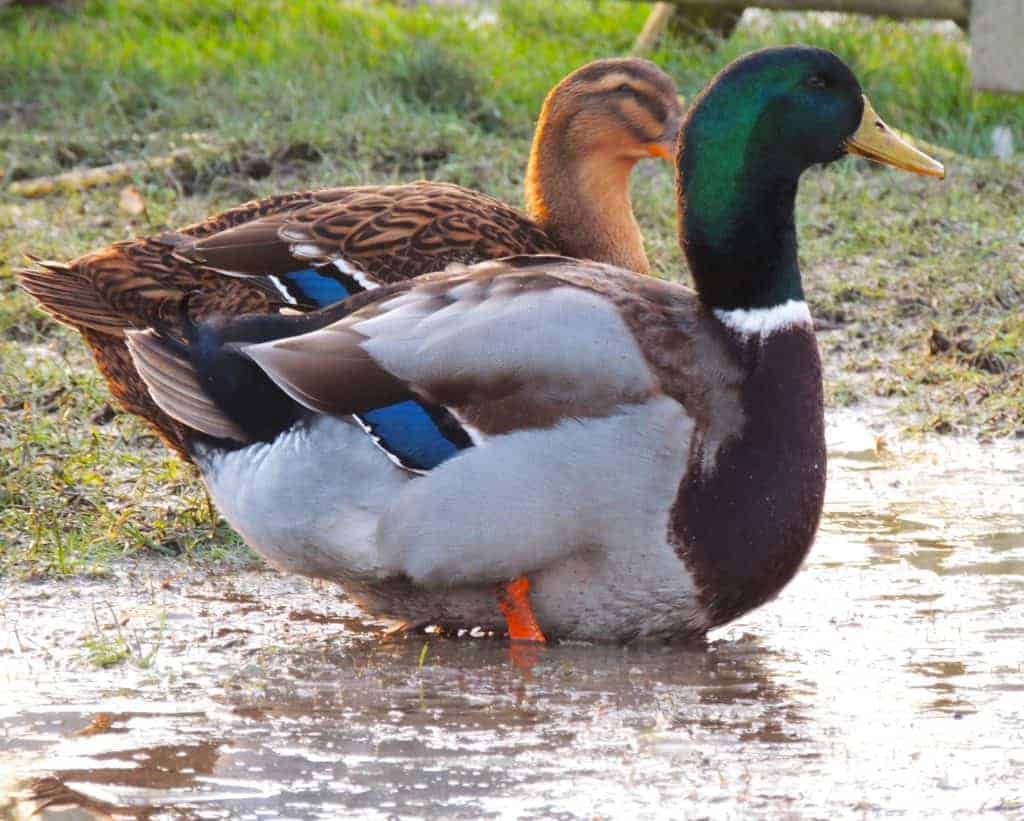
Rouens closely resemble Mallards in color but are much larger and heavier. Males have green heads, white collars, claret-colored breasts, and gray bodies. Females are mahogany brown with tan eye stripes and intricate penciling on their feathers. Both sexes have bright blue speculum feathers that are larger and more vivid than those of Mallards. Ducklings resemble Mallard ducklings but can be identified by a second facial stripe below the eye.
Purpose
Rouens are valued for their flavorful, fine-textured meat and are often considered superior to other meat breeds like the Pekin and Aylesbury. They are also used for exhibition purposes because of their size, color, and penciling detail, though they are poor layers and not used primarily for egg production.
Breed Eggs
Rouens lay between 35 and 125 eggs per year, slower and fewer than other domestic breeds. Eggs are typically white but may also be blue-green with thicker shells, averaging around 3.5 ounces each.
Temperament & Behavior
Rouens are calm, docile, and somewhat lethargic. Their large size makes them poor sitters and prone to crushing eggs if they attempt to brood. They grow more slowly than most other domestic ducks, maturing around 6 to 8 months. Despite their slower growth, they fatten easily and are prized for their delicate, high-quality flesh.
Genetic Profile
The Rouen is a selectively bred domestic variety derived from the Mallard (Anas platyrhynchos). Two main strains exist: the production-bred type, which is lighter and more upright, and the standard-bred exhibition type, which is heavier, squarer, and more horizontal in posture. Both exhibit strong Mallard coloration with enhanced size and plumage refinement achieved through generations of selective breeding.