Sunda Teal
Scientific Name
Anas gibberifrons
Alternative Names
Bebek cokelat, Itik benjut.
Measurements
| Feature | Measurement |
|---|---|
| Length | 40–50 cm |
| Wingspan | 70–85 cm |
| Weight | 600–800 g |
Status
The global population is estimated at 10,000–100,000 individuals. It is locally common in parts of its range such as Timor and eastern Indonesia, though uncommon or rare in Borneo and Sumatra. Habitat loss and hunting are suspected pressures, but the species shows adaptability to modified wetlands. It is not known to undergo extreme fluctuations or significant declines at a global level.
Identification
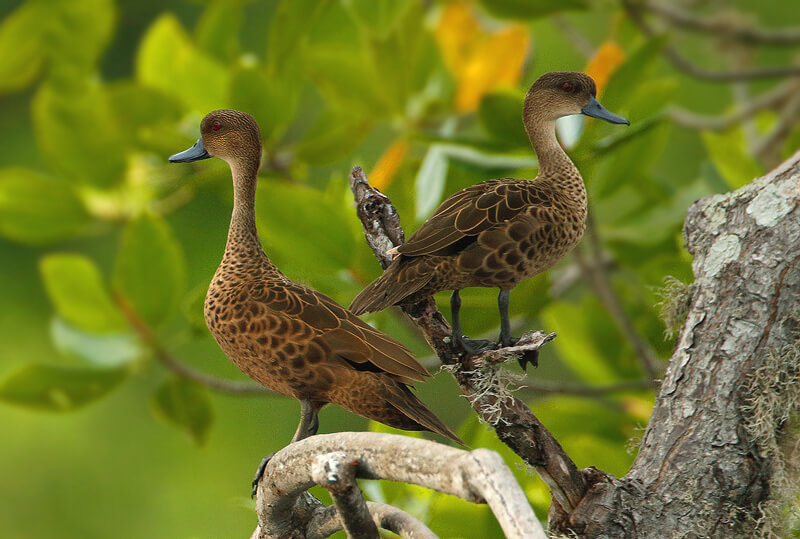
This species is a mottled brown duck with distinct white and green wing flashes. Both sexes look alike, unlike the related chestnut teal. It has a pale face, lighter neck, and a characteristic bulging forehead, making it distinguishable from the female chestnut teal. The Andaman form may show variable white markings on the forehead and around the eyes, while juveniles are duller and paler, especially on the head.
Voice
This is a vocal species, especially active at night. Males produce a soft peeping sound, while females give a louder quacking call.
Diet
The Sunda teal feeds mainly in shallow wetland habitats and its presence appears to correlate with the availability of gastropods and small crustaceans. It likely supplements its diet with aquatic plants and small invertebrates.
Distribution
Found across Indonesia and Timor-Leste, including Java, Bali, Timor, Sulawesi, parts of Borneo, and scattered areas of Sumatra. It occurs from sea level up to elevations of 3,200 metres.
Habitat
A highly adaptable species inhabiting freshwater, brackish, and saline wetlands. It is seen in lakes, marshes, rivers, mangroves, mudflats, rice fields, aquaculture ponds, and even coastal reefs or marine areas. It also occupies human-modified habitats such as fishponds and flooded agricultural land.
Breeding
The Sunda teal nests near freshwater lakes and marshes, usually on the ground among vegetation. It may also nest in tree holes or abandoned burrows such as those made by rabbits. Breeding has been observed in colonies of over 100 individuals in some regions like Sabah.
Wintering
The Sunda teal is a resident species and does not migrate.
Conservation
Though adaptable, it faces continuing pressures from habitat conversion, particularly the large-scale loss of mangroves to fishponds in Java and Bali. Hunting is widespread throughout Indonesia and likely contributes to local declines, especially in areas with smaller populations such as coastal Sumatra. Despite these threats, the species continues to persist in many human-modified environments, suggesting partial resilience, but better data is needed to assess long-term trends.