
Andean Teal
Scientific Name
Anas andium
Alternative Names
Andean speckled teal, Mérida teal, South American teal, South American green-winged teal.
Measurements
| Feature | Measurement |
|---|---|
| Length | 35–45 cm (14–18 in) |
| Wingspan | Approximately 60–70 cm |
| Weight | Not well documented |
Status
The Andean Teal is currently classified as Least Concern by the IUCN, as its population is stable and it occupies a wide range across the Andean highlands.
Identification
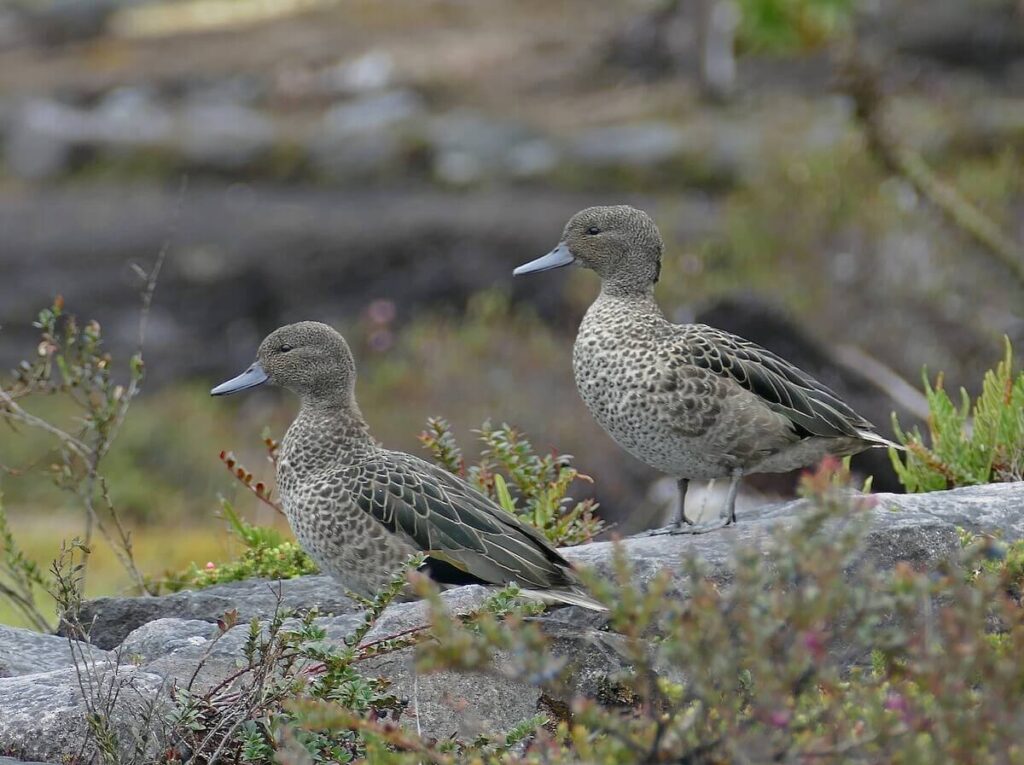
The Andean Teal is a small dabbling duck with brown plumage on the back and greyish underparts. Its head is dark brown, and the bill is dark grey, unlike the yellow bill of the yellow-billed teal. A green speculum with a buff leading edge and a white trailing edge appears on the wings and is most visible in flight. Males and females look similar, though females may appear slightly duller.
Voice
Its voice is not extensively documented, but it is believed to resemble other teals. Females give a soft quack, while males produce light whistles or soft peeping sounds.
Diet
The Andean Teal feeds by dabbling, upending in shallow water, grazing on land, and occasionally diving. During the breeding season, its diet includes aquatic invertebrates such as insects, larvae, crustaceans, mollusks, and worms. In winter, it shifts to seeds of aquatic plants, grasses, sedges, and sometimes rotting vegetation such as kelp.
Distribution
This species is found in the Andes of Colombia, Venezuela, and Ecuador. It is mostly resident in high-altitude wetlands but may move to lower valleys and occasionally coastal regions during colder months.
Habitat
Its preferred habitat includes freshwater lakes, ponds, marshes, rivers, and wooded swamps, especially in the high-altitude páramo ecosystems. It thrives in still or slow-moving water surrounded by dense vegetation.
Breeding
Breeding in Colombia generally begins in February or March. Nests are built close to water in thick vegetation, sometimes in forks of trees, riverbank holes, old parakeet nests, or even roofs. The clutch usually consists of 1 to 5 eggs, occasionally up to 8. Incubation lasts about 22 to 26 days, and both parents care for the ducklings. Young birds fledge at around 6 to 7 weeks of age.
Wintering
This species does not undertake long migrations. Instead, it makes short movements to slightly lower elevations or milder wetland areas during winter.
Conservation
The Andean Teal is not currently threatened, and its remote high-altitude habitats offer some natural protection. However, it could be affected locally by wetland drainage, pollution, or human disturbance, so continued monitoring is important.