
Long-Tailed Duck
Scientific Name
Clangula hyemalis
Alternative Names
Oldsquaw, Coween, Old Wife, South-Southerly
Measurements
| Feature | Measurement |
|---|---|
| Length | 44–60 cm (17–23.5 in) |
| Wingspan | 71 cm (28 in) |
| Weight | 740 g (1.6 lb) |
| Tail | 16.5–23.7 cm (6.5–9.3 in) |
Status
The Long-Tailed Duck is listed as Vulnerable on the IUCN Red List due to declining populations, particularly in the Baltic Sea. Key threats include entanglement in fishing nets, oil spills, and the loss of feeding areas.
Identification
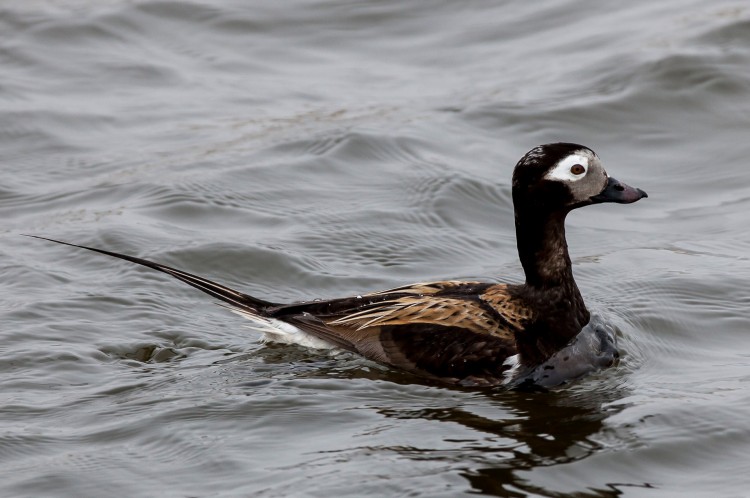
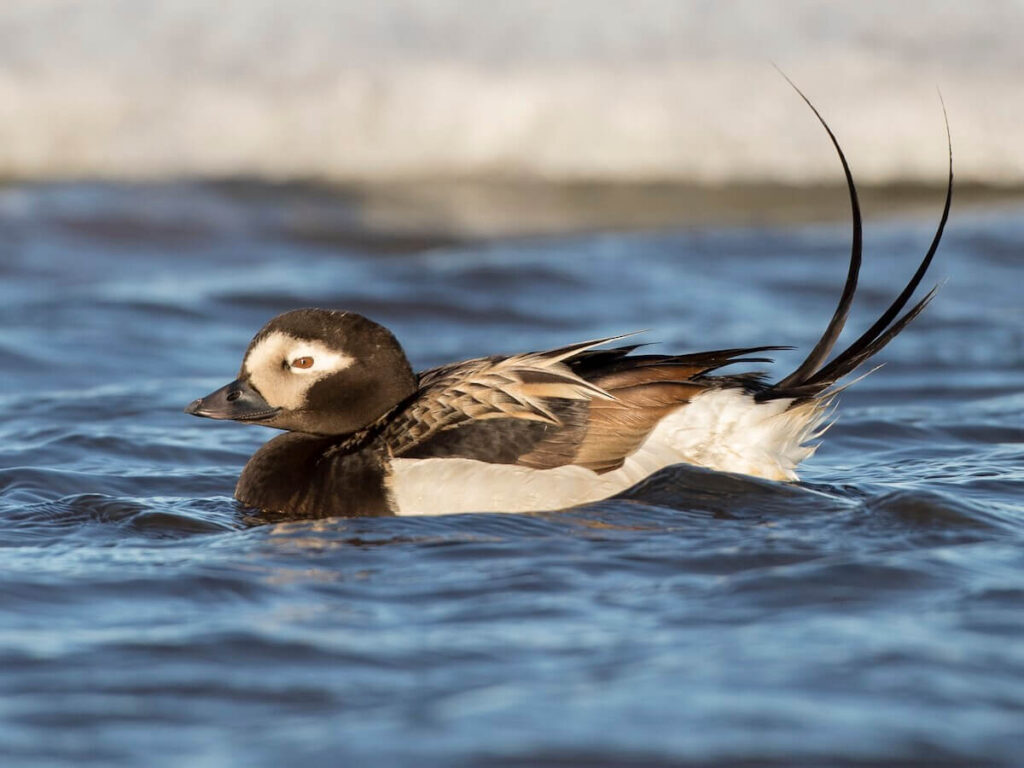
A beautiful sea duck best known for the male’s long, elegant tail and constantly changing plumage. In winter, males are mostly white with a dark cheek patch and chest, while in summer they become darker overall with a white cheek. Females are brown with a short tail, their head turning lighter in winter. Both sexes are compact, small-billed, and strong divers, perfectly suited to cold northern waters.
Voice
The male’s call is a soft, musical yodel — ow, ow, owal-ow — that carries over Arctic lakes and coastal seas.
Diet
Feeds mainly on small marine animals such as mollusks, crustaceans, and small fish. Long-Tailed Ducks dive using their wings and can reach depths of up to 60 meters (200 feet), making them some of the deepest-diving ducks in the world.
Distribution
Breeds across Arctic tundra regions in North America, Europe, and Asia. During winter, it migrates south to northern coastal waters, including the North Atlantic, North Pacific, and Great Lakes. Millions winter in the Baltic Sea, which remains its most important wintering area.
Habitat
In summer, it prefers tundra pools, shallow lakes, and coastal wetlands. In winter, it gathers on open seas, bays, and large freshwater lakes, often in freezing temperatures.
Breeding
They usually build their nests on the ground close to water, hidden among grasses or moss. The female lines the nest with soft down and lays 6–9 eggs, incubating them alone for about 24–25 days. The male leaves before hatching. Ducklings are able to swim and feed themselves within a day of hatching.
Wintering
Large flocks winter on northern seas and inland lakes, especially in the Baltic Sea and Great Lakes region. These birds remain active even in icy waters, diving for food in flocks that can number in the thousands.
Conservation
Conservation efforts focus on reducing bycatch in fishing nets, protecting wintering habitats, and monitoring population trends. Despite recent declines, the species remains widespread across the Arctic and subarctic regions.