
Mallard
Scientific name
Anas platyrhynchos
Alternative names
Commonly called the Mallard or Wild Duck
Measurements
| Feature | Range |
|---|---|
| Length | 50–65 cm (20–26 in) |
| Wingspan | 81–98 cm (32–39 in) |
| Weight | 0.7–1.6 kg (1.5–3.5 lb); males slightly heavier than females |
| Bill | 4.4–6.1 cm (1.7–2.4 in) |
Status
The Mallard is considered Least Concern by the IUCN due to its very large range and growing population. In some regions, it is seen as invasive because it can interbreed with local wild ducks, impacting their genetic diversity.
Identification
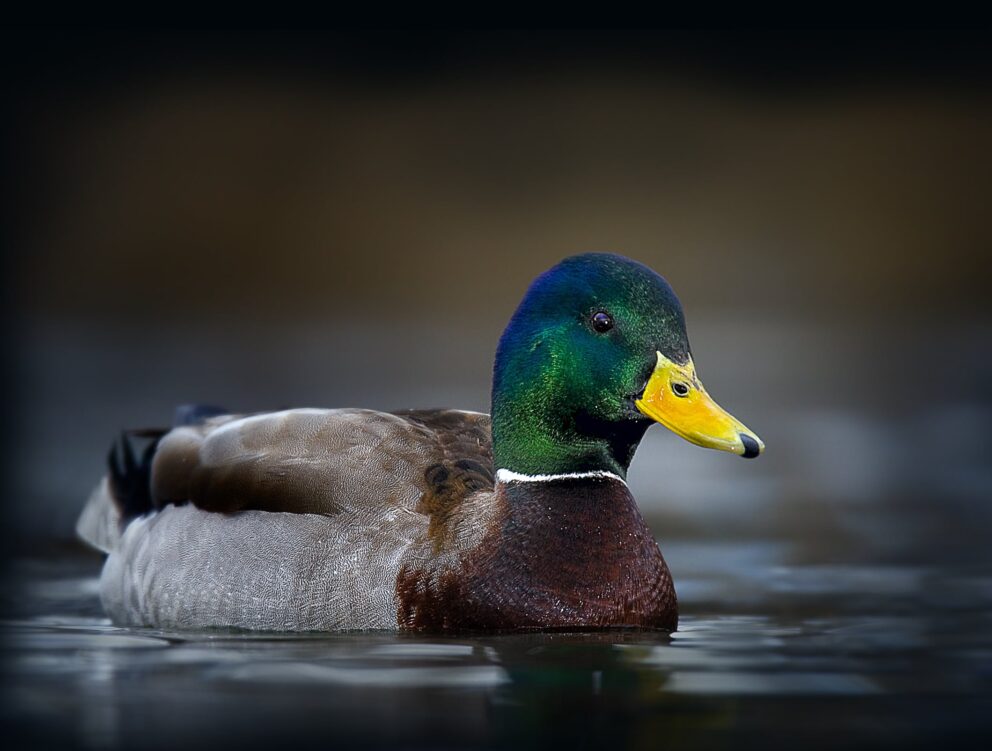
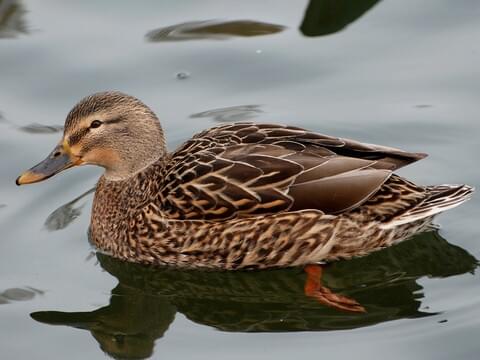
A medium-sized dabbling duck with a broad, flat bill. Males have glossy green heads, white neck rings, chestnut-brown breasts, grey bodies, and black tails, with iridescent blue-purple speculum feathers bordered in white. Females are mottled brown with darker crown and eye-stripes, buff cheeks, and a blue-purple speculum on the wings. Ducklings are yellow and black, becoming more drab as they age. Both sexes show seasonal changes in plumage.
Voice
Females produce the classic loud quack, often in a series of 2–10 notes, while males make quieter, deeper quacks. During nesting or when ducklings are present, females emit softer maternal calls to guide their young.
Diet
Omnivorous and flexible, feeding on aquatic plants, seeds, insects, crustaceans, small fish, and even amphibians. Mallards dabble at the water surface, graze on land, and occasionally hunt small vertebrates. Diet composition varies with season, breeding stage, and food availability.
Behavior
Highly social, forming large flocks outside the breeding season. Dabbling, grazing, and opportunistic hunting are common feeding behaviors. Mallards are capable fliers and strong swimmers. They may show aggressive behavior during mating and defend resources.
Distribution
Widely distributed across North America, Europe, Asia, and introduced populations exist in Australia, New Zealand, and parts of South America. Northern populations are migratory, moving south for winter.
Habitat
Found in freshwater and brackish wetlands including lakes, rivers, ponds, estuaries, and urban parks. Prefers shallow water with aquatic vegetation but adapts well to urban and human-modified environments.
Breeding
Pairs form in autumn or early winter. Females build nests on the ground or in sheltered locations, laying 8–13 creamy white to greenish-buff eggs on alternate days. Incubation lasts 27–28 days, and ducklings fledge in 50–60 days. Ducklings are precocial and swim immediately after hatching.
Wintering
Northern populations migrate to milder climates during winter, while temperate populations may remain year-round in local wetlands. Mallards gather in large flocks at favored wintering sites.
Conservation
The Mallard is abundant and adaptable, benefiting from human-altered landscapes. However, interbreeding with domestic or introduced ducks can threaten local wild populations. Conservation focuses on monitoring hybridization and protecting native duck species where genetic pollution is a concern.