
Maccoa Duck
Scientific Name
Oxyura maccoa
Alternative Names
None widely recognized
Measurements
| Feature | Male | Female |
|---|---|---|
| Length | 48–51 cm (19–20 in) | Slightly smaller |
| Weight | Around 650–750 g (1.4–1.6 lb) | Slightly lighter |
| Wingspan | About 65–70 cm (26–28 in) | — |
Status
Listed as Near Threatened due to habitat loss, pollution, and bycatch, though some populations remain stable in protected wetland areas.
Identification
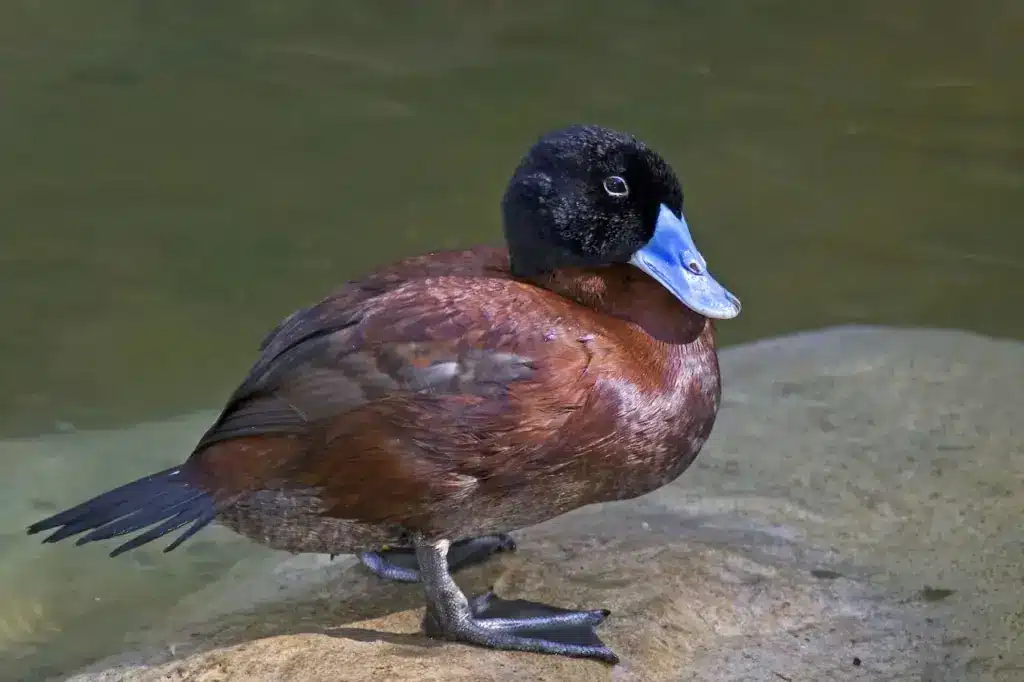
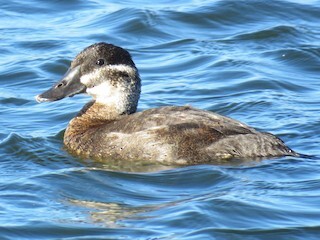
A stiff-tailed diving duck with a distinctive cobalt blue bill in breeding males. Males have a black head and throat, chestnut body, and dark tail and feet. Females are duller, showing a greyish bill with a pale tip, light brown face, and dark crown and cheek stripe. Juveniles resemble females but with slimmer, notched tail feathers.
Voice
Males produce short whistles or a trilling “prrrr” sound during courtship. Both sexes grunt softly when alarmed.
Diet
Omnivorous, feeding on aquatic plants, seeds, and invertebrates such as insect larvae, worms, and crustaceans. Dives last around 15–22 seconds as they sift through bottom debris for food.
Distribution
Found across eastern and southern Africa, with strongholds in South Africa, Namibia, Kenya, and Tanzania. Populations are scattered, with the largest numbers in southern Africa.
Habitat
Prefers fresh to brackish inland waters, including lakes, dams, sewage ponds, and flooded pans. Breeding habitats require open freshwater alongside emergent vegetation like reeds (Typha species).
Breeding
Breeding occurs between January and May. Males are polygynous and defend territories but do not help with nesting. Females build nests from reeds or use those of coots and grebes. Clutches usually contain 5–6 eggs (up to 12 in parasitic cases). Incubation lasts 25–27 days.
Wintering
Sedentary, though individuals may shift locally in search of new wetlands.
Conservation
Threatened by pollution, wetland loss, and bycatch in fishing nets. Some populations have adapted to human-made water bodies like dams, which provide refuge. Climate change poses a long-term risk through the drying of southern African wetlands.
