
Andean Duck

Scientific Name

Oxyura ferruginea

Alternative Names

Andean Ruddy Duck

Measurements

FeatureMaleFemale
Length35–43 cm (14–17 in)Slightly smaller
Weight500–800 g (1.1–1.8 lb)Slightly lighter
WingspanAbout 60–70 cm (24–28 in)

Status

Listed as Least Concern on the IUCN Red List, with stable populations throughout its Andean range.

Identification

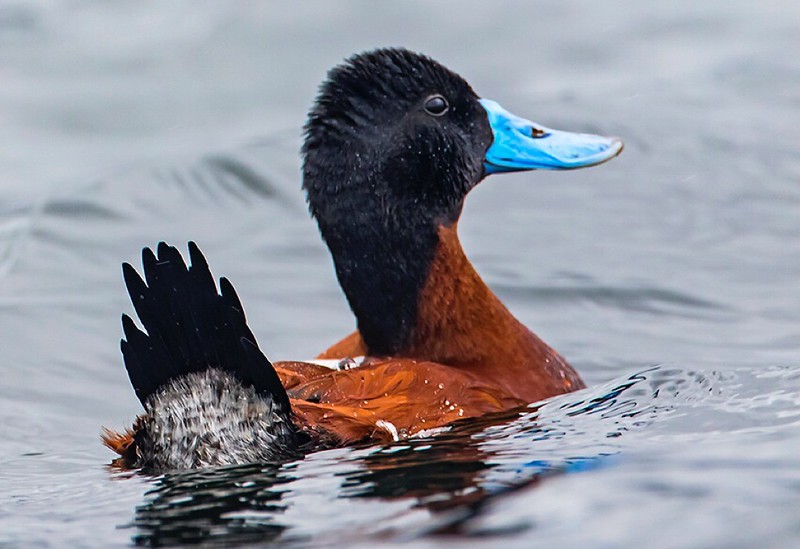
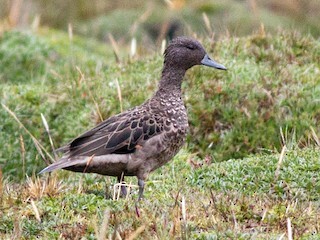
A small, compact stiff-tailed duck with a stout blue bill in breeding males and a long, cocked tail. Breeding males have chestnut bodies, black heads, and bright blue bills. Females and non-breeding males are brownish-gray with a blurred cheek stripe. Distinguished from the ruddy duck by its all-black face and slightly larger size.

Voice

Generally quiet; may emit soft grunts or low whistles during courtship.

Diet

Feeds by diving for aquatic vegetation, seeds, insects, and small crustaceans. Uses its broad bill to sift food from the water and mud.

Distribution

Native to the Andes Mountains of Colombia, Ecuador, Peru, Bolivia, and Chile, sometimes extending into northern Argentina.

Habitat

Prefers marshy lakes, ponds, and high-altitude wetlands, often surrounded by dense emergent vegetation.

Breeding

Breeds in dense marsh vegetation near water. The female builds the nest from grasses and reeds, concealing it well among tall plants. A typical clutch contains 5–15 eggs. Both parents protect the brood after hatching.

Wintering

Resident species with minimal migration, though it may move locally in search of suitable wetlands.

Conservation

Currently stable, but habitat degradation and wetland drainage pose potential threats in parts of its range. Protection of Andean wetlands remains vital for its continued survival.

Similar Posts

  • Crested Shelduck

    Scientific Name Tadorna cristata Alternative Names Korean Crested Shelduck, Korean Sheldrake, Korean Mandarin Measurements Feature Male Female Length 63–71 cm (25–28 in) 63–71 cm (25–28 in) Weight Not well recorded, likely similar to other shelducks around 1.5–2 kg Slightly lighter than male Wingspan Not precisely known, estimated similar to other Tadorna species around 110–130 cm…

  • Wandering Whistling Duck

    Scientific Name Dendrocygna arcuata Alternative Names Whistling Tree-Duck, Water Whistling Duck, Red Whistler Measurements Feature Male & Female Length 54–60 cm (21–24 in) Weight Around 750 g (1.65 lb) Status / Origin This species is native to tropical and subtropical regions of Australia, Indonesia, the Philippines, Papua New Guinea, Timor-Leste, Borneo, and nearby Pacific Islands….

  • Falcated Duck

    Scientific Name Mareca falcata Alternative Names Falcated Teal Measurements: Feature Male Female Length 46–53 cm (18–21 in) 46–53 cm (18–21 in) Weight 422–770 g (15–27 oz) Slightly lighter Wingspan 79–91 cm (31–36 in) 79–91 cm (31–36 in) Status The Falcated Duck is listed as Near Threatened on the IUCN Red List. While its global population…

  • Shelduck Species: Meet 7 Remarkable Ducks of the Tadorna Genus

    There are about 7 widely recognized shelduck species, most of which belong to the genus Tadorna within the duck family Anatidae. These large, colorful waterfowl are known for their upright posture, striking plumage patterns, and their unique position between ducks and geese in both appearance and behavior. Below is a list of the 7 most…

  • Steller’s Eider

    Scientific Name Polysticta stelleri Measurements Feature Measurement Length 43–46 cm (17–18 in) Weight 800–860 g (1.8–1.9 lb) Wingspan 69 cm (27 in) Wing 21–22.5 cm (8.3–8.9 in) Culmen 3.7–4.2 cm (1.5–1.7 in) Tarsus 3.6–4.0 cm (1.4–1.6 in) Status Steller’s Eider is listed as Vulnerable by the IUCN. The Alaska-breeding population is Threatened under U.S. law…

  • Sunda Teal

    Scientific Name Anas gibberifrons Alternative Names Bebek cokelat, Itik benjut. Measurements Feature Measurement Length 40–50 cm Wingspan 70–85 cm Weight 600–800 g Status The global population is estimated at 10,000–100,000 individuals. It is locally common in parts of its range such as Timor and eastern Indonesia, though uncommon or rare in Borneo and Sumatra. Habitat…

Leave a Reply

Your email address will not be published. Required fields are marked *