
Greater Scaup
Scientific Name
Aythya marila
Alternative Names
Scaup, Bluebill (North America)
Measurements
Length: 39–56 cm (15–22 in)
Wingspan: 71–84 cm (28–33 in)
Weight: 726–1,360 g (1.6–3.0 lb)
Status
Listed as Least Concern by the IUCN, though populations have been declining since the 1980s due to habitat loss, pollution, and reduced female survival rates.
Identification
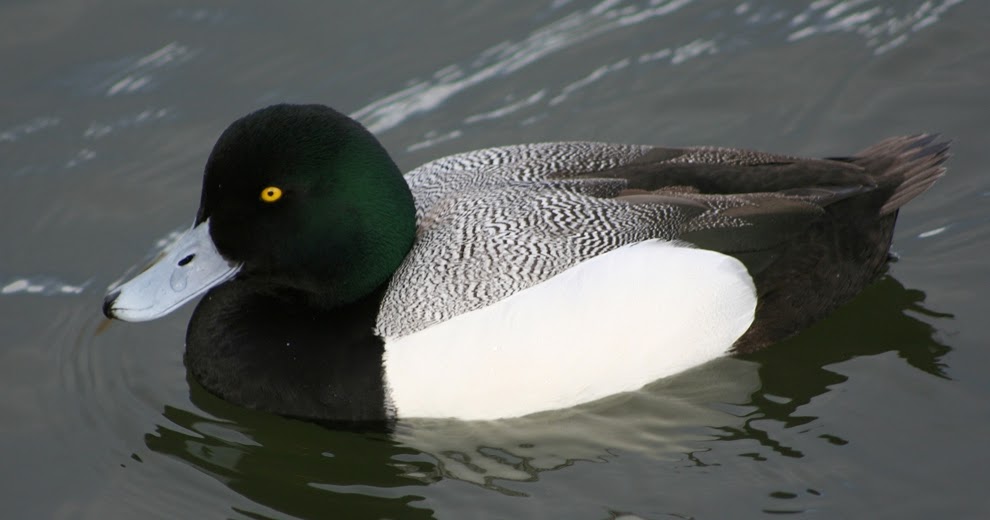
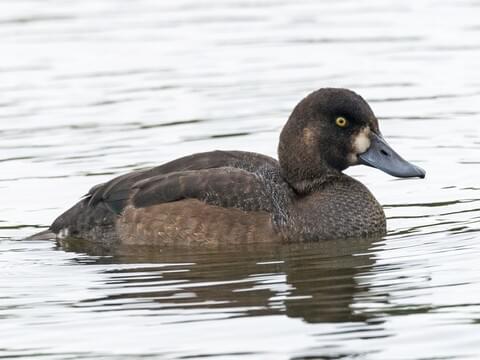
A medium-sized diving duck with a light blue-gray bill and yellow eyes. Males have dark greenish heads with a glossy sheen, black breast, white flanks, and a pale gray back. Females are brown with a white patch at the base of the bill and white wing markings. The greater scaup is larger and rounder-headed than the lesser scaup, with a broader bill and a more extensive white wing stripe.
Voice
Males produce a soft, quick whistle during courtship. Females make a rasping “arrr-arrr-arrr” call.
Diet
Feeds by diving for mollusks, aquatic insects, crustaceans, and plant material. In freshwater, they consume seeds, stems, roots, and pondweeds; in coastal areas, they feed mainly on shellfish. They can dive up to 6–10 meters and stay submerged for about a minute.
Behavior
Forms large flocks, or “rafts,” often numbering in the thousands. Courtship takes place during migration, leading to monogamous pair formation. Males leave after egg-laying to molt in large groups on lakes rich in food and cover.
Distribution
Breeds across northern North America, Iceland, Scandinavia, and Siberia. In winter, migrates south to coastal waters of Europe, East Asia, and North America, including the Great Lakes, Atlantic, and Pacific coasts.
Habitat
Prefers tundra and boreal regions near freshwater lakes for breeding. Winters along sheltered coasts, bays, and estuaries, and occasionally on inland lakes that remain unfrozen.
Breeding
Begins breeding around two years of age, often nesting on islands or floating vegetation near water. The female lays 6–9 olive-buff eggs and incubates them for 24–28 days. Ducklings are able to walk, swim, and feed themselves soon after hatching but fledge after 40–45 days.
Wintering
Forms large flocks along coasts and bays during the winter, especially in the Atlantic Flyway, often mixing with other diving ducks.
Conservation
Although still classified as Least Concern, the greater scaup faces ongoing declines linked to habitat degradation, contaminants, and selenium poisoning from eating zebra mussels. Conservation efforts include population monitoring, ringing programs, and habitat protection to track migration and survival rates.
