
Mulard
Scientific Name
Hybrid: Anas platyrhynchos × Cairina moschata
Alternative Names
Moulard, Mule Duck
Measurements:
| Feature | Male | Female |
|---|---|---|
| Weight | 4–6 kg (8.8–13 lb) | 3–5 kg (6.6–11 lb) |
| Length | 60–70 cm (24–28 in) | 55–65 cm (22–26 in) |
| Wingspan | 90–105 cm (35–41 in) | 85–100 cm (33–39 in) |
Status
The Mulard is a domesticated hybrid and is commercially produced in large numbers, particularly in France for meat and foie gras. It is not considered endangered and is widely farmed in Europe, the United States, and Southeast Asia.
Average Life Span
5–7 years in farmed settings
Breed History
The Mulard is a hybrid between the Muscovy duck (Cairina moschata) and domestic ducks such as the American Pekin (Anas platyrhynchos). The term Mulard typically refers to crosses where the drake is a Muscovy and the duck is a Pekin. When the reverse cross is made, the offspring are called hinnies. Mulards were developed for their superior meat quality and adaptability for foie gras production, as they combine the hardiness of Muscovies with the temperament and growth rate of Pekins.
Identification
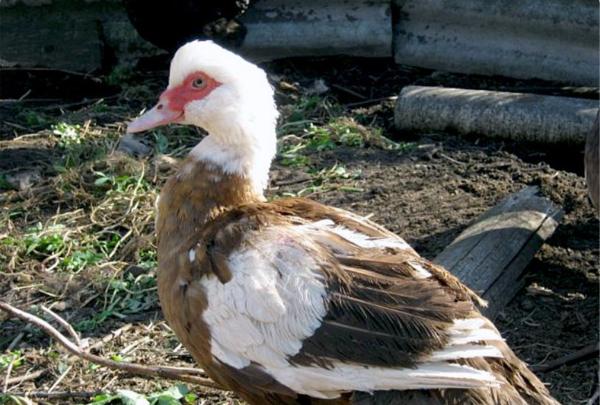
Mulards are large, robust ducks with traits from both parent breeds. They have a broad body, lean meat, and claws on their feet inherited from the Muscovy. Plumage varies but is often white or light-colored. Males are larger and heavier, while females are slightly smaller and typically used for meat production. Mulards do not fly and are usually kept near water.
Purpose
Mulards are primarily raised for meat and foie gras. Females are generally used for meat, while males are preferred for foie gras due to their size and suitability for gavage. They are also popular in general meat production due to their hybrid vigor and calm temperament.
Breed Eggs
Mulards are sterile hybrids, so they do not produce fertile eggs. Artificial insemination is commonly used to produce Mulard offspring on farms. The incubation period of their eggs is about 32 days, similar to an average between Muscovy and Pekin ducks.
Temperament & Behavior
Mulards are hardy and calm ducks that are easy to manage on farms. They prefer staying near water and forage readily when given access. While they inherit some traits from Muscovies, such as claws, they do not fly or perch. These ducks are known for being relatively quiet, manageable, and suitable for commercial production systems.
Genetic Profile
Mulards are interspecific F1 hybrids, combining the genetics of Muscovy and Pekin ducks. They exhibit natural hybrid vigor, resulting in faster growth, leaner meat, and better adaptability than either parent breed alone. Their sterility is typical of interspecific crosses, ensuring controlled production through artificial insemination.