
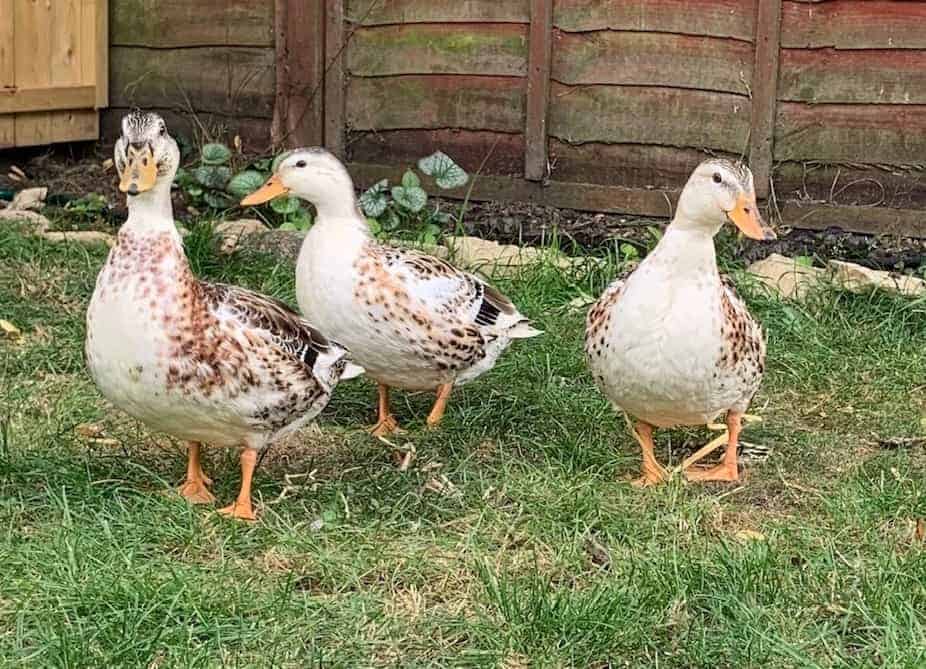
Silver Bantam

Scientific Name

Anas platyrhynchos domesticus

Alternative Names

Miniature Silver Appleyard (original name), Silver Bantam

Measurements

FeatureMale (Drake)Female (Duck)
Weight0.9 kg (2.0 lb)0.8 kg (1.8 lb)
Ring Size12 mm12 mm
Eggs per Year60–16060–160

History

The Silver Bantam was developed in Suffolk, England, in the late 1940s by Reginald Appleyard. He originally called it the “Miniature Silver Appleyard” and bred it by crossing Khaki Campbells with White Calls. It was created to be a beautiful and friendly small duck. The breed received little attention until it was officially standardized in 1997 under the name “Silver Bantam.” In the 1950s and 1960s, a few rare females were hatched with yellow wing bars, but this color variation disappeared over time.

Identification

Silver Bantam ducks are small with tight, glossy feathers. Females have a buff-colored hood on their head, while males develop a shiny green hood during the breeding season, similar to a Mallard drake. In eclipse plumage, males have a darker hood that hides their breeding colors. They are calm, manageable, and not very noisy.

Voice

They are relatively quiet compared to other duck breeds. Ducks quack softly, and drakes make a low, raspy sound.

Diet

They eat a mix of grains, insects, plants, and foraged greens. They enjoy grazing in gardens and small ponds.

Distribution

This breed was developed in the United Kingdom and is mainly found there. Small populations exist in Europe and with specialist breeders.

Habitat

They do well in gardens, small farms, or backyard ponds. They require clean water, secure housing, and safe fencing due to their small size.

Breeding

Females lay 60 to 160 small eggs each year and are known to sit well and care for their ducklings. Ducklings hatch with yellow down tipped with a smoky grey color.

Wintering

They are hardy but benefit from shelter during cold or wet weather due to their small size and light body weight.

Conservation

The Silver Bantam is considered rare. The FAO listed it as “Critical” in 2007, and the Rare Breeds Survival Trust (RBST) currently classifies it as a priority breed. In 2002, only 50–100 birds were estimated to exist. Dedicated breeders are needed to preserve the population.

Similar Posts

  • Mulard

    Scientific Name Hybrid: Anas platyrhynchos × Cairina moschata Alternative Names Moulard, Mule Duck Measurements: Feature Male Female Weight 4–6 kg (8.8–13 lb) 3–5 kg (6.6–11 lb) Length 60–70 cm (24–28 in) 55–65 cm (22–26 in) Wingspan 90–105 cm (35–41 in) 85–100 cm (33–39 in) Status The Mulard is a domesticated hybrid and is commercially produced…

  • Duclair Duck

    Scientific Name Anas platyrhynchos domesticus Alternative Names Normandy Duck, French Duclair Measurements: Feature Male Female Weight Up to 3.0 kg (6.6 lb) Up to 2.5 kg (5.5 lb) Status Least Concern. Although traditional farming declined in France during the 20th century, conservation efforts are underway through the Parc naturel régional des Boucles de la Seine…

  • Welsh Harlequin

    Scientific Name Anas platyrhynchos domesticus Alternative Names Silver Harlequin, Golden Harlequin Measurements Feature Male Female Weight 4.5–5.5 lb (2–2.5 kg) 4.5–5.5 lb (2–2.5 kg) Length Light-weight, streamlined body Light-weight, streamlined body Lifespan 8–12 years 8–12 years Status The Welsh Harlequin was admitted to the American Poultry Association’s Standard of Perfection in 2001. In North America,…

  • Call Duck

    Scientific Name Anas platyrhynchos domesticus Alternative Names Decoy Duck, Coy Duck (historically), Australian Call Duck (separate standard in Australia) Measurements: Feature Male (Drake) Female (Duck) Weight Up to 0.9 kg (2 lb) Around 0.7–0.8 kg (1.5–1.8 lb) Body Type Very small, compact Very small, compact Bill Short and stubby Short and stubby Status The Call…

  • Muscovy Duck

    Scientific Name: Cairina moschata Alternative Names: Barbary Duck, Pato Criollo, Musk Duck Measurements: Feature Male Female Length 76–84 cm (30–33 in) 71–76 cm (28–30 in) Weight Up to 4 kg (8.8 lb) About half that weight Wingspan 137–152 cm (54–60 in) 137–152 cm (54–60 in) Status A native of Central and South America, the Muscovy…

  • Forest Duck

    Scientific Name Anas bertrandi Alternative Names Canard de Forest, Bertrand’s Duck Measurements: Feature Male Female Length About 60–65 cm (23–26 in) About 55–60 cm (21–23 in) Weight 2.5–3 kg (5.5–6.6 lb) 2–2.5 kg (4.4–5.5 lb) Status The Forest Duck is classified as critically endangered by the FAO. It was once presumed extinct after the Second…

Leave a Reply

Your email address will not be published. Required fields are marked *