
Paradise Shelduck
Scientific Name
Tadorna variegata
Alternative Names
Paradise Duck, Painted Duck, Pūtangitangi (Māori)
Measurements
| Feature | Male | Female |
|---|---|---|
| Length | 63–71 cm (25–28 in) | 63–71 cm (25–28 in) |
| Weight | About 1.7 kg (3.8 lb) | About 1.3 kg (2.8 lb) |
| Wingspan | Around 90 cm (35 in) | Around 90 cm (35 in) |
Status
The Paradise Shelduck is endemic to New Zealand, meaning it is found nowhere else. It is New Zealand’s most widespread waterfowl species and is classed by the IUCN as a species of Least Concern, with stable populations.
Identification
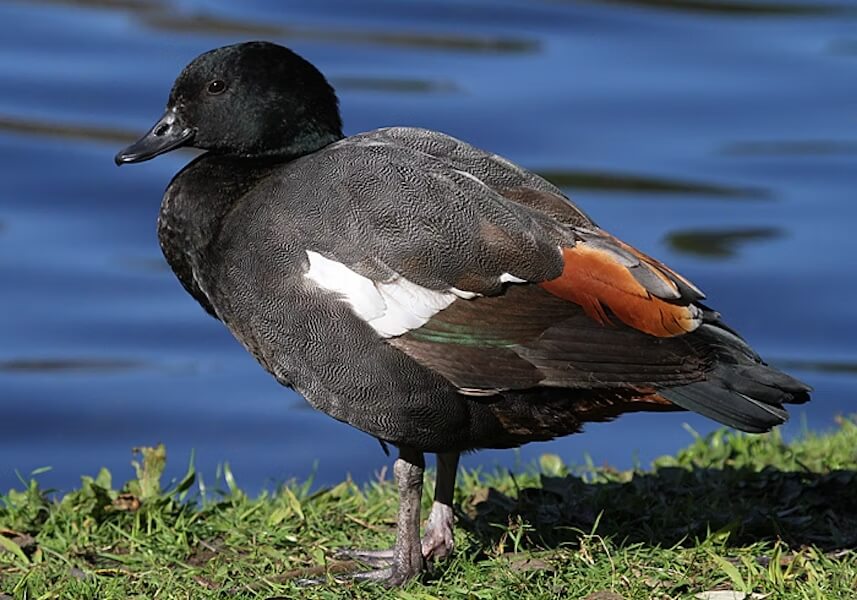
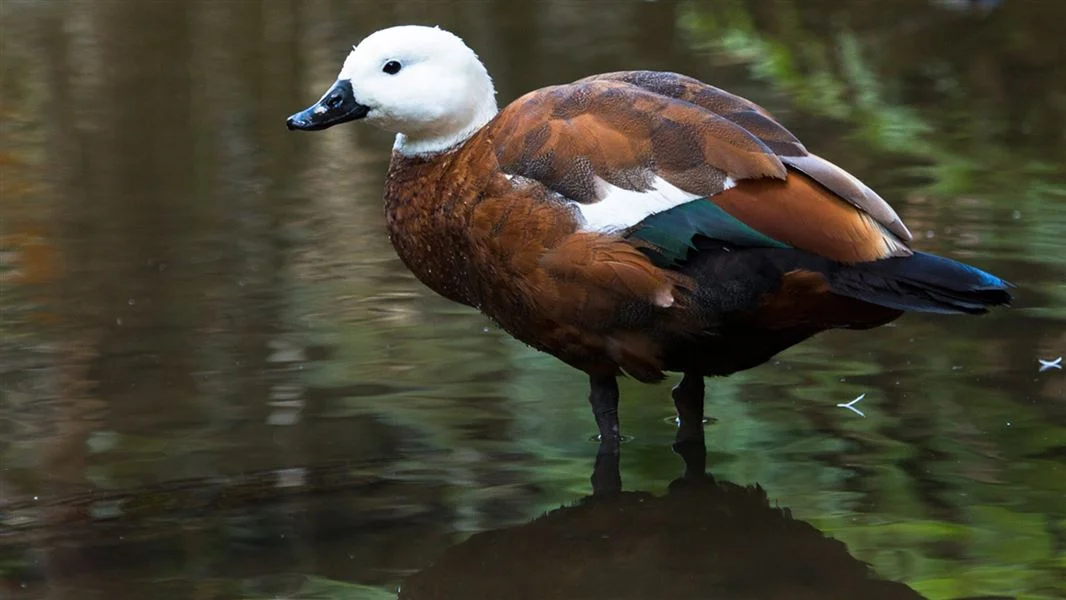
A large, goose-like duck with clear differences between male and female. The male has a dark blue-black head and barred black body, while the female has a white head and chestnut body. Both have white wing patches visible in flight, glossy green wing feathers, and black legs and feet. Young birds are brown and white, with the female’s white head developing after the first molt.
Voice
Males give a deep “zonk-zonk” or honking call, while females make a high-pitched “zeek-zeek” sound.
Diet
Mainly herbivorous, feeding on pasture grasses, clover, and crops. They also eat seeds, weeds, earthworms, insects, and small crustaceans. Ducklings start with aquatic insects before grazing on land.
Distribution
Found throughout New Zealand’s North and South Islands, as well as offshore islands such as Kapiti, Great Barrier, and Stewart Island. They are most common in the North Island and less so on the Canterbury Plains or in alpine regions.
Habitat
Prefers pastures, grasslands, wetlands, and farmland ponds. They often live near rivers, lakes, and farm dams and use open country with good visibility. Dense vegetation nearby provides safe cover for nesting and resting.
Breeding
Pairs form long-term bonds, often for life, and defend the same territory year after year. Nesting takes place from August to December in sheltered spots such as hollow trees, burrows, tussocks, or under buildings.
- Clutch size: 8–10 eggs (sometimes up to 15)
- Incubation: 30–35 days, done by the female
- Fledging: Around 8 weeks
Males help guard the young after hatching.
Wintering
Paradise Shelducks are non-migratory but form large molting flocks between December and February. During this time, they cannot fly. These flocks gather at traditional sites before adults return to their breeding territories in March or April.
Behaviour
Territorial and alert. When threatened, males and females perform defensive displays—lowering their heads, charging intruders, or using a “broken wing” act to draw predators away from ducklings. They graze mainly during the day and rest near water at night.
Hunting
Paradise Shelducks are a game bird in New Zealand. The hunting season runs from May to July, with daily bag limits varying by region.
Conservation
Populations declined during early European settlement due to hunting but recovered after legal protection and habitat changes. Today, numbers are estimated at 600,000–700,000 birds and remain stable. Predation by stoats and weasels poses some local threats, but overall, the species continues to thrive.