
Welsh Harlequin
Scientific Name
Anas platyrhynchos domesticus
Alternative Names
Silver Harlequin, Golden Harlequin
Measurements
| Feature | Male | Female |
|---|---|---|
| Weight | 4.5–5.5 lb (2–2.5 kg) | 4.5–5.5 lb (2–2.5 kg) |
| Length | Light-weight, streamlined body | Light-weight, streamlined body |
| Lifespan | 8–12 years | 8–12 years |
Status
The Welsh Harlequin was admitted to the American Poultry Association’s Standard of Perfection in 2001. In North America, its conservation status improved from “critical” to “watch” by the American Livestock Breeds Conservancy in 2016. It remains relatively common worldwide but should be bred carefully to maintain true coloration and conformation standards.
Average Life Span
8–12 years
Breed History
The Welsh Harlequin originated in 1949 when Group Captain Leslie Bonnet of Criccieth, Wales, discovered a light-colored mutation among his Khaki Campbell ducks. Bonnet selectively bred for this trait, creating a beautiful and productive new breed. Though a fox nearly wiped out his flock, the breed was saved when Eddie Grayson of Lancashire preserved some of the original birds. In 1968, hatching eggs were exported to the United States, and additional birds followed in the early 1980s. The breed gained official recognition in 2001 and remains the only truly Welsh duck breed.
Identification
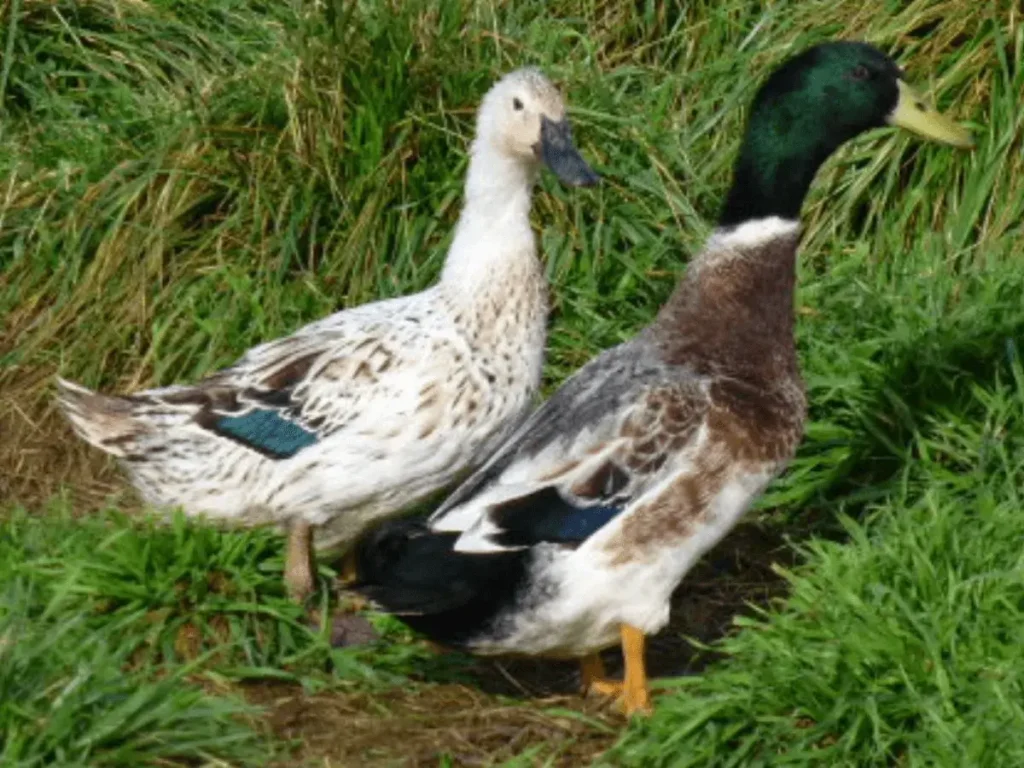
The Welsh Harlequin is a light, graceful breed with a long, streamlined body, rounded chest, and moderately full abdomen. The drake’s head is greenish-black with reddish-chestnut shoulders frosted in white, a creamy chest, and a tortoiseshell-patterned back of cream, white, and brown. The duck’s body is creamy white with buff and brown-green bands on the wings, and a lightly stippled head. The golden variety replaces black pigments with soft golden brown tones. Females have dark bills and brown feet, while drakes have yellow-green bills and orange legs. Ducklings can be sexed by bill color at hatch—males darker, females lighter with a dark tip.
Purpose
A superb dual-purpose breed, the Welsh Harlequin excels in both egg and meat production. It produces lean, flavorful meat and is highly valued for its prolific egg-laying and brooding ability.
Breed Eggs
Welsh Harlequins are among the best layers of all duck breeds, producing between 240 and 330 white-shelled eggs each year. The eggs weigh around 70–90 grams and are prized for their size and taste. The breed frequently goes broody, and a single pair can raise multiple clutches without human assistance.
Temperament & Behavior
Welsh Harlequins are calm, friendly, and curious, making them excellent backyard ducks. They are active foragers, quiet compared to most breeds, and easy to handle. They rarely fly and thrive in both warm and cold climates when given proper shelter and access to clean water. They enjoy human interaction and can be easily trained to return to their enclosure each evening.
Genetic Profile
The Welsh Harlequin’s color pattern is derived from a natural mutation in Khaki Campbells. It carries a sex-linked genetic trait that allows for bill-based sexing at hatch. The breed’s signature “silver” and “golden” varieties are determined by pigmentation genes that modify the intensity of black and brown plumage. Selective breeding is important to maintain these unique color phases and ensure breed authenticity.