
4 Types of Shoveler Ducks

Northern Shoveler
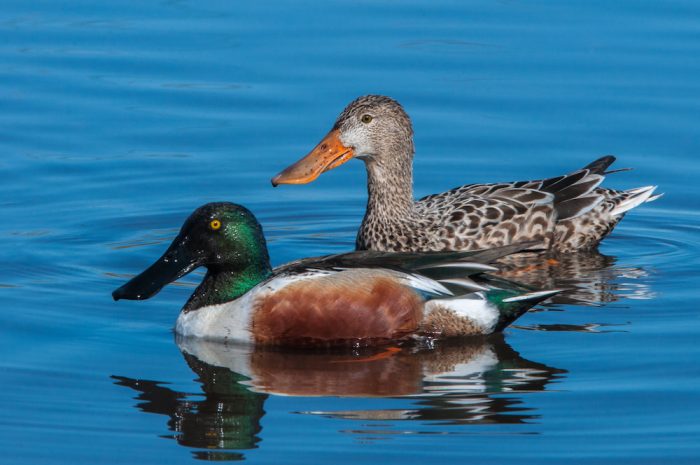
Scientific Name: Spatula clypeata

Range: North America, Europe, Asia

Male Plumage / Key Features: Green head, white chest, rusty sides; broad spatula-shaped bill

Australasian Shoveler
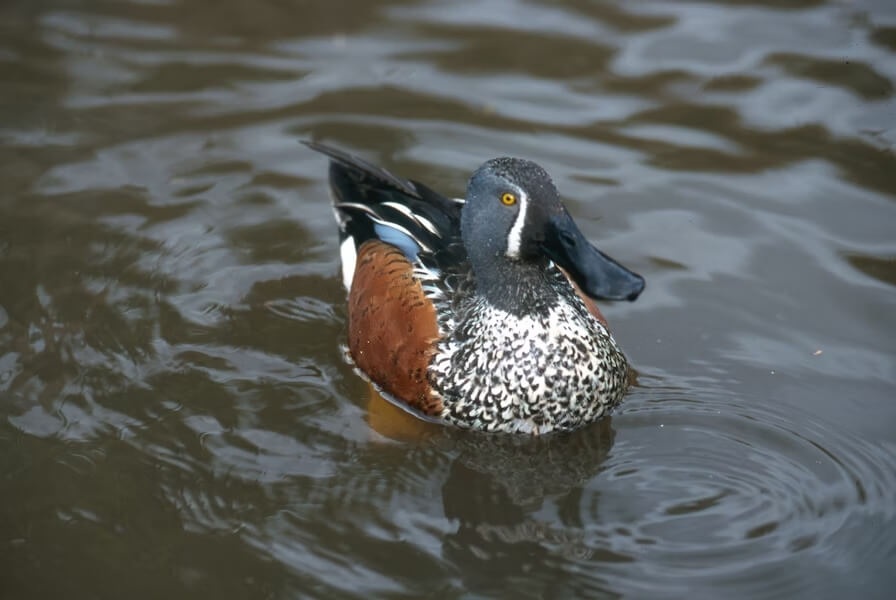
Scientific Name: Spatula rhynchotis

Range: Australia, New Zealand

Male Plumage / Key Features: Blue-grey head, white chest, chestnut sides

Cape Shoveler
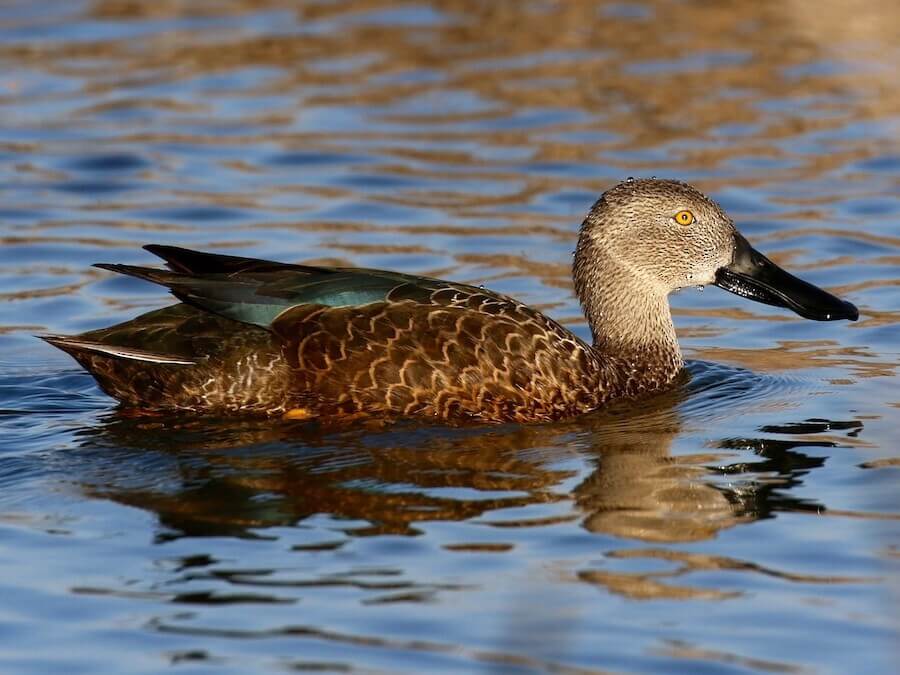
Scientific Name: Spatula smithii

Range: Southern Africa

Male Plumage / Key Features: Green head, white belly, chestnut body

Red Shoveler
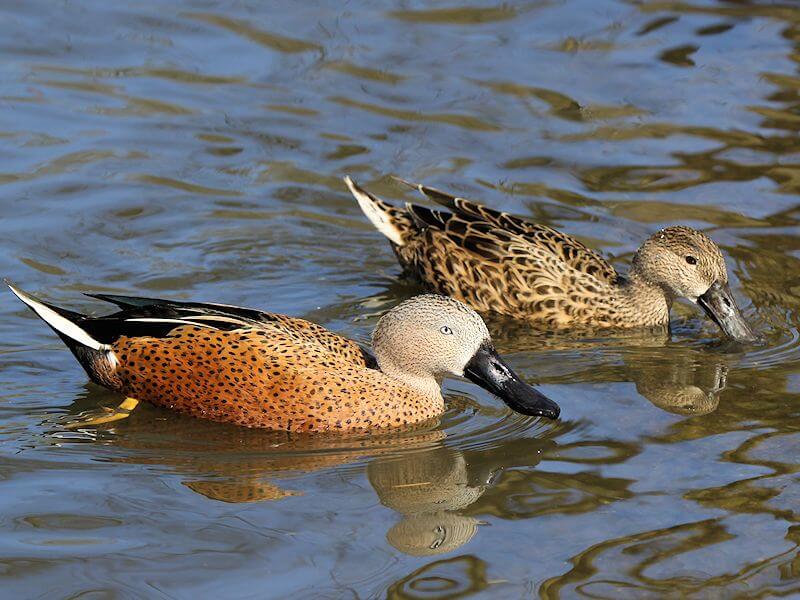
Scientific Name: Spatula platalea

Range: South America (Chile, Argentina, Uruguay)

Male Plumage / Key Features: Reddish body, long broad bill

Shovelers: The Spatula-Billed Dabblers

Shoveler ducks are a group of dabbling ducks in the genus Spatula, commonly recognized for their wide, spatula-shaped bills. These specially adapted bills allow them to filter small invertebrates, plankton, and seeds from shallow water, making them highly efficient feeders in marshes, lakes, and wetlands.

Shovelers are found across North and South America, Europe, Africa, and Australasia, with each species adapted to local habitats. Their slender bodies, upright posture, and dabbling behavior make them well suited to a diet that relies on filtering rather than diving.

The Australasian Shoveler (Spatula rhynchotis) and the Red Shoveler (Spatula platalea) are examples of regional relatives that share the characteristic spatula bill and feeding style. While smaller or differently colored than the Northern Shoveler (Spatula clypeata), they perform the same ecological role in their respective habitats, justifying their inclusion in the shoveler group.

Among shovelers, no species is currently known to be extinct, but several populations, such as the Red Shoveler in South America, face pressure from wetland loss and habitat degradation, emphasizing the importance of conservation for these specialized filter feeders.

Similar Posts

  • White-faced Whistling Duck

    Scientific Name Dendrocygna viduata Alternative Names White-faced Tree Duck, Irere, Guiriri Measurements Feature Male & Female Length 38–48 cm (15–19 in) Weight 700–1,000 g (1.5–2.2 lb) Wingspan About 75–85 cm (30–33 in) Status A common species found across two continents—Africa and South America. Classified as Least Concern due to its large population and wide range….

  • South African Shelduck

    Scientific Name Tadorna cana Alternative Names South African shelduck, Cape shelduck Measurement Measurement Male Female Length 64 cm (25 in) 64 cm (25 in) Wingspan 87–125 cm 87–125 cm Weight 1.5–2.3 kg 1.5–2.3 kg Status and Origin Native to southern Africa, mainly breeding in South Africa and Namibia. Listed as Least Concern by the IUCN….

  • Black-headed Duck

    Scientific Name Heteronetta atricapilla Alternative Names Black-headed Duck Measurements Feature Male Female Length 35 cm (14 in) 35 cm (14 in) Weight 510 g (18 oz) 565 g (20 oz) Wingspan Not specified Not specified Status The black-headed duck is assessed as Least Concern by the IUCN. Its population is stable, and it has a…

  • Amsterdam Wigeon

    Scientific Name: Mareca marecula Alternative Names: Amsterdam Wigeon, Amsterdam Island Duck, Amsterdam Duck Measurements: Feature Male Female Length About size of a thrush (approx. 20–22 cm / 8–9 in)* Same Weight Very small, exact unknown (smaller than most ducks)* Same Wingspan Not recorded (flightless species) Not recorded *Based on historical description: “not much larger than…

  • Laysan Duck/Teal

    Scientific Name Anas laysanensis Alternative Names Laysan Duck, Laysan Teal Measurements Feature Male Female Length 38–43 cm (15–17 in) 38–43 cm (15–17 in) Wingspan 60–70 cm (24–28 in) 60–70 cm (24–28 in) Weight 450–500 g (1.0–1.1 lb) 400–450 g (0.9–1.0 lb) Status Endemic to the Hawaiian Islands. Once widespread, now only found on Laysan Island…

  • White-cheeked Pintail

    Scientific Name Anas bahamensis Alternative Names Bahama pintail, Bahama duck, White-cheeked duck Measurements Feature Male Female Body Length 38–51 cm 38–51 cm Weight 474–710 g 505–670 g Wingspan Around 76–84 cm Around 76–84 cm Status Listed as Least Concern, though some local populations face pressure from habitat loss and hunting. Identification A medium-sized dabbling duck…

Leave a Reply

Your email address will not be published. Required fields are marked *