7 Types of Mergansers You Should Know

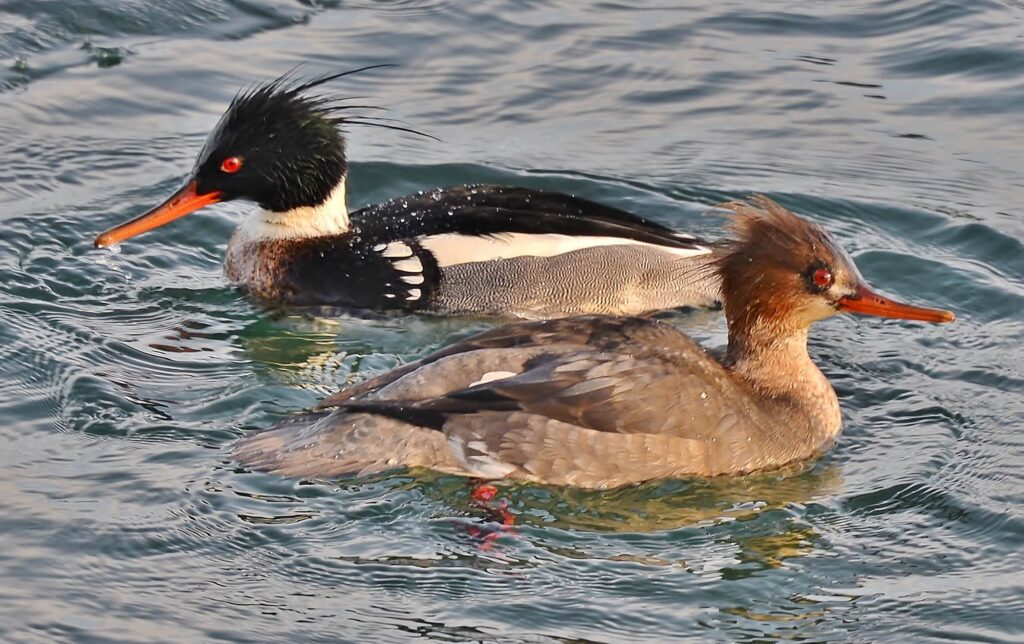
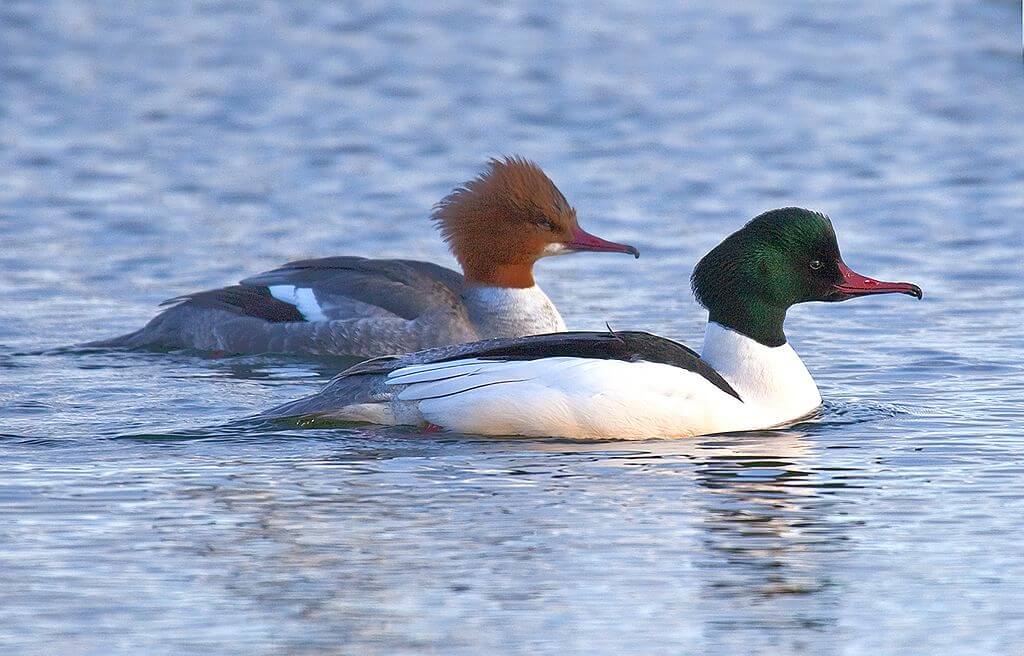
Mergansers are a group of ducks in the subfamily Merginae, commonly known as “sawbill ducks” because of the serrated edges along their bills. These special bills help them catch and hold slippery prey like fish, making them expert divers. Most mergansers are found in freshwater lakes and rivers across North America, Europe, and Asia, though a few species inhabit South America. Their streamlined bodies, strong swimming abilities, and diving behavior make them well adapted to a fish-based diet.
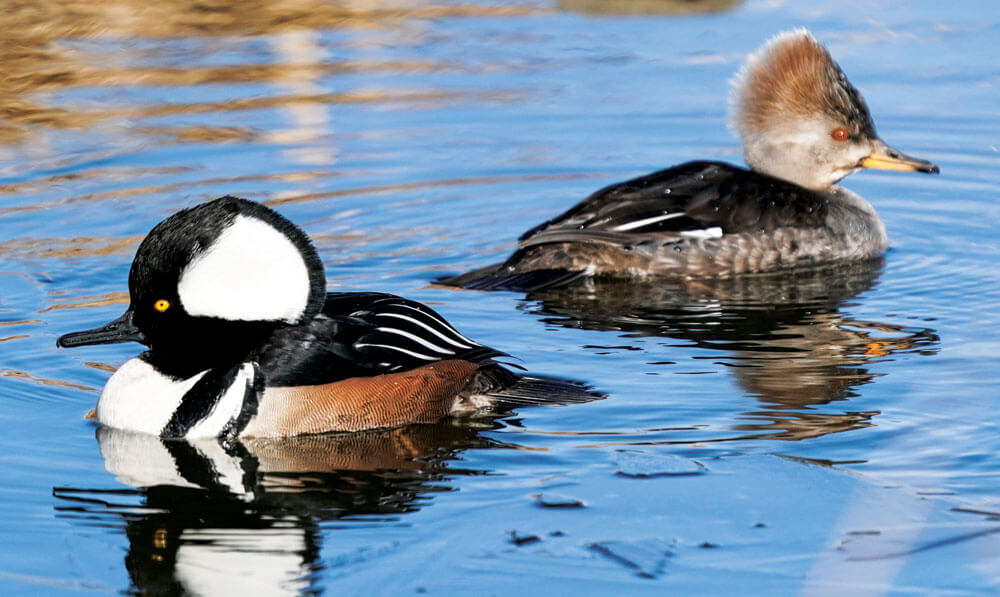
Auckland Island Merganser

Mergansers: The Sawbill Ducks

Mergansers are a group of ducks in the subfamily Merginae, commonly known as “sawbill ducks” because of the serrated edges along their bills. These special bills help them catch and hold slippery prey like fish, making them expert divers. Most mergansers are found in freshwater lakes and rivers across North America, Europe, and Asia, though a few species inhabit South America. Their streamlined bodies, strong swimming abilities, and diving behavior make them well adapted to a fish-based diet.
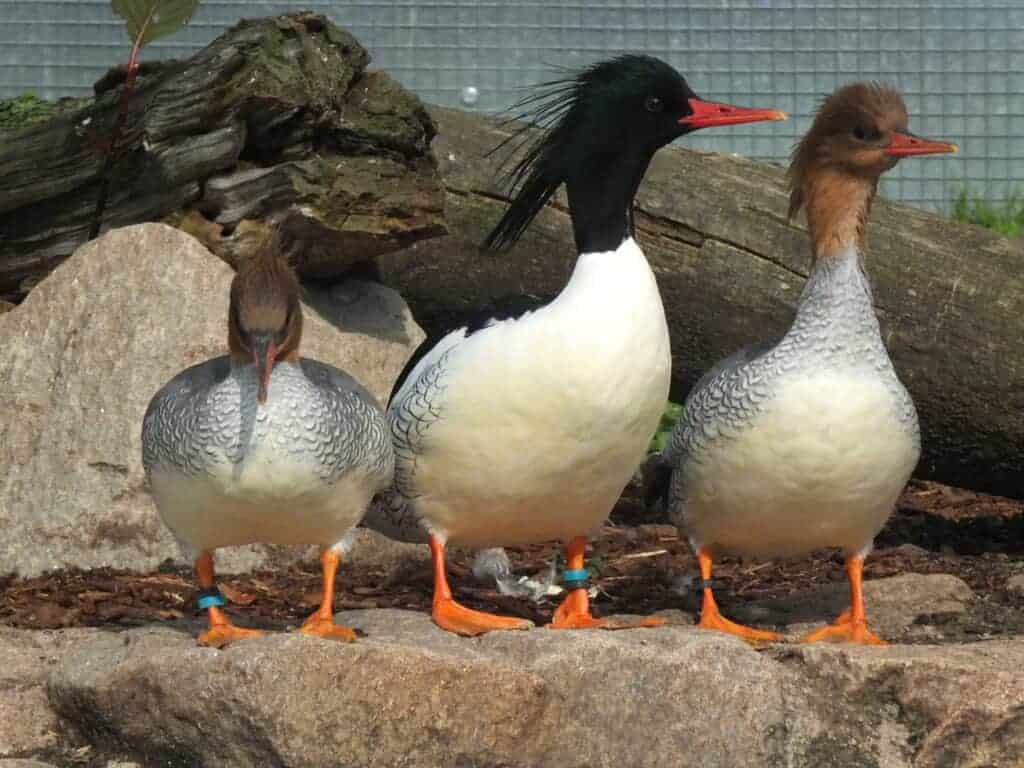
The Smew (Mergellus albellus) is included in merganser lists even though it belongs to a separate genus, Mergellus. It shares key characteristics with true mergansers, including a serrated bill, diving habits, and a similar body shape. Its behavior and ecological niche make it a close relative, justifying its inclusion when discussing sawbill ducks.

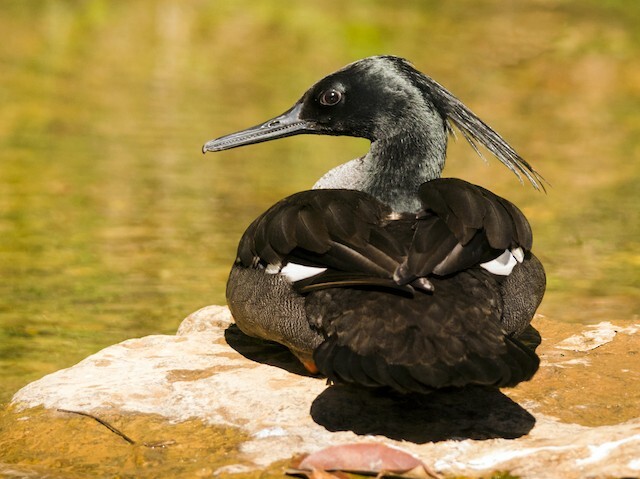
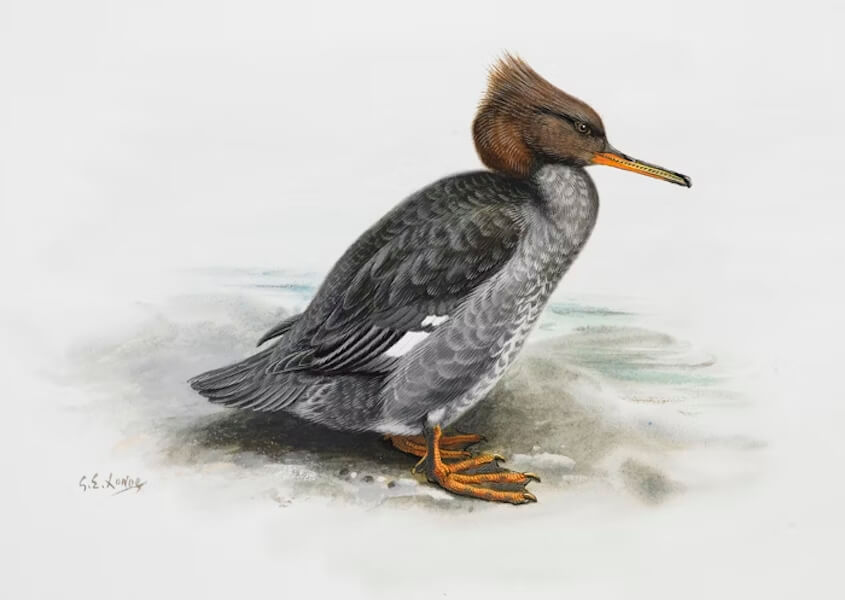
Among mergansers, one species is notable for being extinct: the Auckland Island Merganser (Mergus australis). Native to New Zealand’s Auckland Islands, this dark-bodied duck with a red bill was last recorded in the 19th century. Its disappearance highlights the fragility of island waterfowl populations, particularly in the face of human impact and introduced predators.

Similar Posts

  • Yellow-billed Teal

    Scientific Name Anas flavirostris Alternative Names Chilean Teal, Sharp-winged Teal Measurements Measurement Range Imperial Length 360–430 mm 14–17 in Weight 400–500 g 0.9–1.1 lb Wingspan 600–700 mm 24–28 in Status Listed as Least Concern by the IUCN due to its wide distribution and stable population across South America. Identification A small, compact teal characterized by…

  • Flying Steamer Duck

    Scientific Name Tachyeres patachonicus Alternative Names Flying steamer-duck, flying steamerduck Measurements Measurement Male Female Weight Heavier Lighter Wingspan Slightly smaller Slightly larger Bill Dark grey with yellow tone Orange with black tip Status / Origin Native to southern Chile, Argentina, Tierra del Fuego, and the Falkland Islands. Classified as Least Concern. Identification Smallest of the…

  • Pink-headed Duck

    Scientific Name Rhodonessa caryophyllacea. Measurements Measurement Range Body Length 41–43 cm Egg Length 1.71–1.82 inches Egg Width 1.61–1.70 inches Status This species is currently listed as Critically Endangered by the IUCN and is widely believed to be extinct, although unconfirmed reports from remote wetlands in northern Myanmar have left open the possibility that a small…

  • Steller’s Eider

    Scientific Name Polysticta stelleri Measurements Feature Measurement Length 43–46 cm (17–18 in) Weight 800–860 g (1.8–1.9 lb) Wingspan 69 cm (27 in) Wing 21–22.5 cm (8.3–8.9 in) Culmen 3.7–4.2 cm (1.5–1.7 in) Tarsus 3.6–4.0 cm (1.4–1.6 in) Status Steller’s Eider is listed as Vulnerable by the IUCN. The Alaska-breeding population is Threatened under U.S. law…

  • Eurasian Wigeon

    Scientific Name Mareca penelope Alternative Names Eurasian Wigeon, European Wigeon, Widgeon Measurements Feature Male Female Length 42–52 cm (17–20 in) 42–52 cm (17–20 in) Weight 500–1,073 g (1–2 lb) 500–1,073 g (1–2 lb) Wingspan 71–80 cm (28–31 in) 71–80 cm (28–31 in) Status A common and widespread dabbling duck across Europe and Asia. Classified as…

  • Spectacled Eider

    Scientific Name Somateria fischeri Measurements: Feature Male Female Length 52–57 cm (20.5–22.5 in) 52–57 cm (20.5–22.5 in) Weight 1.8–2.3 kg (4–5 lb) 1.5–2.0 kg (3.3–4.4 lb) Wingspan 86–96 cm (34–38 in) 86–96 cm (34–38 in) Status The Spectacled Eider is listed as Threatened under the U.S. Endangered Species Act but Least Concern on the IUCN…

One Comment

Leave a Reply

Your email address will not be published. Required fields are marked *