
African Black Duck
Scientific Name
Anas sparsa
Alternative Names
Black River Duck, Ethiopian Black Duck, West African Black Duck
Measurements
| Feature | Male | Female |
|---|---|---|
| Length | 48–57 cm (19–22 in) | Slightly smaller |
| Weight | About 1 kg (2.2 lb) | Slightly less |
| Wingspan | 80–90 cm (31–35 in) | 80–90 cm (31–35 in) |
Status
The African Black Duck is a shy and beautiful waterbird found mainly in sub-Saharan Africa, from South Africa and Ethiopia to parts of West Africa. It’s not globally threatened and is commonly seen near fast-flowing rivers and forest streams. Its quiet, elusive nature often makes it a special find for birdwatchers.
Identification
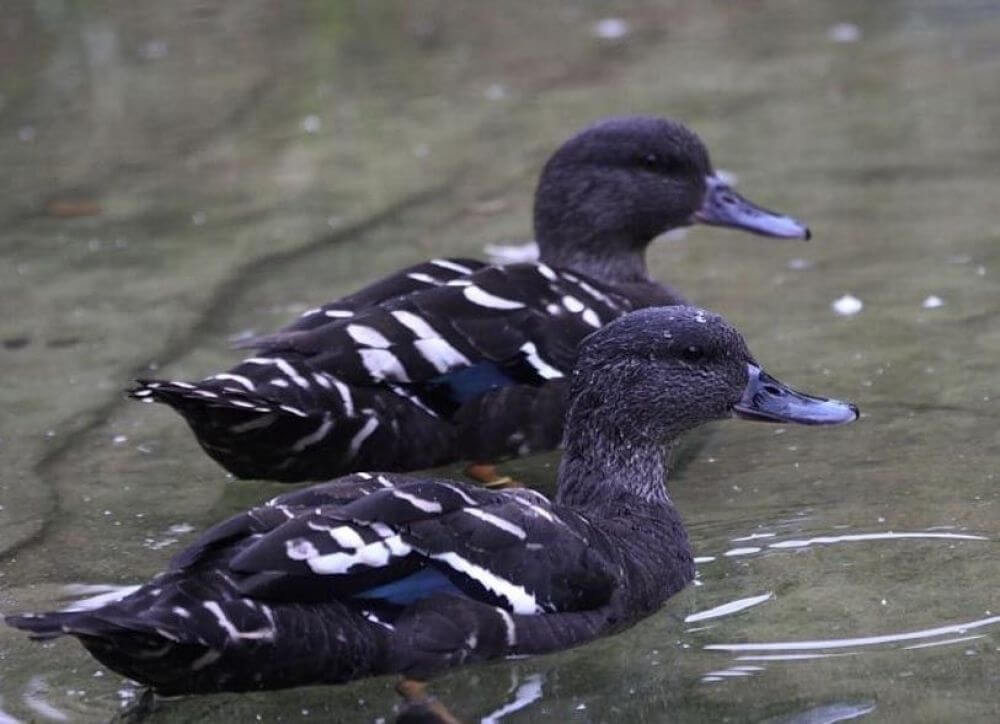
This duck is mostly dark black-brown with striking white patches on its back and wings, giving it a speckled look when seen from above. It has a dark black bill and bright orange legs and feet, adding a splash of color to its otherwise dusky appearance. In flight, a flash of purplish-blue speculum feathers can be seen. Males are slightly larger and darker than females, but both share the same unique markings.
Voice
Usually silent, but may give a low, harsh quack or a sharp “kree” when alarmed or disturbed near its nesting area.
Diet
The African Black Duck eats a mix of plants and small animals, including insect larvae, snails, small fish, and crabs. It often searches for food under rocks or in shallow running water, dabbling and diving skillfully.
Distribution
This duck is found across central, eastern, and southern Africa, including countries like South Africa, Kenya, Tanzania, Uganda, and Ethiopia. Smaller populations also live in western areas like Cameroon and Gabon.
Habitat
Prefers clear rivers and mountain streams shaded by trees, often in hilly or forested regions. During the night, it sometimes moves to open lakes or ponds to rest or feed.
Breeding
Breeding can happen at different times of the year depending on the region. The female builds a cup-shaped nest made of grass and driftwood, hidden carefully near running water but safely above flood levels. She lays 4 to 8 eggs, incubating them for about 30 days. Ducklings stay with the mother for nearly three months until they are strong enough to fly.
Behavior
This is a very shy and territorial duck, often seen alone or in pairs rather than in large flocks. It swims low in the water and prefers to hide rather than fly when disturbed.
Conservation
Currently listed as Least Concern on the IUCN Red List. Although not endangered, the African Black Duck faces local threats from habitat loss and river pollution. Protecting clean, forested waterways helps this beautiful and secretive duck thrive in its natural home.
Amazing ducks.. always love their white mottling. They look like very sturdy birds.