
Marbled Duck
Scientific Name
Marmaronetta angustirostris
Alternative Names
Also known as the marbled teal.
Measurements
| Feature | Measurement |
|---|---|
| Length | 39–42 cm |
| Wingspan | Not well documented, estimated around 63–70 cm |
| Weight | Approximately 400–600 g |
Status
Classified as Near Threatened by the IUCN due to habitat destruction, wetland drainage and hunting pressures. It is listed under the Agreement on the Conservation of African-Eurasian Migratory Waterbirds (AEWA).
Identification
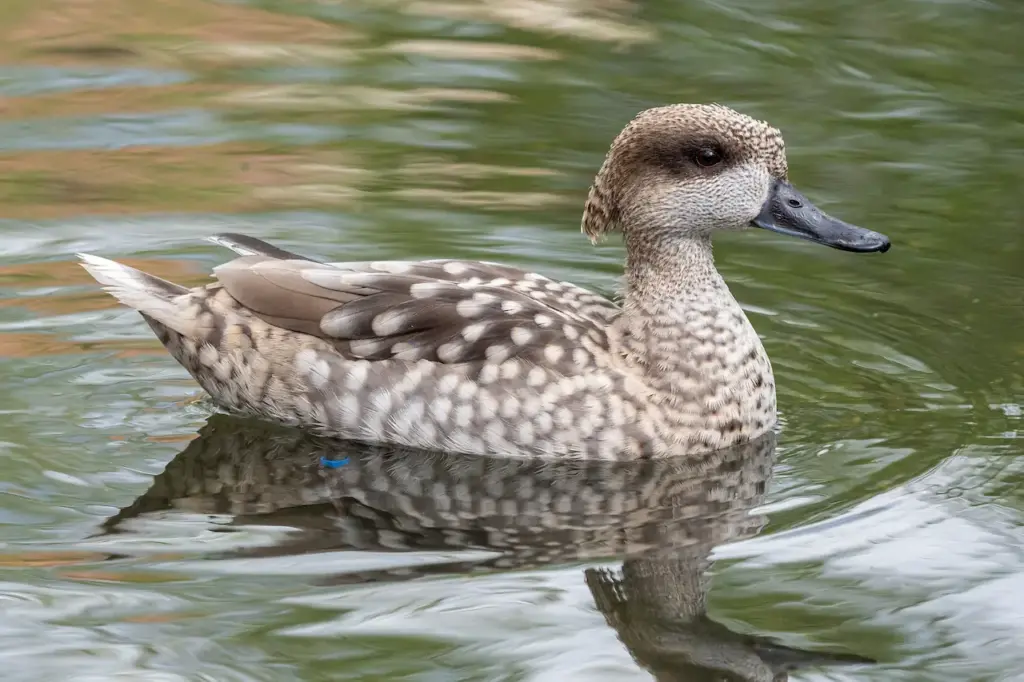
A medium-sized duck with pale sandy-brown plumage diffusely blotched with off-white. It has a shaggy head, dark eye-patch and no distinct wing speculum in flight. Both sexes are similar, though females are slightly smaller. Juveniles resemble adults but with more pronounced off-white blotching.
Voice
Generally quiet, producing soft, high-pitched whistles or murmuring calls, mostly during the breeding season.
Diet
Feeds mainly by dabbling or up-ending in shallow water. Adults consume seeds of aquatic plants such as Scirpus and Ruppia, as well as invertebrates including aquatic insects, crustaceans and occasionally ants. They also eat green plant matter like Potamogeton. Ducklings primarily feed on invertebrates.
Distribution
Occurs in southern Europe, northern Africa, the Levant, and western to central Asia. Key populations are found in southern Spain, southern Italy, northwest Africa, Iraq’s Mesopotamian Marshes and the Shadegan Marshes in Iran. Small populations persist in Armenia, Azerbaijan, Russia, western India and western China. They can be nomadic outside the breeding season.
Habitat
Prefers shallow, temporary freshwater, brackish or alkaline wetlands with dense emergent vegetation. Also found in coastal lagoons, slow-flowing rivers and man-made reservoirs. These habitats are typically in otherwise dry regions.
Breeding
Nests are placed on the ground among dense vegetation at the water’s edge, sometimes higher in reeds or on reed platforms. Clutches average around 12 eggs. The species is gregarious and may breed in loose colonies.
Wintering
Some populations disperse southwards to the Sahel region below the Sahara during winter. Large wintering flocks have been recorded, particularly in Khuzestan, Iran.
Conservation
Threatened by wetland loss, water diversion, pollution and hunting. Conservation efforts include habitat protection, legal safeguards and inclusion in international agreements like AEWA.
