
Spectacled Eider
Scientific Name
Somateria fischeri
Measurements:
| Feature | Male | Female |
|---|---|---|
| Length | 52–57 cm (20.5–22.5 in) | 52–57 cm (20.5–22.5 in) |
| Weight | 1.8–2.3 kg (4–5 lb) | 1.5–2.0 kg (3.3–4.4 lb) |
| Wingspan | 86–96 cm (34–38 in) | 86–96 cm (34–38 in) |
Status
The Spectacled Eider is listed as Threatened under the U.S. Endangered Species Act but Least Concern on the IUCN Red List. Its population in Alaska dropped sharply in the past, though it remains more stable in Russia. It is fully protected from hunting under U.S. law.
Identification
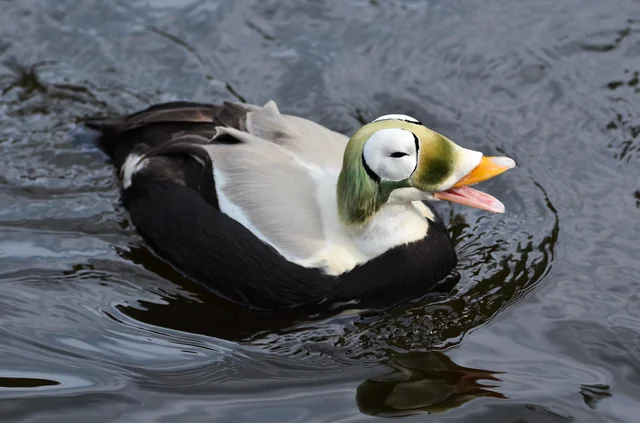
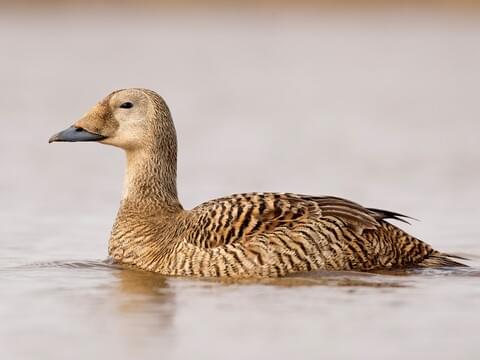
A medium-sized sea duck known for the male’s striking appearance — a black body, white back, and a pale yellow-green head marked with large white eye patches that look like spectacles. The female is warm brown with lighter “goggles” around the eyes and can be told apart from other ducks by her size and shape. Young birds and molting males resemble the female.
Voice
Males make a soft, crooning call, while females produce a rough croaking sound.
Diet
These ducks dive for food, feeding mostly on mollusks when at sea and on aquatic insects, crustaceans, and plants when nesting inland. They can stay underwater longer than most diving ducks.
Distribution
Found along the coasts of Alaska and northeastern Russia, including areas bordering the Bering Sea. There are two breeding populations in Alaska and one in Russia. The species spends the winter far out at sea, often in large flocks.
Habitat
Prefers coastal tundra wetlands, shallow ponds, and lakes for breeding. In winter, it stays in icy waters of the Bering Sea, where openings in sea ice allow feeding and resting.
Breeding
Breeding pairs form during winter. They build their nests close to ponds on raised ground called hummocks, lined with plants and soft down. The female lays 3–6 olive-colored eggs and incubates them for about 24 days. Chicks leave the nest soon after hatching and are led to water by the female, who protects them until they can fly at around 7 weeks old.
Wintering
During winter, Spectacled Eiders gather in large flocks in the Bering Sea, staying around open water within sea ice.
Conservation
Major threats include climate change, habitat loss, and possible oil and gas development near key breeding areas. Conservation efforts focus on habitat protection and continued monitoring of population trends.