8 Types of Blue Ducks That Are True Rare Beauties
If you’ve landed on this post, you’re perhaps curious about the types of ducks that are blue. Truth be told, there aren’t very many truly blue ducks in the duck world. What you can find are ducks with blue feathers on their heads, wings, or certain parts of their bodies. Interestingly, this “blue” isn’t due to pigment—it comes from the structure of the feathers themselves, which reflect light to create a shimmering, iridescent effect. Think of it like how the sky or the ocean looks blue to us because of the way light is refracted. The blue you see on these ducks’ feathers is simply the result of light hitting them at just the right angle, making them appear brilliantly blue to our eyes.
We’ve already listed over 20 species of ducks that show at least some of these amazing structural blue feathers in this post. The list includes even species with only tiny blue markings on their wings but otherwise very different plumage. We can’t really call those “blue ducks.”
We believe that blue ducks are those with more extensive blue coloration across their bodies—from head to tail. These are the ducks we’ve included here, though there aren’t many of them. Some of the ducks on this list may have small patches of other colors, like gray, black, or white, but they still have a predominantly blue appearance that sets them apart from other ducks—or at least makes them worth mentioning when we talk about blue ducks.
Because so few ducks truly fit this description, we’ve also included a few black ducks that show a noticeable bluish iridescence.
1. Blue Duck / Whio
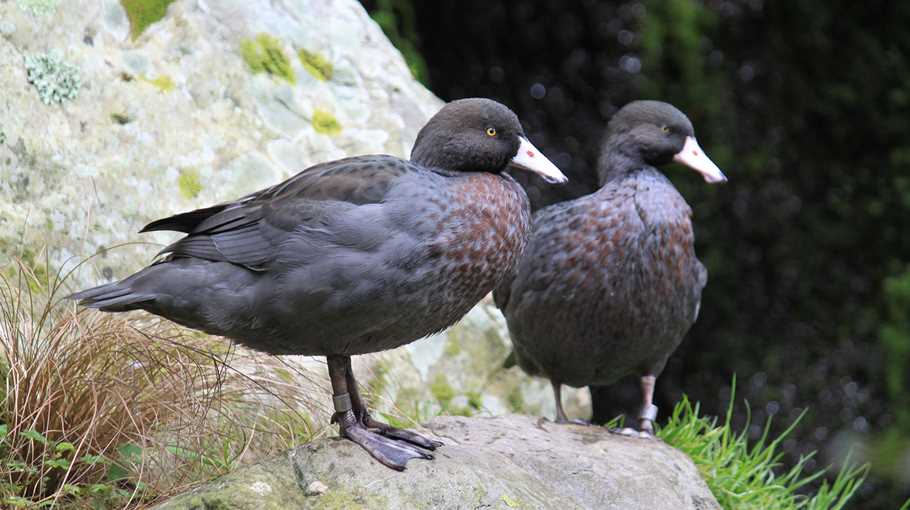
The blue duck, or whio, immediately catches your eye with its dusky blue-grey feathers and chestnut highlights on the chest. The shimmering effect comes from the feather structure reflecting light, rather than pigment, giving it a soft, iridescent glow along the body. Native to New Zealand, whio are river specialists, living year-round on fast-flowing streams. They are alert and watchful; males often give alarm calls before humans or predators are noticed. Spotting a whio is not just a treat for birdwatchers; it also indicates a healthy, clean river ecosystem, as these ducks need pristine streams with plenty of invertebrates to thrive.
2. Swedish Blue
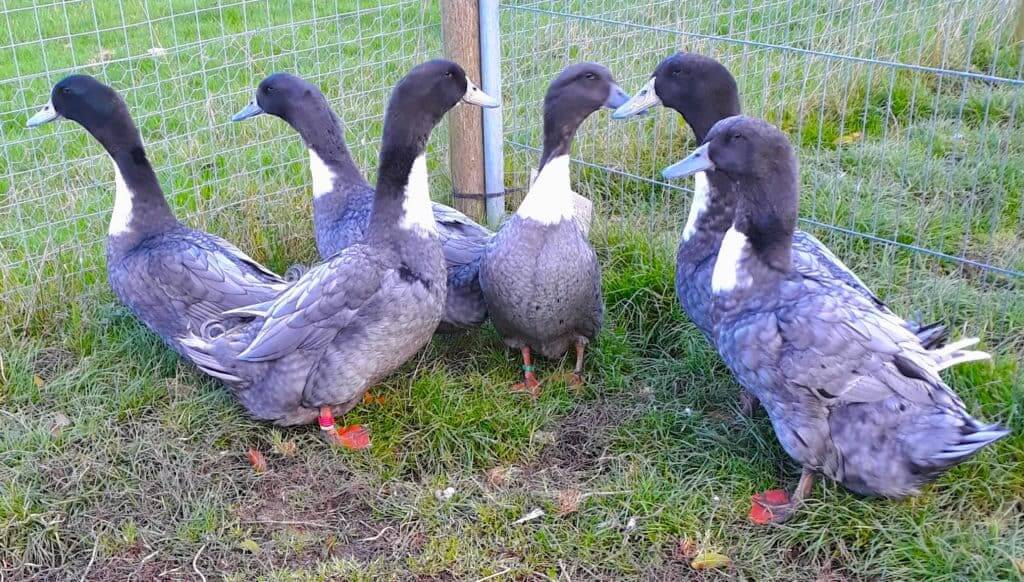
Swedish Blue ducks are other instantly recognizable ducks, thanks to their steel-blue plumage, which is contrasted with a white bib running from the bill halfway down the chest. The blue you see is caused by a dilution gene, which scatters light to create that soft, smoky effect. Developed in northern Europe in the 1800s, these ducks are hardy, good foragers, and reliable layers of mostly white eggs. While they retain the ability to fly, they prefer staying grounded, making them excellent ornamental or backyard ducks.
3. Harlequin Duck

If you spot a splash of color on a fast-moving river or rocky shoreline, it’s probably a male Harlequin Duck. Their breeding plumage is a striking slate blue, accented with crisp white stripes and rich chestnut sides. The head features an elegant white crescent in front of the eye, while chestnut markings highlight the brow—truly a tiny jewel among sea ducks. Females are more subtle, gray-brown with a neat white spot on the cheek and around the bill. Despite their beauty, Harlequins are small sea ducks with a wide but fragmented range—from eastern Siberia and Greenland to the Pacific Northwest of North America. They breed in fast-flowing rivers and winter along rocky coasts, navigating some of the harshest marine environments with remarkable agility.
4. Comb Duck
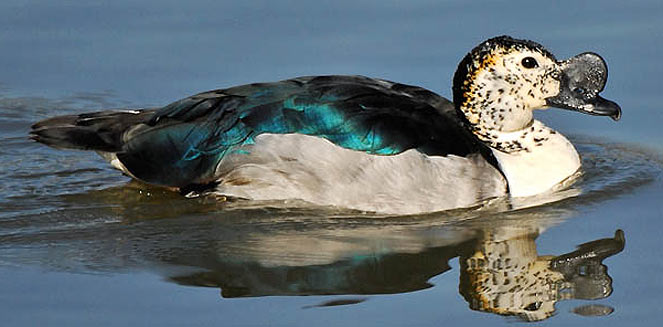
The comb duck immediately stands out with its glossy blue-black upperparts, shimmering with hints of green and blue in the right light, paired with a pure white neck and underparts. Males are larger than females and boast a distinctive black knob on their bill, giving them a commanding presence. Native to tropical wetlands of South America, these ducks are often seen gliding slowly across rivers and marshes. Comb ducks are surprisingly social, sometimes forming loose flocks, and their size makes them one of the largest duck species in their habitat.
5. Muscovy Duck (Blue Variety)
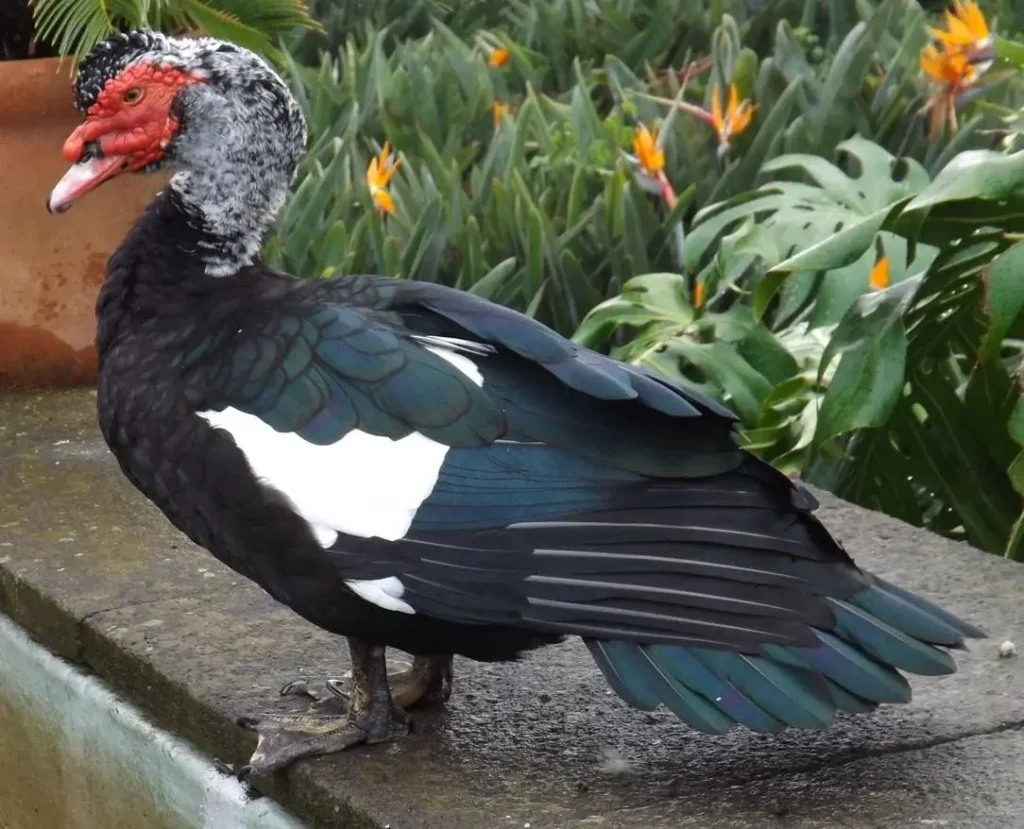
Blue Muscovy ducks are a subtle show of elegance, with plumage ranging from smoky slate-grey to deeper slate-blue shades, often accented by darker lacing along the feathers. Black feathers sometimes peek through, adding depth to their coloration, and some even have white pied markings for extra contrast. Unlike their wild cousins, these ducks are domesticated and relatively calm, making them popular for small farms and backyard flocks. They are also excellent foragers, adept at finding insects, plants, and small invertebrates. Despite their striking appearance, their gentle nature and adaptability make them stand out more for personality than for speed or flight—they’re grounded, robust, and surprisingly quiet for a duck of their size.
6. Cayuga Duck
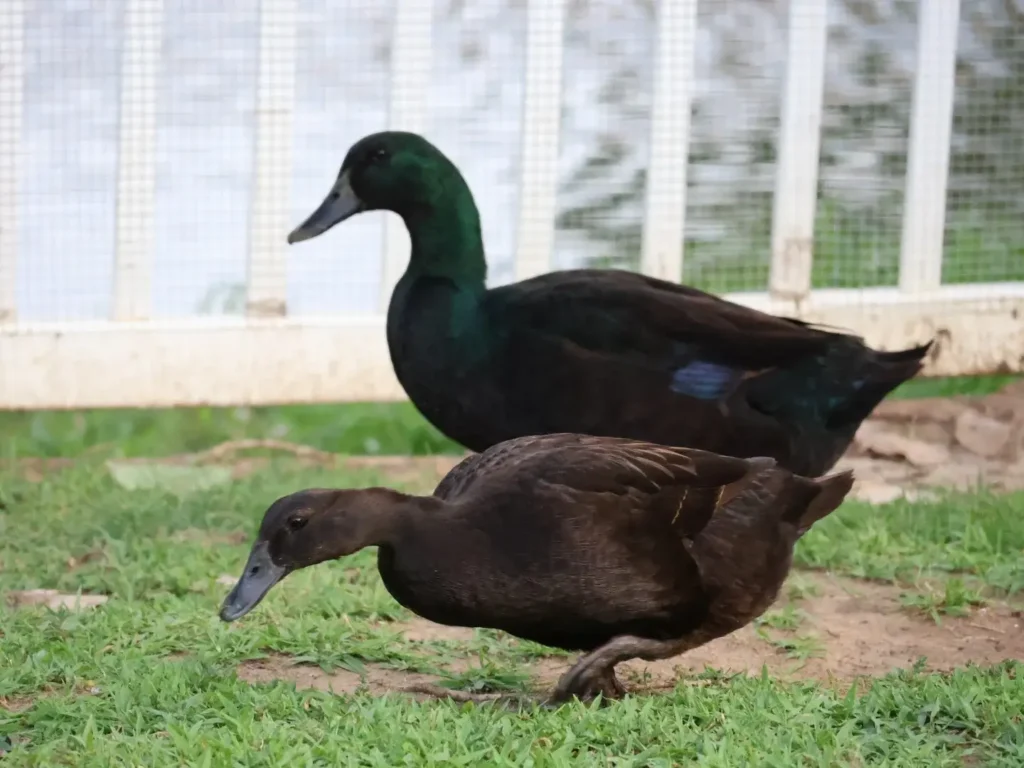
The Cayuga duck has shiny black feathers that show a soft blue shine when sunlight hits them. This breed comes from New York’s Finger Lakes region and is valued for both its beauty and its usefulness on farms. Cayugas are calm, hardy birds that adapt well to different climates and small farms. They lay dark-colored eggs, usually around 150–200 per year, and are good mothers, often taking care of their young diligently. While their feathers may look black at first, the blue shine gives them a jewel-like quality. Cayugas grow to a medium-large size, with males being heavier than females, and they are excellent foragers, finding insects, plants, and seeds on land and in shallow water.
7. Black East Indian Duck
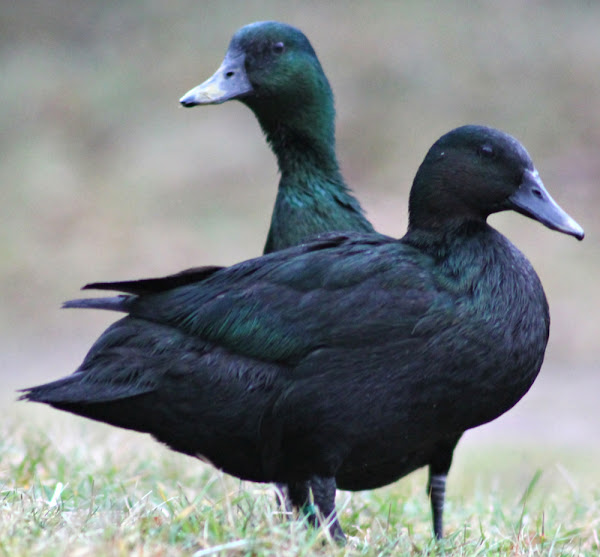
The Black East Indian duck is a small, bantam-sized duck with deep black feathers that shimmer with blue or purple in sunlight. They have black bills and dark legs, adding to their elegant appearance. This is one of the oldest bantam duck breeds, though it has no connection to the East Indies. Females may develop small white patches as they get older, while the best show birds have a green sheen even under the wings. These ducks are lively, hardy, and perfect for small gardens or ornamental collections, making them a favorite among bantam duck enthusiasts.
8. Pomeranian Duck
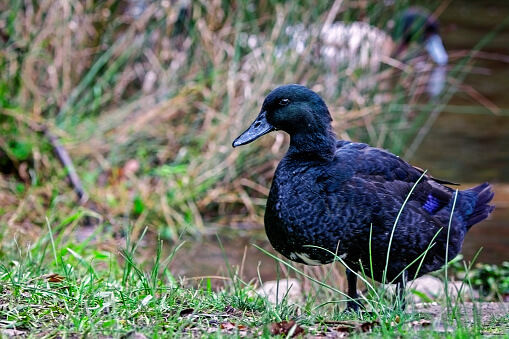
Pomeranian ducks are medium-sized and often have a striking blue or black body with a white breast, creating a sharp contrast that draws the eye. They come from the Pomerania region of northern Germany and share ancestry with other northern European breeds like the Swedish Blue. Males usually weigh around 3 kg and females 2.5 kg. These ducks are good layers, producing 70–100 eggs per year, and their calm, hardy nature makes them easy to keep on small farms. The blue or black feathers often have subtle iridescence, especially in strong sunlight, giving these ducks a quietly elegant look while they forage or swim.