Types of Teal Ducks: Complete List of 23 Species
Teal ducks are not a single species, but rather a group of small dabbling ducks of the genus Anas, found across six continents and many islands. As dabbling ducks, they feed mainly at the water’s surface or by tipping forward, rather than diving deep. Many teal species range in size from about 33–38 cm (13–15 inches) and are often seen in dense, synchronized flocks, moving and taking off as a group with remarkable coordination.
The word teal originally referred to a blue-green color, like the patch often found on the wings of certain teal species. This little flash of color is usually on the secondary feathers, the part of the wing visible when the duck is at rest. Ducks that display this distinctive blue or green patch, or similar coloration, were historically grouped as “teals,” regardless of their exact species or genus.
In fact, many teals are named after their colored wing patches—for instance, the blue-winged teal with its bright blue patch, or the green-winged teal with its iridescent green. But this is not true of all teal ducks. Each species also has unique markings, body colors, and other traits that make it recognizable.
To help you explore this fascinating group, below are 23 types of teal ducks, along with the unique characteristics that give each species its name and charm.
1. Common Teal (Eurasian Teal)
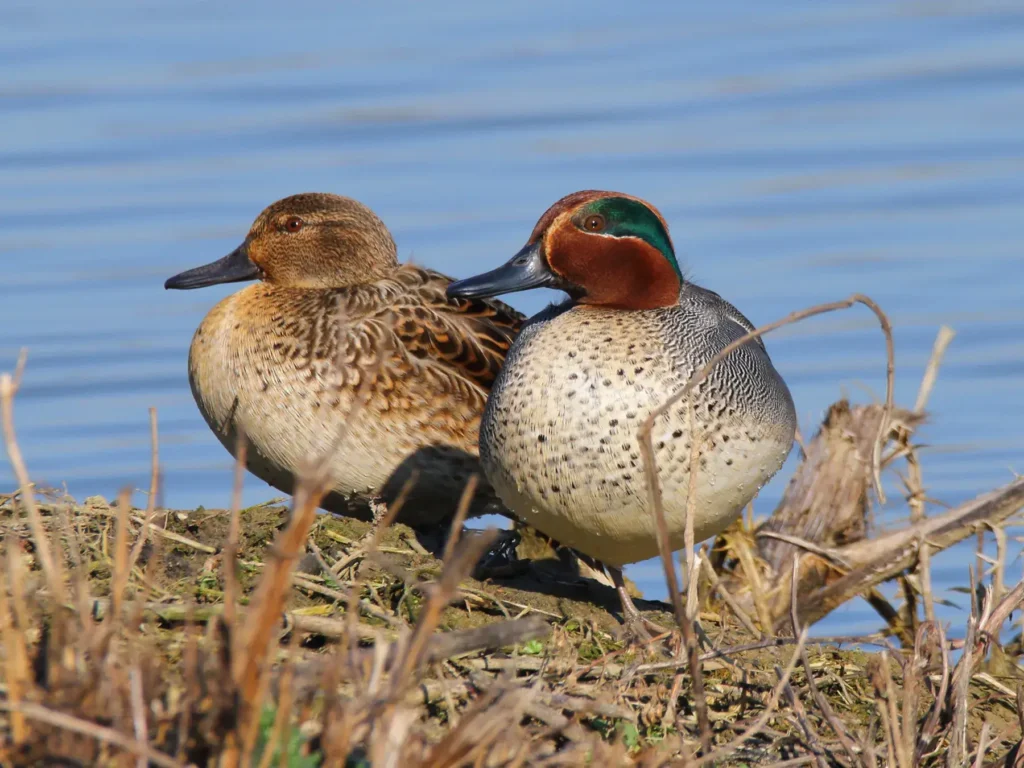
A true pocket-sized marvel of the duck world, the Common Teal measures just 34–43 cm (13–17 in) and carries a delicate charm that belies its tiny stature. The drake is a visual delight, with a rich chestnut head and a striking metallic dark green stripe running from the eye to the neck, while his flanks show subtle, fine vermiculations. The female is plain with streaky brown feathers, but both males and females have a green shiny patch on their wings with a white edge, a signature feature of teals.
Beyond its dapper appearance, this species is remarkable for its long migratory habits. It breeds across much of Europe and northern Asia and winters far to the south. In milder parts of Europe, though, some stay all year because the weather is not too harsh. The Common Teal’s small size makes it agile in flight, and its quiet, high-pitched whistle is a signature sound in wetland habitats across Eurasia.
2. Green-winged Teal
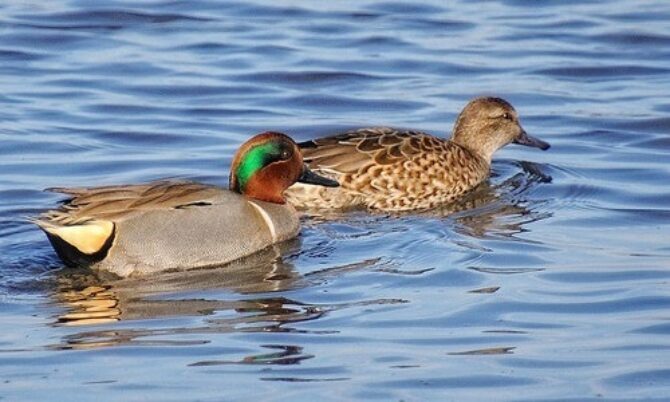
The Green-winged Teal is a small, lively dabbling duck of North America, easily spotted by the male’s chestnut head with a bright green eye patch and a white-edged green wing patch that flashes in flight. His grey back and flanks, paired with a yellow rear, make him stand out even among large flocks, while a vertical white stripe on his breast helps distinguish him from his Eurasian cousin. Females are a gentle light brown, resembling a female mallard, but the green speculum and the duck’s compact shape give them away to a keen observer.
These ducks are highly social and strongly migratory, gathering in huge, twisting flocks that move with remarkable coordination across the sky. They prefer sheltered wetlands, taiga bogs, and mangroves, feeding mostly by dabbling for plants or grazing on land. They build their nests on the ground, hidden near water, which helps keep their babies safe. The males make a clear whistling sound, while the females give a softer quack, so these ducks are often easy to hear in their wetlands.
3. Blue-winged Teal
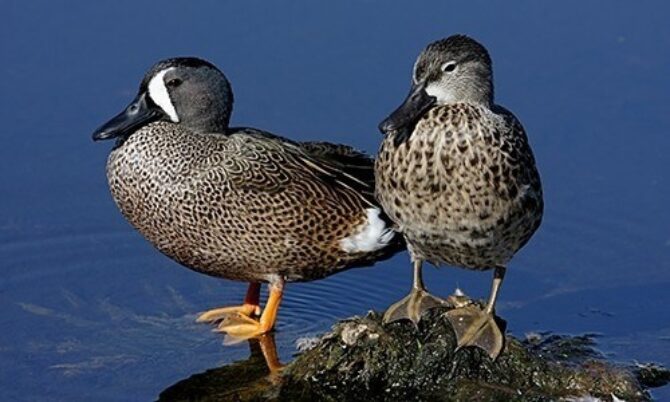
The Blue-winged Teal is instantly recognizable by the male’s greyish-blue head with a striking white crescent on the face, a light brown body, white patch near the rear, and black tail. Both males and females share sky-blue wing feathers, a green speculum, and yellow legs, while the female wears a mottled brown coat with a pale area at the base of her bill.
These small ducks prefer quiet, sheltered waters such as marshes, ponds, and shallow streams with lots of vegetation rather than open or fast-moving water. They are agile feeders, often found along shorelines dabbling for plants, and are known for their two annual molts, with young birds adding a third in their first year. The males announce themselves with a short, sharp whistle, while the females respond with a soft quack, adding a gentle soundtrack to the wetlands they inhabit.
4. Yellow-billed Teal
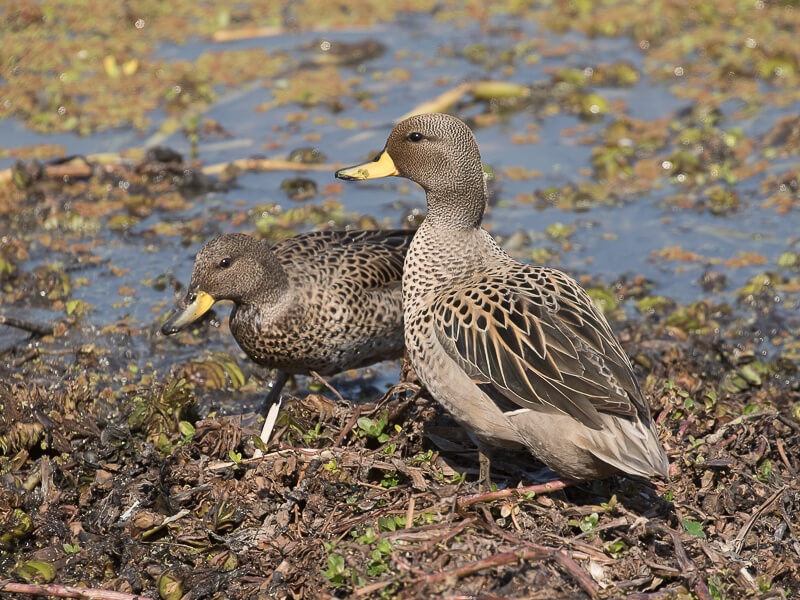
The Yellow-billed Teal is a small duck from South America, easily recognized by its bright yellow bill with a black tip and a black line along the top. Its head is darker than similar ducks, with a shorter neck and plain grayish sides.
This teal prefers freshwater wetlands, especially calm, marshy areas rather than fast rivers. It can be found across Argentina, Chile, Peru, Bolivia, Uruguay, Brazil, and the Falkland Islands, and has even established itself on South Georgia. Its adaptability to different wetland habitats makes it a common sight in many South American waters.
5. Red-billed Teal
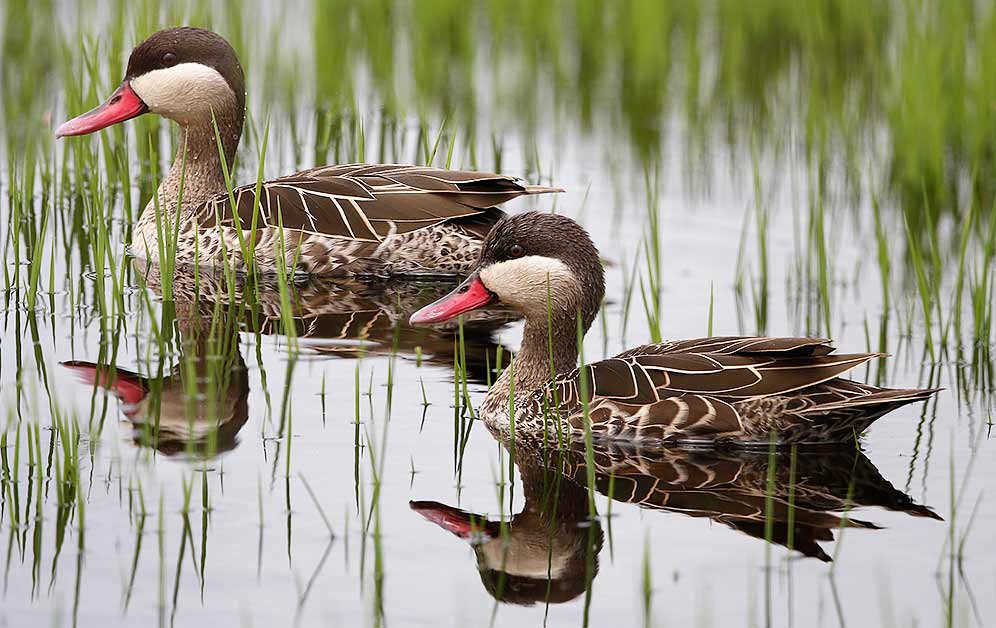
Another amazing teal distinguished by its bright red bill and pale face is the Red-billed Teal. This small dabbling duck, 43–48 cm (17–19 in) long, has a dark brown scalloped body and buff-and-black flight feathers that show when it takes off. Males and females look very similar, while juveniles are duller.
It is mostly quiet, but the male makes a sharp whzzt call during mating displays, and the female answers with a soft, mallard-like quack. These teals are highly social outside the breeding season, often forming large flocks, and they feed by dabbling in water or foraging on land, usually in the evening. They build ground nests hidden in dense vegetation near water, making them well-adapted to the wetlands of southern and eastern Africa.
6. Ringed Teal
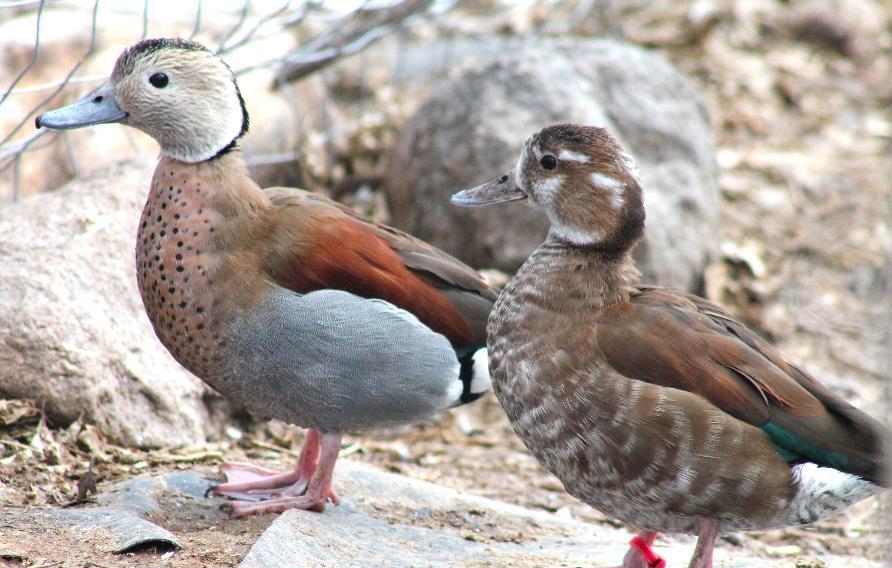
With a salmon-colored chest speckled in black and a rich chestnut back, the Ringed Teal is a tiny jewel of South American wetlands. The male’s black head stripe and pale grey flanks make him instantly recognizable, while the female wears a softer palette of olive-brown, white-streaked head, and pencilled chest bars. Both share a dark tail, pale rump, and a striking white wing patch, plus grey bills and pink legs.
These teals are loyal partners, forming strong bonds that last beyond the breeding season. They are mostly resident but sometimes move short distances in search of water. Found across Argentina, Bolivia, Brazil, Paraguay, and Uruguay, the Ringed Teal is a quiet but colorful presence in marshes and wetlands, a small duck that leaves a big impression.
7. Cinnamon Teal

Native to western North and South America, the Cinnamon Teal is a small dabbling duck that brings a warm splash of color to marshes and ponds. The male is bright cinnamon-red all over with a brown back, red eyes, and a dark bill, while the female is mottled brown with a pale head and grey bill, looking similar to a female Blue-winged Teal but with richer tones and a slightly longer, spatula-shaped bill.
These ducks mostly feed on plants, quietly dabbling through shallow waters. While generally soft-spoken, females can quack loudly when needed, and males have a gentle nasal whistle. Their breeding habitats span the western United States and southwestern Canada, though a few occasionally appear along the east coast.
8. Brown Teal
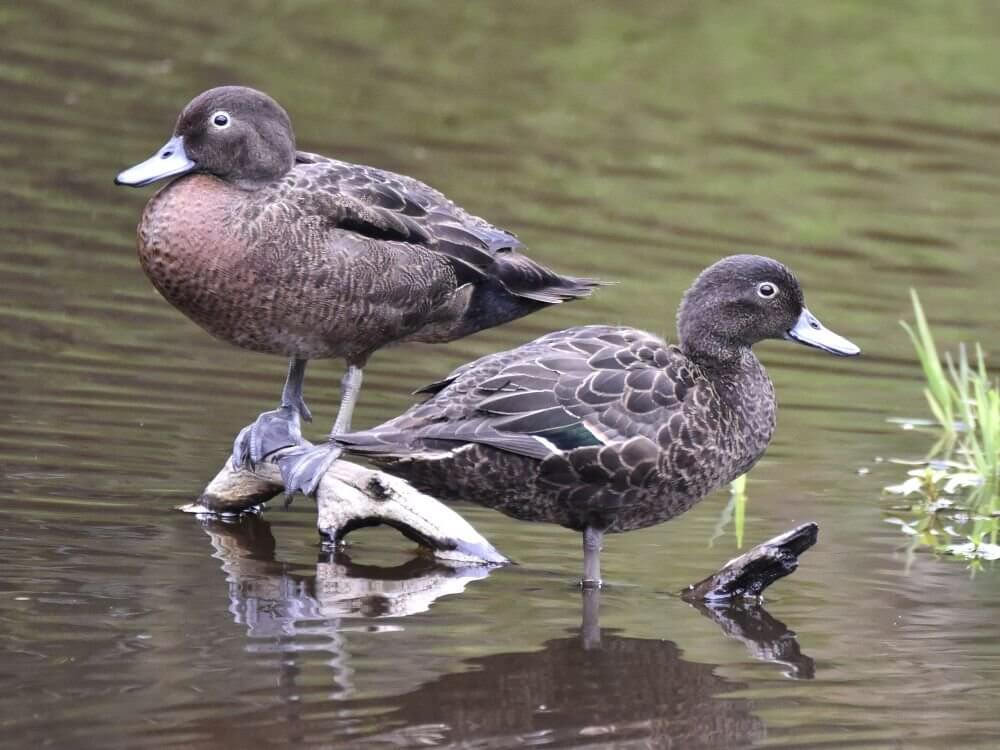
The Brown Teal was initially considered to belong to the same species as the flightless Auckland and Campbell teals, and for many years the name “brown teal” was used for the whole group. Outside the breeding season, males, females, and juveniles look alike, with mottled brown heads and throats and a white ring around the eyes. During breeding, males may develop a green head, chestnut breast, white side stripes, and sometimes a white neck band, though the colors vary between individuals.
This small duck is largely nocturnal, a survival strategy it uses to avoid daytime predators such as the New Zealand falcon, Eyles’ harrier, and southern skuas. It quietly forages through wetlands under the cover of darkness, making it a cautious but fascinating part of New Zealand’s native bird life.
9. Silver Teal
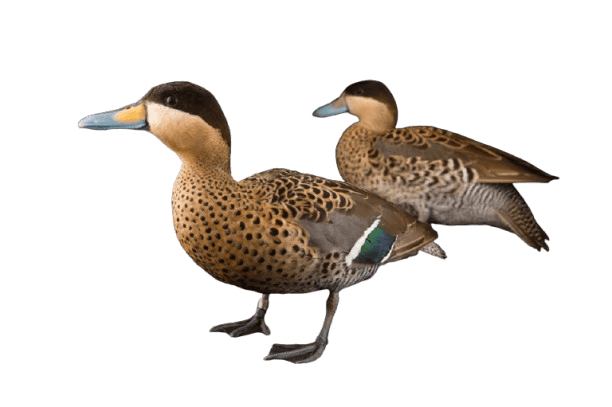
The Silver Teal stands out with its shiny green wing patch and black cap that stretches below the eyes, giving it a sleek, polished look. Its bluish bill with a yellow tip adds a subtle pop of color, while females are slightly duller with less yellow.
These ducks are partially migratory, with birds from the southernmost areas flying north to southern Brazil during winter. They inhabit wetlands, pools, and marshes across southern Bolivia, Brazil, Paraguay, Argentina, Chile, Uruguay, and even remote islands like South Georgia and the Falklands. Quiet and elegant, the Silver Teal prefers calm, sheltered waters where it can feed by dabbling and grazing without disturbance.
10. Chestnut Teal
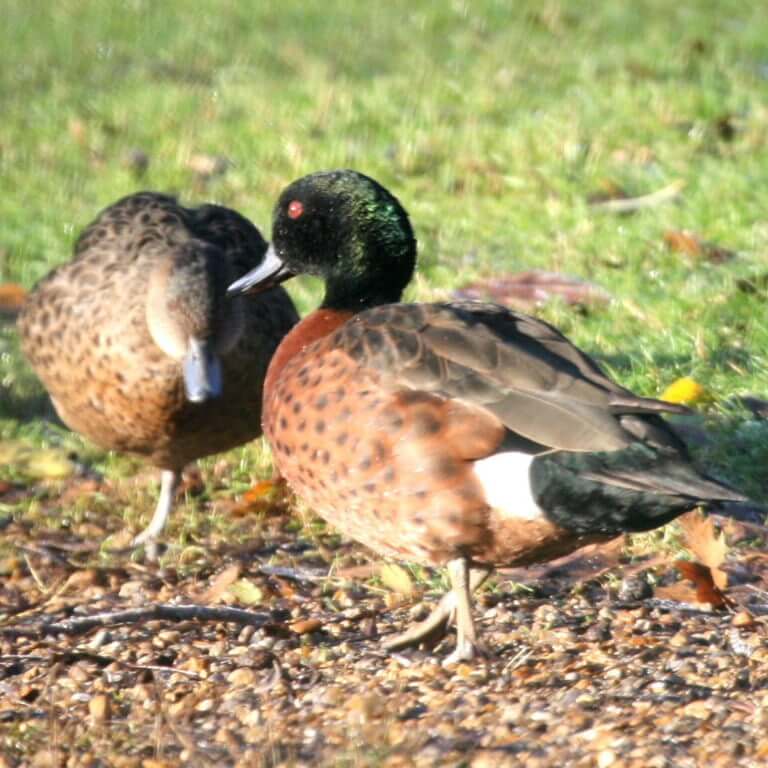
Native to Australia, the Chestnut Teal is a slightly larger and darker duck compared with the Grey Teal. The male has a green head and mottled brown body, while the female is brown with a similar mottled pattern, making her look very much like a Grey Teal. Females are known for their loud, laughing quack, often repeated many times across the wetlands.
These ducks prefer coastal estuaries and wetlands and are not picky about water salinity. They are omnivorous, feeding on both plants and small aquatic animals, and are protected under the National Parks and Wildlife Act 1974, highlighting their importance in Australia’s wetland ecosystems.
11. Grey Teal
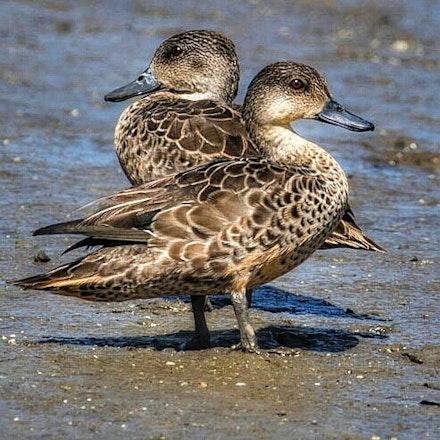
Commonly identified by its crimson-colored eyes, the Grey Teal is a mottled brown duck with white and green flashes on its wings. Unlike the Chestnut Teal, males and females share the same coloring, though the Grey Teal can be told apart by its lighter neck and paler face. Juveniles are even paler, with dull brown eyes that darken as they mature. Its blue-grey bill and matching grey feet complete its subtle but elegant look.
Grey Teals are found in open wetlands across Australia, New Zealand, New Guinea, and Indonesia, and occasionally show up as vagrants in the Solomons and New Caledonia. They are versatile and adaptable, making nests in various wetland habitats and thriving in both permanent and temporary waters.
12. Brazilian Teal
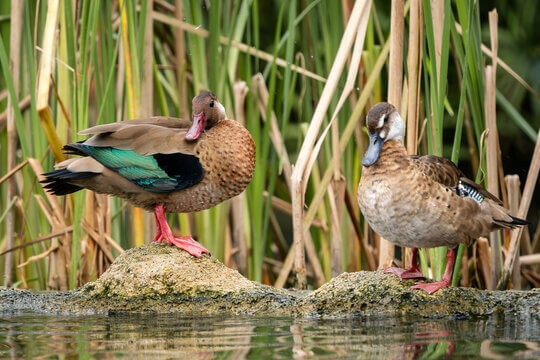
Native to eastern and central South America, the Brazilian Teal is a small, light‑brown duck that stands out in freshwater marshes and ponds. Males are easily noticed by their bright red beaks and legs and a pale grey patch on the side of their head and neck, while females look similar but with duller colors on their limbs.
These teals prefer shallow freshwater habitats with dense vegetation nearby, such as marshy lakes, slow rivers, and ponds away from coastal waters. They feed mainly in pairs or small groups, dabbling for seeds, roots, fruits, and insects near the water’s edge. Both parents help care for their young, and the species is known to be common and widespread throughout its range — from Brazil and Uruguay to Argentina, Paraguay, Bolivia, Venezuela, Colombia, and the Guianas.
Brazilian Teals do not undertake long migrations but may move locally if water levels or food availability change. Their adaptable habits and broad distribution mean they are currently classified as Least Concern on the global conservation scale.
13. Puna Teal
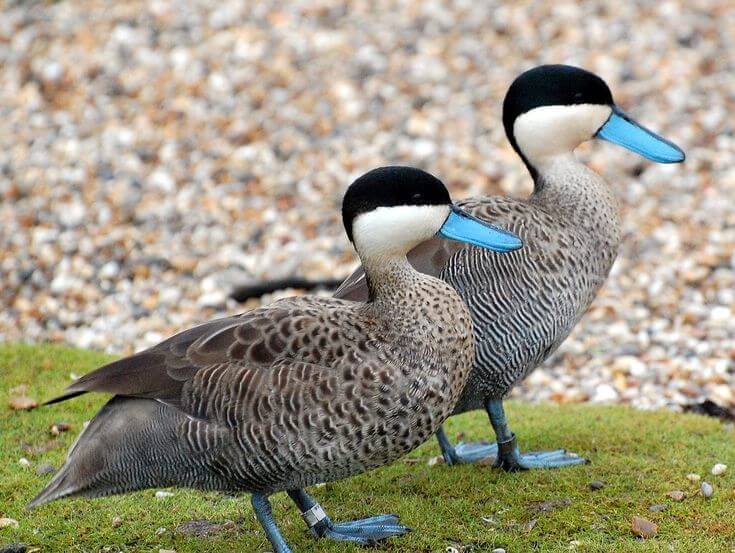
Commonly seen gliding across the high-altitude lakes of the Andes, the Puna Teal is a master of blending into the altiplano landscape. Adult males have a blackish-brown cap, creamy white lower face and neck, and coffee-colored body marked with delicate spots and bars, while their wings show dull blue coverts, white-tipped secondaries, and an iridescent green speculum. Their light blue bill with a black tip makes them easy to identify from a distance.
Females and juveniles are subtler, with duller colors and less defined patterns, and chicks display brown upper down, greyish-white underparts, and small white spots, along with a thin black eyestripe. Found on large lakes and pools in Peru, Bolivia, northern Chile, and northwest Argentina, the Puna Teal thrives in cold, high-altitude wetlands where its coloration and markings offer both camouflage and charm.
14. Baikal Teal
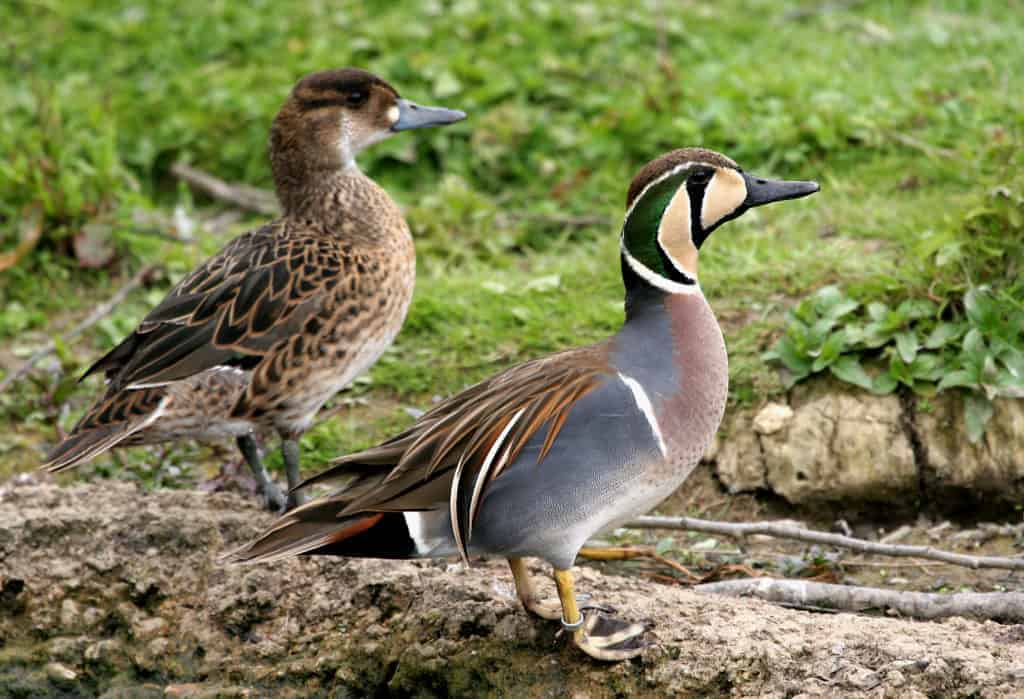
Famed for its brightly patterned head and expressive face, the Baikal Teal, also called the bimaculate duck or squawk duck, breeds in eastern Russia and migrates to winter in East Asia. The male is instantly recognizable with a striking green nape, yellow-and-black auriculars, dark crown, and light brown spotted breast, while its grey sides are accented with white bars.
Females resemble female Green-winged Teals but have a longer tail, a white spot at the base of the bill, a white throat stretching toward the eye, and a pale eyebrow, helping birdwatchers tell them apart. Juveniles look similar to females, though subtle markings like the pale loral spot distinguish them from other species.
Slightly larger than the common teal, the Baikal Teal is adapted for long migrations, covering thousands of kilometers each year. Outside the breeding season, males molt into a rich rufous-colored eclipse plumage, blending more with females while retaining hints of their characteristic markings.
15. Cape Teal
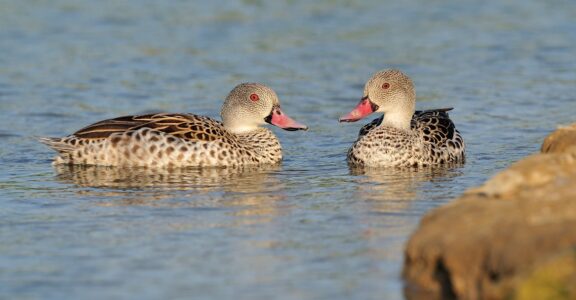
Known for its pale grey plumage and subtle pink bill, the Cape Teal is a dabbling duck of open wetlands across sub-Saharan Africa. Males and females look very similar, with slightly browner backs and juveniles missing the pink on their bills.
While usually quiet, this duck comes alive during mating displays: the male produces a clear whistle, while the female responds with a soft quack. Mostly non-migratory, Cape Teals move locally with the rains and can form large moulting flocks of up to 2,000 birds, though they are typically seen in smaller, dispersed groups.
These teals dabble for food, feeding on aquatic plants, invertebrates, crustaceans, and small amphibians. They build nests are built on the ground, hidden under vegetation near water, providing safety for their young in Africa’s open wetland habitats.
16. Campbell Teal
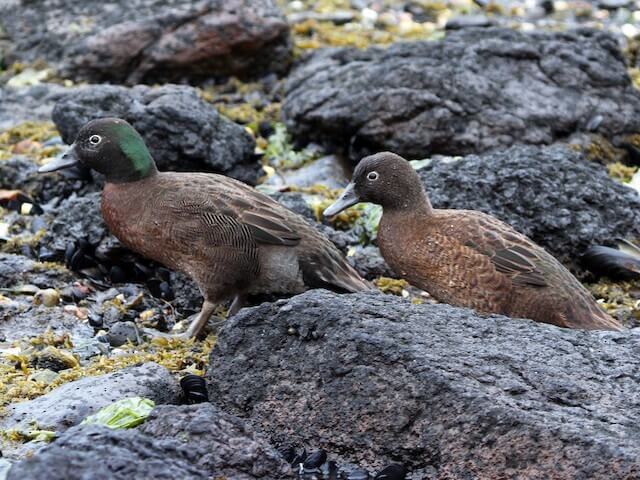
Endemic to New Zealand’s remote Campbell Islands, the Campbell Teal is a small, flightless, nocturnal duck that quietly navigates tussock grasslands and fern-covered terrain. Males display dark sepia plumage with a green iridescent tinge on the head and back and a chestnut breast, while females are uniformly dark brown, blending perfectly into their environment.
These teals make use of petrel burrows and natural pathways for shelter and foraging, feeding mainly on amphipods and insects. Territorial by nature, they carefully defend their home ranges despite the harsh island conditions. Classified as vulnerable by the IUCN, the Campbell Teal is a rare and highly specialized species that highlights the unique wildlife of New Zealand’s subantarctic islands.
Discover other flightless ducks here: Flightless Ducks: 7 Iconic Ducks That Can’t Fly
17. Auckland Teal
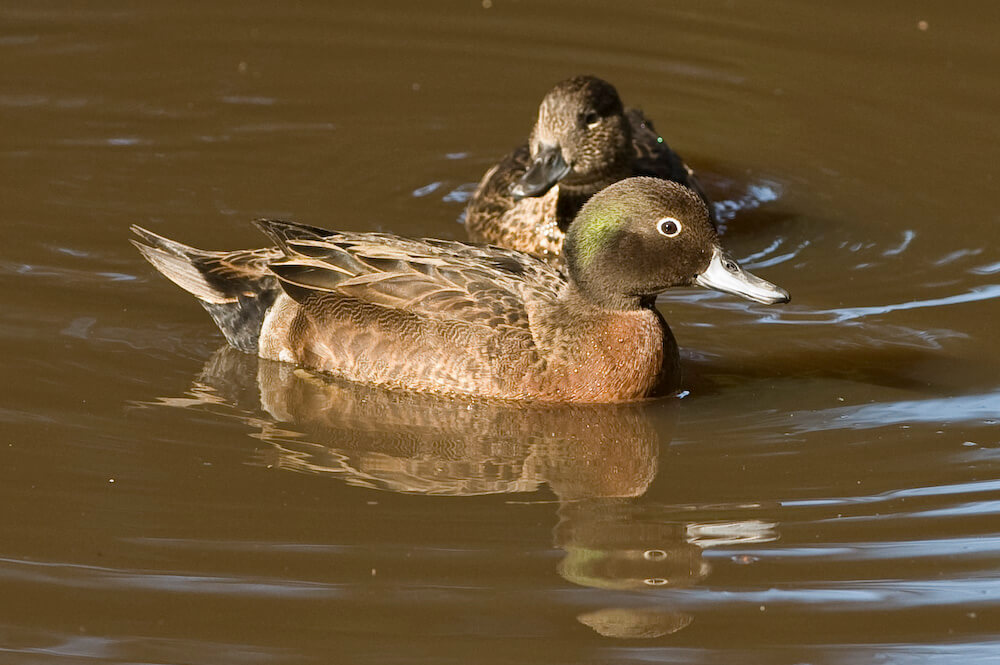
With small wings that can’t lift it into the air, the Auckland Teal is another ducks that has completely lost the ability to fly. Found only on the Auckland Islands south of New Zealand, it now survives mainly on predator-free islands like Adams, Enderby, and Disappointment.
This duck has all-over brown plumage with a slight green sheen on the neck and a clear white ring around the eye, while females are a bit darker than males. Its reduced wings are a clear sign of its flightless lifestyle, much like its close relative, the Campbell Teal.
Active mostly at dawn, dusk, and night, the Auckland Teal avoids daytime predators such as falcons and skuas. It moves through tussock grasslands, coastal areas, and dense shrublands, feeding mainly on insects and small marine creatures. Unlike many other ducks, it is territorial and rarely forms flocks, making it a quiet and solitary resident of these remote islands.
18. Salvadori’s Teal
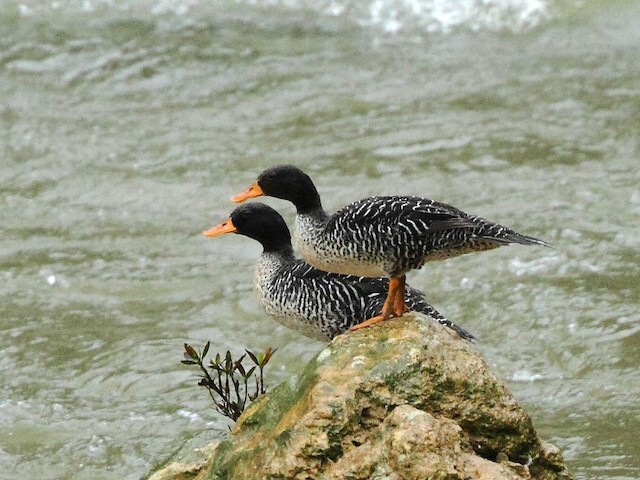
Hidden along fast-flowing mountain streams in New Guinea, Salvadori’s Teal is a quiet and secretive duck that is not often seen. It has a dark brown head and neck, while the body is patterned with bars and spots of dark brown and off-white, along with bright orange legs and a yellow bill that add a touch of color. Males and females look very similar, though males are slightly larger.
This teal prefers highland streams and lakes, where it feeds as an omnivore on both plant and animal matter. It builds its nest close to water, laying a small clutch of two to four eggs during the dry season. Although currently listed as Least Concern, its population may be slowly declining, making this shy duck an important species to watch in its remote habitat.
19. Bernier’s Teal
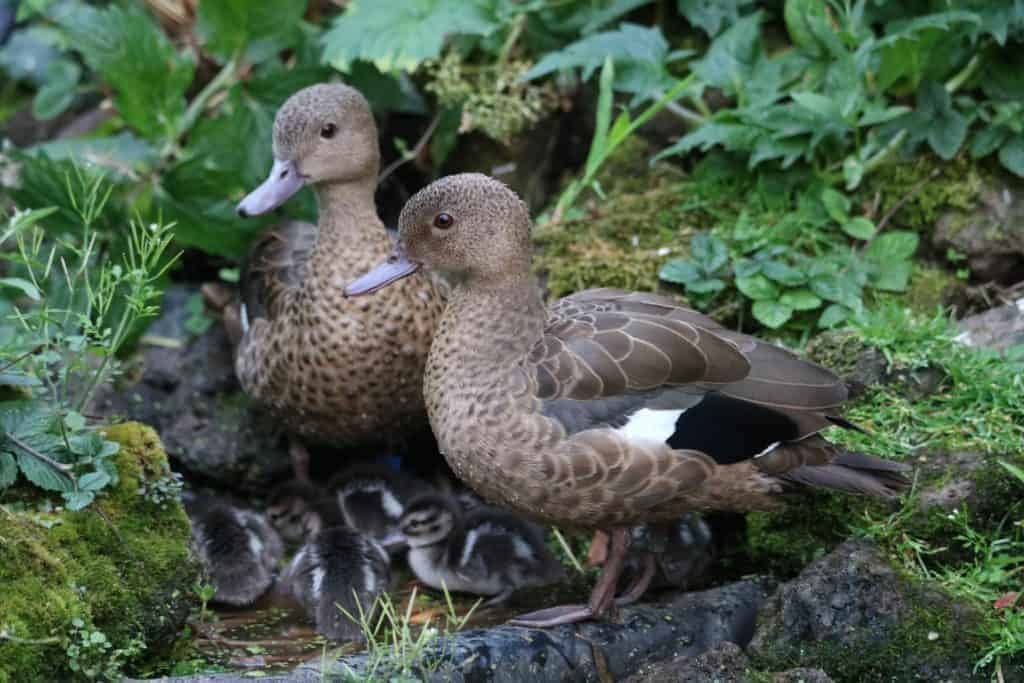
On the edge of extinction, the Bernier’s Teal survives in the shrinking mangrove forests of Madagascar, making it one of the rarest teals in the world. Both males and females look alike, with warm brown plumage, a reddish bill, and dull reddish-orange legs and feet, while males are only slightly larger.
This duck stays close to its habitat, rarely leaving the shallow, brackish ponds and lakes within mangroves. It depends heavily on these coastal wetlands for survival. Sadly, with only about 1,500 individuals left, the species is under serious threat from habitat loss due to logging, fuel use, farming expansion, and hunting. Its survival now depends on conservation efforts to protect the last remaining mangrove areas.
20. Andaman Teal
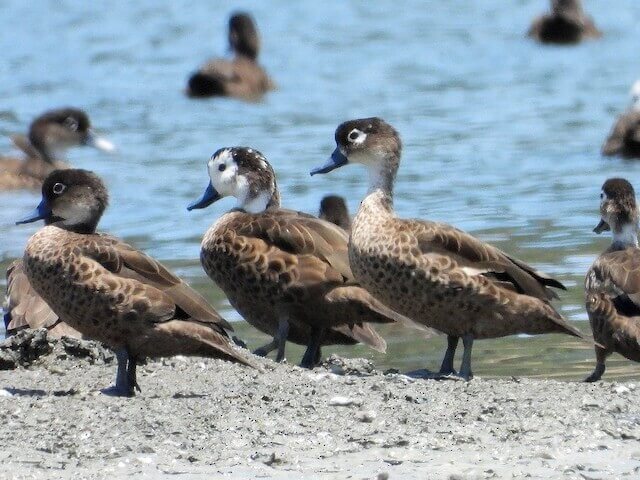
Found only on a handful of islands in the Bay of Bengal, the Andaman Teal is a rare duck with a very limited range. It has dark brown plumage with buff markings, a pale face and throat, a clear white ring around the eye, and a bluish-grey bill with red eyes that stand out in good light.
This teal lives in inland pools, mangroves, and lagoons, and is mostly active at night, often feeding in rice fields on molluscs and small insects. During the breeding season, it nests in reed patches, laying around nine eggs in a grass-lined nest. Although once very scarce, its population has slowly increased in recent decades, giving hope for the survival of this island species.
21. Sunda Teal
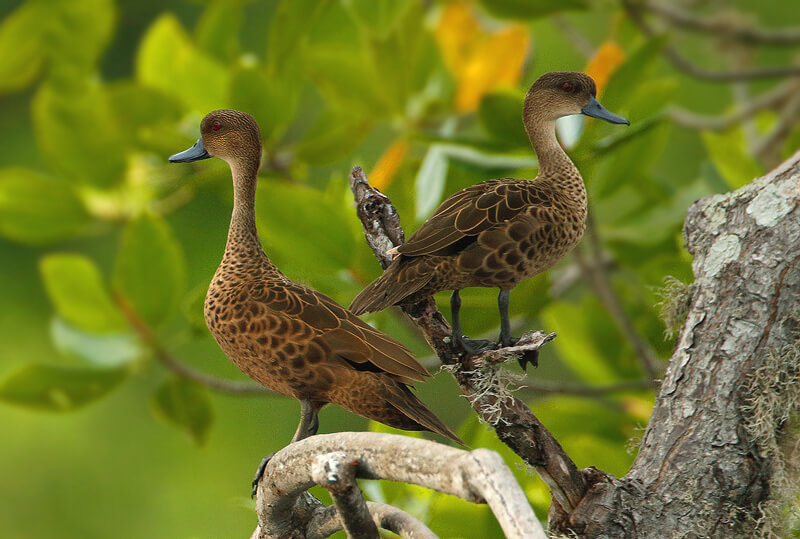
This is a small dabbling duck, found in Indonesia and Timor-Leste, and characterized by a mottled brown body with subtle white and green flashes on its wings. Males and females look alike, though you can tell them apart from similar ducks by its paler face, lighter neck, and slightly bulging forehead. Young birds are even paler, especially around the head.
The Sunda Teal prefers freshwater lakes and marshes, where it builds its nest close to water—usually on the ground, but sometimes in tree holes or even burrows. It is quite vocal, especially at night, with males giving a gentle peeping call while females produce a louder quack, adding life to the quiet wetlands after dark.
22. Andean Teal
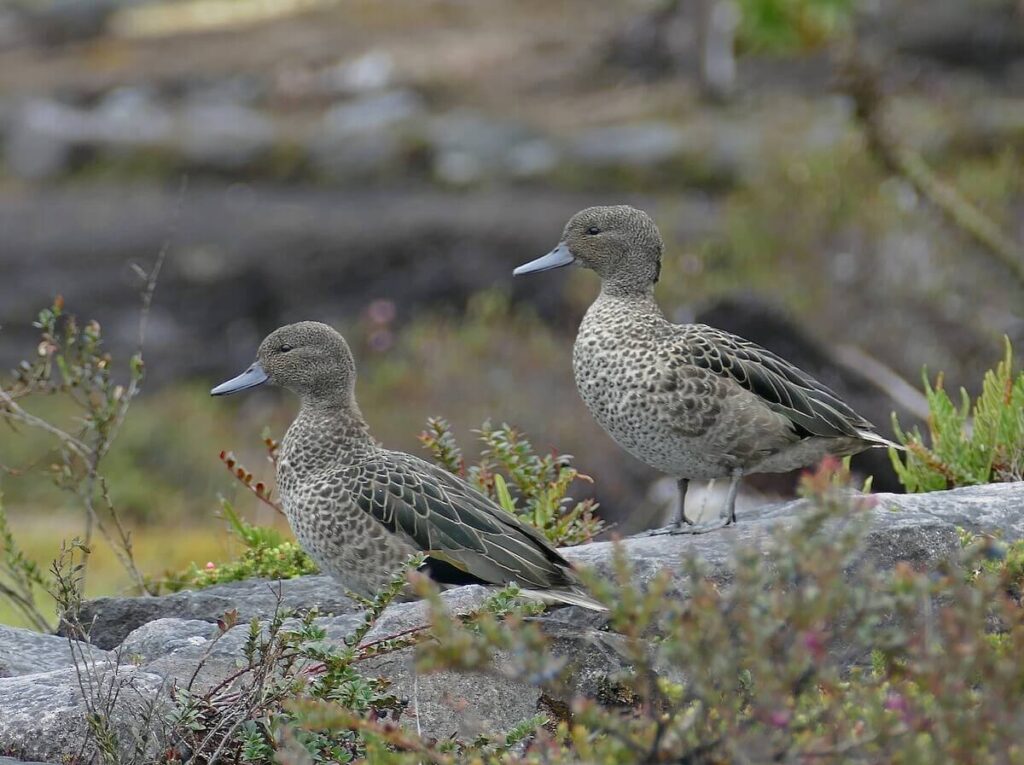
Tucked high in the Andean highlands of South America, the Andean Teal makes its home in cool freshwater wetlands well above sea level. This duck has dark grey‑brown plumage with subtle mottling and fine spotting, helping it blend into the reeds and grasses of its mountain lakes and marshes. Males and females look much the same, with both sexes sharing a dusky bill and legs.
Unlike many lowland relatives, the Andean Teal is adapted to life at altitude, thriving in habitats from Colombia through Venezuela and Ecuador and sometimes into Peru and Bolivia. It forages by dabbling in shallow water for plants and small invertebrates, often seen in small groups or pairs rather than large flocks. Though its population may move slightly with seasonal changes in water levels, it’s generally not considered threatened and is listed as Least Concern by conservation authorities.
23. Laysan Teal
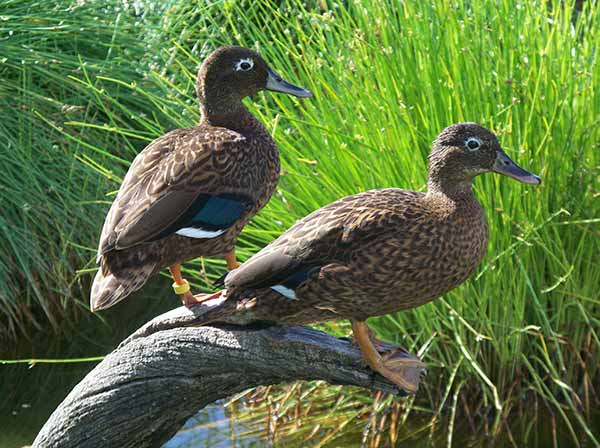
Endemic to the Hawaiian Islands, the Laysan Teal, or koloa pōhaka, is a small, dark brown dabbling duck with a striking white eye-ring that gives it a watchful expression. Males have a short, dark green bill with black blotches, while females have a dull orange bill with similar markings. Both sexes sport an iridescent purplish-green wing patch and, in older birds, patches of white feathers on the head and neck due to leucism.
This species flies only short distances; during the annual molt, it sheds all its flight feathers, leaving the ducks temporarily grounded. Adapted for life on land, Laysan Teals walk, run, and forage with ease, using their reduced wings and strong pelvic structure instead of flight. They can live up to 12 years in the wild and even longer in captivity.