27 Black And White Ducks (Wild Species & Domestic Breeds)
When people are looking for ducks to photograph or raise at home, many are naturally drawn to the brightest and most colorful species or breeds. But beauty in ducks is not always about bright, flashy colors. If you look closely, you will notice that there are many stunning ducks that have simple black and white plumages, with timeless contrasts that can stand out even more than brightly colored ducks.
Curious which ducks show off this classic look? There are quite a few species to explore. To make it easier, we’ve divided them into two groups: wild black-and-white ducks and domestic black-and-white ducks, so you can browse the list quickly based on your interests.
- Black and White Wild Ducks
- 1. Bufflehead
- 2. Common Goldeneye
- 3. Barrow’s Goldeneye
- 4. Long-Tailed Duck
- 5. Smew
- 6. Tufted Duck
- 7. Common Eider
- 8. Common Merganser
- 9. Ring-necked Ducks
- 10. King Eider
- 11. Northern ‘Borealis’ Eider
- 12. Scaly-sided Merganser
- 13. Spectacled Eider
- 14. Steller’s Eider
- 15. Greater Scaup
- 16. Lesser Scaup
- 17. Canvasback
- 18. Knob-billed Duck
- 19. Common Shelduck
- 20. Radjah Shelduck
- Black and White Domestic Ducks
Black and White Wild Ducks
1. Bufflehead
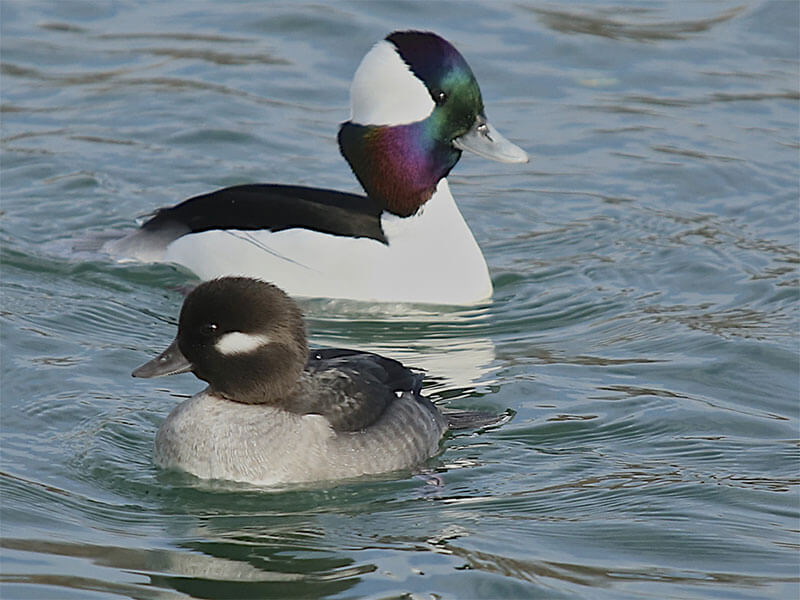
The first black and white duck that many birders are always be happy to spot is the Bufflehead . Despite its small size, it’s easy to notice, thanks to its bold contrast of black and white feathers.
The male looks especially striking, with a glossy dark head that shimmers in green and purple light, plus a large white patch near the back of the head. The female is less bold than the male and shows mostly grey plumage with a lighter belly and a smaller white mark on her head.
What really makes this duck fun to watch is its constant movement. Buffleheads rarely sit still; they are always diving underwater in quick bursts to find food, then popping back up again moments later. You’ll usually see them in small groups rather than large gatherings.
They prefer to nest in tree holes instead of open ground. Many of these nests are actually old woodpecker holes, which suit their small bodies perfectly. During winter, they head to lakes and coastal waters across North America, where they continue their energetic diving routines.
Buffleheads are not the only ducks that love nesting in trees. Discover more tree-nesting ducks: 23 Ducks That Nest In Trees
2. Common Goldeneye
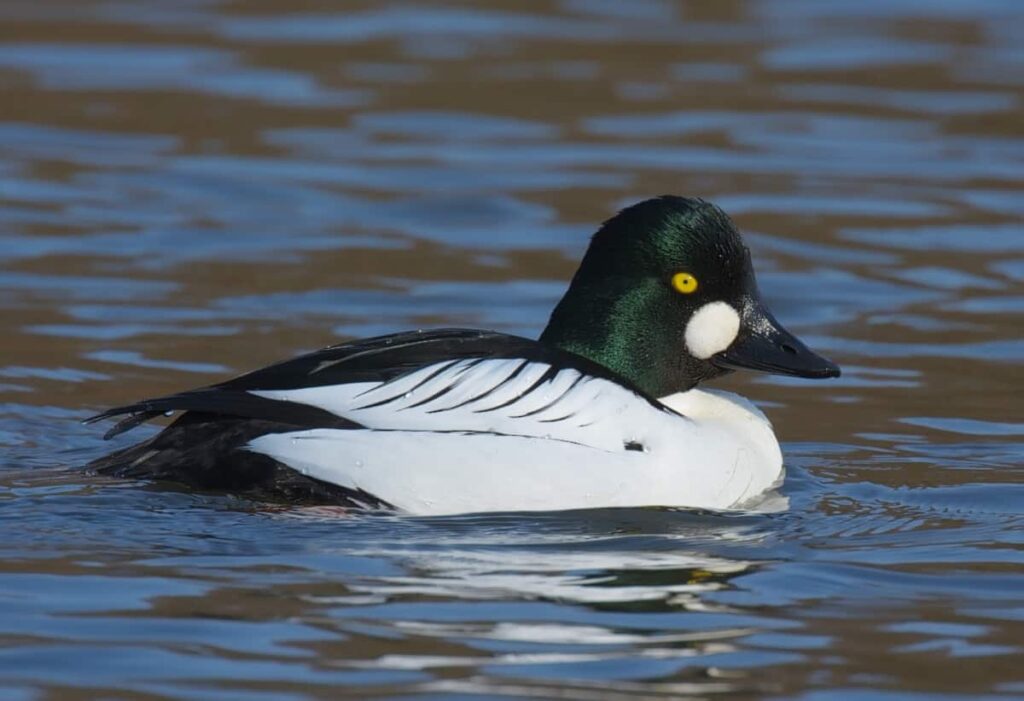
The Common Goldeneye earns its name from the striking golden-yellow eyes that seem to glow against its dark head. Males stand out with bold black-and-white plumage: a glossy greenish-black head, a round white patch below the eye, a dark back, and a crisp white neck and belly. Females are less flashy, with a brown head and mostly grey body.
These ducks are skilled divers and often plunge underwater to catch crustaceans, insects, and mollusks.. They are aggressive and territorial, with males performing elaborate courtship displays to impress females.
Common Goldeneyes are found in lakes and rivers across boreal forests in North America and northern Europe, where they thrive in quiet, clear waters.
3. Barrow’s Goldeneye
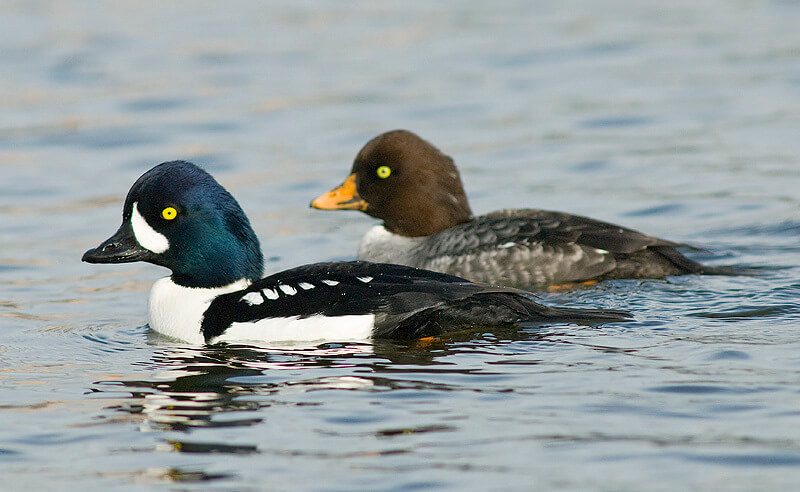
At first glance, Barrow’s Goldeneye look a lot like Common Goldeneyes, but a closer look reveals key differences. Their heads are smaller and more oblong, with males showing a glossy purple sheen, bright yellow eyes, and a white crescent between the eye and bill. Their black-and-white patterns are sharp and striking. Females are more subtle in color, with a coppery-brown head, gray body, and mostly yellow bill.
These ducks breed on wooded lakes and ponds in northwestern North America, with smaller populations in eastern Canada and Iceland. Female Barrow’s Goldeneyes show strong site fidelity and tend to return to the same breeding grounds and even the same nest sites year after year.
Don’t the yellow eyes of the Goldeneyes above look striking and contrast beautifully with their overall plumage? Discover more ducks with yellow eyes: 11 Ducks with Yellow Eyes (Pictures Included)
4. Long-Tailed Duck
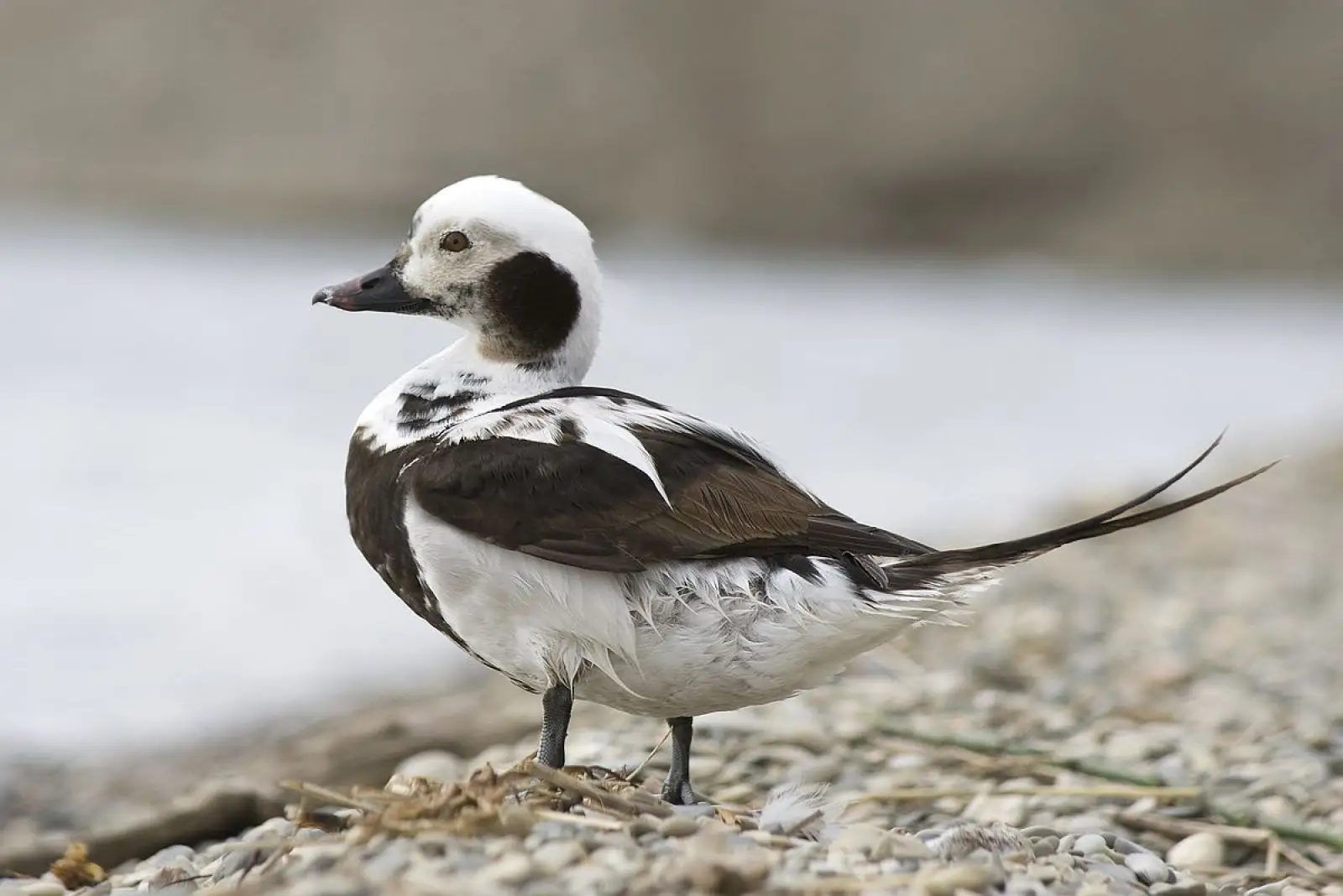
The Long-Tailed Duck is a medium-sized sea duck, instantly recognizable by the male’s long pointed tail and its dramatic seasonal changes in plumage.
In winter, males display a mostly white body with a dark cheek patch, while in summer they show a dark head, neck, and back with a contrasting white cheek patch. Females are more subtle, with a brown back and shorter pointed tail, and like the males, their head coloration shifts between seasons.
They breed in tundra pools, marshes, and northern mountain lakes, and winter along the northern coastlines of the Atlantic and Pacific Oceans. They are highly social and often gather in large flocks during migration and winter, diving frequently for mollusks, crustaceans, and small fish to fuel their energy-demanding lifestyle.
5. Smew
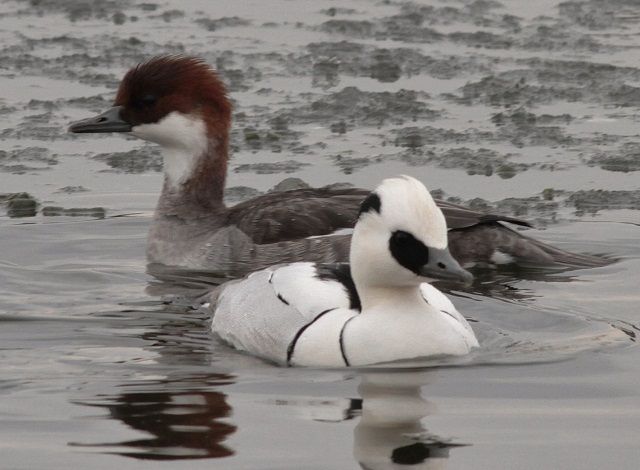
The Smew is another striking black-and-white duck, with the adult male often nicknamed the “panda duck” or “cracked ice” for its bold pattern.
Females and immature males, called “redheads”, are mostly grey with a chestnut forehead, white chin and cheeks, and dark lores. Young males gain the adult black-and-white plumage at around 8–10 months, while adult males adopt a lighter eclipse plumage in late summer and autumn.
Equipped with a hooked, serrated bill, Smews are expert fish catchers, and often dive efficiently in fish-rich lakes and slow rivers. They breed across the northern taiga of the Palearctic, from Scandinavia to Chukotka, and rely on tree cavities for nesting. In flight, their oval white wing patches make them unmistakable among other diving ducks.
6. Tufted Duck

The Tufted Duck is instantly recognizable by the male’s prominent head tuft, glossy black body, and contrasting white flanks, paired with golden-yellow eyes and a blue-grey bill. Females are brown with lighter flanks, and sometimes show white at the base of the bill, which can make them look a little like scaups.
They are partially migratory and breed across temperate and northern Eurasia. The males are mostly silent but give a soft whistle during courtship, while females are more vocal, producing a harsh, growling “karr”, usually in flight. These ducks are expert divers, feeding primarily on aquatic invertebrates and plant matter in lakes and slow rivers.
7. Common Eider
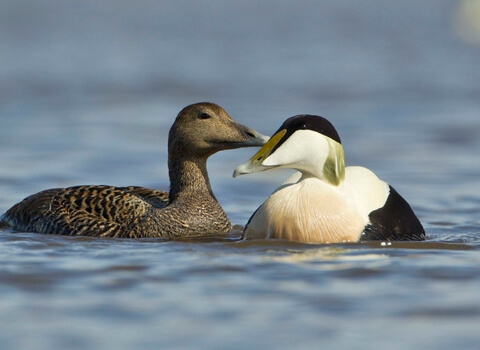
Also known as St. Cuthbert’s duck or Cuddy’s duck, the Common Eider is a large sea duck measuring 50–71 cm (20–28 in). The male is striking, with black-and-white plumage and a green nape, while the female is a warm brown, and is easily distinguishable by her large size and unique head shape.
They mostly breed in the Arctic and northern temperate regions, but migrate slightly South in winter, where they tend to form large coastal flocks. They are remarkably strong fliers and can reach speeds of up to 113 km/h (70 mph). Males perform odd, almost human-like display calls during courtship, which adds an unusual touch to their coastal breeding rituals.
8. Common Merganser
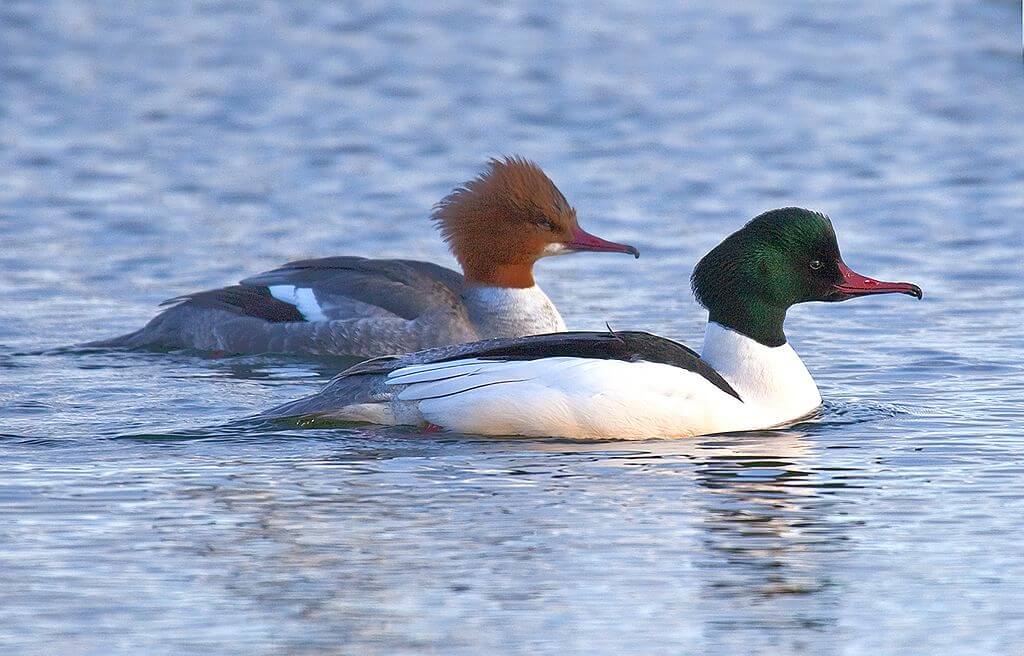
Common Mergansers, or goosanders in Eurasia, are large diving ducks with a striking black-and-white pattern in breeding males. Breeding males are particularly easy to recognize with their white bodies, dark backs, and shiny green heads. Females and immature males are mostly gray with cinnamon-red heads and white throats, showing a softer, less contrasting palette.
These ducks are fish-eating specialists, with serrated “sawbills” that grip slippery prey underwater. They nest in tree cavities near water and are known for returning to the same sites each year. Their diet isn’t limited to fish though as they also eat molluscs, crustaceans, insect larvae, and occasionally small birds or mammals, making them versatile aquatic hunters.
9. Ring-necked Ducks
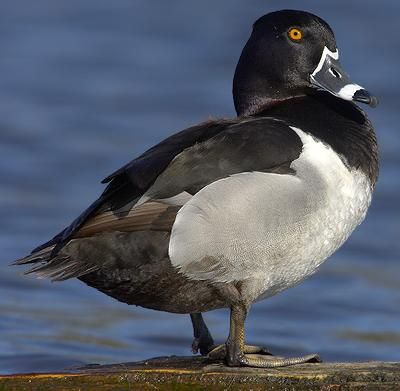
Ring-necked Ducks are medium-sized diving ducks with a sleek, angular shape. Adult males show a striking black-and-white pattern similar to their relative, the Eurasian tufted duck. They have shiny black heads and backs, white breasts, white wing lines, and two white rings around gray bills, with bright yellow eyes.
Females are more subdued, with gray-brown bodies, a dark back, subtle bill markings, grayish-blue feet, and brown eyes encircled by white; they also give a soft “trrr” call. These ducks feed by diving or dabbling, and the ducklings rely on small animals like insects, snails, and worms for food.
10. King Eider
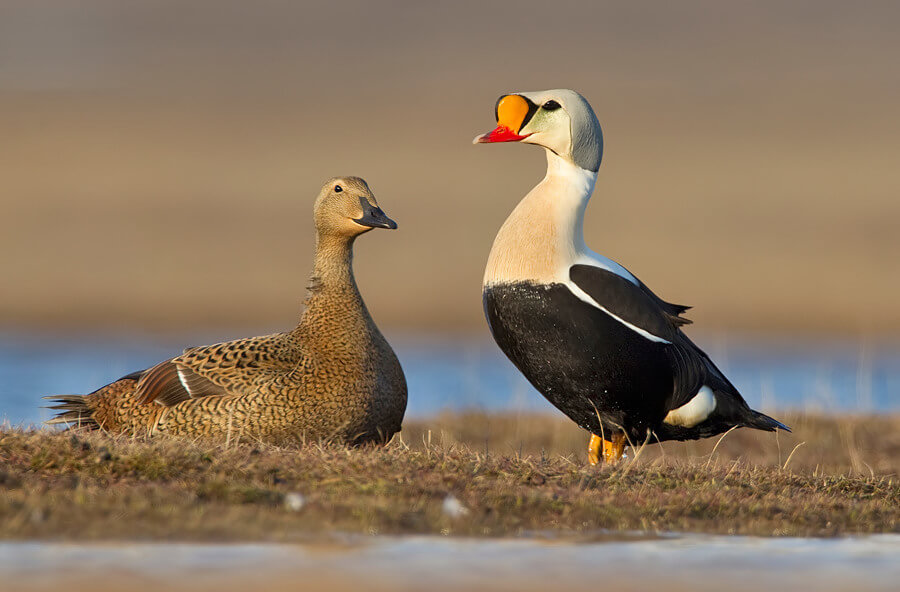
Another striking black-and-white diving duck is the male King Eider. It stands out with a mostly black body, buff-tinged white breast, and a multicolored head, which is pale bluish-grey on the head, nape, and neck, with a pale green cheek and a bright red bill topped by a yellow knob. Some back feathers curve upward like tiny spurs, adding to its dramatic appearance.
Females have more understated, warm brown plumages with fine black streaks and chevron markings, buffy eye rings, and subtle spots at the base of their bills.
King Eiders breed along Arctic coasts across Alaska, Canada, Greenland, Svalbard, and Russia, and migrate to winter in arctic and subarctic marine waters, including the Bering Sea and northern Norway.
11. Northern ‘Borealis’ Eider

The next black-and-white duck on our list is the Northern Eider (Somateria mollissima borealis), a rare Arctic form of the Common Eider.
Males resemble typical Common Eiders but show small scapular “sails” on their backs and a bright yellow-orange bill and legs. The bill is slightly longer, droops at the tip, and has distinctive lobes and black edging.
In Britain, Northern Eiders are very rare, usually appearing in small numbers alongside Common Eiders. Subtle differences in plumage, bill, and leg color make them a prized sight for keen birders. Other vagrant Eider forms, like Dreser’s Eider, have also been recorded, highlighting the hidden diversity within this familiar sea duck.
12. Scaly-sided Merganser
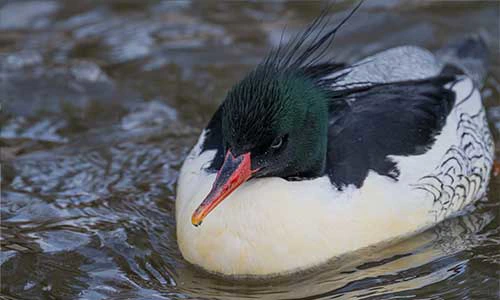
Another merganser that we can say is black and white is the Scaly-sided Merganser (Mergus squamatus), an endangered species found in Manchuria and southeastern Siberia.
Adult males are striking, with a black head and neck, white breast and underparts, blackish mantle and wings, and a thin red bill.
Both sexes have a wispy crest (which is usually longer in males) and flanks that show distinctive scaled patterns.
Females replace much of the black with grey and have buffish heads. Their legs are orange-red, and their dark eyes give them a sharp, alert look. This merganser breeds in the north and winters farther south, often in forested rivers.
Discover other types of mergansers: 7 Types of Mergansers You Should Know
13. Spectacled Eider
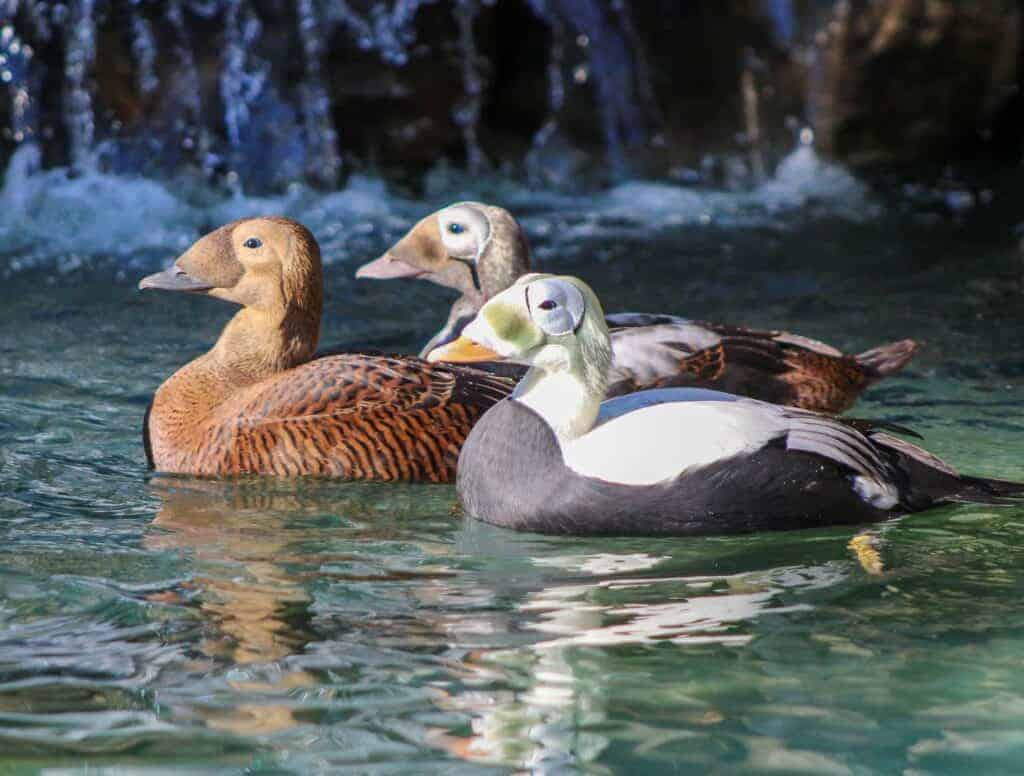
Slightly smaller than the Common Eider, the Spectacled Eider is instantly recognizable by the male’s black body, white back, and yellow-green head adorned with large white “spectacle” patches around the eyes.
Females are rich brown but can still be identified by their pale eye markings and robust size.
These sea ducks breed along the coasts of Alaska, eastern Russia, and the Bering Sea, with males giving a soft crooning call and females a harsh croak.
14. Steller’s Eider
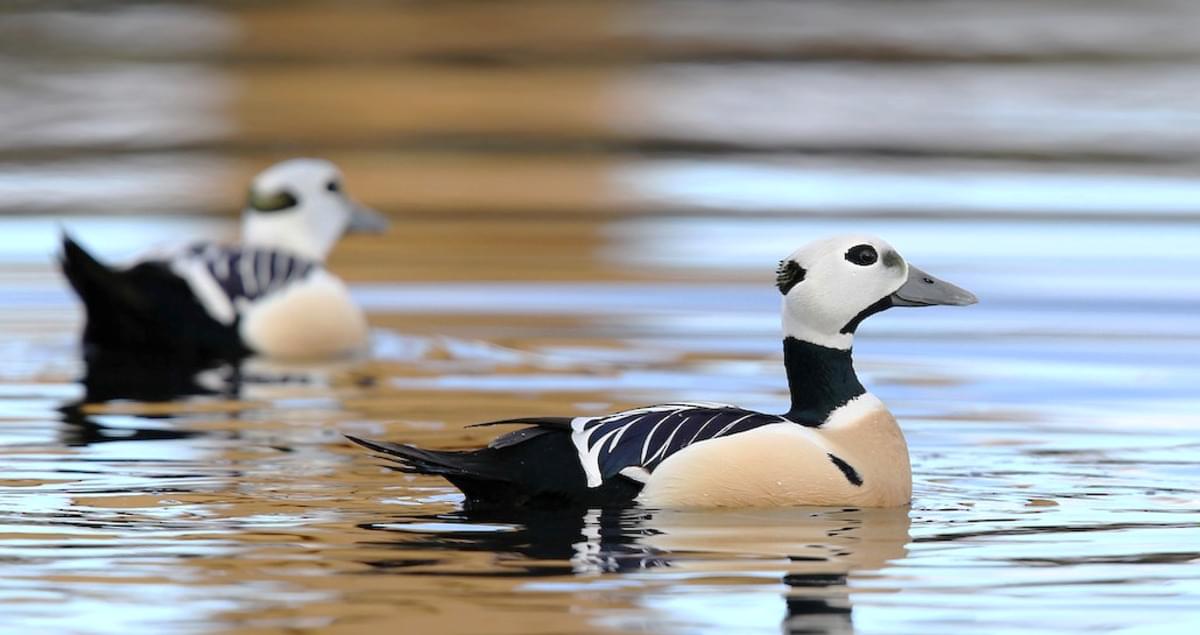
Another eider that we can also include in our list of black-and-white ducks is the Steller’s Eider.
This small, fast-flying Arctic sea duck breeds along the coasts of Russia, Alaska, and the Baltic Sea.
The male is unmistakable in breeding plumage, with a black cap, chin, collar, eye-ring, and rump, contrasted by a white head and shoulders, light green patches near the eyes, and a cinnamon breast marked with a black spot.
Females and juveniles have shades of brown with pale eye-rings and subtle white-edged wing feathers.
Both sexes display an iridescent bluish-purple speculum on their wings, and their compact bodies, relatively long tails, and thick bills make them highly distinctive among eiders.
15. Greater Scaup
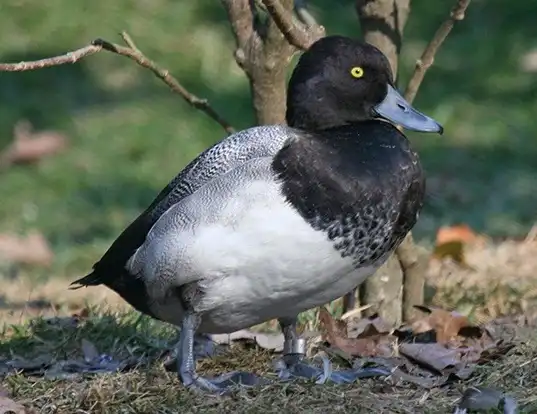
Another duck that also meets our black-and-white ducks description, especially when you observe it from afar, is the male Greater Scaup.
From a distance, the contrast of its dark head and breast against the white belly and wing stripe makes it instantly recognizable.
Males sport a green to purple iridescent head, pale grey upperparts, and a bold white wing stripe, while females are mostly brown with white wing and facial patches. Both sexes have blue-grey bills and yellow eyes.
Greater scaup nest near water—on islands or floating mats of vegetation—and dive for mollusks, plants, and insects, sometimes reaching depths of 6 meters, rarely 10. They are social and form massive wintering flocks, known as “rafts,” that can number in the thousands.
16. Lesser Scaup
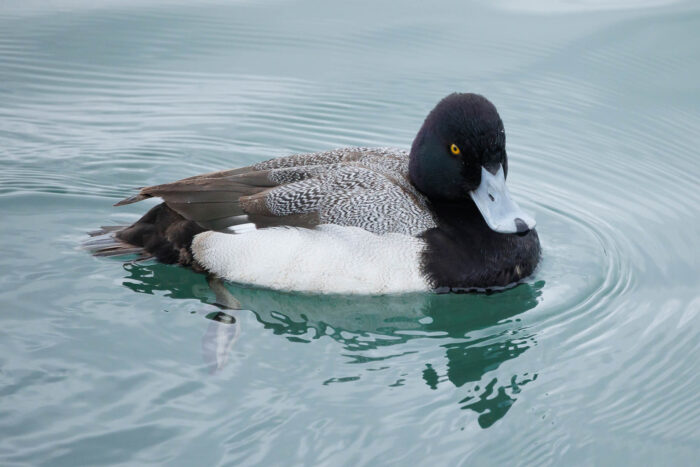
If Greater Scaup is on our list, the next obvious duck species to include is the Lesser Scaup, due to their high resemblance.
Adult males display a glossy black head with a small tuft, black breast, whitish-grey back, and striking white underparts. Their wings show dark vermiculations with a prominent white patch on the secondaries, while the tail and rectrices are black. Females are mostly dark brown with a subtle white band at the base of the bill and a lighter ear region.
Compared to Greater Scaup, Lesser Scaup are smaller, less bulky, and have a narrower, straighter bill. In flight, the white secondary wing patch is the key feature that set them apart.
17. Canvasback
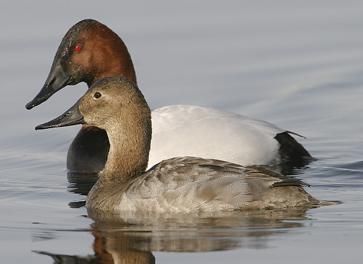
The Canvasback gets its name from the fine, canvas-like pattern on the drake’s back, a feature early European settlers noticed when they first saw the species.
Males are striking with a chestnut-red head and neck, black breast, gray back, black rump, and white sides and belly etched with delicate vermiculation. Their blackish bill and bluish-gray legs complete the elegant look, while their bright red eyes stand out in spring. Females are more muted, with a light brown head fading into a darker chest and grayish-brown sides and back.
These ducks are expert divers, and are known to feed mostly on seeds, buds, leaves, tubers, roots, snails, and insect larvae beneath the water. Canvasbacks rely on open lakes and marshes for food, and their preference for diving gives them an edge in reaching underwater plants and invertebrates that other ducks might miss.
18. Knob-billed Duck
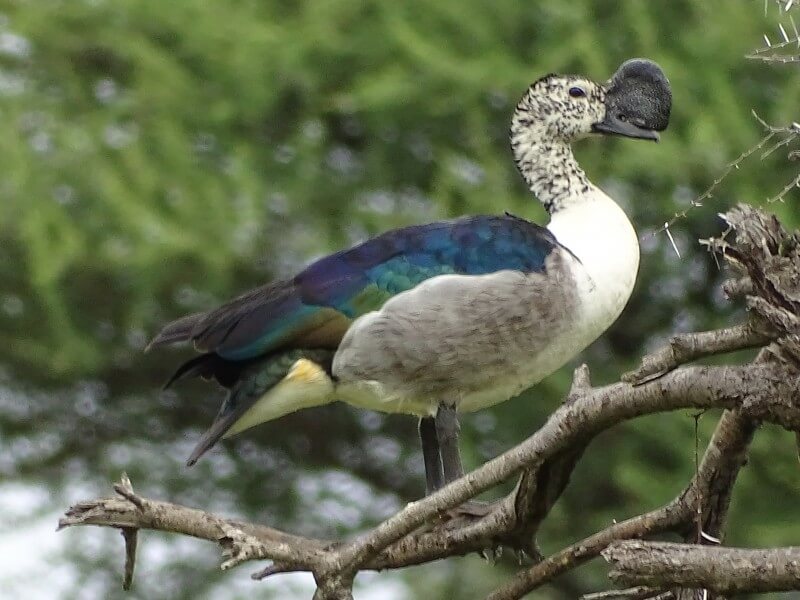
The Knob-billed Duck, also known as the African Comb Duck, stands out with its bold black-and-white plumage and glossy iridescent upperparts that shimmer with blue and green tones when light hit them right.
Males are larger than females and have a distinctive black knob on their bill. Both sexes have a white head marked with dark spots and pure white neck and underparts.
These ducks favor still freshwater swamps and lakes in tropical regions, where they breed and raise their young ones. They mostly stay in one area year-round but may disperse during the wet season. Their size and striking appearance make them one of the most noticeable ducks across Sub-Saharan Africa, Madagascar, South Asia, and mainland Indochina.
19. Common Shelduck
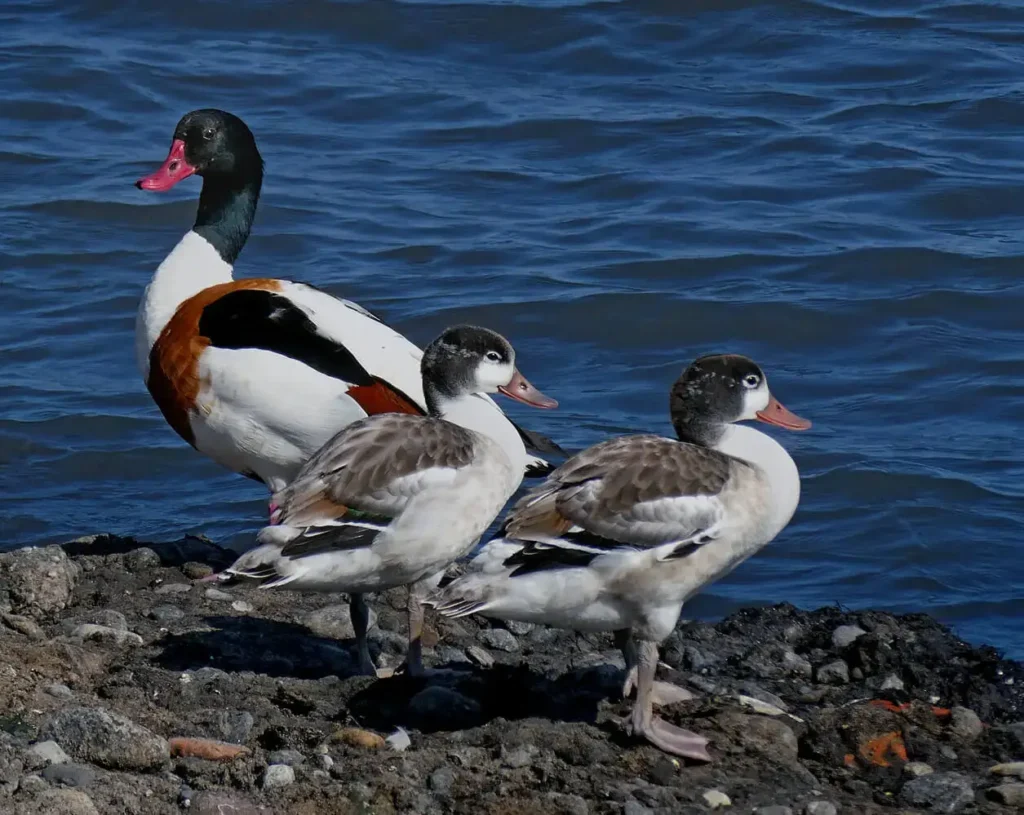
Another duck we can include in this list of black-and-white ducks, though it has distinctive colorful markings, is the Common Shelduck.
Its body is mostly white with striking black and chestnut patches, while the head and neck are dark green. The reddish-pink bill and pink feet add extra flair, and in flight, flashes of green and chestnut on the wings appear alongside almost entirely white underwings.
Females are smaller and show some white facial markings, while males reach peak brilliance in breeding season, with their bills turning to bright red with a noticeable forehead knob.
Common Shelducks breed across the Euro-Siberian region and migrate to subtropical areas in winter, including parts of the Maghreb. They favor open wetlands, estuaries, and coastal habitats, where their bold plumage makes them easy to spot among other waterfowl.
20. Radjah Shelduck
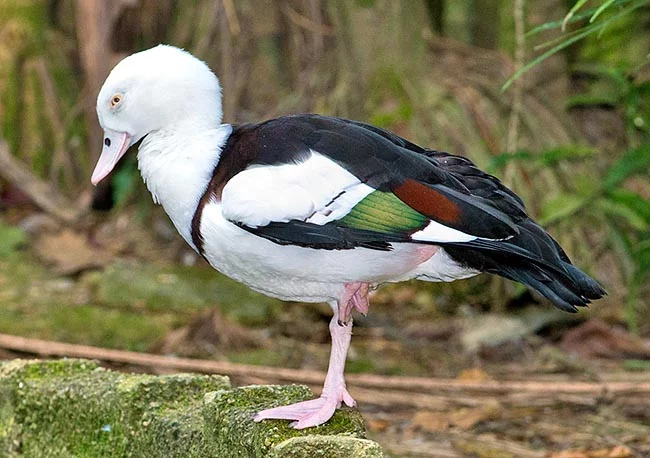
Also called the raja shelduck, black-backed shelduck, or Burdekin duck, this striking duck is also worth being in our list of black-and-white ducks.
Both males and females are mostly white, with dark wing-tips and a distinctive dark collar around the neck. In flight, green bands appear on the tops of their wings, adding a subtle splash of color to their elegant black-and-white look.
These ducks are vocal and expressive: females make a harsh rattling call, while males produce a soft, breathy whistle that sounds almost like a sore throat.
Radjah Shelducks live along mangrove forests and coastal areas of New Guinea, Australia, and some of the Moluccas, where they navigate both water and shoreline with ease.
Discover more ducks with white heads: 19 Ducks with White Heads
Black and White Domestic Duck Breeds
21. Muscovy Duck
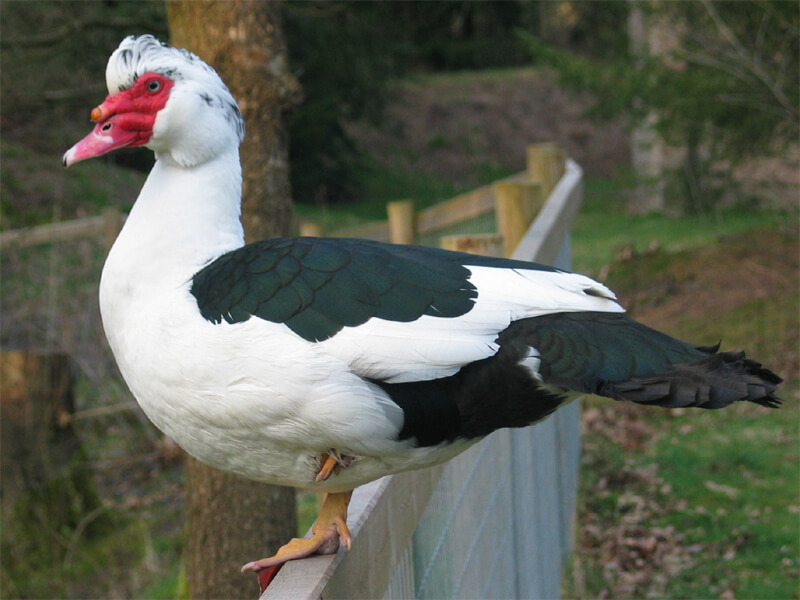
The first black-and-white domestic duck that many people instantly recognize is the one with bright red, bumpy skin around its face: the impressive and unmistakable Muscovy Duck.
These ducks come in many colors, but one of the most eye-catching colors are the black-and-white variety. Their white feathers often mix with glossy black patches that shine green or purple in the right light.
Muscovies are quiet compared to most ducks—they don’t quack much, but they make gentle hissing and cooing sounds instead.
They’re great for keeping around farms because they eat lots of insects, weeds, and even small pests. Muscovies also make devoted parents and can hatch large clutches of ducklings several times a year.
22. Magpie Duck
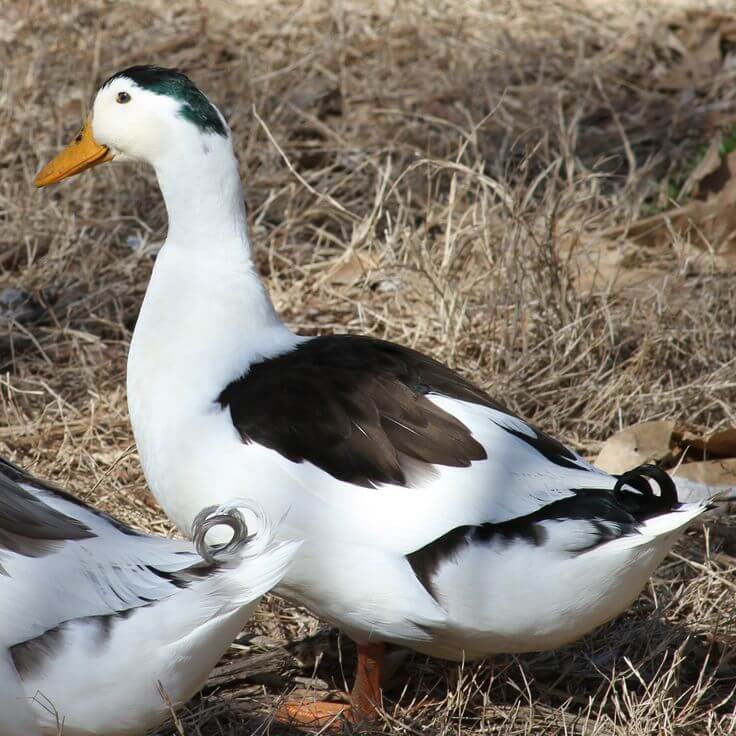
Named after the bird it resembles, the Magpie Duck has a neat black-and-white pattern that looks like it’s wearing a tuxedo. Most have white bodies with black patches on the head and back, though sometimes the black can fade as they age.
They’re cheerful, active ducks that love to forage in the grass for bugs and greens. Magpies are also excellent layers that are known to produce up to 200 or more eggs per year. Their calm nature makes them easy to care for, and their tidy markings have made them a real favorite among backyard duck keepers.
23. Ancona Duck
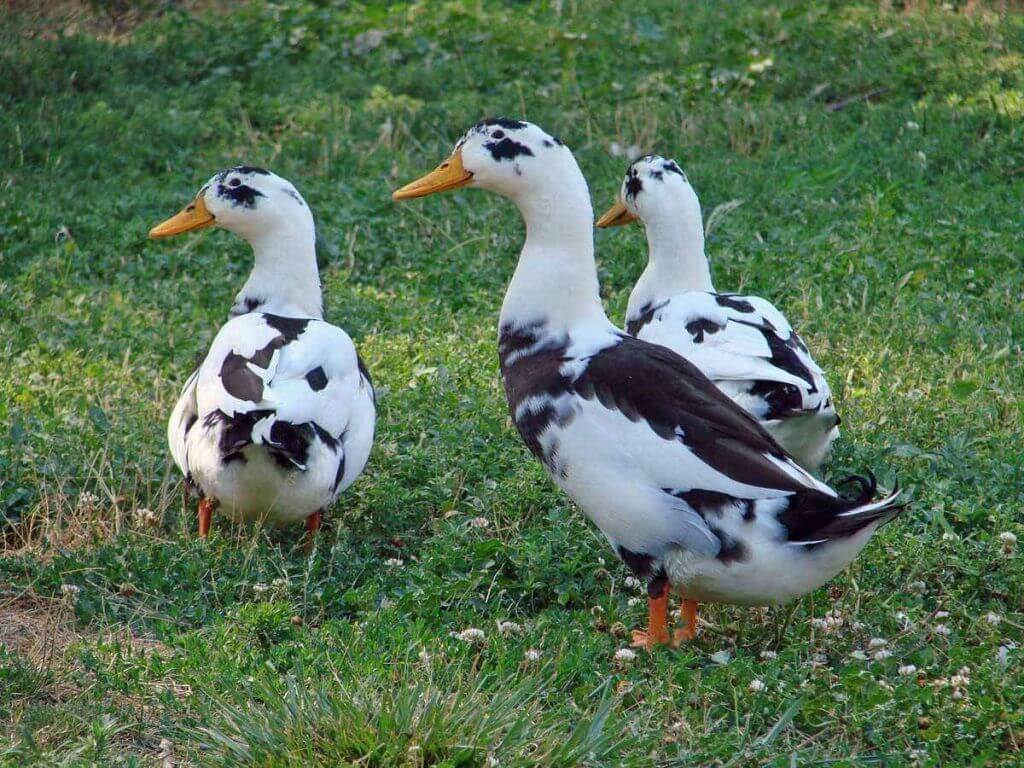
The Ancona is a beautiful, friendly duck known for its unique black-and-white splashes that never look the same on any two birds. One might have a black face and white chest, while another could be mostly white with a few black spots.
Anconas are hardy and adaptable, and are known to lay plenty of large eggs in shades of white, blue, or green. They enjoy foraging and are gentle enough to keep with other birds. Their soft, low voices and playful personalities make them a joy to watch around the pond or garden.
24. Swedish Black (Blue Swedish) Duck
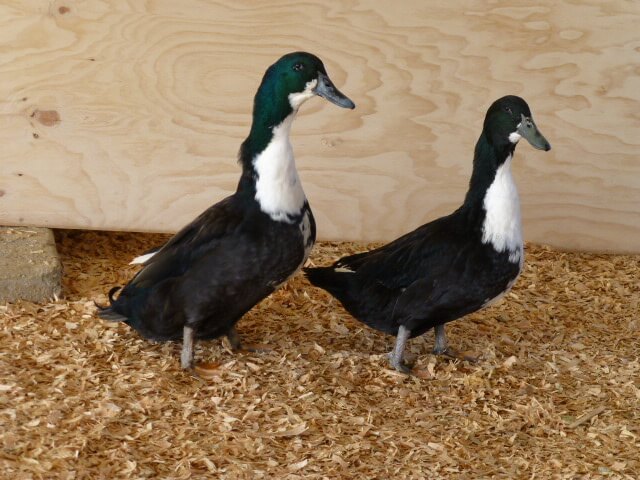
Among the friendliest of domestic ducks, the Swedish Black, also known as the Blue Swedish, shows off a smart and tidy look. The Black Swedish has glossy black feathers that shimmer green in the sunlight, paired with a neat white bib on its chest, while the Blue Swedish wears soft bluish-gray feathers with the same white patch. These ducks are calm and easy to handle, making them perfect for small farms or backyards.
They lay a fair number of large, white eggs and enjoy foraging in grassy areas for insects and plants. Their gentle quacks and peaceful behavior make them a favorite with families and bird lovers alike.
25. Pekin Crosses (Mixed Breeds)
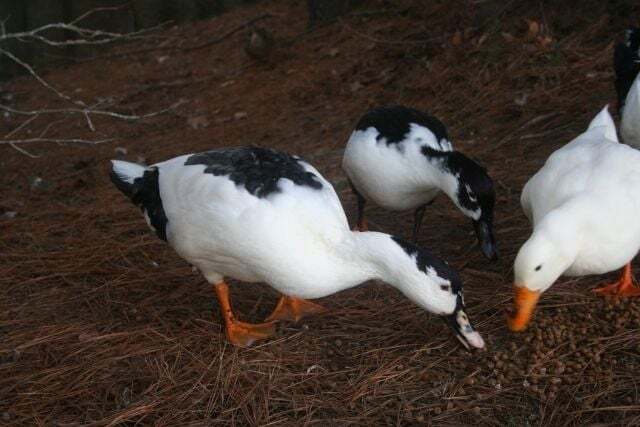
Most people know the Pekin as the classic big white duck, but when it’s crossed with darker breeds like the Cayuga or Magpie, you can get some truly beautiful black-and-white patterns. These mixed ducks can have anything from white faces and dark wings to patchy markings across their whole bodies.
Because they’re crossbreeds, their looks and personalities can vary quite a bit, but many inherit the Pekin’s friendly nature and the hardiness of their darker parents. They’re usually good egg layers, grow quickly, and make lively additions to a mixed flock.
26. Elderly Cayugas
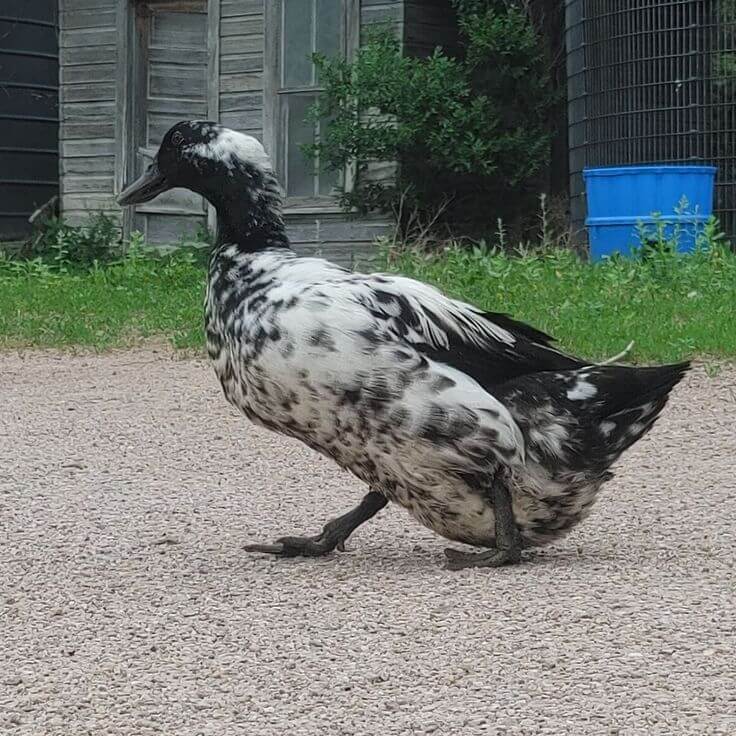
Cayugas are famous for their rich, black feathers that shine with green and purple tones, but as they grow older, something magical happens, especially to females: their feathers begin to turn white. Over time, an elderly female Cayuga can end up looking black and white, almost like it has frosted tips! This color change doesn’t affect their health though; it’s just a sign of maturity.
These ducks are quiet, gentle, and easy to keep, and love both ponds and grassy yards. They also lay dark, almost charcoal-colored eggs early in the season, which gradually lighten as the weeks go by.
27. Pomeranian Duck
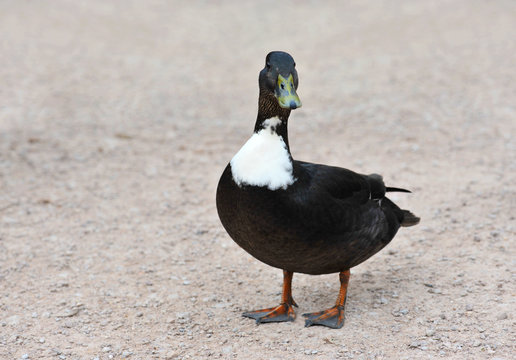
Also known as the Pommern duck, the Pomeranian is a domesticated breed that hails from the Pomerania region along Germany’s Baltic Sea coast. Its striking black or blue body contrasts sharply with a pure white breast, while dark beaks, feet, and brown eyes complete its classic look.
Medium-sized, males weigh around 3 kg and females about 2.5 kg. These ducks are reliable layers, producing 70–100 eggs per year, each weighing 80–90 grams. The Pomeranian’s calm temperament and bold black-and-white plumage make it a favorite among domestic flocks.