
Blue-billed Duck
Scientific Name:
Oxyura australis
Measurements
| Feature | Male | Female |
|---|---|---|
| Length | Up to 40 cm (16 in) | Up to 40 cm (16 in) |
| Weight | Around 500–900 g (1.1–2 lb) | Around 500–900 g (1.1–2 lb) |
| Wingspan | About 62–70 cm (24–28 in) | About 62–70 cm (24–28 in) |
Status
Endemic to Australia, the Blue-billed Duck lives in temperate regions across the south and east of the country. It’s currently listed as Least Concern globally but remains vulnerable or endangered in some Australian states, mainly due to wetland loss and water regulation.
Identification
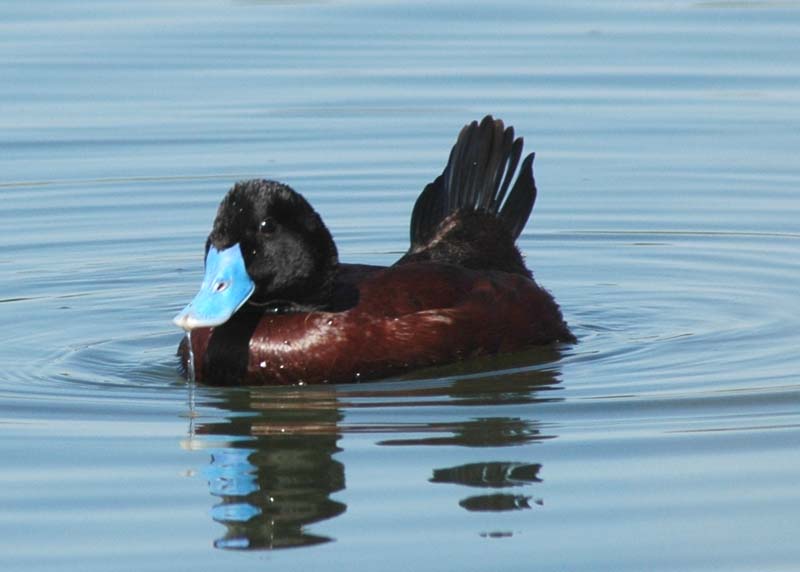
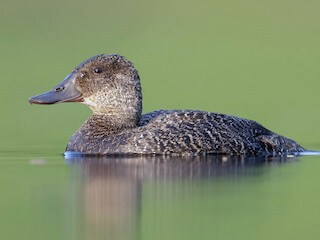
This small, stiff-tailed duck gets its name from the male’s bright blue bill, which turns a vivid shade during the breeding season. Outside that time, it fades to slate-grey. The male also shows glossy black and rich chestnut plumage when breeding, while the female is darker brown with mottled feather tips all year. Both sexes have stiff, spiny tail feathers that can be held upright, especially when alarmed or displaying. They sit low in the water and use strong feet to swim and dive efficiently.
Voice
Usually quiet, but males give a soft, low quack. Their courtship involves complex body movements and splashing displays rather than loud calls.
Diet
An omnivorous diver, feeding mostly underwater. It eats small aquatic invertebrates like insects, beetle larvae, and snails, along with seeds and plant material. The duck often sifts through mud with its bill while diving and can stay underwater for about 10 seconds at a time.
Distribution
Found across temperate parts of southern Queensland, New South Wales, Victoria, Tasmania, and southwestern Western Australia. Most abundant in the Murray–Darling Basin. Rare along coastal New South Wales except in drought years.
Habitat
Prefers deep, freshwater swamps with thick vegetation such as cumbungi (Typha) and lignum. It also uses artificial wetlands like sewage ponds and dams. While almost fully aquatic, it walks awkwardly on land.
Breeding
The breeding season mainly runs from autumn to winter. Males perform elaborate courtship displays before leaving the female to raise the young. Females build hidden nests among dense reeds and lay 5–6 eggs on average. The ducklings hatch after about 26–28 days and can feed themselves within a day, though the mother guards them closely.
Wintering
Outside the breeding season, large flocks—sometimes hundreds strong—gather on open lakes and reservoirs. Adults that stay in breeding swamps tend to be older, experienced birds.
Conservation
Main threats include wetland drainage, salinization, overgrazing, and loss of dense vegetation. While artificial wetlands have helped support numbers, natural wetland decline remains a concern. The species is protected under Australian law, and recovery plans focus on maintaining healthy water flows and managing salinity.
