
Common Goldeneye

Scientific name: Bucephala clangula


Alternative names: Goldeneye, Common Golden-eye Duck

Measurements

FeatureMaleFemale
Length45–51 cm (18–20 in)40–50 cm (16–20 in)
Weight~1,000 g (2.2 lb)~800 g (1.8 lb)
Wingspan77–83 cm (30.5–32.5 in)77–83 cm (30.5–32.5 in)

Status

Listed as Least Concern by the IUCN, the Common Goldeneye is a widespread and stable species found across northern regions.

Identification

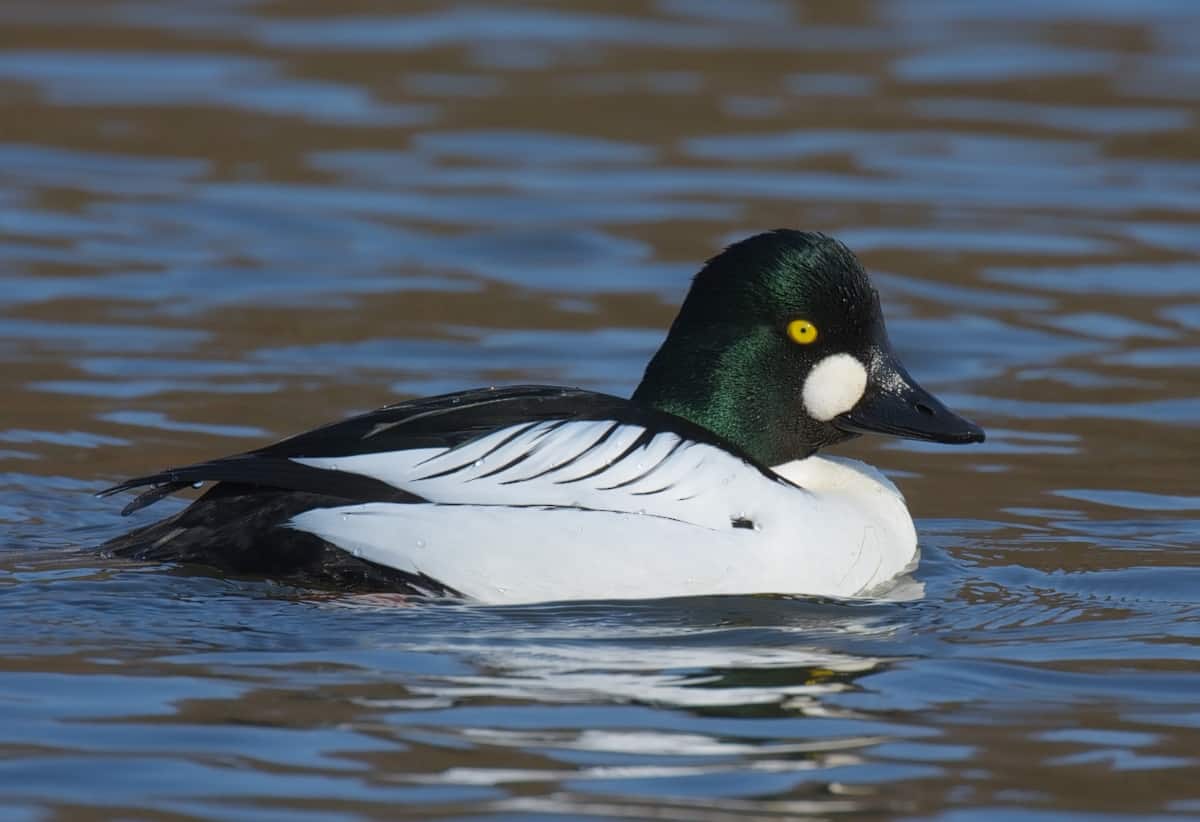
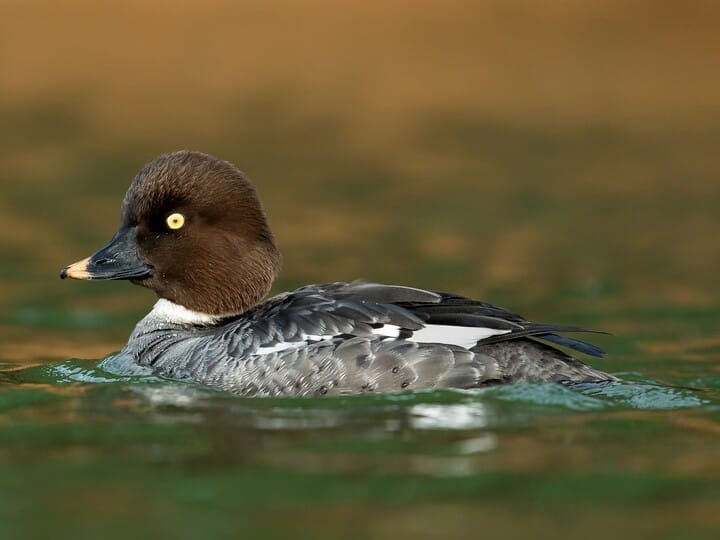
A medium-sized diving duck easily recognized by its bright golden-yellow eyes and compact build. Males have a glossy dark green head with a small white patch near the bill, black back, and white underparts. Females are more subdued, with chocolate-brown heads and grayish bodies. Both have orange-yellow legs and produce a characteristic whistling sound with their wings in flight.

Voice

Mostly silent but known for the distinct wing-whistle heard during flight, which often gives away their presence before they’re seen.

Diet

Feeds by diving for crustaceans, aquatic insects, mollusks, and small fish. During breeding, insects dominate the diet, while in winter, they rely more on crustaceans and aquatic plants.

Distribution

Breeds throughout the boreal forests of North America, northern Europe, and Asia. North American populations nest mainly in Canada and Alaska, migrating south to the U.S. during winter.

Habitat

Prefers clear freshwater lakes, rivers, and forest ponds for breeding. In winter, they inhabit sheltered coastal bays or large inland waters that stay unfrozen.

Breeding

Nests in tree cavities or artificial nest boxes close to water, often using old woodpecker holes. Females lay 6–11 eggs and handle incubation alone for about 28–32 days. Ducklings leave the nest within a day of hatching, often making remarkable leaps from tree cavities to reach the water below.

Wintering

Migrates to temperate regions in winter, forming small flocks in open water bodies. Commonly found diving alongside other sea ducks in protected bays, estuaries, and large lakes.

Similar Posts

  • Cape Teal

    Scientific name Anas capensis Alternative names Cape Wigeon, Cape Widgeon Measurements Feature Range / Note Length 44–46 cm Weight 316–502 g (11–18 oz) Wingspan Not specifically recorded Status Not considered endangered. Classified as Least Concern, population is large and appears to be increasing. Identification Cape Teals are small, pale ducks with mostly grey mottled plumage,…

  • Brazilian Teal

    Scientific Name Amazonetta brasiliensis Alternative Names Brazilian Teal, Brazilian Duck Measurements Feature Male Female Length 38–45 cm (15–18 in) 38–45 cm (15–18 in) Weight Around 500–600 g (1.1–1.3 lb) Slightly lighter than males Wingspan Around 70–80 cm (28–31 in) Around 70–80 cm (28–31 in) Status This species is common and listed as Least Concern. It…

  • Knob-billed Duck

    Scientific name Sarkidiornis melanotos Common name Knob-billed Duck or African Comb Duck Measurements Feature Average Length 56–76 cm (22–30 in) Wingspan 116–145 cm (46–57 in) Weight 1.03–2.9 kg (2.3–6.4 lb) Status The knob-billed duck is a large, distinctive waterfowl found across Sub-Saharan Africa, Madagascar, and parts of South and Southeast Asia. It inhabits tropical and…

  • Black-headed Duck

    Scientific Name Heteronetta atricapilla Alternative Names Black-headed Duck Measurements Feature Male Female Length 35 cm (14 in) 35 cm (14 in) Weight 510 g (18 oz) 565 g (20 oz) Wingspan Not specified Not specified Status The black-headed duck is assessed as Least Concern by the IUCN. Its population is stable, and it has a…

  • Mexican Duck

    Scientific Name Anas diazi Alternative Names Mexican Mallard Measurements Measurement Range Imperial Length 510–560 mm 20–22 in Status Least Concern globally; populations show a slow decline due to hybridization, habitat loss, and overhunting. Identification A medium-sized dabbling duck resembling a female mallard but with a darker overall body tone. Both sexes are mainly brown with…

  • Red-breasted Merganser

    Scientific name Mergus serrator Alternative names Also called the Sawbill Duck or Fish Duck. Measurements Feature Range Length 51–64 cm (20–25 in) Weight Males: 950–1,350 g (34–48 oz); Females: 800–1,100 g (28–39 oz) Wingspan 66–74 cm (26–29 in) Status Listed as Least Concern on the IUCN Red List. The species is protected under the Agreement…

Leave a Reply

Your email address will not be published. Required fields are marked *