
Rosy-billed Pochard
Scientific name:
Netta peposaca
Alternative names:
Rosybill, Rosybill Pochard
Measurements
| Feature | Range |
|---|---|
| Length | Up to 56 cm (22 in) |
| Wingspan | 72–84 cm (28–33 in) |
| Weight | 1–1.2 kg (2.2–2.6 lb) |
Status
The Rosy-billed Pochard’s population is currently stable and even increasing in some regions. It is not considered globally threatened and occurs in several protected areas. However, heavy hunting pressure and lead poisoning from ammunition remain serious local threats in Argentina.
Identification
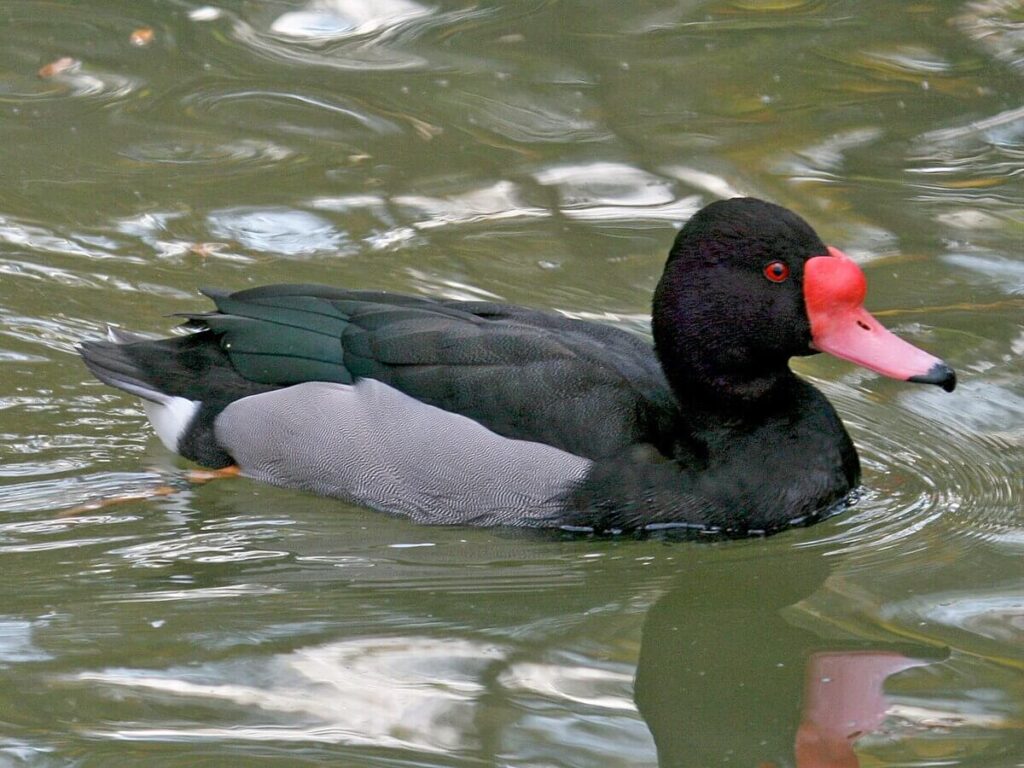
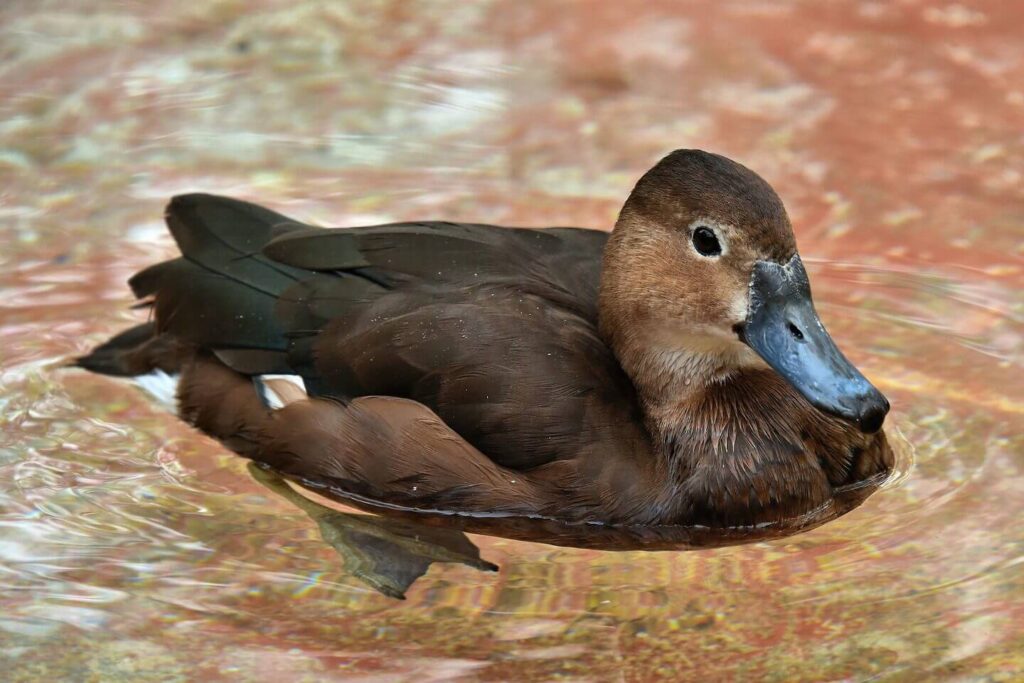
The male Rosy-billed Pochard is striking, with a blackish-purple head, neck, and breast, gray sides, and a white patch beneath the tail. Its bright red bill with a rounded knob and red eyes make it easy to recognize, especially during the breeding season when colors intensify. The female is brown and duller, with a bluish-gray bill tipped in black and yellow-orange to gray legs. Both have noticeable white on their wings in flight. Young birds resemble females but are darker underneath.
Voice
These ducks make a deep, honking call similar to other members of the duck family but with a lower tone. Overall, they are quieter than most other ducks, with limited vocalizations recorded.
Diet
Rosybills are mainly seed eaters but will also consume roots, sedges, aquatic plants, and small animals. Their diet is rich in carbohydrates, helping them maintain body heat during cooler seasons. Although they belong to the diving duck group, they usually feed like dabbling ducks—tipping forward in shallow water rather than diving deep. Their adaptable diet allows them to thrive in many wetland environments.
Behavior
Rosy-billed Pochards are social and often seen in large flocks of hundreds or even thousands. They are strong fliers but have short, blunt wings that require quick wingbeats. On land, they walk awkwardly because their legs are positioned far back for efficient swimming. Their movements and distribution are strongly influenced by water levels, and they migrate to wetter regions during dry seasons.
Distribution
This species is found across South America, mainly in Argentina, Uruguay, Paraguay, southern Brazil, and central Chile. In winter, birds from southern Argentina move north to Brazil and southern Bolivia. Occasional individuals reach the Falkland Islands.
Habitat
Rosybills live in shallow freshwater wetlands, lakes, and marshes with tall grasses and reeds. They prefer areas with stable water levels and abundant aquatic vegetation. During dry periods, they move toward larger water bodies to feed and rest.
Breeding
Breeding takes place from October to November. Pairs form each season but do not stay together for life. Males and females perform lively courtship displays that include head bobbing, neck stretching, and mock preening. Females build floating nests from plant materials, often near the water’s edge or even in rice fields. They lay up to 10 pale greenish eggs, which hatch after about 28 days. Females care for the ducklings alone, and sometimes broods from different females join together and are raised collectively.
Wintering
Rosybills are fully migratory, moving northward during the austral winter when southern wetlands dry out. They gather in large flocks in wetter areas and feed on available seeds and aquatic plants. Populations tend to increase during wet years when more habitat becomes available.
Conservation
The Rosy-billed Pochard is not globally threatened, but hunting and lead poisoning pose ongoing risks. Many ducks accidentally swallow lead pellets while foraging, mistaking them for small stones needed for digestion, which leads to toxic buildup in their bodies. Conservation efforts focus on protecting wetlands, promoting non-lead ammunition, and monitoring populations through regional surveys.
