
Southern Pochard
Scientific Name
Netta erythrophthalma
Measurements
| Measurement | Range |
|---|---|
| Body Length | 45–50 cm |
| Wingspan | Approximately 75–85 cm |
| Weight | 700–1,200 g |
| Egg Count | 6–15 eggs per clutch |
| Incubation | 20–28 days |
Status
The Southern Pochard is currently listed as Least Concern by the IUCN, but its population has been steadily declining since the 1970s. In South America, estimates from 2016 suggested around 25,000 individuals, though this may be an overestimate due to insufficient data. Habitat modifications, hunting, and pollution are contributing to the decline.
Identification
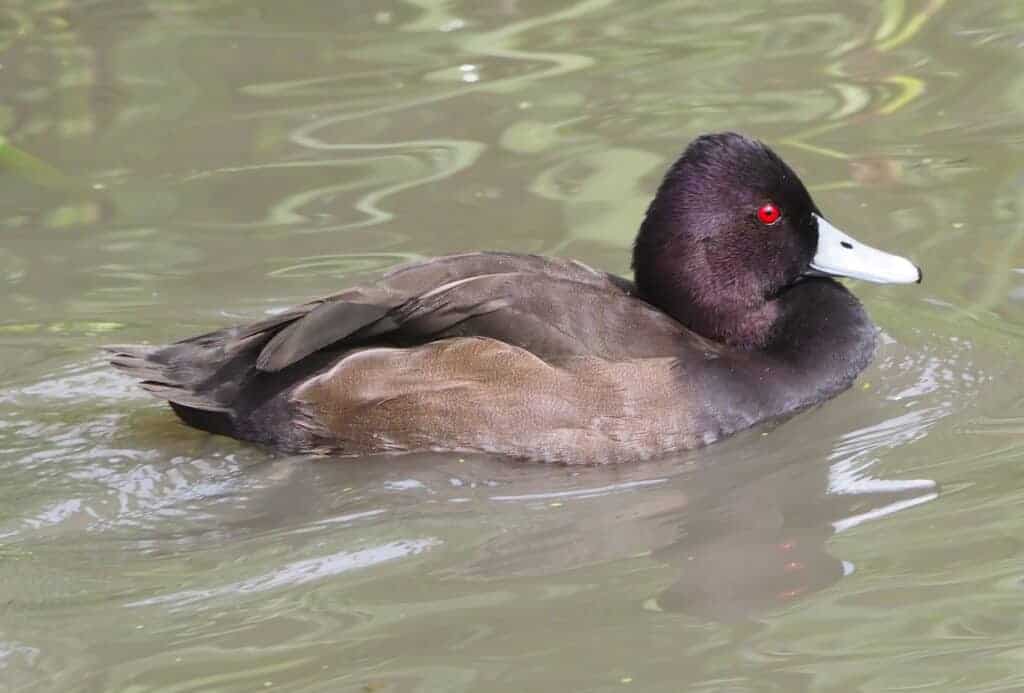
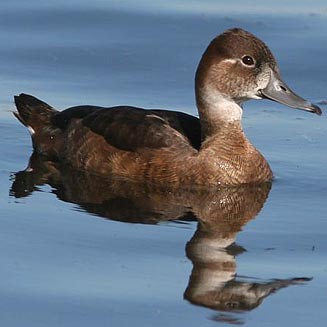
This medium-sized diving duck has a dark brown to almost black plumage. The male typically has a darker body with a rich chestnut hue and striking red eyes, while the female is duller with brown eyes. The bill is dark grey to black, and both sexes have rounded heads and relatively short necks. In flight, the wings appear dark with no prominent speculum.
Voice
Generally quiet, the Southern Pochard produces low, soft whistles or grunts. During courtship, males may emit faint wheezy whistles, while females produce low quacks or gruff calls when disturbed.
Diet
Southern Pochards primarily feed on aquatic plants, diving to reach submerged vegetation. They also consume plant material, seeds, larvae, pupae, and small aquatic invertebrates.
Distribution
The South American subspecies occurs from Colombia and Venezuela southward through Brazil, Ecuador, Peru, Bolivia, Argentina, and Chile, up to altitudes of 3,700 metres. The African subspecies ranges from South Africa to Ethiopia, with high concentrations in central plateaus and the southwestern winter rainfall regions.
Habitat
They inhabit freshwater lakes, marshes, reservoirs, and ponds, preferring shallow water with submerged vegetation. In Africa, they occur in both open water bodies and those fringed with emergent plants. Historically more migratory, they have become more sedentary due to artificial water bodies like farm dams.
Breeding
Southern Pochards are solitary nesters. Nests are made from stems and leaves on riverbanks or near water, concealed by vegetation. Clutches consist of six to fifteen eggs, incubated by the female for 20 to 28 days. After hatching, the ducklings are immediately led to water.
Wintering
Movements are mostly local. While historically migratory, many populations have become resident due to the availability of permanent water sources. Some dispersal may occur during dry seasons or in response to water availability.
Conservation
Although classified as Least Concern, the species is undergoing a slow decline. Habitat loss, wetland drainage, hunting, pollution, and disturbance contribute to regional decreases. Monitoring is limited, especially in South America, making population assessments uncertain. Conservation efforts include habitat protection and improved wetland management.
