
Velvet Scoter
Scientific name
Melanitta fusca
Common name
Velvet Scoter
Measurements
| Feature | Average |
|---|---|
| Length | 51–56 cm (20–22 in) |
| Wingspan | 90–99 cm (35–39 in) |
| Weight | 1.1–2.0 kg (2.4–4.4 lb) |
Status
The velvet scoter is a large, dark sea duck of northern Europe and western Asia. Once common across its range, its population has declined significantly, especially in the Baltic region and the Caucasus. It is currently listed as Vulnerable by the IUCN, largely due to nesting habitat loss, fishing disturbance, and predation of eggs and ducklings.
Identification
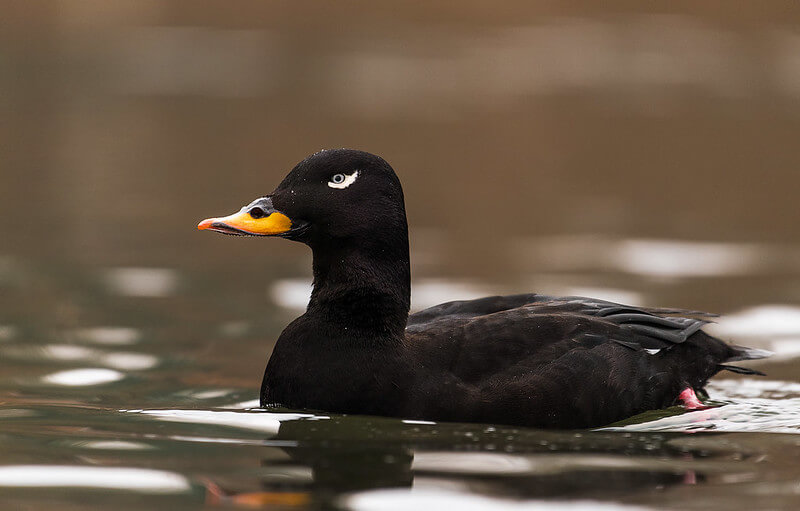
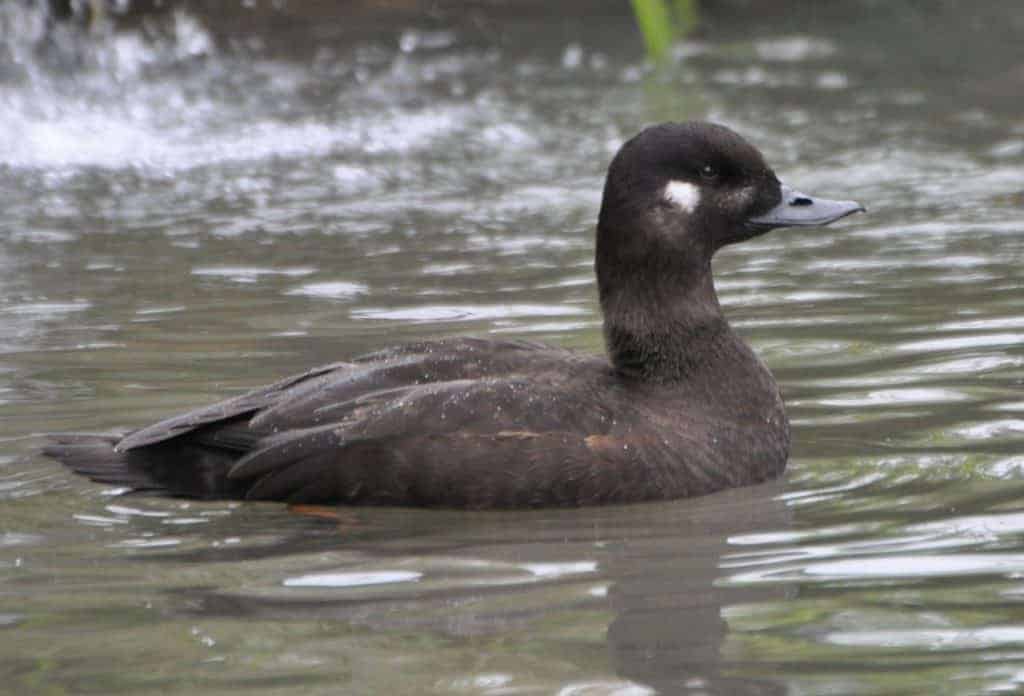
Males are strikingly black with a bold white patch behind the eye and a large white speculum visible on the wings. Their bill is thick and partly orange, with a yellowish knob at the base. Females are darker brown, lacking the glossy sheen and bold markings of males, though they share the same compact, heavy-bodied shape and sloping forehead. In flight, both sexes display the distinct white wing patches that help separate them from other sea ducks.
Voice
Usually quiet, though males produce soft, whistling calls during courtship, while females give low grunts or quacks, especially when alarmed or leading young.
Distribution
Velvet scoters breed across northern Europe and western Siberia, from Norway east to the Yenisey River in central Siberia and into northeast Kazakhstan. In winter, they move south to temperate coasts—notably around Great Britain, the Baltic Sea, the Black Sea, and the Caspian Sea. Small numbers also reach northern France and Spain.
A small, isolated population breeds at Lake Tabatskuri in Georgia’s Samtskhe-Javakheti region, where just 25–35 pairs remain. Their numbers are threatened by nesting competition, predation by gulls, and fishing disturbance, leading to poor reproductive success.
Habitat
Velvet scoters nest near northern lakes, rivers, and tundra ponds, preferring areas with dense vegetation for concealment. In winter, they form large, tightly packed flocks on coastal waters, bays, and estuaries, often feeding far offshore.
Behavior
Breeding begins in late spring. The female builds a well-hidden nest on the ground, lined with down and vegetation. She lays 7–9 eggs, which she alone incubates for 27–28 days. The down-covered ducklings are precocial, feeding themselves soon after hatching, though the female guards them until they can fly at around 30–40 days. Velvet scoters typically breed at two years of age.
Diet
They dive to feed on molluscs, crustaceans, and occasionally small fish. Their strong bills and gizzards allow them to crush shells with ease. In coastal waters, they often forage in synchrony, diving in unison and resurfacing together.
Wintering
In winter, velvet scoters gather in large rafts on temperate coastal waters, often mixing with white-winged scoters. They are found around the Baltic, North, Black, and Caspian Seas, occasionally venturing to Atlantic coasts of western Europe.
Conservation
Velvet scoters face serious challenges, including habitat loss, pollution, and bycatch in fishing nets. Human disturbance near nesting lakes and oil contamination in marine habitats have further reduced populations. Conservation efforts focus on protecting key breeding sites, reducing fishing-related mortality, and monitoring isolated populations such as those in Georgia. The species is covered by the Agreement on the Conservation of African-Eurasian Migratory Waterbirds (AEWA), which promotes international cooperation to protect migratory waterfowl.