
Duck Identification: Small Brown Diving Duck
Have you spotted a small brown diving duck and found yourself wondering what it could be? You’ve come to the right place. We’ll help you narrow it down using a few simple clues.
There are over 40 species of diving ducks, but only a handful truly fit the “small brown” description. Below, we’ve highlighted some of the most likely candidates, along with pictures and key details to help you identify them more easily.
1. Ruddy Duck

The first potential candidate is Ruddy Duck. This duck is small, compact, and quite stout, usually measuring around 14–17 inches in length. One feature that really stands out is its stiff tail, which is often held upright, giving it a slightly spiky, alert appearance even when resting on the water.
If the duck you saw was mostly brown, there’s a good chance it was a female or a non-breeding male. These birds have grayish-brown plumage with a darker cap and a fairly plain, dark bill, which can make them easy to overlook at first glance. However, during the breeding season, males look completely different, showing off a rich chestnut-red body, bright blue bill, and bold white cheeks.
Ruddy Ducks prefer calm waters with plenty of vegetation, where they can dive underwater to feed. They are also known for their wide distribution, being found across the Americas and even parts of Europe. In fact, their introduction to places like the UK has led to growing populations outside their native range, where they are sometimes considered invasive.
2. Masked Duck

Another strong possibility for your small brown diving duck is the Masked Duck. Like the Ruddy Duck, it is small and compact, with a stiff tail, but it tends to be even more secretive and harder to spot.
If the duck you saw was brown with subtle markings, this could easily be a female or non-breeding male Masked Duck. These birds have a mottled brown body with two noticeable dark lines across the face, which can be a helpful clue if you got a close look. In flight, a white wing patch may also be visible, giving away its identity.
What really makes the Masked Duck stand out is its behavior. It spends much of its time hiding in thick marsh vegetation and often feeds at night, so it can go unnoticed even when it’s nearby. When disturbed, it may quietly slip under the water or disappear into reeds, sometimes leaving you wondering where it went.
It prefers small ponds, marshes, and even roadside ditches with dense plant cover, and it dives to feed on aquatic plants and small creatures. So, if your mystery duck seemed shy, stayed close to vegetation, and kept disappearing underwater, there’s a good chance you were looking at a Masked Duck.
3. White-headed Duck
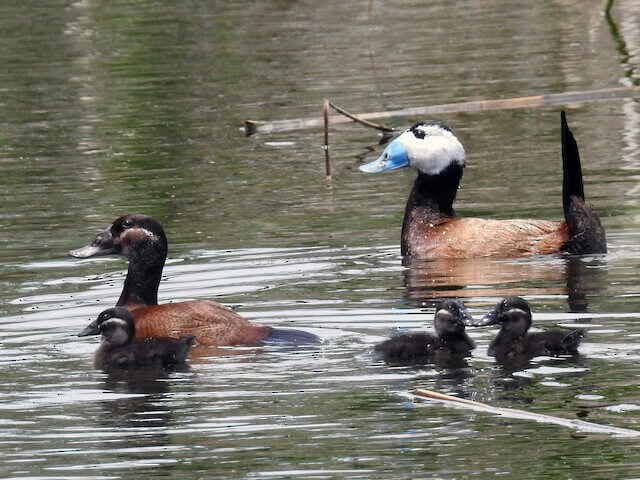
Another duck that could match the small brown diving duck description is the White-headed Duck. It’s a compact bird, similar in size to the Ruddy Duck, and shares that same stiff-tailed look, often holding its tail upright.
If the duck you saw looked mostly brown, it was likely a female. These have duller, brownish plumage with a darker bill, which can make them blend easily into their surroundings. Males, on the other hand, are much more striking with a white head, black crown, blue bill, and reddish-grey body—but you’re less likely to mistake those for a “small brown duck.”
The White-headed Duck prefers to stay on the water rather than take flight when disturbed, often swimming away quietly instead. It also spends a lot of time diving for food, feeding on aquatic plants and small creatures beneath the surface. You’ll usually find it in lakes or ponds with plenty of vegetation around the edges, which provides both shelter and nesting spots.
This species is found across parts of Spain, North Africa, and Asia, but it’s worth noting that its numbers are declining, mainly due to habitat loss and pollution. In fact, it is considered endangered, making any sighting quite special.
Discover other ducks that are considered endangered in this post: 17 Most Endangered Ducks in the World According To IUCN Red List
4. Female Red-breasted Merganser
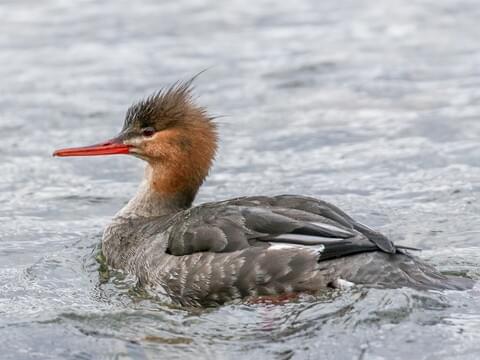
If the duck you spotted was small, brown, and diving frequently, it was probably a female Red-breasted Merganser. Unlike the males, which show the striking red breast, females are mostly brownish-gray with a rusty-brown head and a shaggy crest, giving them a slightly wild, tousled look. Their long, thin reddish-orange bill is a good clue if you get a close look, and a patch of white on the belly can sometimes be seen when they dive or swim.
These ducks are expert divers, chasing fish underwater with the help of their serrated bills. They are also highly migratory, moving from freshwater breeding sites on lakes and rivers to coastal waters in the winter.
Despite their widespread range across the temperate and subarctic Northern Hemisphere, they are sensitive to habitat changes, making sightings of these elegant, diving ducks particularly rewarding.
How many Merganser ducks do you know? Discover other species in this post: 7 Types of Mergansers You Should Know
5. Madagascar Pochard
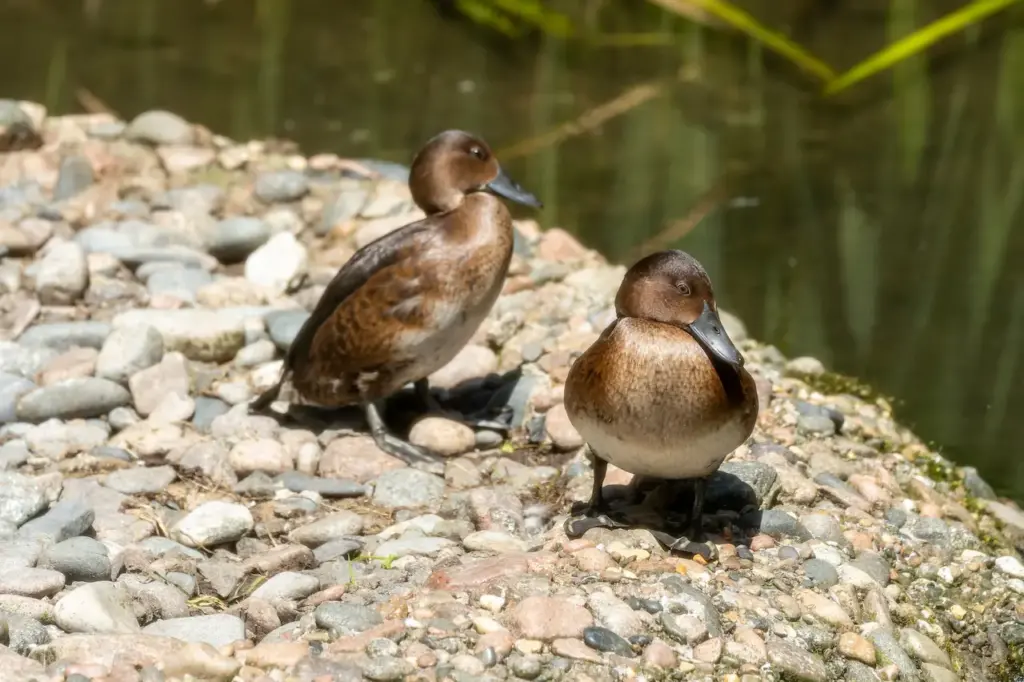
If you spotted the small brown diving duck in Madagascar, the Madagascar Pochard is a potential candidate to consider though it’s extremely rare. This medium-sized diving duck is about 42–56 cm long. Most of the time (except for adult males in breeding colors) its overall plumage is brown or chestnut. Juveniles are paler with a dull brown tone and darker stomach, blending seamlessly with marshy waters.
Breeding males develop darker chestnut heads and necks, with white underparts and wing undersides that might flash when they dive. But it’s often the females or non-breeding males that are spotted, with muted brown plumage that can make them tricky to pick out.
Unlike many diving ducks, it sticks close to inland wetlands rather than traveling widely, making it highly localized. Sightings are rare, since the total population remains very small: even with reintroduction efforts, their population hovers around just a few dozen birds.
6. Hardhead
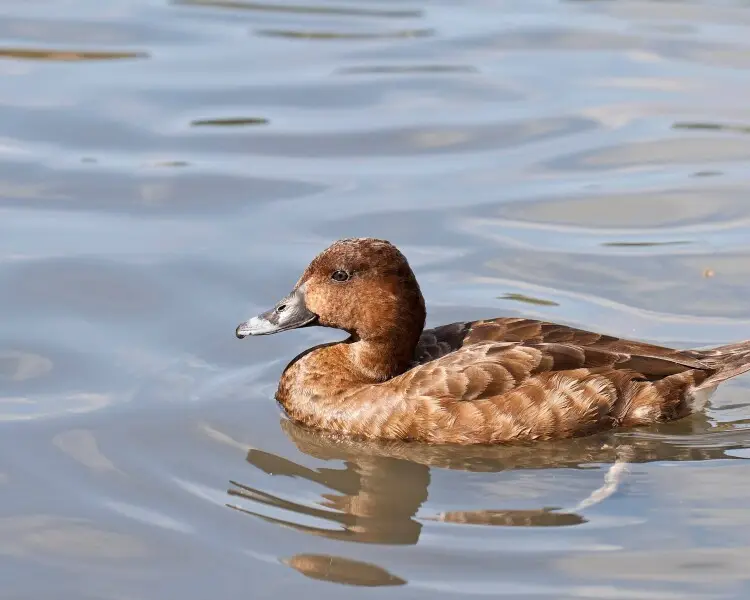
Another small brown diving duck you might have spotted is the Hardhead, also called the White-eyed Duck. It’s the only true diving duck native to Australia, and it’s smaller than many other ducks, measuring around 42–59 cm long. Both males and females are mostly chocolate-brown on top with rufous flanks, and their undersides are white—though this is often hidden when they are in the water. One way to tell the males apart is by their striking white eyes, while females have brown eyes.
Hardheads prefer coastal and wetland areas, especially in southeast Australia, but they can travel far, sometimes reaching New Guinea, New Zealand, and nearby Pacific Islands. True to their name, they are expert divers, feeding underwater on plants and small animals. If you spotted the small brown duck diving in Australia’s calm lakes or wetlands, the Hardhead is definitely worth considering.
7. Southern Pochard
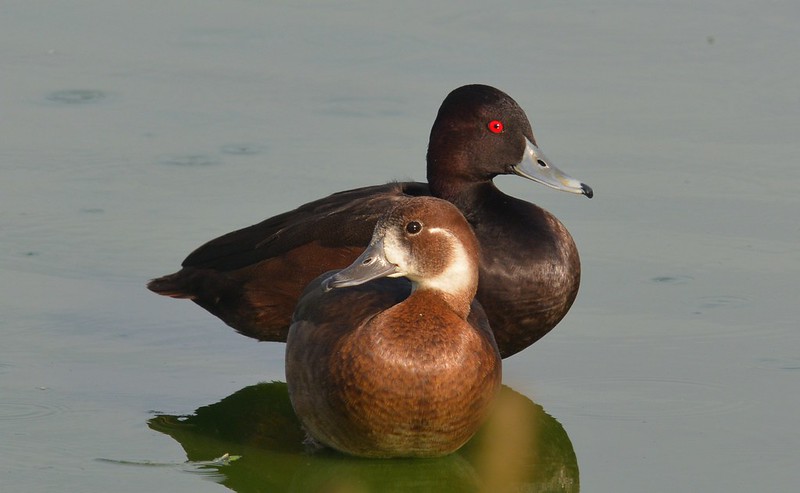
“Small’ can be relative, and what you think of as a small duck might actually be medium-sized. If what you saw is medium-sized, the Southern Pochard is another potential candidate to consider. These diving ducks tend to hold their bodies low in the water and have a slightly sloping forehead and short tail that give them a distinctive shape among other waterfowl. The males have grey backs with reddish‑brown heads and necks, while females and young birds are much more brown overall—so a brown bird seen diving often fits well with this species.
Southern Pochards live in a variety of freshwater habitats rich in submerged vegetation, from lowland lakes all the way up into high Andean waters in South America. They are often seen in small groups but can gather in very large flocks outside the breeding season. Females build nests close to water and lead their ducklings to the safety of the lake soon after they hatch.
8. Female Tufted Duck

And finally, the female Tufted Duck is another small brown diving duck that could match what you’ve seen. Adult females are mostly brown with lighter flanks and sometimes show a hint of white at the base of the bill, though never as much as scaup species. This subtle marking can make them tricky to identify, especially if you’re scanning a pond full of similar ducks.
Tufted Ducks are found across northern Eurasia and are partially migratory, moving south in winter. They are diving specialists, feeding underwater on plants, insects, and small invertebrates. If you hear a harsh, growling “karr” while the duck is in flight, that’s a strong clue you’re looking at a female Tufted Duck.
While males are mostly silent except for a soft courtship whistle, the females’ calls and their understated brown plumage help distinguish them from other small diving ducks in the same habitat.

