Duck Identification: Black Diving Duck with Long Neck
Have you spotted a black diving duck with long neck and found yourself wondering what it could be? You’ve come to the right place. We’ll help you narrow it down using a few simple clues.
There are over 40 species of diving ducks and about 45 ducks with long necks, but not all diving ducks are black or long-necked. Similarly, among the long-necked species, not all are diving ducks or black. To identify the duck in question, we need to focus on those that are both diving ducks and black with long necks.
Below, we’ve highlighted some of the most likely candidates, along with pictures and key details to help you identify them more easily.
1. Brazilian Merganser
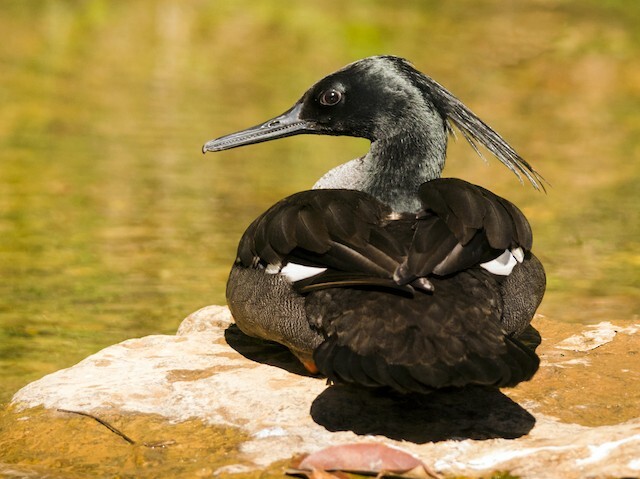
The first duck that matches the Black Diving Duck with a Long Neck description is the Brazilian Merganser. This is a slender, elegant diving duck, measuring around 49–56 cm (19–22 in), with a long neck and a sharp, jagged black bill that gives it a distinctive, predatory look. It has a dark plumage, with a shiny greenish-black hood, which makes it stand out among other waterfowl. Its upperparts are slate-grey and the breast fades to a pale grey and whitish belly. In flight, a small white speculum flashes, adding a subtle contrast to its otherwise dark body. Females are slightly smaller, with shorter bills and crests, but otherwise share the same striking colors.
Brazilian Mergansers are extremely rare, with fewer than 250 birds known in the wild, and are mostly found in Brazil and in small populations in Argentina. The species prefers fast-flowing rivers and forested streams, where it dives for fish and other aquatic prey using its serrated bill. Red legs and feet provide another key identifying feature you can use to ascertain that what you’ve seen is a Brazilian merganser.
2. Rosy-billed Pochard
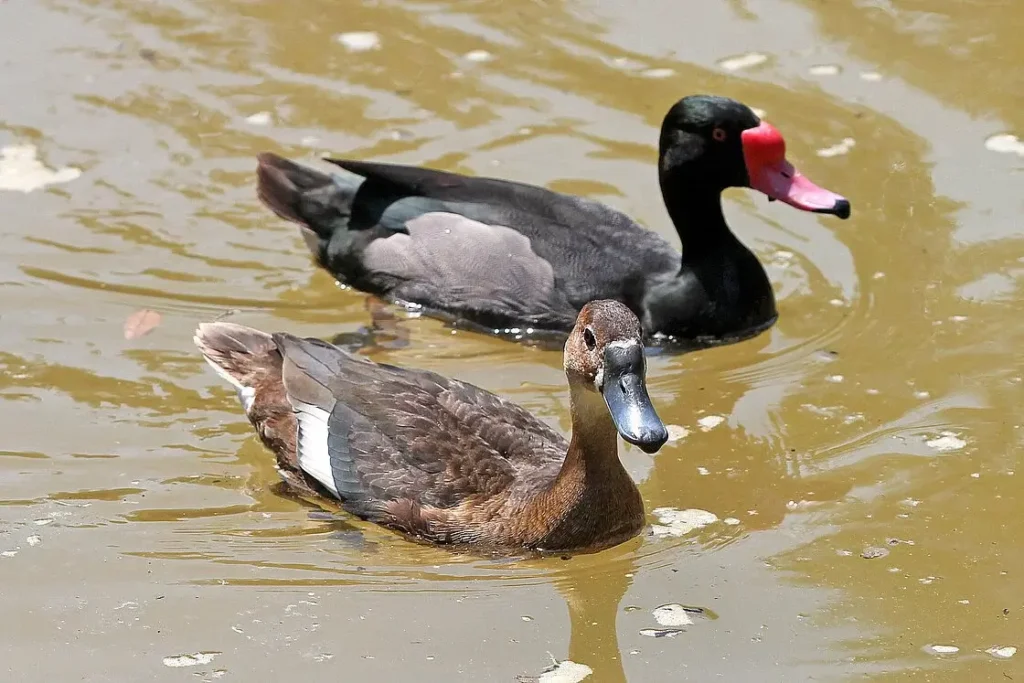
Another possible diving duck is the Rosy-billed Pochard. This South American pochard is a medium-to-large diving duck, though it often feeds by dabbling or tipping in shallow water rather than diving deeply. Males are striking, with a purplish-black head, neck, and breast, gray sides, and a bright red bill featuring a rounded knob at the base—a feature that becomes even more pronounced during the breeding season. A patch of white around the crissum (near the tail) adds a noticeable contrast, especially when in flight alongside the white wing primaries. Yellow to orange legs complete the male’s colorful appearance.
Females are more subdued, mostly brown with a bluish-gray bill tipped in black and yellow-orange to gray legs. The white crissum remains the most distinctive feature in females, giving a hint of contrast against their otherwise muted plumage. Rosy-billed Pochards are sociable birds, and are often seen in small groups, but they can gather in flocks of hundreds outside the breeding season.
This species is endemic to South America, found in Argentina, central Chile, Paraguay, Uruguay, and southern Brazil. Populations in southern Argentina migrate north during the austral winter, reaching southern Brazil and Bolivia. Its long neck, dark body, and subtle contrasting patches make the Rosy-billed Pochard a possible match for a black diving duck with long neck description, particularly outside the breeding season when males are less conspicuous.
3. Common Scoter
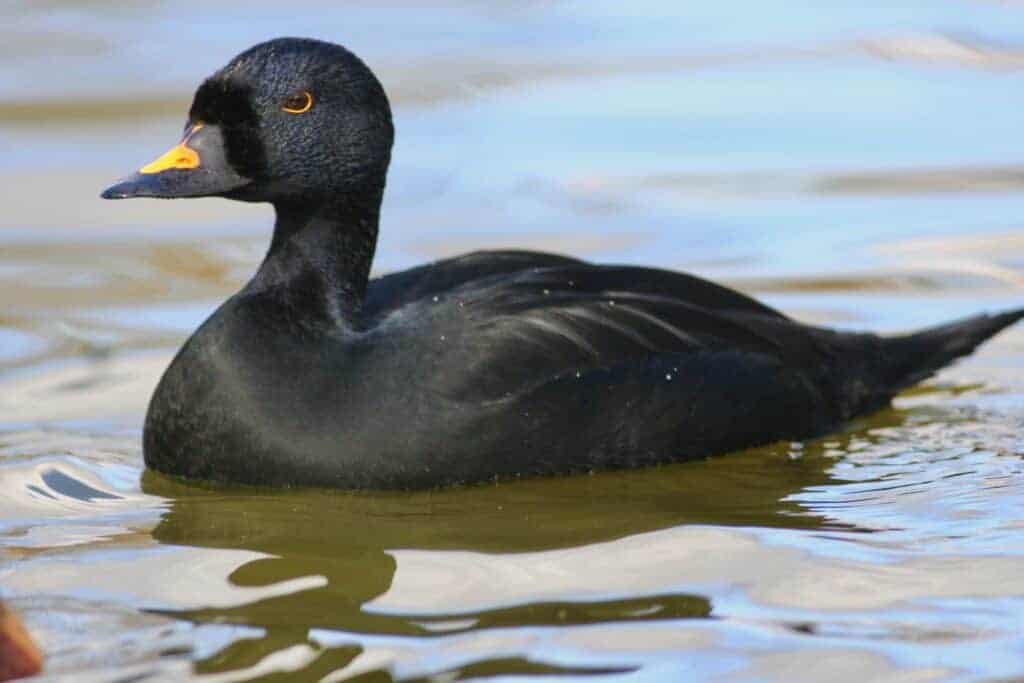
Common Scoter also matches the description. This medium-sized sea duck measures 44–54 cm in length and is easily recognized by its robust body and relatively long neck. On water, it often appears slender and elongated, giving it a graceful, long-necked profile.
Male Common Scoters are strikingly all black, with a distinctive bulbous bill that shows hints of yellow around the nostrils. Females are brown with pale cheeks, resembling the female Black Scoter, though the pale areas are more extensive, helping to differentiate the species. In flight, their movement is light, fast, and direct, and they are often seen in large, tightly packed flocks, taking off or diving in unison.
Common Scoters breed in woodland or tundra, constructing lined nests on the ground near the sea, lakes, or rivers, and typically lay 6–8 eggs. Their diet consists mainly of crustaceans and molluscs, though they will also eat aquatic insects and small fish when on freshwater.
4. Baer’s Pochard
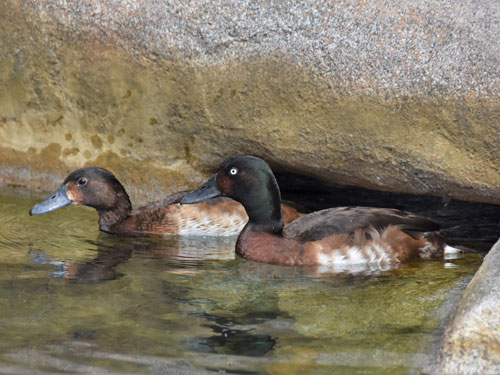
The black diving could also be a Baer’s Pochard. This striking duck has a glossy black head and neck, which in poor light can appear completely black, making it easy to mistake for a solid black diver. Closely related to the Ferruginous Duck, Baer’s Pochard was once considered the same species, but it can be distinguished by its white flanks when floating, a longer, more rounded head, and a slightly larger body.
During the breeding season, which varies depending on latitude and environment, the female builds a nest from sedges, reeds, and other plants among emergent vegetation, usually in shallow water or on small islands. Clutches range from 5 to 14 eggs. Males typically take on sentry duties while females incubate the eggs.
Baer’s Pochard was once relatively common, but today it is extremely rare, with fewer than 1,000 mature individuals remaining. Habitat loss and hunting are the main threats, and the species is classified as critically endangered by the IUCN. In China, it is also listed as a first-class protected animal, reflecting the urgent need for conservation efforts.
Discover other endangered duck species here: 17 Most Endangered Ducks in the World According To IUCN Red List
5. Black-headed Duck
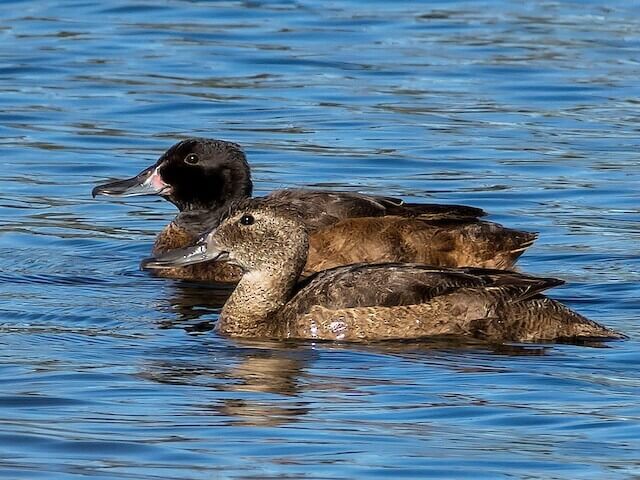
Another duck that might fit the description is the Black-headed Duck. It’s a smallish duck, about 35 cm (14 in) long, with males weighing around 510 g and females slightly more at 565 g. Despite its size, it has a unique, elongated body that gives it a sleek, slightly “stretched” look, though its wings are noticeably short in proportion.
The males really stand out with a glossy black head and upper neck paired with a crisp white chin. Their back and upperparts are deep brownish-black with subtle cinnamon or rufous speckles, and you’ll notice two white bars on the folded wing. The underparts are mostly whitish with brown mottling, giving them a soft, silvery sheen. Females are a little more subdued, sporting a dark brown head and neck with a whitish throat, while immature birds lean even more rufous on the back with pale yellowish underparts and a faint eye stripe.
They have two separate ranges in South America: one along the western side of central Chile, and another stretching from southern Bolivia down through Paraguay, central Argentina, southern Uruguay, and the very southern tip of Brazil.
6. Velvet Scoter
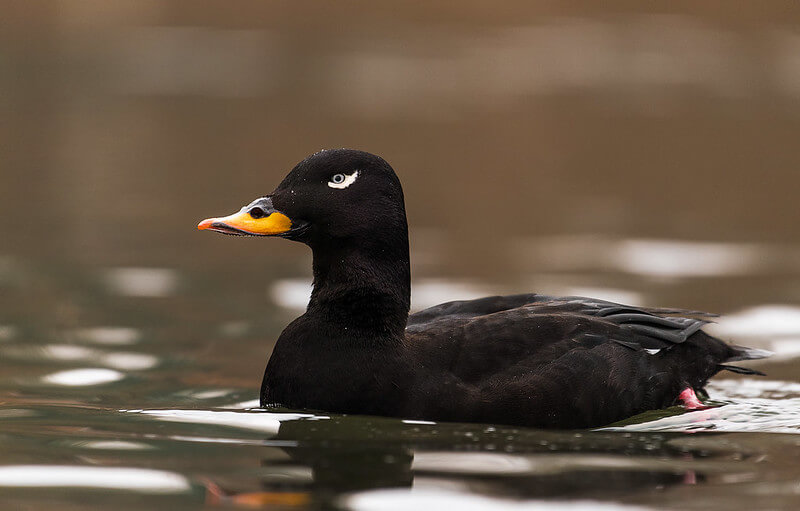
If the duck you spotted had not just a long neck but a thick, sturdy neck, then it might be a Velvet Scoter. This is a fairly large sea duck with a broad, long bill and a pointed tail that gives it a strong, robust silhouette.
Males are striking in glossy black plumage with big white patches on their wings and smaller white spots just behind the eyes. Their bills are partly orange, adding a touch of color to the dark feathers. Females are a bit less flashy as they duller, browner, and without that shiny gloss, but they share the same overall shape and pattern.
Velvet Scoters breed across northern Europe, from Norway to central Siberia, and even northeast Kazakhstan. In the winter, they head south to milder waters, reaching as far as Great Britain, the Black Sea, and the Caspian Sea, sometimes even appearing in northern France and Spain. They’re social birds, often forming tightly packed flocks on coastal waters, and when they take off, the entire group usually lifts into the air together.
Sadly, the Velvet Scoter is considered Vulnerable by the IUCN, so spotting one is a special moment for bird enthusiasts.
7. Stejneger’s Scoter
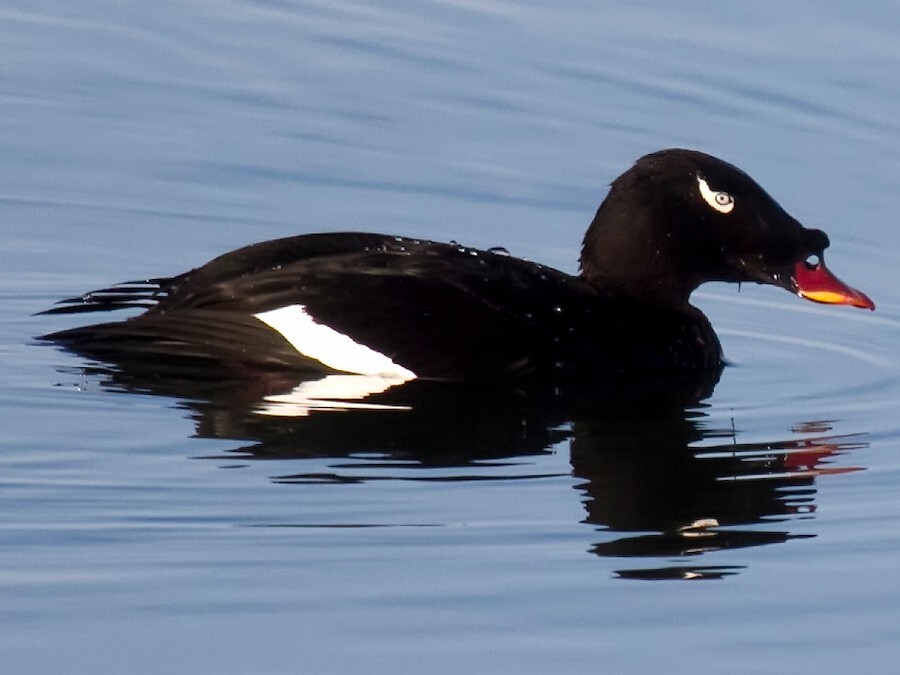
Finally, if the duck you saw had a long, thick neck and an all-over dark appearance, it could be a Stejneger’s Scoter. This black diving duck is often mistaken for the White-winged Scoter, but there are a few subtle differences to look for.
The male Stejneger’s Scoter has a tall knob at the base of its mostly orange-yellow bill, giving it a distinct profile. Its head shape is also key: it has a long “Roman nose” look, similar to the common eider, unlike the White-winged Scoter, which has a “two-stepped” slope between bill and head. Even the feathering along the bill’s base forms a sharper, more acute angle compared to its relative.
These ducks breed across the far north of Asia, east of the Yenisey Basin, and in winter they migrate south to temperate areas, reaching China and nearby regions. Stejneger’s Scoters are social birds, forming large, tightly packed flocks on coastal waters, and when they take off, the group usually launches together, making quite a spectacle.