
Baikal Teal

Scientific Name

Sibirionetta formosa

Alternative Names

Bimaculate Duck, Squawk Duck

Measurements

FeatureMaleFemale
Length39–43 cm (15–17 in)39–43 cm (15–17 in)
Height30–40 cm (11.75–15.75 in)30–40 cm (11.75–15.75 in)
WeightAround 1 lb (450 g)Around 1 lb (450 g)

Status

The Baikal Teal is listed as Least Concern on the IUCN Red List. Once considered Vulnerable due to hunting and habitat loss, its population has made a remarkable recovery, now estimated at over one million individuals, especially wintering in South Korea.

Identification

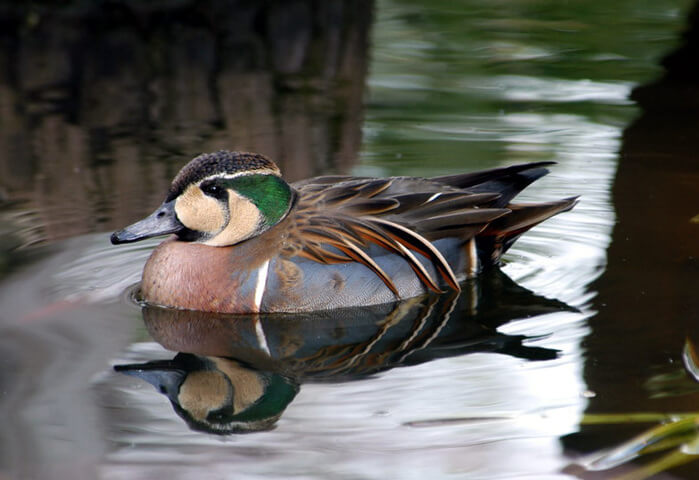
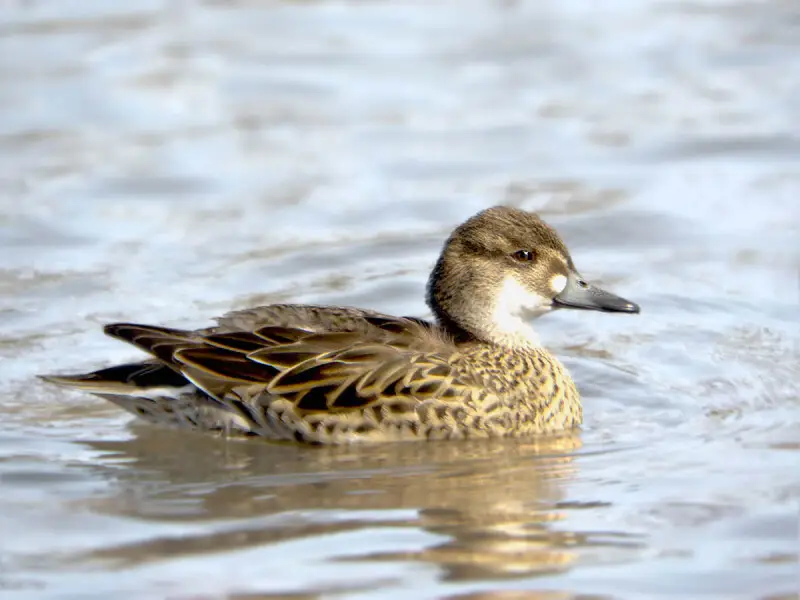
The breeding male Baikal Teal is unmistakable, with a green nape, yellow and black face markings, and a striking pattern of light brown and grey on the body. The female resembles a Green-winged Teal but has a longer tail, white throat, and pale spot at the base of the bill. Juveniles look like females but can be identified by a pale spot near the eye. During non-breeding season, males take on a rufous-brown plumage similar to females.

Voice

Known for its soft, high-pitched whistles and occasional squawking calls, particularly during courtship or when alarmed.

Diet

Feeds on seeds, aquatic plants, small invertebrates, and insects. They forage mainly in shallow waters by dabbling or upending.

Distribution

Breeds across eastern Siberia—from the Yenisey River basin to Kamchatka—and migrates south to East Asia. Large wintering populations occur in South Korea, Japan, and China, with smaller numbers reaching Taiwan and northern Vietnam.

Habitat

Prefers pools on the tundra edge and swampy forest areas for breeding. In winter, it gathers in huge flocks on lowland freshwater lakes, rice paddies, and flooded plains.

Breeding

They build their nests near shallow pools or wet grasslands. The female lays a clutch of eggs in concealed grassy spots, and both parents stay close to feeding areas for protection.

Wintering

Migratory, spending winters in East Asia’s mild lowlands. Thousands of birds can be seen together in wetlands, particularly in South Korea and Japan.

Conservation

Although previously threatened by overhunting and loss of wetlands, conservation measures and improved protection of wintering sites have allowed populations to recover strongly. Continuous habitat management remains crucial for maintaining this success.

Similar Posts

  • Red-crested Pochard

    Scientific name Netta rufina Alternative names Also known as the Redhead Duck or Red-headed Pochard. Measurements Feature Range Length 53–57 cm (21–22 in) Weight 1.1–1.4 kg (2.4–3.1 lb) Wingspan 85–90 cm (33–35 in) Status Listed as Least Concern on the IUCN Red List. Protected under the Agreement on the Conservation of African-Eurasian Migratory Waterbirds (AEWA)….

  • Northern Shoveler

    Scientific name Spatula clypeata Alternative names Shoveler, Northern Shoveller, Common Shoveler Measurements Feature Range Length 44–52 cm (17.3–20.5 in) Wingspan 70–84 cm (27.6–33.1 in) Weight 500–800 g (1.1–1.8 lb) Status The Northern Shoveler is classified as Least Concern by the IUCN and is protected under the Agreement on the Conservation of African-Eurasian Migratory Waterbirds (AEWA)….

  • Patagonian Crested Duck

    Scientific name Lophonetta specularioides specularioides Alternative names Also known as the Southern Crested Duck or the Grey Duck (in the Falkland Islands). It is the nominate subspecies of the Crested Duck, alongside the Andean Crested Duck. Measurements Feature Range / Note Length 50–60 cm Weight Around 1 kg; males slightly heavier Wingspan ~85–95 cm (estimated…

  • Smew

    Scientific Name Mergellus albellus Alternative Names White Nun, Panda Duck, Redhead Smew (female) Measurements Feature Male Female Length 38–44 cm (15–17 in) 38–44 cm (15–17 in) Weight 450–650 g (16–23 oz) 450–650 g (16–23 oz) Wingspan 56–69 cm (22–27 in) 56–69 cm (22–27 in) Status A small diving duck found across northern Europe and Asia,…

  • American Wigeon

    Scientific Name Mareca americana Alternative Names Baldpate Measurements Feature Measurement Length 42–59 cm (17–23 in) Wingspan 76–91 cm (30–36 in) Weight 512–1,330 g (1.1–2.9 lb) Status The American Wigeon is listed as Least Concern on the IUCN Red List. Its population is stable overall, though regional shifts have occurred — with declines in Canada’s Prairie…

  • Pink-eared Duck

    Scientific Name Malacorhynchus membranaceus Alternative Names Pink-eared Duck, Zebra Duck (rarely used), New Holland Duck (historical name) Measurements Feature Male Female Length 38–40 cm (15–16 in) 38–40 cm (15–16 in) Weight Not well documented Not well documented Wingspan Not well documented Not well documented Status A native Australian species that is still common in many…

Leave a Reply

Your email address will not be published. Required fields are marked *