Blue-Winged Teal Vs Mallard: A Field Guide to Accurate Identification
Telling male mallards from male blue-winged teals is fairly straightforward, especially in breeding plumage. The mallard’s larger size and signature green head are hard to mistake, while the blue-winged teal stands out with its neat white crescent between the eye and bill on a bluish-gray head.
Females, however, are where things get tricky. Both hens wear mottled brown plumage and can look remarkably similar at a glance. In a blue-winged teal vs. mallard comparison, it’s the females that tend to trip up even experienced birders.
The good news is that a few reliable features can help you tell them apart. These include:
1. Size
The first and often most obvious clue, especially when you are observing these ducks at close range or if you get an opportunity to put them side by side, is size.
A female blue-winged teal is noticeably smaller, with a slight, daintier build that can look almost delicate next to a mallard. In fact, a teal is roughly half the size of a female mallard, giving it a much more petite, refined appearance in the field.
Female mallards (hens), by contrast, are medium-to-large dabbling ducks. They typically measure about 20–23 inches (50–60 cm) in length and weigh around 2.4–2.5 pounds (1,089–1,300 grams). This gives them a fuller, heavier-bodied look when compared side by side with smaller ducks.
Female blue-winged teals are much more compact. They measure about 14–16 inches (36–41 cm) in length, with a wingspan of 22–24 inches (56–62 cm), and weigh between 8 and 19 ounces (230–545 g). In the field, their small size, finer features, and lighter build stand out immediately.
2. Bill

The bill is another useful feature that can help you identify these two ducks correctly. Female mallards typically show a darker, mottled bill, which often show a mix of black and orange. While males have that bright, unmistakable orange bill, hens tend to have a duller, darker bills, especially during breeding season when reduced brightness helps with camouflage.
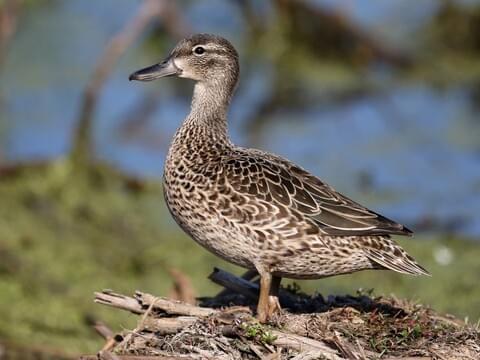
Female blue-winged teals, on the other hand, have generally dark gray to black bills, but what often stands out is a faint pale or whitish area at the base of the bill. This can give the face a slightly cleaner, more defined look compared to the more mottled appearance of a mallard’s bill.
If you pair this with surrounding tones, it becomes even easier to see quickly identify these two species. Blue-winged teals often show a softer, duller grayish look through the face and upper breast, whereas female mallards tend to have warmer, richer brown tones, which may sometimes show a slightly reddish-brown wash on the breast.
3. Legs and Feet
Leg color is another handy field mark, especially when the birds are standing or dabbling in shallow water. Female mallards typically have bright orange legs and feet, which can stand out quite clearly, even at a distance. This warm, vivid color often complements their overall richer brown tones.
Female blue-winged teals, in contrast, have much duller legs. Their legs and feet are usually a muted gray to dark, sometimes appearing pale blackish rather than orange. They lack the brightness you see in mallards, which gives them a more subdued, understated look overall.
4. Speculum (Wing Patch)
Finally, the speculum is another reliable field marks you can leverage when comparing these two species, especially in flight or when the wing is briefly visible at rest.

In female mallards, the speculum is typically quite distinct and consistent. It shows a clear iridescent purple-blue panel bordered on both sides by crisp white edges. This contrast makes it relatively easy to pick out even at a distance. Both males and females share this characteristic speculum pattern, though it may be less obvious during the summer moult when wing plumage is temporarily duller.

Female blue-winged teals, however, show a more subdued and less sharply defined wing pattern, especially when compared to breeding males. Their speculum tends to appear duller, often bluish but less vivid, and can show blackish-brown tones with hints of green iridescence depending on the light. The anterior edge is usually less clean-cut than the mallard’s, often blending into brown feathers that may have variable whitish edging.