
11 Ducks with Yellow Eyes (Pictures Included)

Have you ever noticed how some ducks with yellow eyes seem to stare right through you? Those golden eyes give ducks sharp, watchful looks that are hard to miss, especially when light hit them just right. Eye color in ducks can vary from dark brown to pale yellow, and in some species, that yellow glow is one of the easiest ways to recognize them from a distance.
These ducks often look especially striking when their yellow eyes contrast with darker feathers on their heads or overall plumage. Whether they live on calm lakes, fast-flowing rivers, or coastal waters, their gaze always seems alert and full of life. Let’s take a closer look at some ducks known for their yellow eyes and the places where you might spot them.
- 1. Common Goldeneye (Bucephala clangula)
- 2. Barrow’s Goldeneye (Bucephala islandica)
- 3. Greater Scaup (Aythya marila)
- 4. Lesser Scaup (Aythya affinis)
- 5. New Zealand Scaup (Aythya novaeseelandiae)
- 6. Tufted Duck (Aythya fuligula)
- 7. Ring-necked Duck (Aythya collaris)
- 8. Redhead (Aythya americana)
- 9. Blue Duck / Whio (Hymenolaimus malacorhynchos)
- 10. Muscovy Duck
- 11. Northern Shoveler
- Duck Identification Posters/Charts
1. Common Goldeneye (Bucephala clangula)
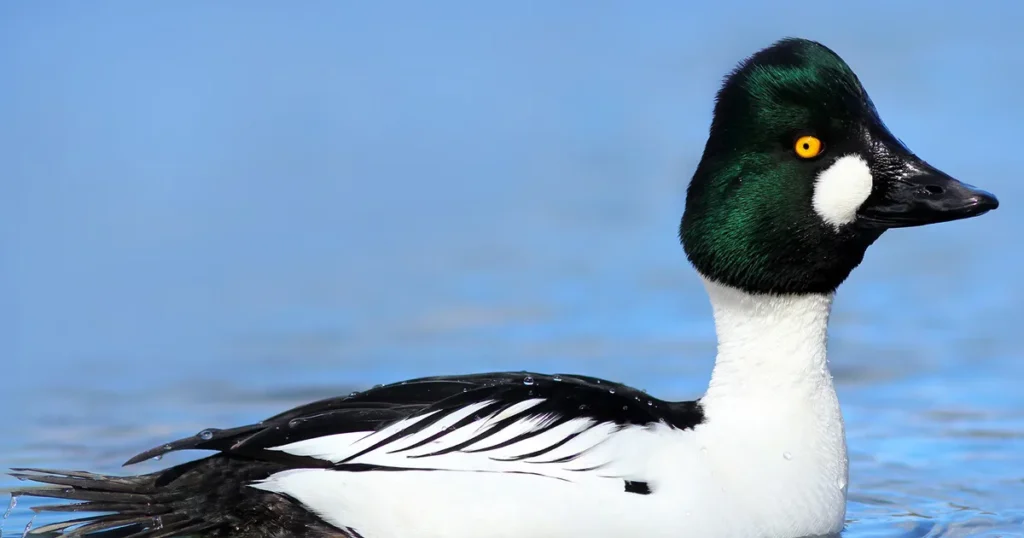
The first duck that comes to mind when you’re trying to identify ducks with yellow eyes is, unsurprisingly, the one named after that very feature: the Common Goldeneye.
And true to its name, the vivid yellow eyes are the first thing you notice when you spot this medium-sized sea duck. Even from the picture above, you can see how it is gleaming like tiny lanterns against its sleek, dark head.
Males are unmistakable with their glossy green-black heads, crisp white bodies, and the distinctive round white patch just in front of the eye. Females are more modest in brown and gray plumage, but their eyes fade to a paler yellow, sometimes almost ivory.
These ducks breed in northern forests but winter farther south, often turning up on large inland lakes and sheltered estuaries.
When they are flying, you may sometimes hear a distinctive whistling sound, which is a result of their wings cutting through the air, a true giveaway for anyone scanning from the shore.
2. Barrow’s Goldeneye (Bucephala islandica)
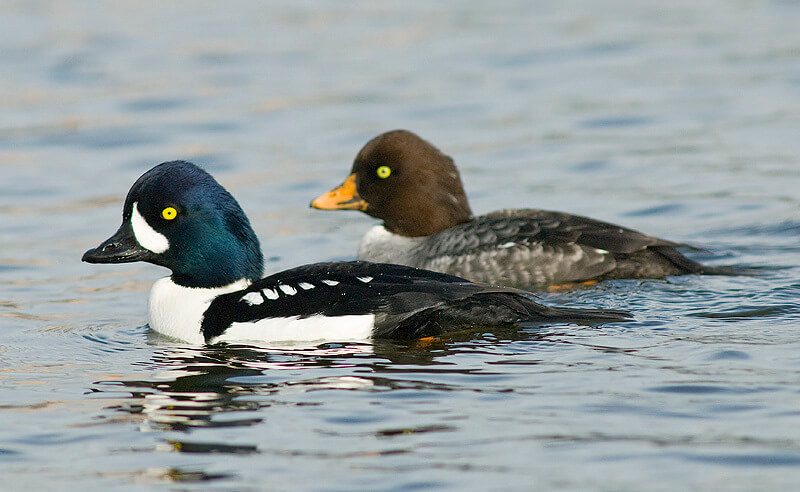
Barrow’s Goldeneye is the Common Goldeneye’s close cousin, but with a few minor differences in terms of look and posture. The first thing that grabs your attention (apart from its intense yellow eyes) is the bold crescent-shaped patch in front of the eye that stretches upward, unlike the rounded spot in the Common Goldeneye.
Males have a bluish-green sheen on the head and black-and-white body pattern. Females show darker brown heads and softer yellow eyes that are deeper in tone than those of the Common Goldeneye.
It’s a bird of rugged, northern waters — think cold mountain lakes, fast rivers, or fjords. Though rare in places like the UK, spotting one among Common Goldeneyes is a special treat (Doesn’t discovering a small difference in bird species like a subtle shift in head shape or the position of the eye, enough to make a birder’s day?).
3. Greater Scaup (Aythya marila)
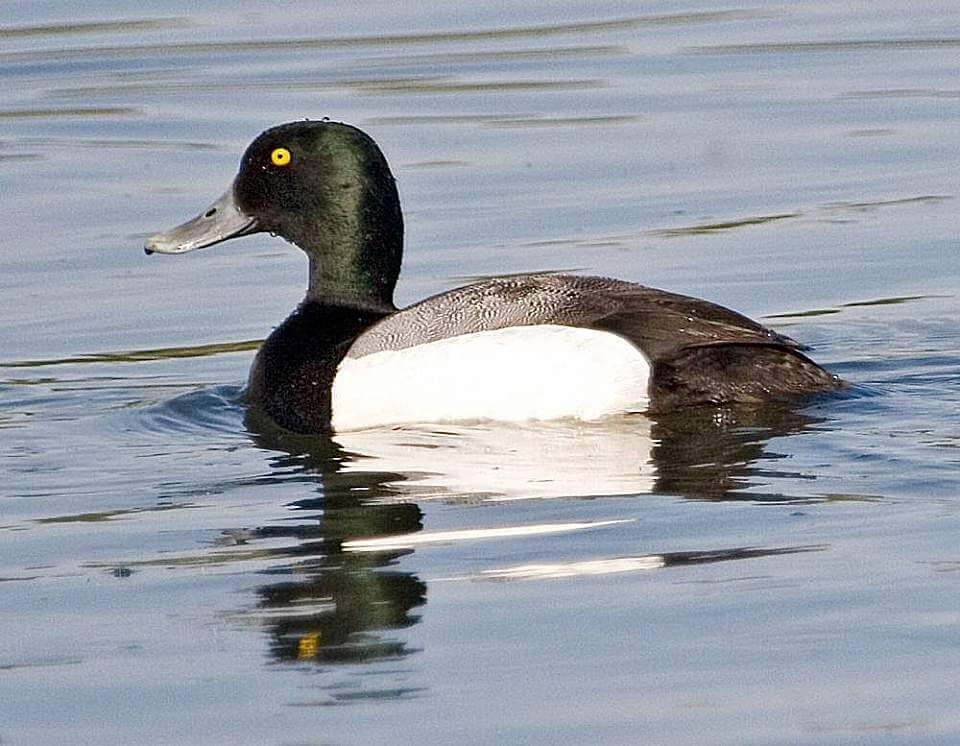
With their clear yellow eyes gleaming like coins in the sunlight, Greater Scaup stand out even among the churning masses of winter diving flocks. They’re the larger of the two scaups, and you can see it in their broad, rounded heads and more robust build.
Males have stunning green sheens on their dark heads, while females are chocolate-brown with a soft white patch at the base of the bill. In a good flight, both sexes show a long, clean white stripe along the wing — a key clue for identification.
These ducks are true divers, and are known to form vast floating rafts on coastal bays or deep lakes, where they plunge for mollusks and aquatic plants.
Watch for that flash of yellow when the light hits just right. It’s often the quickest way to pick them out through binoculars.
4. Lesser Scaup (Aythya affinis)
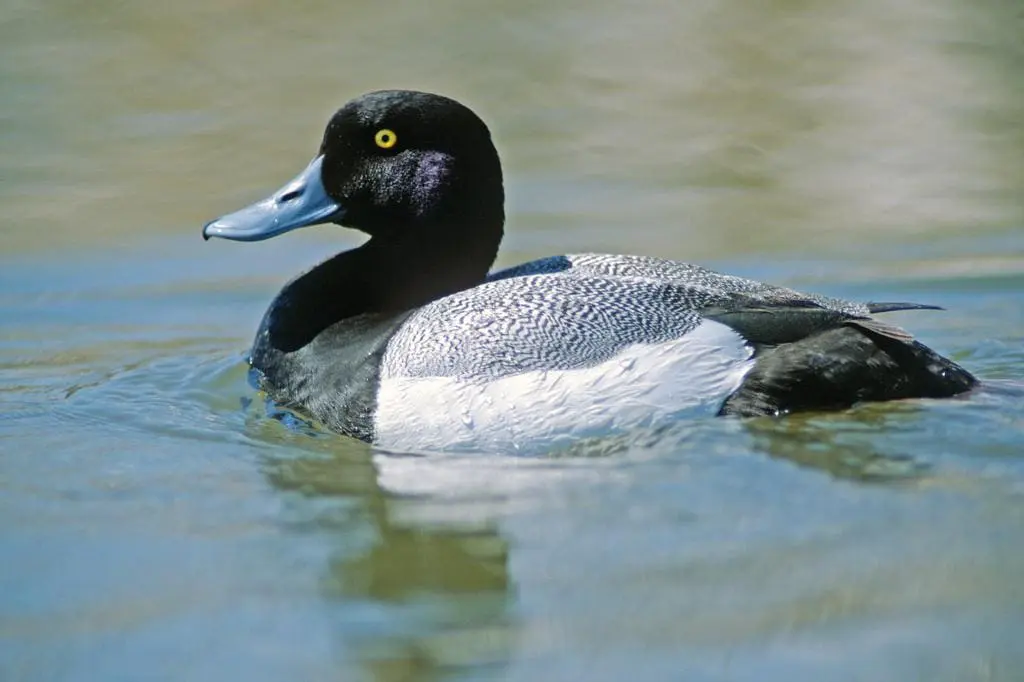
At first glance, the Lesser Scaup could be mistaken for its larger cousin, but once you notice those same golden-yellow eyes set in a slightly narrower head, the difference starts to show.
Males have a purplish iridescence rather than green, giving them a subtly different shine in good light. Their eyes seem to intensify their alert, inquisitive expression, especially when they turn toward you mid-dive.
Females are warm brown overall, and sometimes show a faint white patch near the bill and a gentler yellow eye.
Lesser Scaup are highly social ducks and you can sometimes find them gathered in dense flocks that can number in the hundreds or even thousands, especially during migration.
They love calm freshwater lakes and reservoirs but will happily drift along coastlines too. They are always busy, always diving, and always watching with those bright yellow eyes.
5. New Zealand Scaup (Aythya novaeseelandiae)
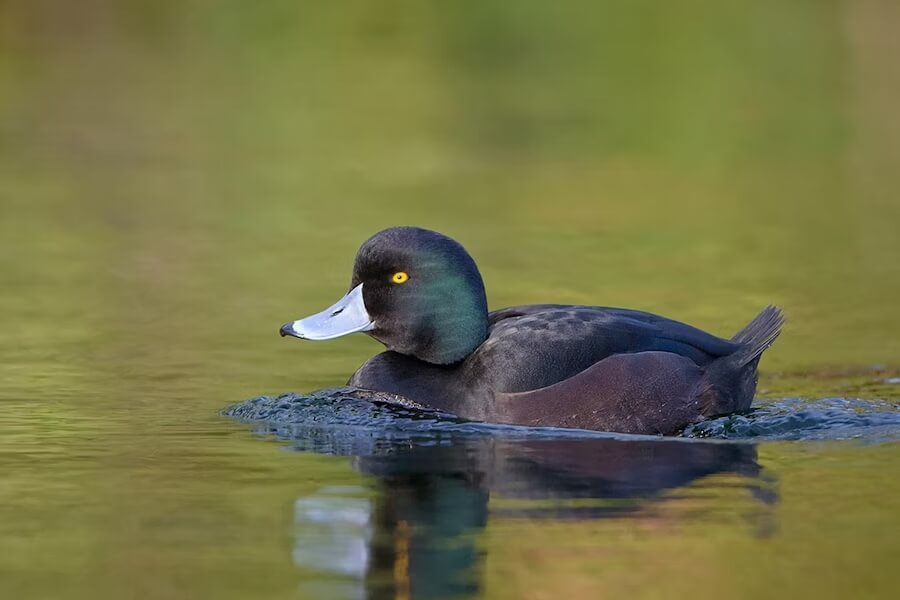
If you’re birding around New Zealand’s lakes, the flash of a bright yellow eye in an otherwise inky silhouette can only mean one thing: presence of the New Zealand Scaup. Also called the Black Teal or pāpango, this compact diving duck is the country’s only true native scaup.
Males are glossy black with rich brown flanks and a striking golden eye that gleams like a small beacon against their dark plumage. Females are chocolate-brown with softer tones and brownish eyes with neat white bars at the base of the bill.
Watch long enough, and you’ll see them disappear below the surface for up to a minute — these little divers are astonishingly agile underwater.
Once threatened, they’ve made a strong comeback thanks to conservation efforts, and spotting those vivid yellow eye glinting in the sunlight is now a reassuring sight on many New Zealand lakes and ponds.
6. Tufted Duck (Aythya fuligula)
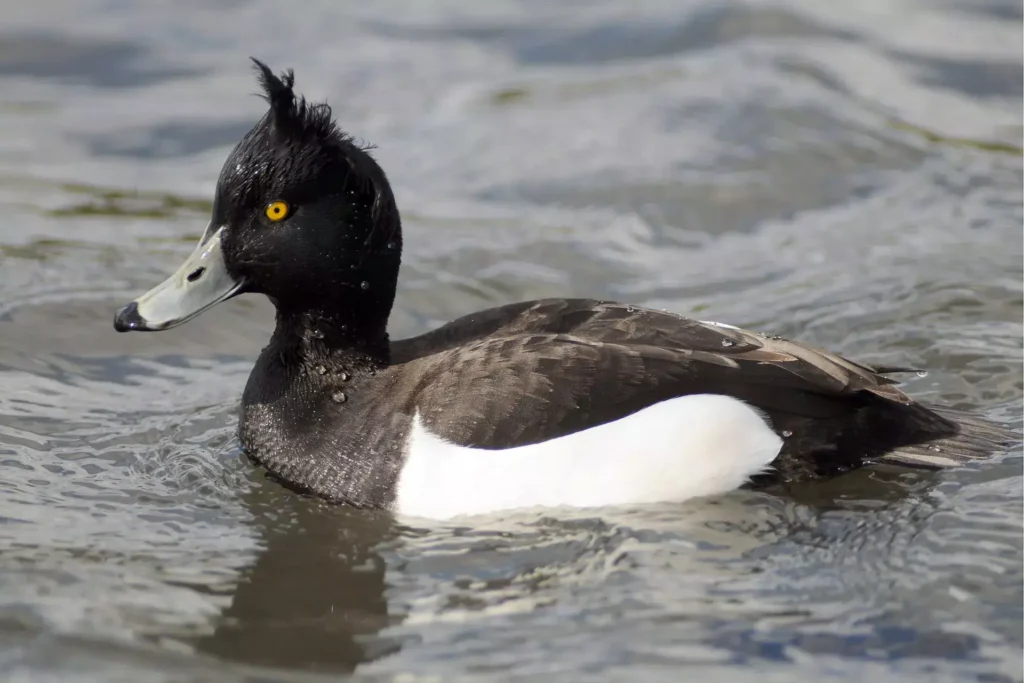
The Tufted Duck has one of those looks that never gets old: a sleek black-and-white contrast crowned by a jaunty little crest and of course, those unmistakable bright yellow eyes.
The male’s yellow eyes stand out brightly against his shiny black head, giving him a lively, curious look. The females and young ones are dark brown instead, with a softer, calmer appearance but still show the same neat shape.
Found across countless lakes, reservoirs, and gravel pits in winter, they’re a familiar sight to many birders. You may sometimes find them bobbing in groups with pochards or other diving ducks.
If you watch closely when they flap their wings, you may notice their bold white wing bars flashing against their gray primaries, and the glints of those yellow eyes add a final spark of personality to these lively, endearing duck species.
7. Ring-necked Duck (Aythya collaris)
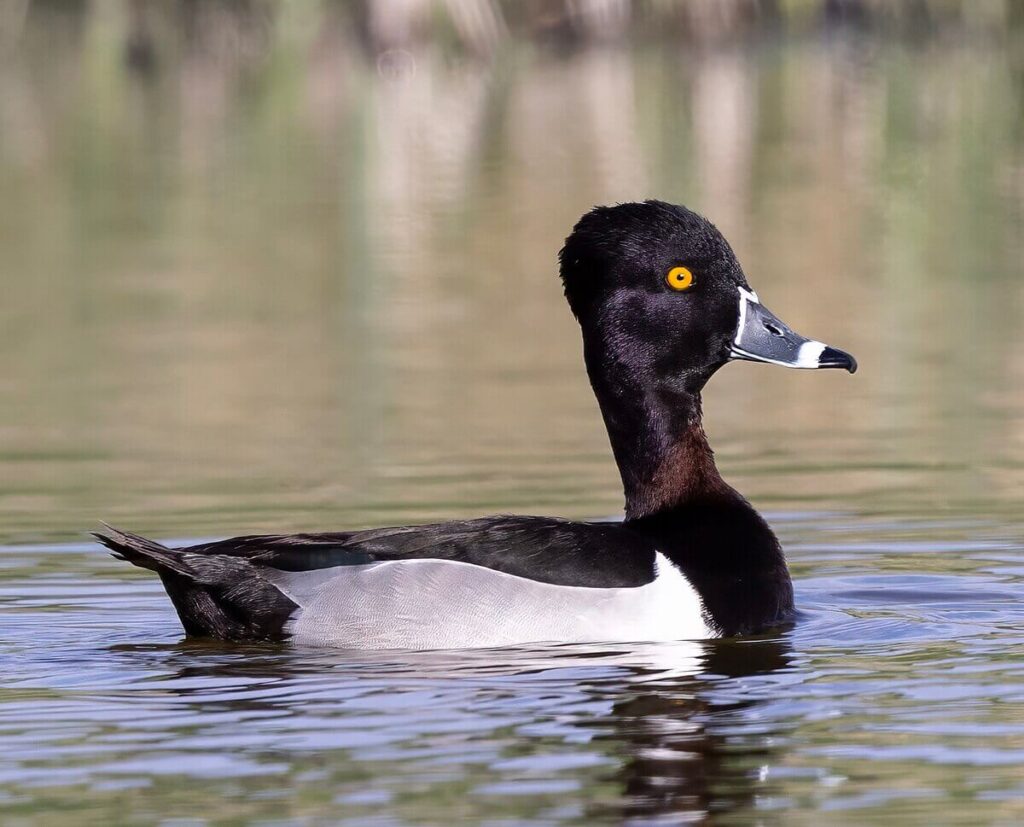
Despite the name, you’ll almost never see the “ring” on this duck’s neck. However, you can’t miss its yellow eyes, shining like gold against its dark, angular head.
The male’s crisp look, which consist of black back, white belly, and sharp gray bill marked by a white ring, gives him a tidy, almost tailored appearance. Female’s plumage is a bit subtle showing gray-brown tones, with brown eyes encircled by soft white rings that lend them a gentle, alert look.
Found across North America’s freshwater ponds and lakes, Ring-necked Ducks are compact, buoyant divers often seen mixing with scaup or other Aythya species.
Their bright eyes are a great giveaway even at a distance. A quick flash of yellow in a restless flock will always remind you that the so-called “ringbill” is always keeping an eye on what’s happening around the water!
8. Redhead (Aythya americana)
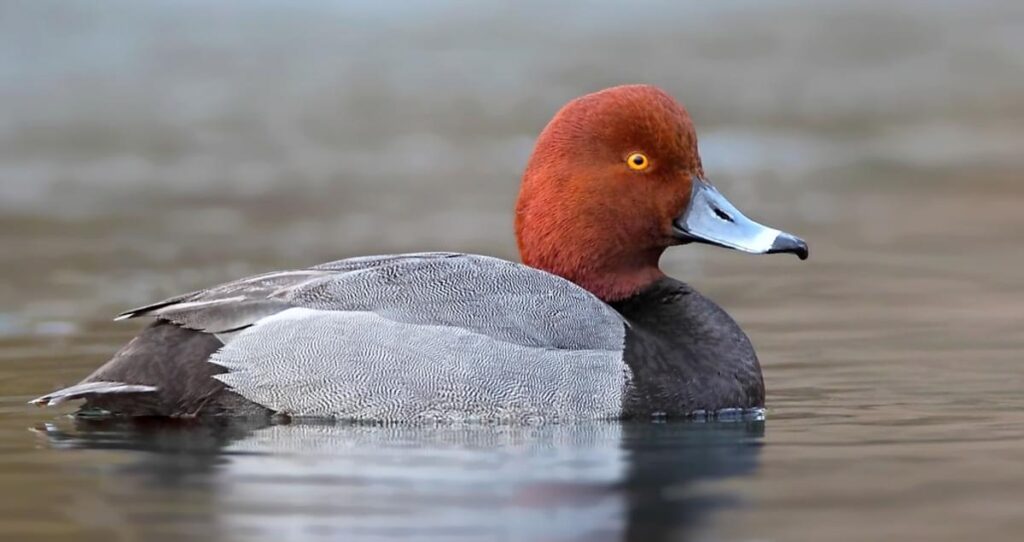
Spotting a Redhead drake on a bright morning is like seeing a flicker of firelight on the water. The deep cinnamon head, sleek gray body, and golden-yellow eyes make for a truly striking combination. Those eyes shine brilliantly in the sun, standing out against the duck’s rich chestnut plumage and calm, rounded profile.
Females have warm brown plumage and paler yellow eyes, giving them a gentler look but they still boast the same graceful outline.
Redheads are sociable by nature, and usually gather in large floating rafts along coasts and big inland lakes.
Watch them dive and you’ll understand why they’re such a favorite among birders. Whether they’re feeding on wild celery, aquatic plants, or the occasional mollusk, that quick flash of yellow in their eye gives them an unmistakably alert, intelligent expression.
9. Blue Duck / Whio (Hymenolaimus malacorhynchos)
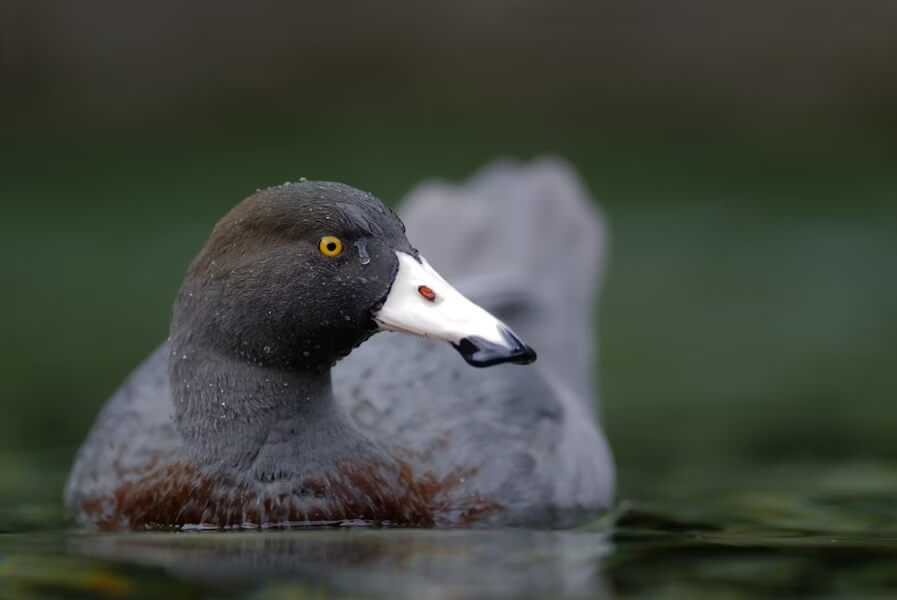
The Blue Duck, or whio, is one of New Zealand’s most treasured river birds — a spirited symbol of the country’s wild backcountry streams.
When you catch one in good light, those pale yellow eyes gleam from a body cloaked in slate-blue plumage speckled with chestnut across the breast.
They look calm and watchful, always alert to movement. This is true to their reputation for seeing you long before you see them.
Both sexes share this coloring, though males are a bit larger with more breast spotting and a subtle greenish shimmer on the head.
The whio’s unusual bill, ending in a black fleshy flap, is perfectly built for life in fast, tumbling water where they sift out invertebrates from between the stones.
To find one is to find a clean, healthy river as they are living barometers of pristine water. And when those yellow eyes meet yours from the rapids, it’s a reminder that few ducks in the world are quite so wild, or so uniquely at home, as the whio.
10. Muscovy Duck
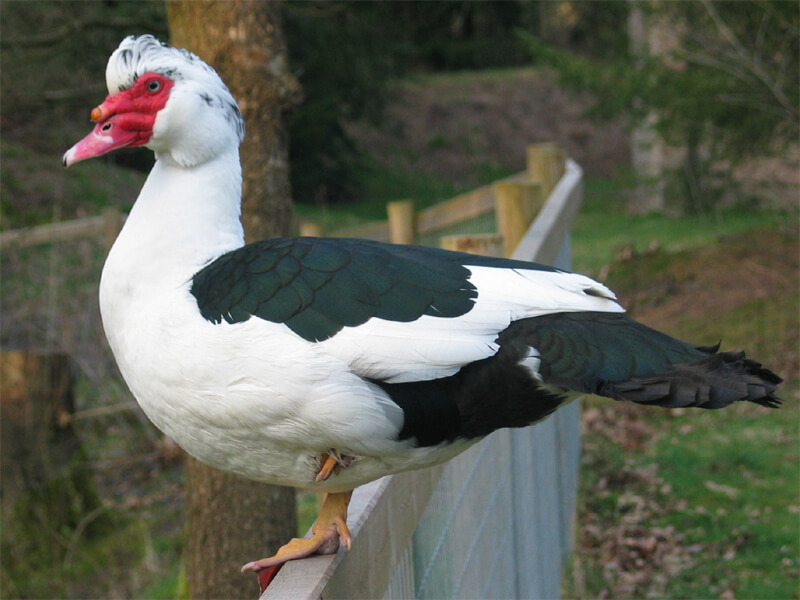
Muscovy Ducks have yellow to yellow-brown eyes, which is a perfectly normal trait for this large, distinctive species. Their eye color can vary, sometimes leaning more toward brown or even dark, but the yellow hue is the most common.
These ducks are easy to recognize by their bold red facial skin and knobby caruncles, which give them a look unlike any other duck.
Wild Muscovies are mostly glossy black with white wing patches that gleam greenish in good light, while domestic ones come in a variety of colors.
They’re hefty, long-necked ducks that often resemble small geese, dabbling in shallow wetlands or loafing around farm ponds and urban parks.
11. Northern Shoveler
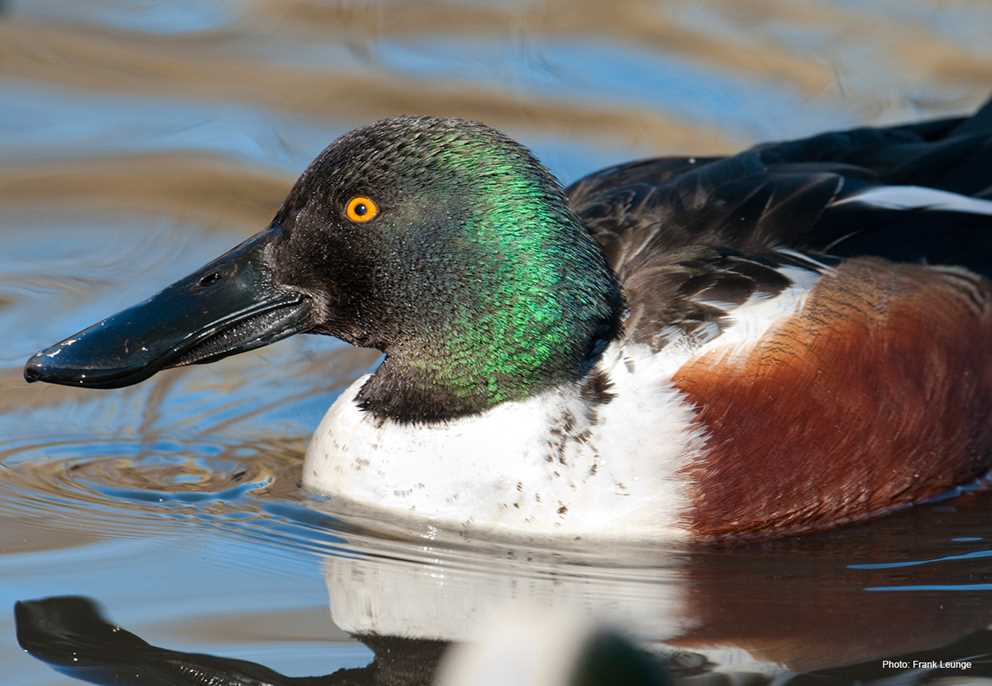
The Northern Shoveler is a widespread duck with striking yellow eyes that stand out against its bold plumage and oversized spoon-shaped bill.
Males are unmistakable as they sport a dark green head, white chest, and chestnut flanks, while females wear a more camouflaged brown pattern.
Their wide, flattened bill isn’t just for show; it’s a clever tool for filtering tiny plants and animals from the water.
Found across much of North America, Europe, and Asia, these shovelers migrate long distances to winter in warmer regions, and are often seen skimming through shallow wetlands, lakes, and flooded fields.
Duck Identification Posters/Charts
Celebrate the beauty of ducks with detailed, high-resolution identification posters designed for both learning and decor. Each chart features vibrant colors, sharp details, and a smooth premium finish that’s perfect for classrooms, study spaces, living rooms, or offices.
