Types of White Ducks: 16 Beautiful Breeds, With Pictures
It’s always a delight to spot a white duck, whether waddling in your garden or gliding across a nearby pond. While many ducks show some white in their plumage, ducks that are completely white are much rarer. In fact, among wild species, the only duck with predominantly white feathers is the male Smew. This means that most white ducks you encounter are domestic ducks, and you can guess what that implies: they’ve likely been bred specifically for that striking coloration.
No matter where you see white ducks, they tend to evoke feelings of serenity, elegance, and happiness. White has long symbolized light and goodness in the world, which may explain the many superstitions surrounding white birds and animals.
Whatever your reason for loving white ducks, it’s also worth knowing which breeds or species exist. In this post, we’ll highlight some types of white ducks that you might not have known existed. So, without further ado, here are the most common white ducks found around the world.
1. American Pekin
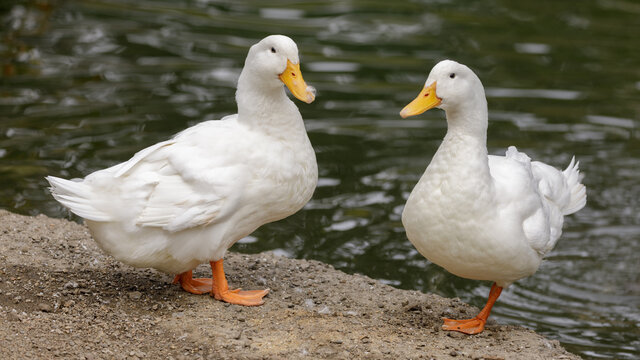
The first white duck worth highlighting is the American Pekin, an American domestic breed that’s widely celebrated for its soft, creamy-white plumage. Its yellow-orange feet and beak add a cheerful splash of color, giving the duck an unmistakably friendly and approachable look.
Beyond looks, the Pekin plays a major role in duck meat production in the United States. Hardy, fast-growing, and highly fertile, it is widely raised for commercial meat production.
While calm and sociable, they are surprisingly vocal, especially the females, whose quacks are loud and frequent. Interestingly, they are less likely to sit on their own eggs, making them more dependent on humans for breeding. But this is the trait that has made them easier to manage and raise for meat production.
2. Crested Duck
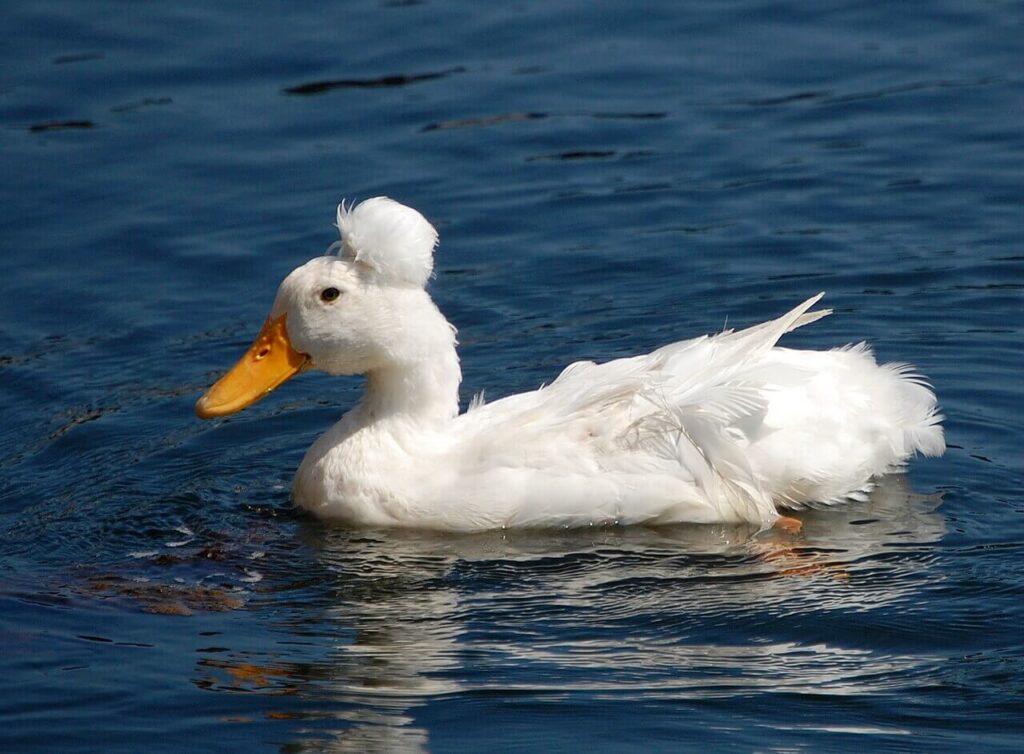
A crown of feathers atop the head gives the Domestic Crested Duck an almost regal silhouette. They are believed to have first been brought from the East Indies to Europe by Dutch ships. While this breed comes in a wide range of colors, only black and white are officially recognized in the United States.
The striking crest is what makes the duck so eye-catching, but the gene behind it, the crest allele, can sometimes affect skull and brain development, leading to balance or movement challenges. Despite these quirks, Crested Ducks are hardy, can be raised for both eggs and meat, and their playful, friendly personalities make them a favorite among breeders who enjoy their unique charm.
3. Aylesbury Duck
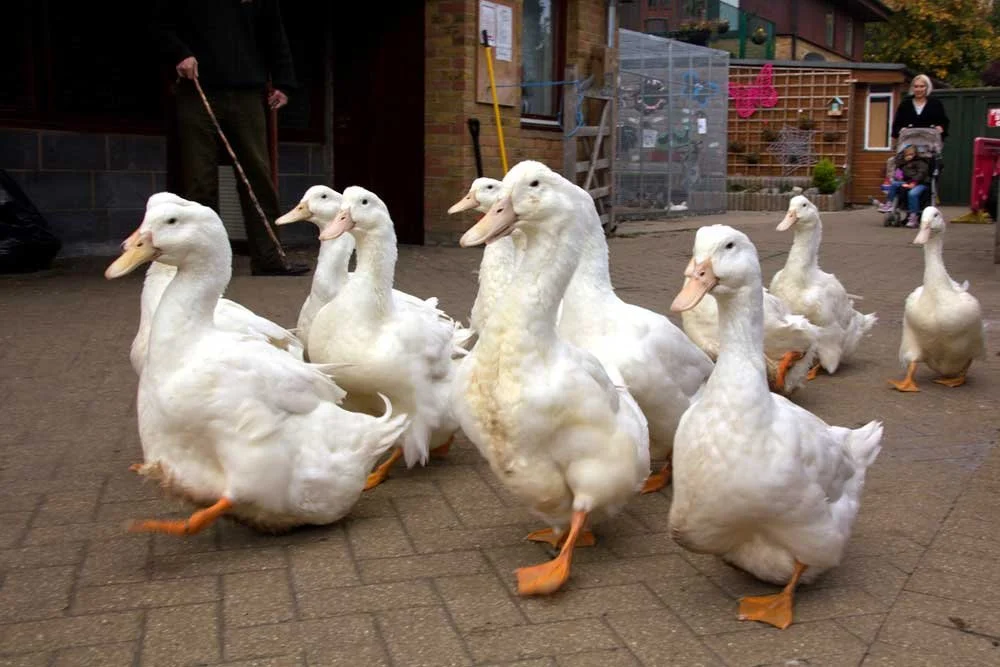
Standing long and low, the Aylesbury Duck carries itself with a calm, almost regal grace. Its pure white plumage shines like freshly fallen snow, and is complemented by a straight, pinkish-white bill and bright orange legs and feet. Besides white plumage, it has white skin, which is a unique attribute considering that most ducks have yellow skins.
Originating from Aylesbury in Buckinghamshire, England, this breed was developed in the 18th century when white feathers were highly sought after for quilt filling. Over time, breeders focused on size, shape, and color, giving us the large, horizontal-bodied duck we know today. Aylesburys are known for being exceptionally tame and slow-moving, making them easy to handle.
Fun Fact: The Aylesbury duck has become a town symbol, having been featured on the coat of arms and even on the badge of Aylesbury United F.C., affectionately nicknamed “The Ducks.”
4. Bali Duck
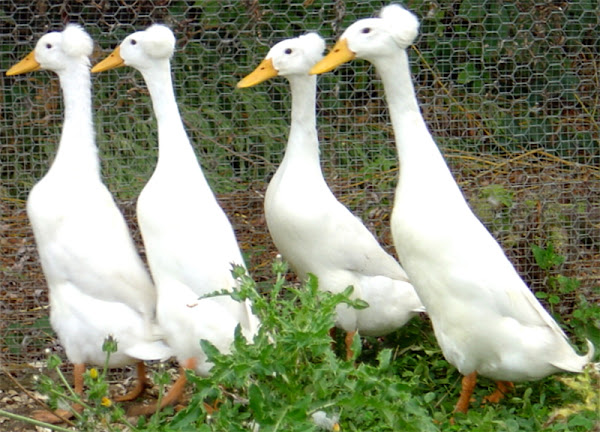
Sporting a small crest on its head and a sleek, lightweight frame, Bali Duck‘s white plumage is crisp and eye-catching, while its unique posture hints at its Runner duck heritage.
Originally from Bali, this breed is mostly kept as a pet or ornamental bird, although it can lay eggs. However, like the Crested duck, its crest gene, comes with challenges: it can cause balance issues and skull deformities, and sadly, some ducklings don’t survive hatching.
Despite these challenges, the Bali Duck remains a rare, charming bird whose playful personality and elegant look make a true little gem among domestic ducks.
5. Call Duck
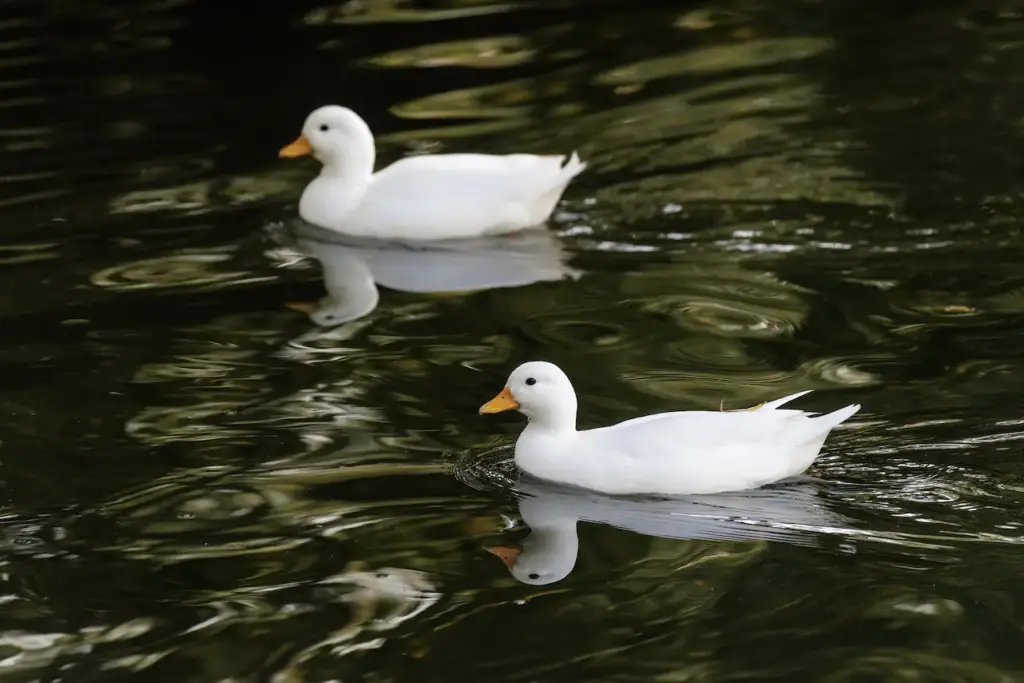
Tiny but mighty, the Call Duck is like the pocket-sized superstar of the duck world. Its snowy white feathers make it look delicate, yet this little duck was bred for a very practical purpose: to call wild Mallards into traps across the Fenlands of the UK and the marshes of Holland.
Females are famous for their piercing, high-pitched quacks, which can be heard over long distances, so be warned if you have close neighbors! Despite their vocal tendencies, Call Ducks have won hearts far and wide as show birds in Europe and North America.
6. White Layer Duck

White Layer Duck is another amazing domestic duck breed dressed in pristine white plumage. They are exceptional egg layers, producing up to 290 large eggs a year, and most of their eggs are white with just a few bluish eggs mixed in. They thrive in all climates and rarely go broody, making them easy to manage. For anyone seeking a quiet, reliable duck that combines elegance with productivity, the White Layer is a top choice.
7. German Pekin
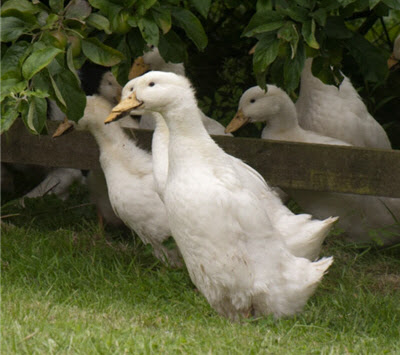
Standing almost upright, the German Pekin is a broad, heavy-set duck cloaked in creamy-white feathers with a soft yellowish tinge. It has a short orange beak and sturdy body, which gives it a charming, almost statuesque presence.
Unlike its American cousin, the German Pekin is mostly a show bird today rather than a farm duck, prized for its elegant appearance rather than its meat.
Females lay around 80 sizable eggs a year, making them decent layers, but their true value lies in their poise and beauty, which has kept them popular in European exhibitions for decades.
8. Mulard
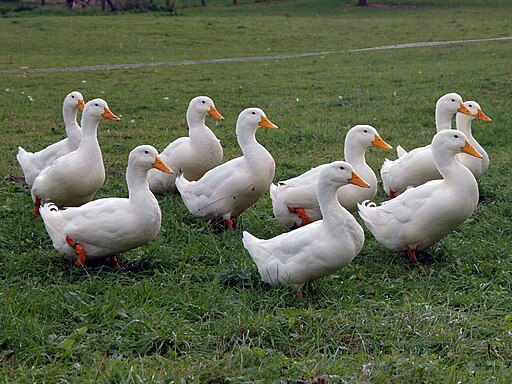
The Mulard is a duck with a story of hybrid vigor behind it. Born from a cross between a Muscovy and a White Pekin, this duck wears smooth white feathers that echo its Pekin parentage, but its sturdy frame hints at the Muscovy influence.
Mulards are sterile, which makes them a duck that can’t reproduce naturally, but their purpose is clear: they are prized for meat and are the main breed used for foie gras production worldwide.
While their breeding may raise ethical debates, there’s no denying the Mulard’s distinctive presence in culinary traditions, combining strength, elegance, and a rich heritage all in one bird.
9. Bourbourg Duck

The Bourbourg Duck is a large, plump bird that almost glows in its pure white plumage. It has pinkish-white bill and yellow-orange legs, which complement its broad, horizontal body, giving it a classic, sturdy look reminiscent of the Aylesbury.
Bred in northern France in the late 1800s, this duck grows quickly and matures into a hearty bird with males weighing up to nearly 8 pounds! Beyond its striking appearance, the Bourbourg is valued for its fine, well-flavored meat and decent egg production, with females laying sizable pinkish-white eggs.
10. Indian Runner Duck

If you thought ducks only waddled or swam, meet the Indian Runner: a duck that stands almost like a little white penguin and prefers to run rather than waddle. Its sleek, elongated body is covered in crisp white feathers, with a wedge-shaped head and a straight bill that gives it a “racy” look. Bred on the islands of Indonesia, Indian Runners are prolific layers, easily producing over 170 eggs a year, making them a favorite for backyard flocks.
11. White Muscovy Duck

Muscovy ducks are quite different from most other domestic ducks, mainly because they are not descended from Mallards. Instead, they originated from Central and South America and have been domesticated since pre-Columbian times.
Known for being quiet, excellent foragers, and strong breeders, they are a popular choice on farms. Among them, the White Muscovy stands out with its clean, all-white plumage, which contrasts sharply with the red, warty caruncles around its face.
Beyond their unique looks, Muscovies are valued for their lean, flavorful meat and their ability to adapt to different environments. Even though they are tropical birds, they can handle surprisingly cold weather, making them both hardy and reliable.
12. Ancona Duck

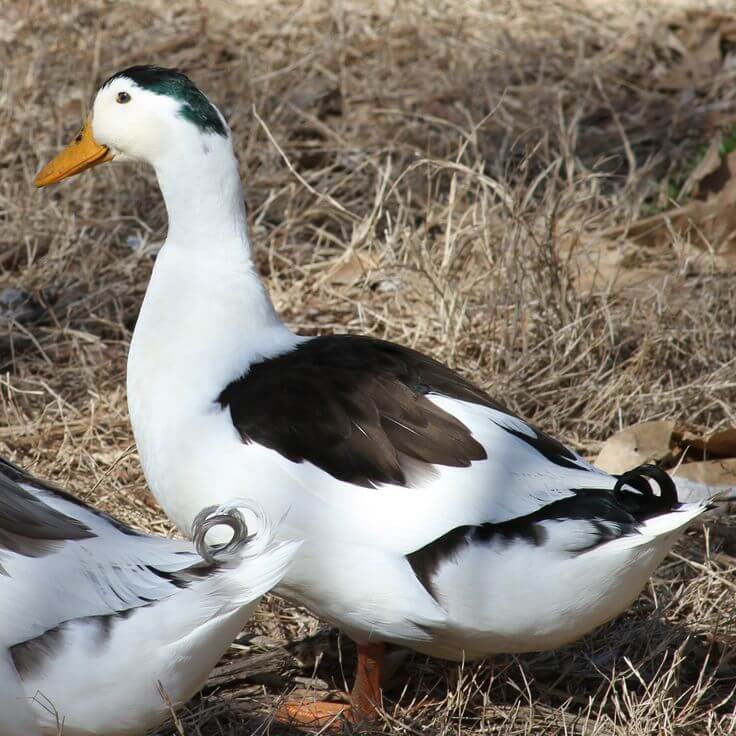
Although not entirely white like the breeds we’ve highlighted so far, the Ancona Duck still earns its place on this list because some individuals have predominantly white plumage. Even then, the white is usually broken up by irregular patches of color ( black, in most cases) giving the duck a striking and slightly unpredictable look. No two Ancona ducks share the exact same pattern, which only adds to their charm.
Beyond looks, the Ancona is a hardy and adaptable duck that does well in a variety of environments. It’s also a very productive layer that is capable of producing well over 200 eggs a year in a range of colors.
13. Cherry Valley Duck

With its clean white plumage, bright orange legs, and sturdy build, Cherry Valley duck looks every bit like a classic farm duck, but it’s been specially developed for performance. Originating in the UK, this Pekin-based hybrid is known for its rapid growth and impressive egg production, with some birds laying up to 300 eggs a year.
What really sets the Cherry Valley apart is how adaptable it is. These ducks are hardy, friendly, and don’t fly, making them easy to manage whether on a large commercial farm or in a backyard setting. They also mature quickly, and often ready in just a few weeks, which is why they are so widely used around the world.
14. White Campbell Duck

When it comes to egg-laying, few ducks can compete with the White Campbell. Dressed in clean, pure white plumage with orange legs and a neat, upright posture, this duck is both elegant and highly productive. It is a color variety of the well-known Khaki Campbell, bred specifically for its white feathers while keeping its outstanding laying ability.
But the real magic of the White Campbell lies in its performance. These ducks are active foragers and can produce well over 250 eggs a year, sometimes even reaching 300 or more under the right conditions. They are also highly adaptable, and can thrive in a wide range of climates (from hot, dry areas to colder regions), so long as they are given time to adjust.
15. White Mallard

At first glance, a White Mallard might look like something rare and unusual in the wild, and in a way, it is. Unlike typical mallards with their familiar patterns, these birds appear white or creamy due to a genetic condition that reduces pigmentation. Even so, they still carry classic mallard features, like the curled tail feather seen in males.
What makes them interesting goes beyond their color. Mallards are one of the most widespread ducks in the world and are known for their ability to interbreed with other duck species. This has led to many hybrids, including white or partially white birds appearing in the wild. While this adaptability helps them thrive, it also raises concerns about the mixing of wild gene pools. So, spotting a White Mallard is not just about seeing a different color, it’s a glimpse into how flexible and influential this species really is.
Don’t confuse mallards with its lookalikes: 13 Ducks That Look Like Mallards
16. Smew
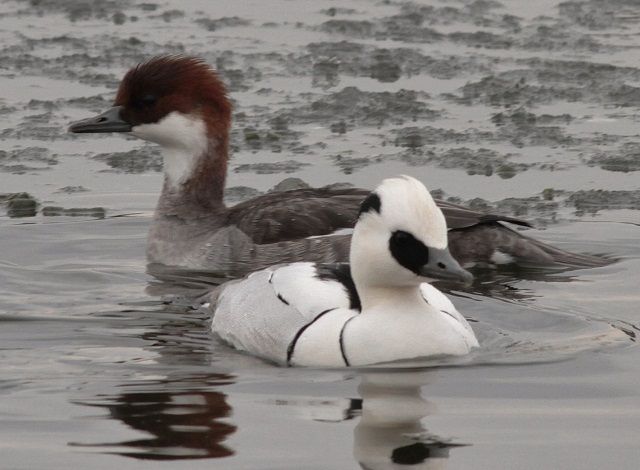
And finally, we come to the only truly wild duck on our list: the Smew. The adult drake is striking, with black-and-white plumage that has earned it nicknames like “panda” or “cracked ice” in flight. Females and young males, by contrast, are softer in color—mostly grey with chestnut foreheads and crowns, white cheeks, and black markings around the eyes—earning them the name “redhead” smew.
Beyond its beautiful feathers, the Smew is a skilled hunter. Its hooked bill, with serrated edges, is perfect for catching fish, which it pursues by diving in lakes and slow rivers. Breeding takes place in the northern taiga of the Palearctic, from Scandinavia all the way to Chukotka, and these ducks rely on trees for nesting.
Discover other ducks that nest on trees: 23 Ducks That Nest In Trees