Stiff-Tailed Ducks: Meet the Upright-Tailed Divers of the Oxyurini Tribe
Stiff-tailed ducks are a distinctive group of freshwater diving ducks that belong to the Oxyurini tribe within the duck family Anatidae. Most species are placed in the genus Oxyura and are easily recognized by their compact bodies, large swollen bills, and the long, stiff tail feathers they often hold upright while resting on the water.
Below is a list of the most notable stiff-tailed duck species found across freshwater lakes, marshes, and wetlands in North America, South America, Europe, Africa, Asia, and Australia.


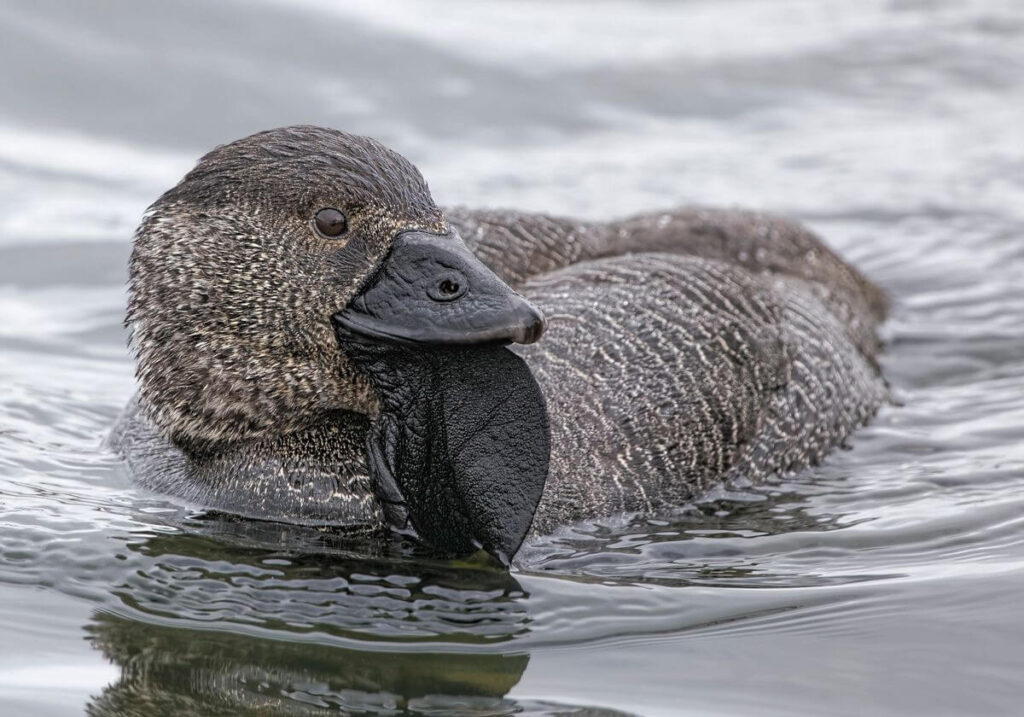
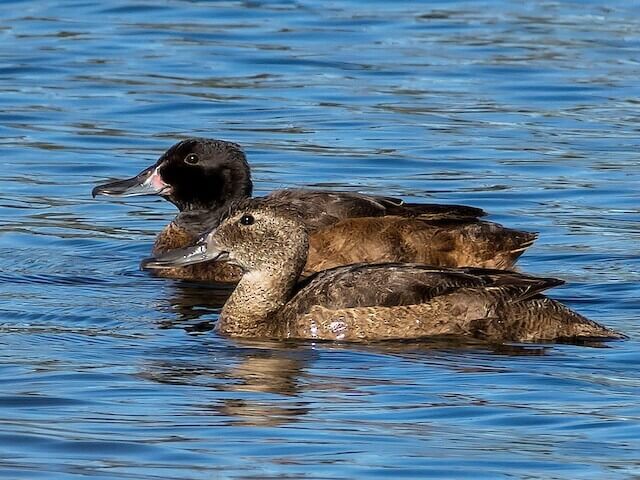
Discover duck species in other tribes:
What Are Stiff-Tailed Ducks?
Stiff-tailed ducks are a distinctive group of freshwater diving ducks belonging to the tribe Oxyurini within the duck family Anatidae. Most species are placed in the genus Oxyura, and they are easily recognized by their unusual body shape, upright tail posture, and specialized diving abilities.
These ducks are highly adapted to life on the water and rarely spend much time on land. Their compact bodies, strong legs, and specialized bills allow them to forage efficiently underwater. Combined with their unusual courtship displays and bold breeding plumage, stiff-tailed ducks stand out as one of the most distinctive groups of waterfowl.
Duck Identification Posters/Charts
Celebrate the beauty of ducks with detailed, high-resolution identification posters designed for both learning and decor. Each chart features vibrant colors, sharp details, and a smooth premium finish that’s perfect for classrooms, study spaces, living rooms, or offices.

Key Characteristics
Stiff-tailed ducks are relatively small, round-bodied diving ducks with several features that make them easy to identify.
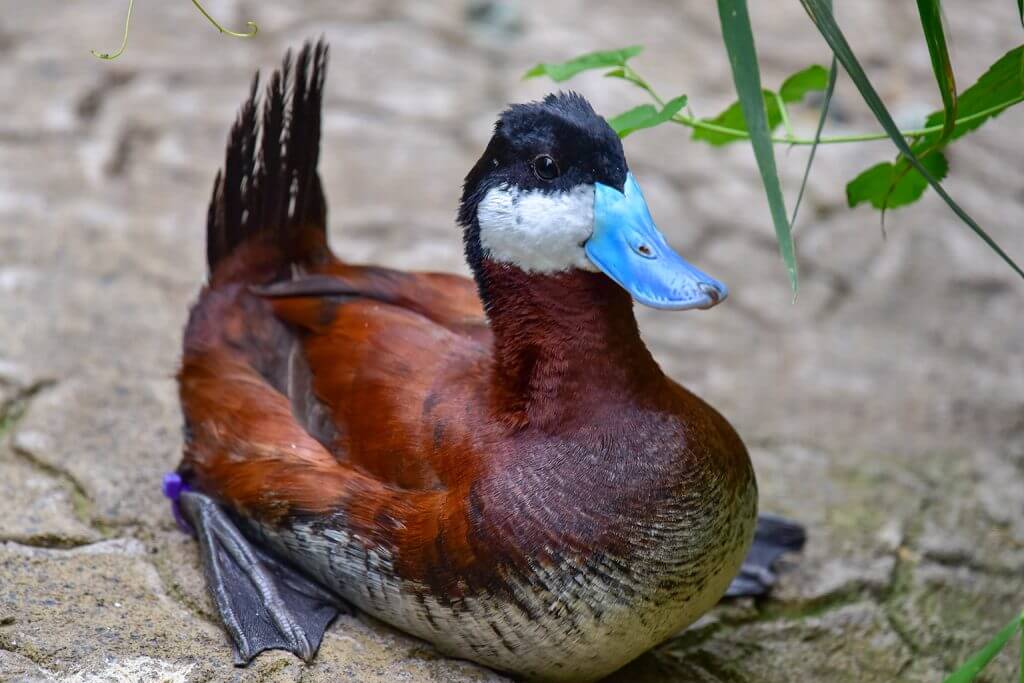
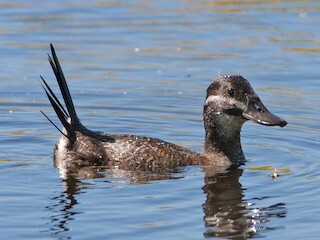
The most noticeable trait is their long, stiff tail feathers, which are often held upright when the bird is resting on the water. These pointed tail feathers help the ducks steer and stabilize themselves while diving.
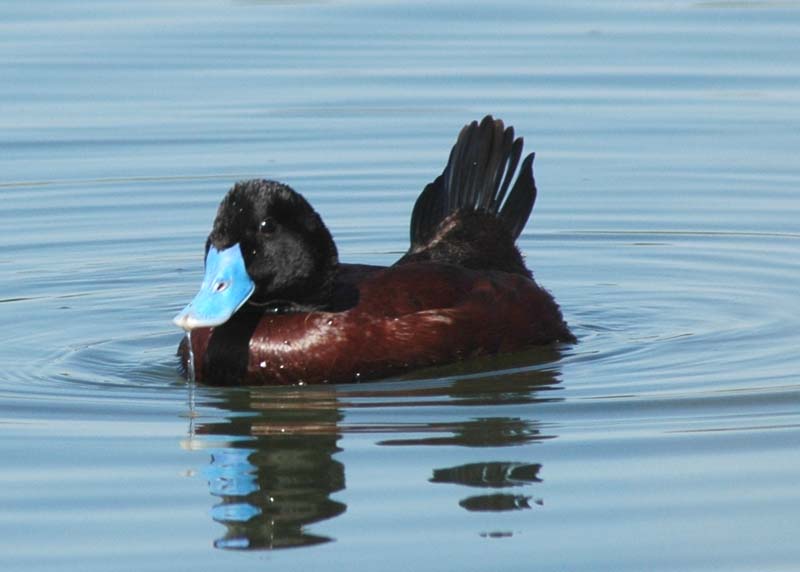
Another defining feature is their large, swollen bill, which is broad and scoop-shaped. In many species, especially during the breeding season, the male’s bill becomes brightly colored.
Other physical adaptations include:
- Legs set far back on the body, which provide powerful propulsion underwater
- Small wings, making flight possible but somewhat labored
- Compact bodies, suited for diving and swimming
Because of this body structure, stiff-tailed ducks are excellent swimmers but awkward walkers, and they seldom venture far from the water.
Habitat and Distribution
Stiff-tailed ducks occur across several continents but tend to be patchily distributed, depending on the availability of suitable wetlands.
They are most commonly found in freshwater lakes, marshes, reservoirs, and ponds with abundant vegetation. These habitats provide the food resources and cover needed for feeding, nesting, and raising young.
Different species inhabit different regions of the world. For example:
- The Ruddy Duck occurs widely across North America and parts of Central America.
- The White-headed Duck lives across parts of southern Europe, North Africa, and central Asia.
- The Maccoa Duck is found throughout sub-Saharan Africa.
- The Blue-billed Duck is native to Australia.
- The Argentine Blue-bill inhabits wetlands in South America.
Although some populations move seasonally, stiff-tailed ducks generally make short regional movements rather than long migrations.
Feeding Behavior
Stiff-tailed ducks are specialized diving feeders that search for food beneath the surface of lakes and marshes.
They typically dive underwater and forage along the bottom, using their broad bills to sift through mud, vegetation, and debris in search of prey. Their stiff tails help them maintain balance and control as they maneuver underwater.
Their diet mainly includes:
- Aquatic insect larvae
- Small crustaceans
- Snails and other invertebrates
- Seeds and aquatic plants
- Occasionally small fish or amphibians
The balance between plant and animal foods often changes with the seasons, with animal prey becoming especially important during the breeding season.
Courtship and Social Behavior
Stiff-tailed ducks are famous for their unusual and elaborate courtship displays, which are quite different from those of most other ducks.
During the breeding season, males perform dramatic displays that include:
- Throwing the head backward while swimming
- Inflating a throat air sac in the neck
- Producing drumming or thudding sounds by striking the inflated sac with the bill
- Erecting a short crest on the head
These displays combine sound and movement to attract females and establish dominance over rival males.
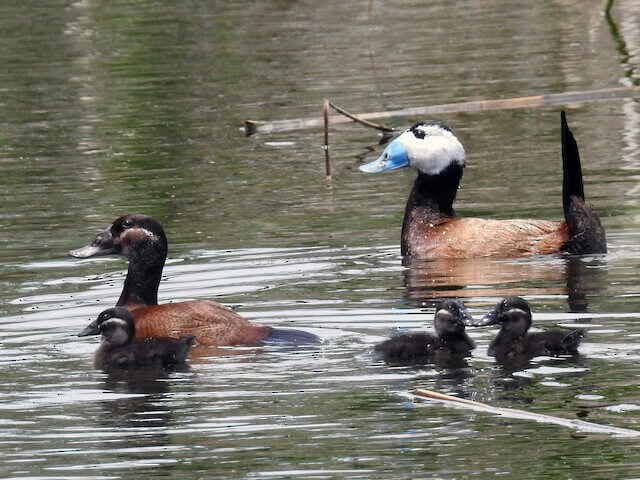
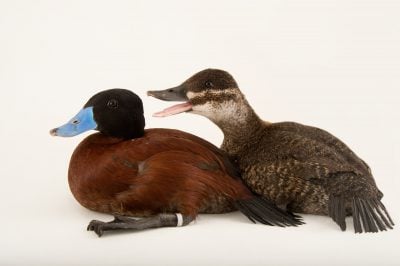
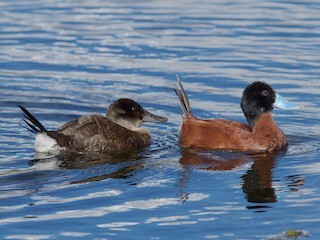
In many species, the males develop bright breeding plumage, which features reddish bodies and vivid blue bills, while females remain more subdued in color for camouflage.
Breeding and Nesting
Stiff-tailed ducks usually nest in dense vegetation near freshwater wetlands. Nests are often hidden among reeds, sedges, or other marsh plants close to the water.
The female typically builds the nest and lays a clutch of five to twelve eggs. Incubation usually lasts around three to four weeks, depending on the species.
When the ducklings hatch, they are precocial, meaning they are able to swim and feed soon after leaving the nest. The mother leads them to nearby water where they begin learning to dive and forage.
Unlike many ducks, males may sometimes assist in caring for the young, although the female remains the primary caregiver.
Conservation Status
The conservation outlook for stiff-tailed ducks varies between species.
Some species remain relatively common and widespread. For example, the Ruddy Duck and the Blue-billed Duck are generally considered stable across much of their range.
Other species face more serious threats. The White-headed Duck, for instance, has experienced major population declines due to habitat loss, wetland degradation, and hybridization with introduced Ruddy Ducks in parts of Europe.
In Africa, the Maccoa Duck is considered near threatened because of habitat destruction and pollution affecting freshwater wetlands.
Conservation efforts for stiff-tailed ducks focus on protecting wetlands, improving water quality, and managing invasive species that may threaten native populations.
Discover: 17 Most Endangered Ducks in the World According To IUCN Red List