16 Ducks with White Stripe On the Head
Stripes on a duck’s head can be an important clue when you are trying to identify certain duck species.
For instance, one way you can tell the difference between a male northern pintail and a male gadwall, especially when you are observing from a distance or when all you can clearly see is their heads, is the presence of a white stripe running from the back of the pintail’s chocolate brown head down the neck. The gadwall male lacks this white stripe and instead has a finely patterned grey head.
(As a small side challenge, can you differentiate the hens of these two species? Check out this post if they confuse you)
Beyond quick identification clues for us birders, stripes also serve certain biological functions in ducks that have them. In some species, for instance, these white markings help attract mates or signal dominance.
That said, which duck species actually have white stripes on their heads? Below is a list of 16 fascinating ducks that wear their white head stripes proudly, along with quick facts on how each species shows off this eye catching feature.
One thing you will notice with the ducks in our list is the fact that these bold head markings come in many forms, from thin eye lines to wide crescents and sweeping neck stripes, giving each species its own unique look.
1. Garganey
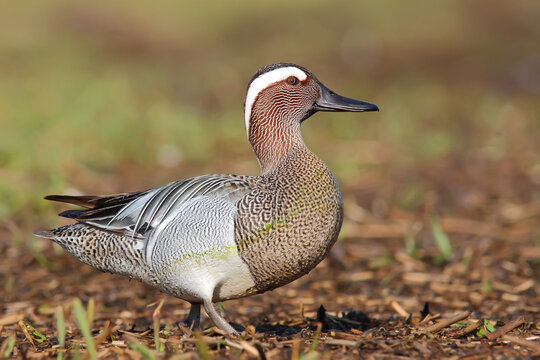
With its bright white stripe curving gracefully from the eye to the back of the head, the Garganey was an easy choice to include first on this list. The bold white line really stands out against its dark, chestnut-brown face, giving it an elegant and graceful look. Males are especially striking in spring and summer when this crisp white stripe is most visible. Garganeys love calm, shallow wetlands and grassy marshes, where they quietly swim and feed. They are also famous for their long migration patterns, breeding in Europe and then flying thousands of miles to winter in Africa and Asia.
2. Baikal Teal
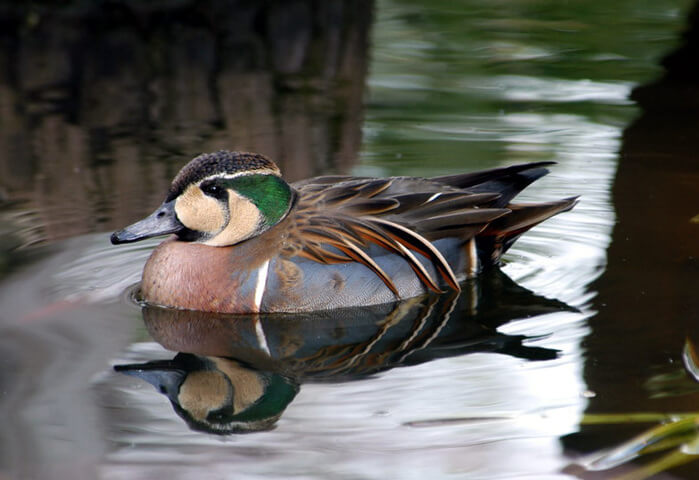
The Baikal Teal wears one of the most beautiful face patterns of any duck. Look closely and you’ll see a curved white stripe that runs from the bill, above the eye, and toward the back of the head, blending into shades of green, yellow, and black. These ducks breed in eastern Russia and spend their winters in East Asia, usually in large, lively groups on lakes and wetlands. Even the females, though plainer, have small white spots near the bill and around the throat that make them easier to identify.
3. Blue-winged Teal
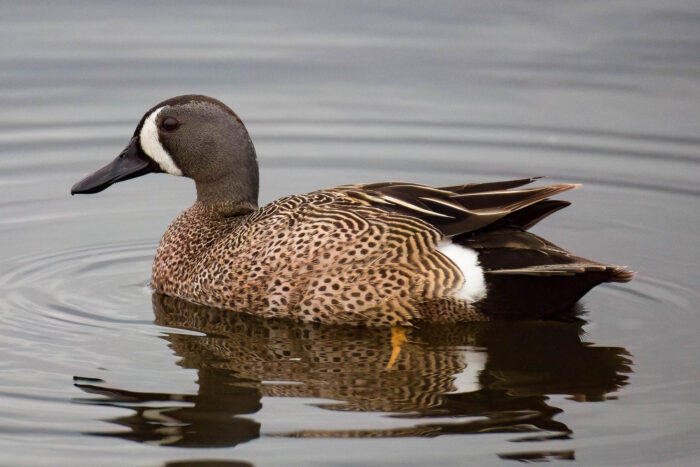
One of the easiest ways to spot a Blue-winged Teal is by the male’s distinctive white crescent-shaped stripe that curves in front of his dark eye, a simple yet striking feature that makes him stand out among other ducks. The rest of the head is a deep gray-blue color. These tiny dabbling ducks love shallow ponds and marshes across North America. They’re also have amazing long migration tendencies, flying all the way to South America for the winter before returning north again in spring.
4. Hooded Merganser
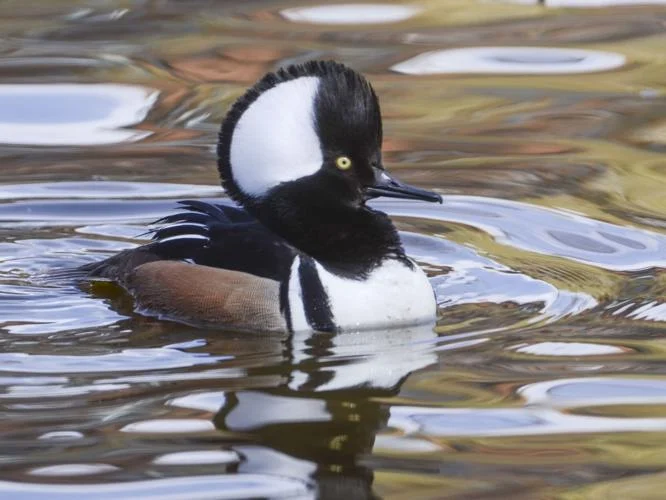
The Hooded Merganser stands out with its bold, fan-shaped white patch on the head, which they can open and close like a stylish hood, a truly eye-catching feature for many birding enthusiasts. When they raise their hood (or crest), the white becomes more pronounced and the head looks like a bold white fan but when they flatten it, the white becomes less obvious and appears more like a thick white stripe across the head. It’s a real show-stopper, especially when the light hits it just right! Females look plainer with brownish heads and a reddish crest, but they still have that same charming “hooded” look that makes this duck easy to recognize on quiet ponds and rivers.
5. Barrow’s Goldeneye
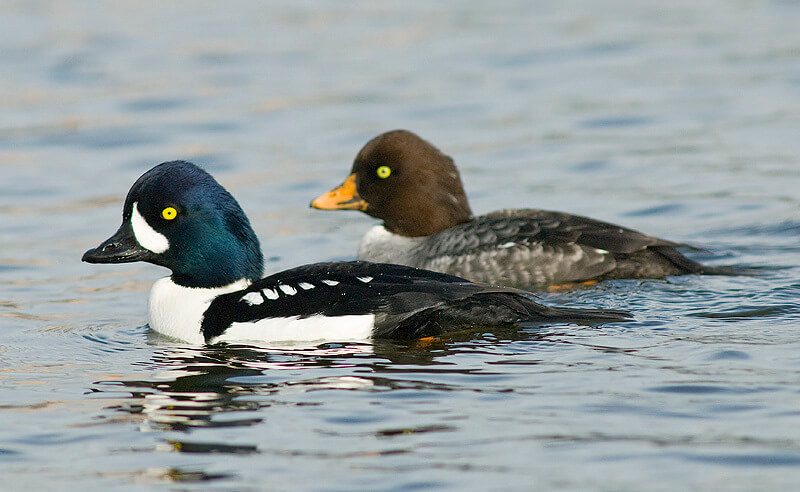
Male Barrow’s Goldeneyes have glossy purple-black heads marked by a bright white crescent-shaped patch in front of the eye, almost like a shining eyebrow. The body is mostly white with black barring on the back, giving it a striking contrast. These ducks love cold northern lakes and mountain streams and are often seen diving underwater for insects, crustaceans, and small fish. Females are brown-headed and a bit subdued in color, but both sexes share that compact, sturdy look that makes them easy to spot on the water.
6. Harlequin Duck
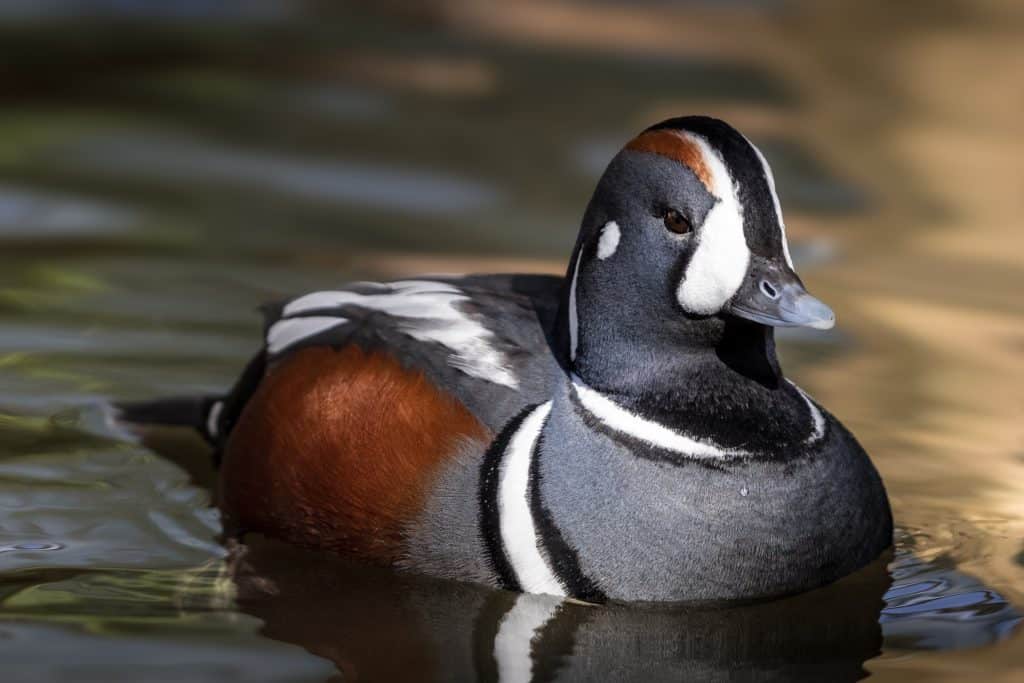
The male Harlequin’s dark blue-gray head is decorated with a bold white crescent in front of the eye, another white spot behind it, and a larger white patch down the neck. Add chestnut sides and a black crown stripe, and you’ve got one of the most prettiest ducks in the world. They live along rocky streams and coastlines, often diving in rushing water where few other ducks dare to swim. Females have softer brown bodies with three small white patches on the head, but they are still charming as their male counterparts.
7. Mandarin Duck
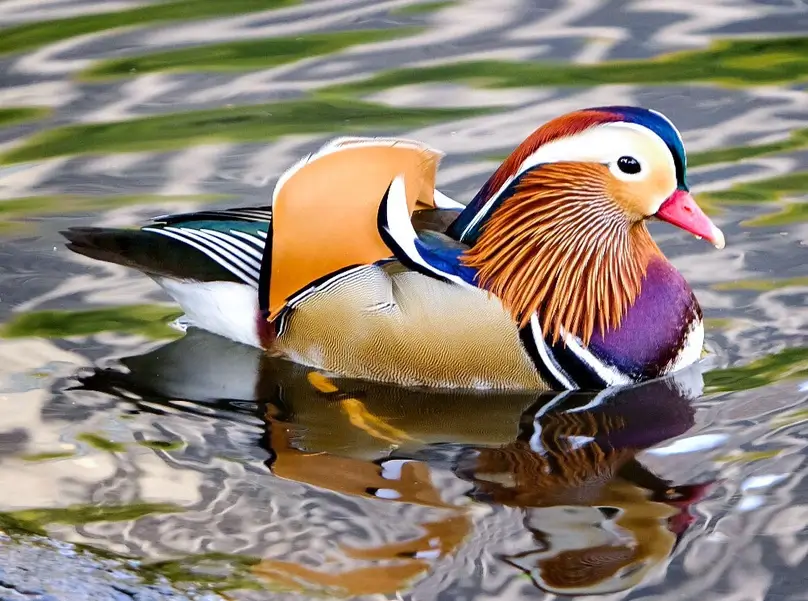
The Mandarin Duck looks like it stepped right out of a painting work. The male’s head is a mix of rich green, purple, and orange, with a white stripe that curves gracefully over the eye and down the neck. This bold marking frames its colorful face and highlights its red bill and orange “sails” (or the upright feathers on its back). Native to East Asia, these ducks are now found in parks and ponds around the world, often amazing onlookers with their beauty. Females are much softer in tone, and wear a grayish-brown body color with a white stripe behind the eye, giving them a gentle elegance of their own.
Duck Identification Posters/Charts
Celebrate the beauty of ducks with detailed, high-resolution identification posters designed for both learning and decor. Each chart features vibrant colors, sharp details, and a smooth premium finish that’s perfect for classrooms, study spaces, living rooms, or offices.

8. Wood Duck
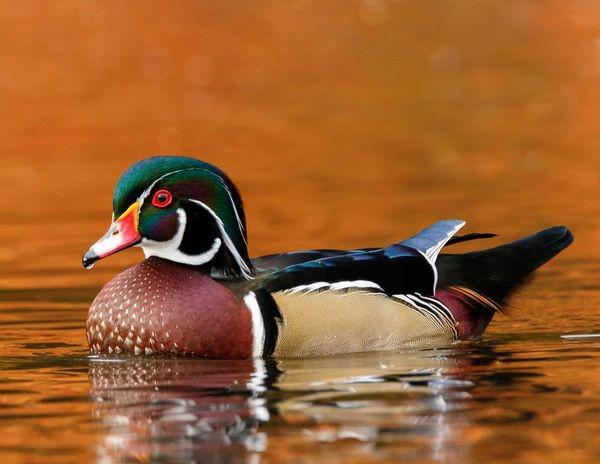
The Wood Duck is another true beauty, easily spotted by the clean white lines running along its face and down the neck. The male has shiny green and purple feathers on his head, with striking white stripes. They nest in tree holes near lakes and swamps and sometimes even in nest boxes if you put one up! Females are brownish-gray with a signature white teardrop around the eye.
See also: 5 Ducks That Look Like Wood Ducks
9. American Wigeon
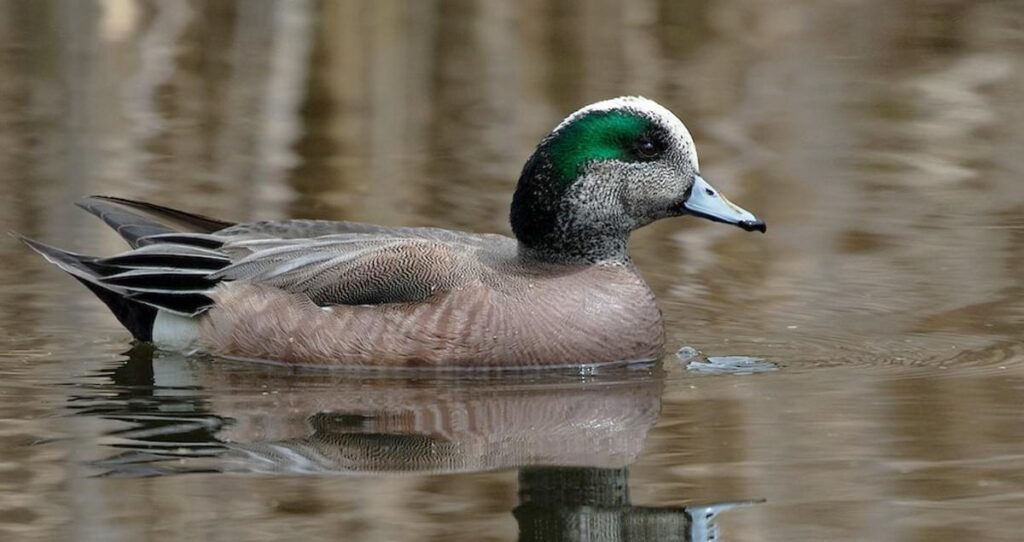
The male American Wigeon has a white stripe running from the crown of his head down to the bill, standing out against the green feathers around the eyes. Because of this look, people sometimes call him the “baldpate.” In flight, you can also spot white shoulder patches flashing on their wings. They’re gentle dabblers, and you will usually find them grazing on aquatic plants alongside coots or feeding in quiet marshes. Females are more subdued in color and are mostly grayish-brown, but both sexes share that round-headed, curious look that makes them easy to recognize.
Did you know that we also have a rare color variation of the American wigeon called Storm Wigeon? Find out here:
10. Northern Pintail
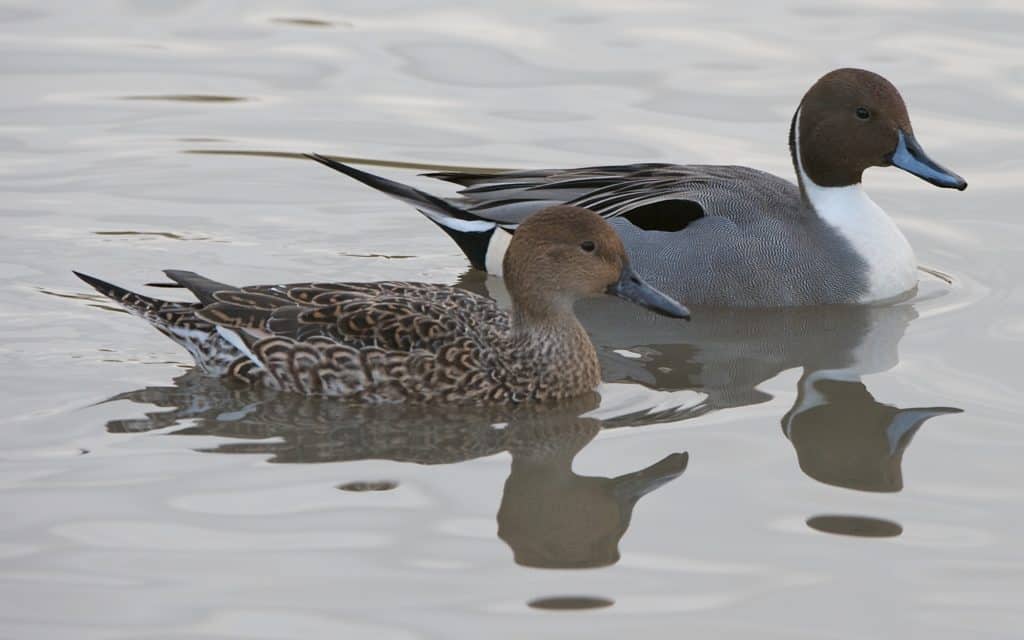
The Northern Pintail is a tall, slender duck with a neck as graceful as a swan’s. The male is especially elegant with white stripe that runs up the side of the neck and continues into the back of his chocolate-brown head, making him look neatly dressed in a tuxedo. That stripe is one of the best clues to spotting a pintail in the wild. His long, pointed tail feathers trail behind like arrows, giving the species its name. Like many ducks in this list, females’ coloration is more subdued and feature an overall shades of brown, which is perfect for blending into grass when nesting. Pintails are dabbling ducks and are often seen gliding over open wetlands or feeding quietly in shallow water.
11. Long-Tailed Duck
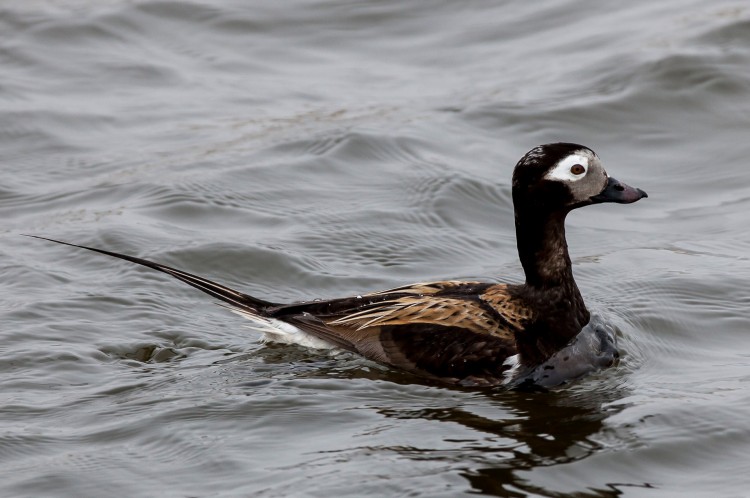
The Long-tailed Duck is an Arctic traveler with ever-changing plumage through the seasons. In winter, the male has a mostly white head and neck, with a distinct white stripe sweeping across the side of the head, separating darker patches on the crown and cheek. Males also have long, elegant tail feathers that trail behind them as they dive and bob on icy northern seas. Females are smaller and browner, but they share that same white-and-dark pattern around the face. These ducks are deep divers, often plunging far below the surface to find shellfish and crustaceans.
12. Surf Scoter
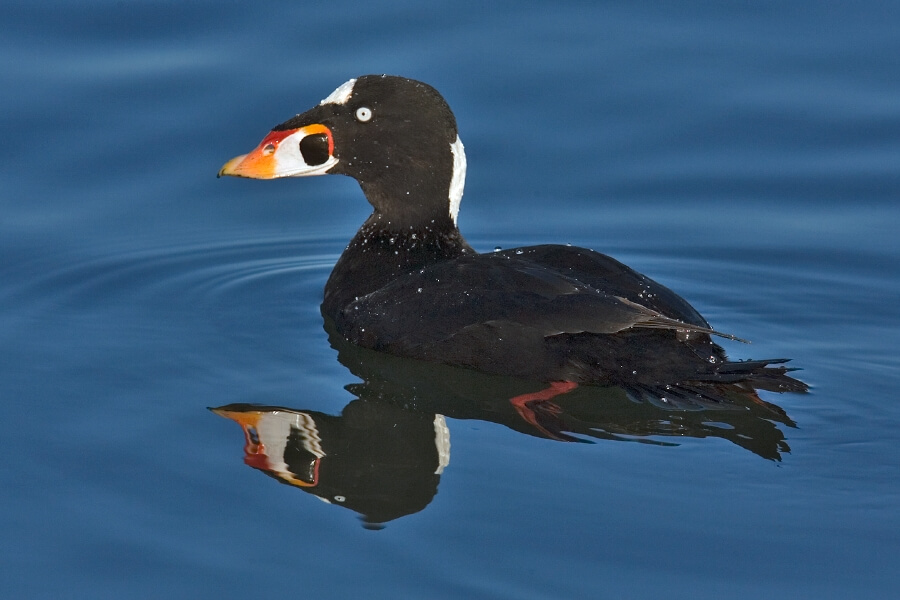
If you spot a large, weird-looking black duck riding the ocean waves with a splash of white on its head, you’ve likely found a Surf Scoter. The male has a bold white patch on the forehead and another on the nape, standing out sharply against his velvety black feathers. Its bill is just as eye-catching and appears large, swollen, and painted in orange, red, and white. It’s one of the most weird but distinctive beaks in the duck world! Females are browner and have pale smudges on the cheeks and sometimes a faint white spot at the back of the head. These strong divers spend their time in cold coastal waters, diving for mussels and other shellfish, and often appear in noisy flocks bobbing just beyond the breaking surf.
Discover other weird or strange-looking ducks here: The 15 Strangest Ducks on the Planet
13. Common Goldeneye
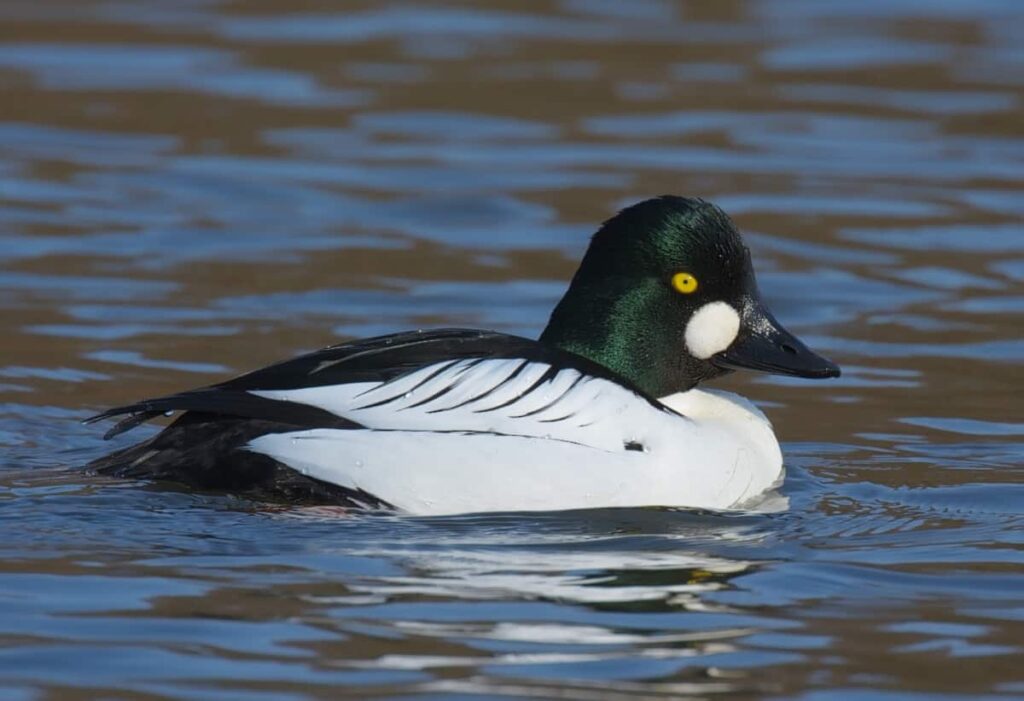
The Common Goldeneye is a striking duck that always seems alert, thanks to its bright golden-yellow eyes. The male’s glossy dark green head shines in the sunlight, and right below the eye is a distinct round white patch that looks like a small stripe or spot on the face. His body is mostly white with black wings and back, giving him a bold, crisp look. When these ducks fly, their wings make a sharp whistling sound, a clue some birdwatchers use to identify them. Females are brown-headed with gray bodies and a white patch on the neck. Common Goldeneyes love diving for their meals, snapping up insects, crustaceans, and fish in cold northern lakes and rivers.
14. Bufflehead
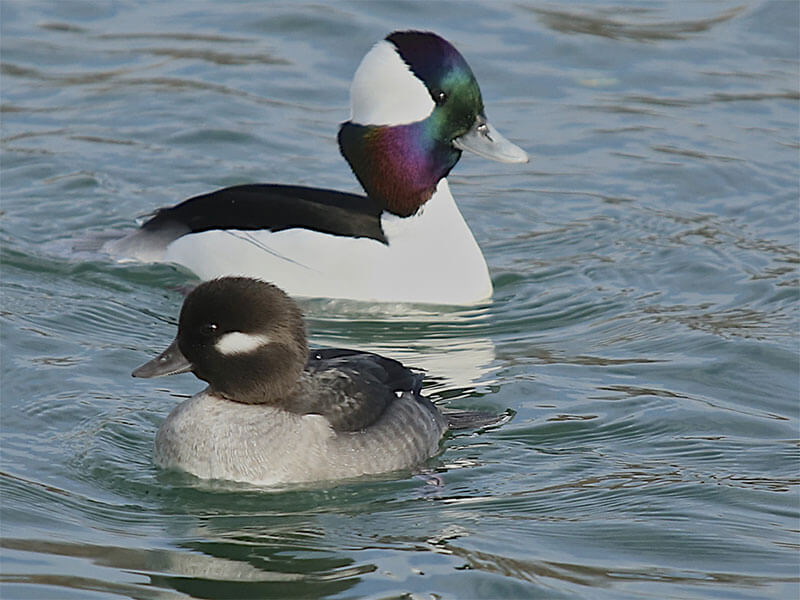
The Bufflehead may be small, but it’s one of the most eye-catching ducks many birders love to spot, thanks to their big, puffy, unique beautiful heads. The male’s glossy black-and-white plumage makes him look like he’s wearing a helmet, and the broad white patch that wraps around the back of his head is his signature feature. When sunlight hits his dark feathers, you’ll see flashes of purple and green shimmer. Females and young males are more subdued, with a brownish head and a smaller white patch just behind the eye. Buffleheads are quick, busy divers that pop in and out of the water like rubber balls. They often nest in old woodpecker holes, especially those made by Northern Flickers.
15. Female Masked Duck
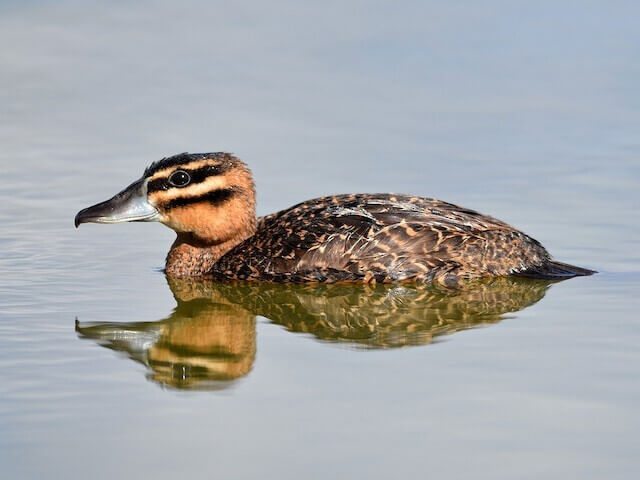
The female Masked Duck is tiny and secretive, which means that you can easily miss it in the field if you’re not looking closely. Her face shows two dark stripes running across a pale buff background, almost like soft whisker marks, which help her blend perfectly into marsh vegetation. The rest of her body is brownish-gray with fine barring that adds to her camouflage. She may not have a bright white stripe like some ducks on this list, but those pale and dark facial bands give her a very distinct look when you observe it up close. Masked Ducks prefer quiet ponds and wetlands with thick reeds, where they can slip away unseen if disturbed.
Hint: Masked duck and Musk duck are two different duck species.
16. White-headed Steamer-Duck
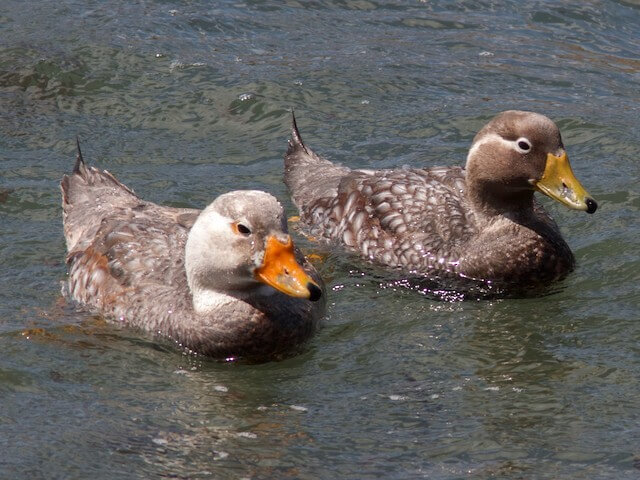
Finally, the White-headed Steamer-Duck is a tough, flightless duck found along the coasts of southern South America. As the name suggests, the adult male has a bright white head that contrasts sharply with his dark gray body. Females and young birds are browner overall, but you can still see lighter areas around the head and neck. These ducks get their steamer name from the way they run across the water, flapping their wings like a paddle steamer in motion. They’re strong, territorial birds that thrive in rocky coastal areas, diving and dabbling for shellfish and sea plants.