18 Ducks with Green Heads (Complete ID Guide)
If you enjoy spending time by local ponds or lakes, chances are you’ve noticed ducks with glossy green heads that seem to shimmer when light hits them just right. The striking color isn’t actually from pigments, but a result of light interacting and bouncing off microscopic structures in these birds’ feathers, creating an iridescent, almost metallic sheen that we all admire.
As a birdwatcher, I still find myself pausing every time I spot that glint of green among the reeds. It’s one of those colors that never gets old: it is bold, elegant, and instantly recognizable. Some ducks wear it like a crown, while others hide it in subtle plumage shades that are only visible when the light hits them at just the right angles.
In this list, we’ll take a closer look at 18 ducks that feature green heads. The list includes a mix of familiar faces you might spot at your local parks, alongside rare and remarkable species from around the world.
- 1. Mallard
- 2. Northern Shoveler
- 3. American Wigeon
- 4. Green-winged Teal
- 5. Common Goldeneye
- 6. Greater Scaup
- 7. Lesser Scaup
- 8. Cayuga Duck
- 9. Bufflehead
- 10. Baikal Teal
- 11. Falcated Duck
- 12. Common Shelduck
- 13. Red-breasted Merganser
- 13. Common Merganser
- 14. Wood Duck
- 15. Chestnut Teal
- 16. Spectacled Eider
- 17. Tufted Duck
- 18. Baer’s Pochard
1. Mallard
Scientific Name: Anas platyrhynchos
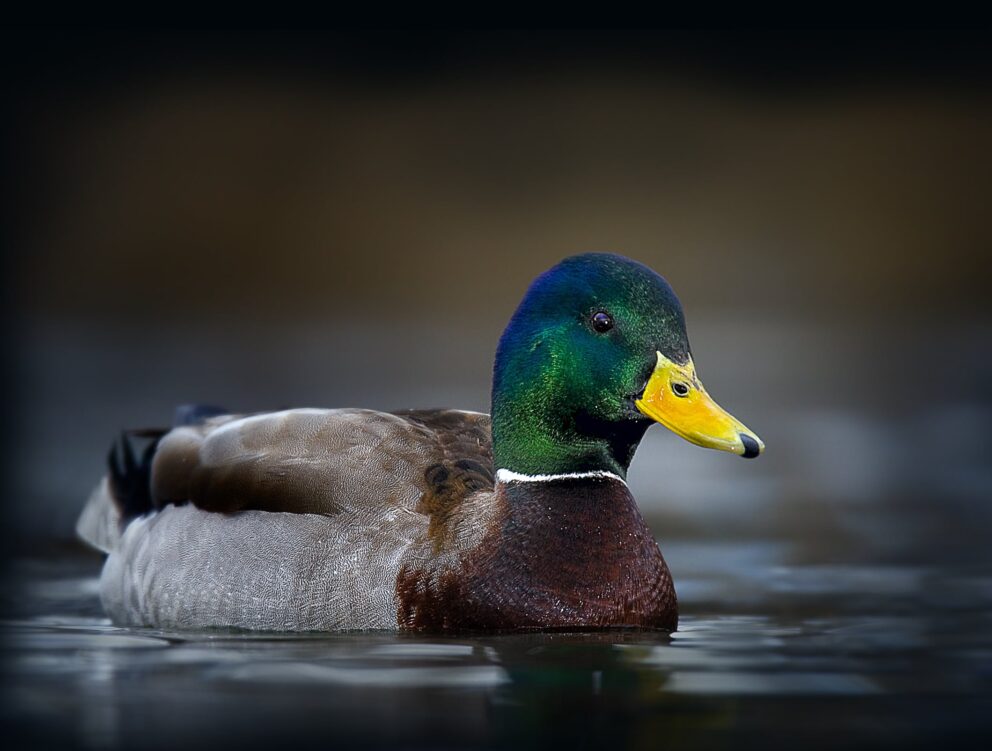
For most duck enthusiasts, the first bird that comes to mind when identifying ducks with green heads is undoubtedly the male mallard. It is instantly recognizable by its shimmering, emerald-green head. It also wears a white ring around the neck and has a bright yellow bill — very handsome indeed! The female, on the other hand, is dressed in soft brown feathers. Mallards are incredibly widespread, and you are likely to find them almost anywhere, from city parks and farm ponds to lakes and quiet rivers.
Fun Fact: Mallards are the ancestors of most domestic ducks you see today. Humans domesticated wild mallards and selectively bred them for traits like size, temperament, and egg production, creating the many duck breeds we see today.
Don’t confuse mallards with these lookalikes: 13 Ducks That Look Like Mallards
2. Northern Shoveler
Scientific Name: Spatula clypeata
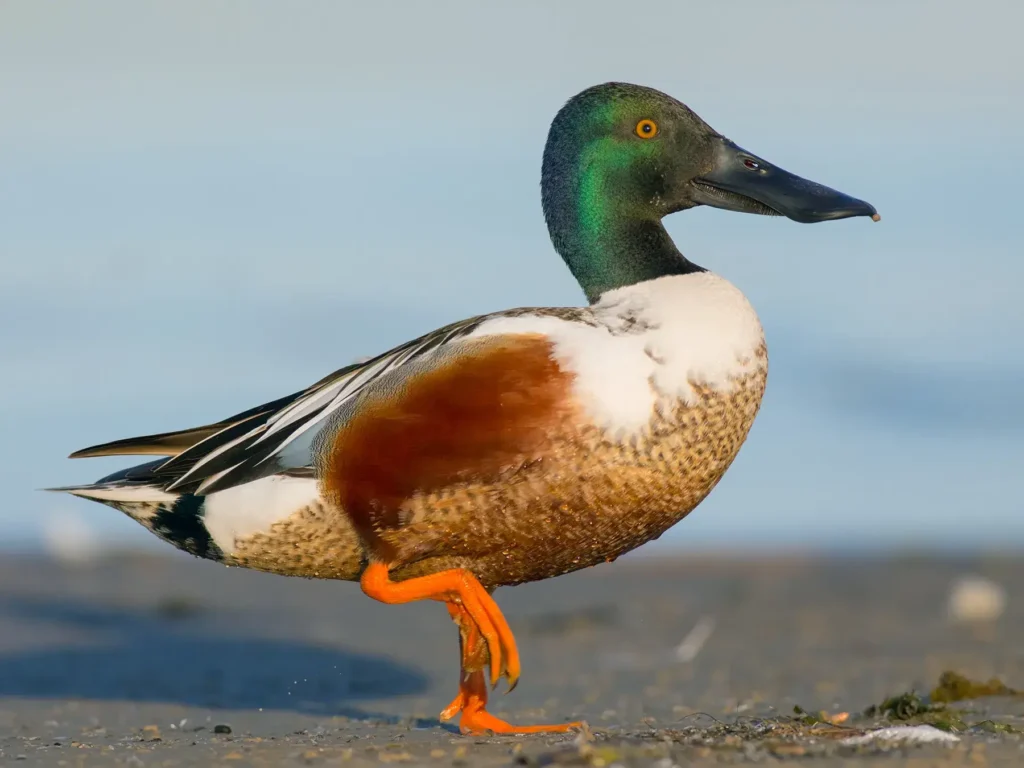
The Northern Shovelers is another duck species that is easy to identify and hard to confuse with other species, thanks to its distinctive large, spoon-shaped bill. The drake has a shiny green head like the male mallard, though it is not quite as glossy. For those wondering why nature gave these ducks such large bills, they are not just for show but play a key role in how they feed. Northern Shovelers use their broad bills to strain small aquatic invertebrates and plankton from the water. Along the edges are fine, comb like structures called lamellae that act like a sieve, allowing the ducks to filter food from the water as they sweep along the surface.
3. American Wigeon
Scientific Name: Mareca americana
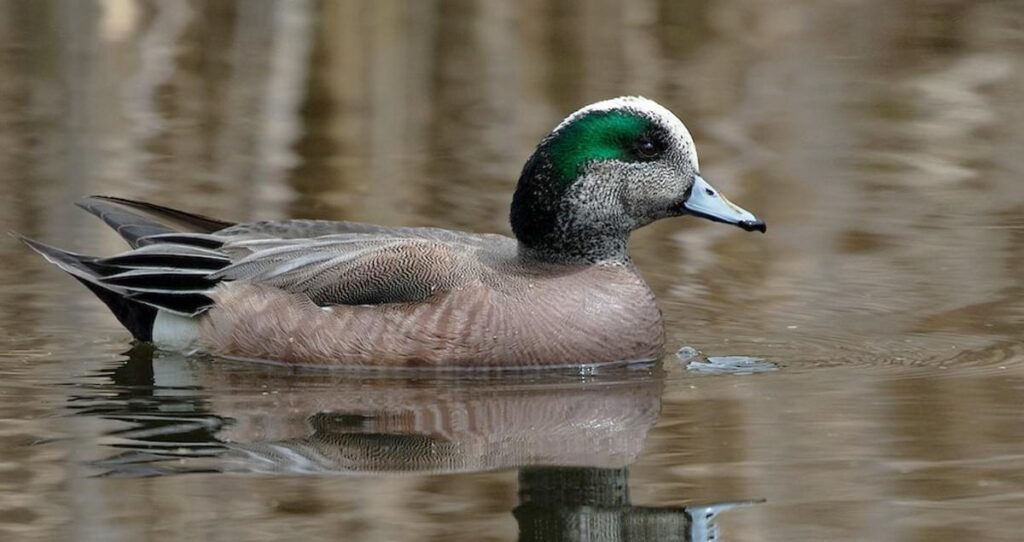
The American Wigeon has a touch of green that looks like a shiny stripe running from the eye to the back of the head. The male’s creamy white forehead and crown make him easy to recognize from afar. You can easily distinguish it from other dabbling ducks by its rounded head, short neck, and relatively small bill, which is pale blue with a black tip in both sexes. The female plumage is less conspicuous than the male’s, but both share white bellies and grey legs and feet.
Can you spot a Storm Wigeon in an American Wigeon flock? This post might help: Storm Wigeon vs American Wigeon: What’s the Difference?
4. Green-winged Teal
Scientific Name: Anas carolinensis
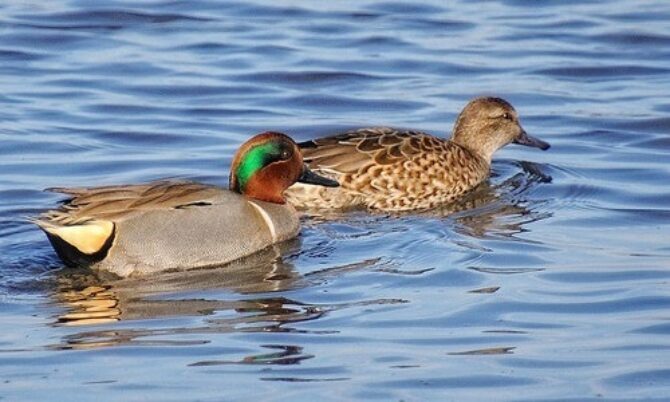
The Green-winged Teal is the smallest dabbling duck in North America, measuring about 31 to 39 cm in length and weighing between 140 and 500 g. Check out this post for other small ducks in this weight category: Top 20 Small Duck Species (Below 700g)
The male’s chestnut-colored head features a shining green stripe that sweeps from his eye all the way to the back, a flash of color that you can use to identify these ducks even from a distance. On flight, look for the bright green patch on their wings as well. These tiny, quick-moving ducks often travel in big flocks ,and love quiet wetlands and shallow ponds, where they dabble for seeds and insects near the surface.
5. Common Goldeneye
Scientific Name: Bucephala clangula
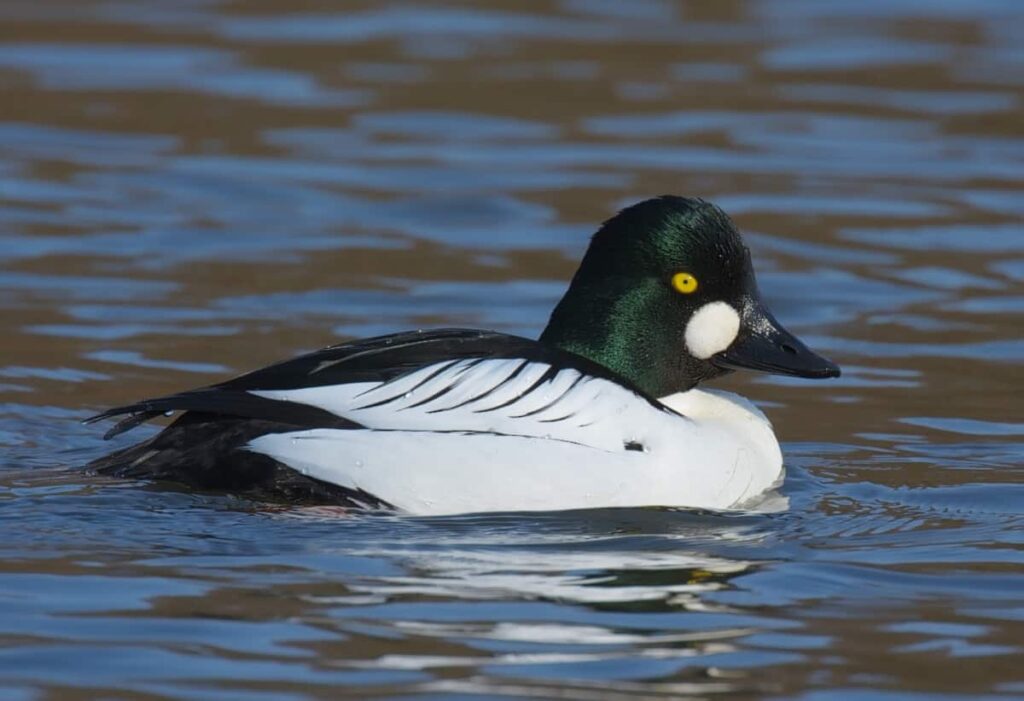
Another striking duck with a glossy green head and brilliant golden eyes is the Common Goldeneye, an aggressive and territorial species commonly found on lakes and rivers in boreal forests across the northern United States, Canada, Scandinavia, Scotland, the Baltic States, and northern Russia. The male’s head may look black at first, but in the right light, it glows with a dark green shimmer. The drake also sport a neat round white spot just below the eye, which we can say is its signature mark. Common Goldeneyes nest in large tree cavities, and tend to return to the same sites year after year, although they will readily use nest boxes when available. But they are not the only ducks that nest in tree cavities; discover other species with similar nesting habits here: 23 Ducks That Nest In Trees
6. Greater Scaup
Scientific Name: Aythya marila
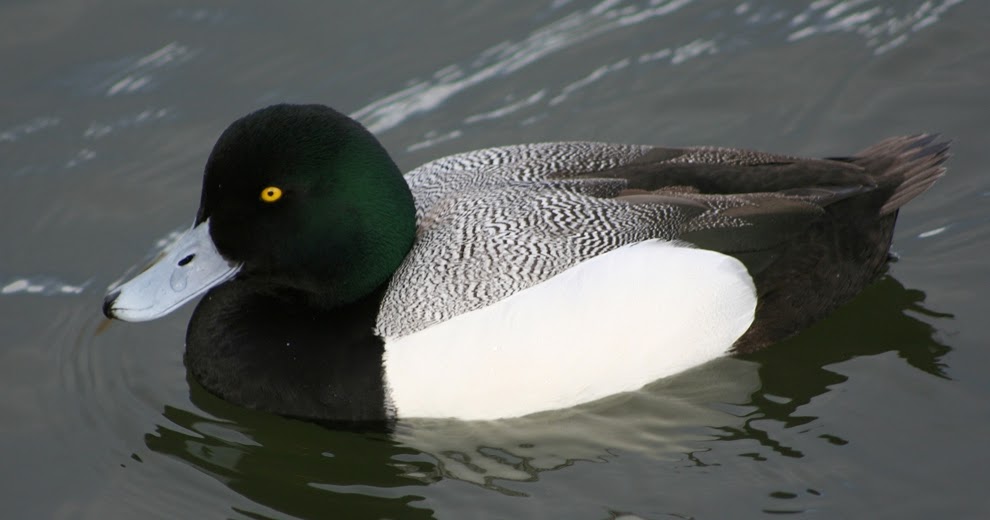
The male Greater Scaup is a mid-sized diving duck with a rounded head that appears dark from a distance but reveals a glossy green sheen up close. The green sheen is more prominent during courtship. It also has a light blue grey bill, yellow eyes, a pale grey back, and a white belly, creating a striking contrast. Females are mostly brown with some white on the wing, a dull blue bill, and a distinctive white patch on the face. Although their numbers have been declining since the 1980s, they are still listed as a species of Least Concern on the IUCN Red List.
7. Lesser Scaup
Scientific Name: Aythya affinis
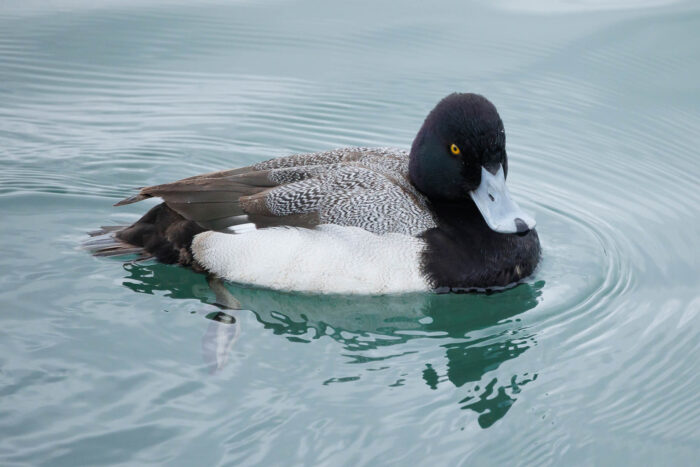
At first glance, the Lesser Scaup is almost identical in appearance to the Greater Scaup, but if you look closely, you’ll notice a few differences. For instance, it’s a bit smaller than the Greater Scaup and has a slight peak on the back of its head. The sides and back of the Greater Scaup are also lighter compared to the Lesser Scaup. The male’s head glows with a glossy mix of green and purple tones, which tend to change depending on the direction of light. Lesser Scaups are skilled divers and spend much of their time underwater searching for snails and plants in ponds and rivers. Like Greater Scaups, IUCN classifies Lesser Scaups as Species of Least Concern.
8. Cayuga Duck
Scientific Name: Anas platyrhynchos f. domestica
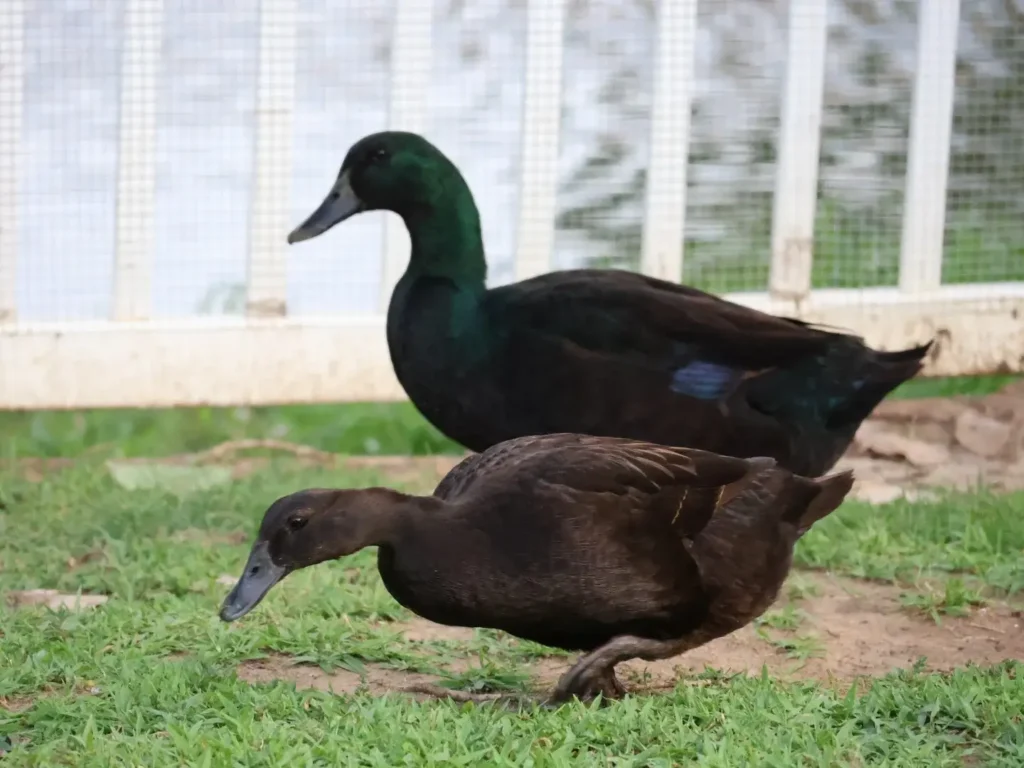
The Cayuga is a domestic duck that truly shines — literally! Its feathers are deep, rich black with a glossy green glow, especially when light hits at the right angles. Almost everything in the cayuga duck is black, including the bill, legs, and feet. Even the eyes that are dark brown. Over time, some older birds may show a few white feathers, but the shimmering green remains their most striking feature. Calm and hardy, Cayugas are loved not just for their beauty but also for their gentle nature around farms and ponds.
Birders who admire the Cayuga’s striking all black plumage often wonder if there are other ducks with a similar overall coloration. The short answer is yes; there are a few other duck species that are largely black. Check them out here: 15 Types of Black Ducks From Around the World You Didn’t Know About
9. Bufflehead
Scientific Name: Bucephala albeola
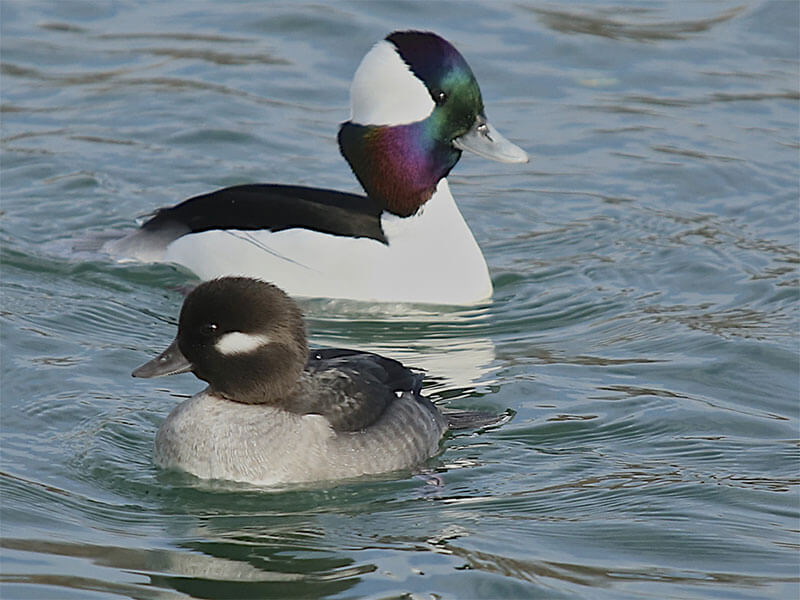
The Bufflehead rivals the Green-winged Teal as one of the smallest North American ducks, measuring about 32 to 40 cm in length and weighing between 270 and 550 g. They get their name from the male’s unusually bulbous head shape, which can also flash shades of green and purple when the sunlight hits just right. A bold white patch on the back of its head makes it look like it is wearing a helmet! Females are more subdued, with overall grey-toned plumage and a smaller white patch behind the eye. Small birds usually have a high metabolism rate and are very active, and buffleheads are no exception. And that’s the reason why you always see them bobbing on the water and diving frequently while feeding.
10. Baikal Teal
Scientific Name: Sibirionetta formosa
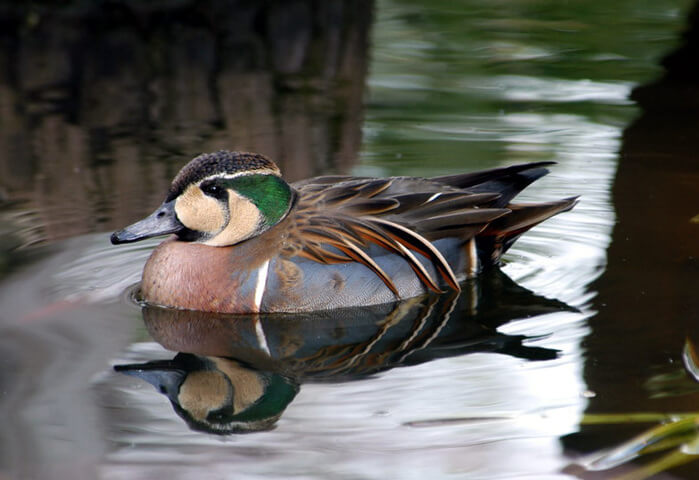
The Baikal Teal is one of the most colorful ducks you’ll ever see in eastern Russia and East Asia. The male’s chestnut head is marked with bold green, yellow, and black patterns that make him truly stand out. A green patch stretches along the back of his head and neck. Like ducks we have discussed so far, the green shines more when the light hits it at favorable angles. Its breast is lightly spotted, and the white bars on its sides make it look sharply dressed, literally. The female is less patterned, with an overall brown body, a pale face, and a small white spot near the bill. These ducks often gather in large flocks around lakes and marshes, especially in Asia’s cooler regions.
11. Falcated Duck
Scientific Name: Mareca falcata
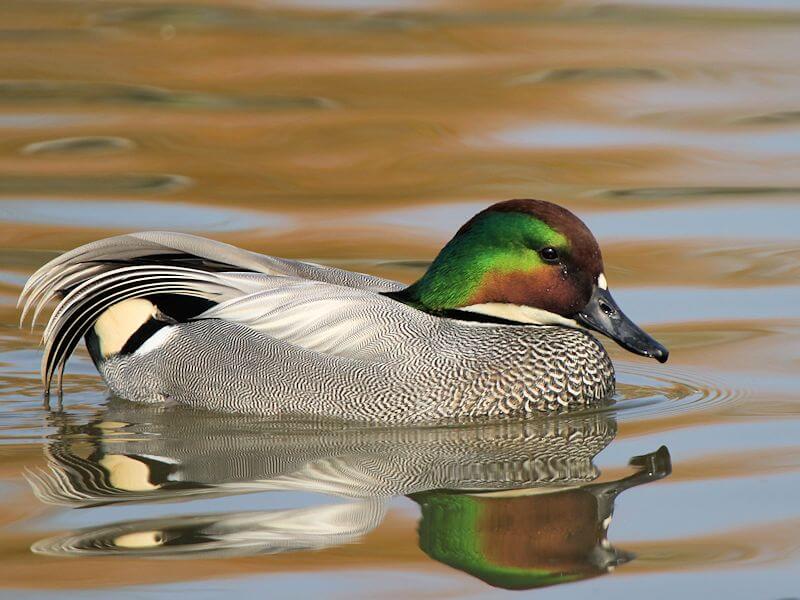
The Falcated Duck male’s head gleams with metallic green, while long, curved feathers sweep down his back like graceful blades — and that’s where its name, “falcated,” (meaning “sickle-shaped), comes from. Its body is softly patterned with gray, white, and bronze tones, giving it a silky look. The female is more modest, dressed in shades of brown, but it’s still easy to spot with its slender gray bill. Falcated ducks are classified as “Near threatened” by the IUCN, their primary threat being people who hunt them for food and their beautiful feathers. Wetland drainage has also contributed significantly to habitat loss for this species.
Discover ducks that IUCN classifies as “Threatened” or Endangered: 17 Most Endangered Ducks in the World According To IUCN Red List
12. Common Shelduck
Scientific Name: Tadorna tadorna
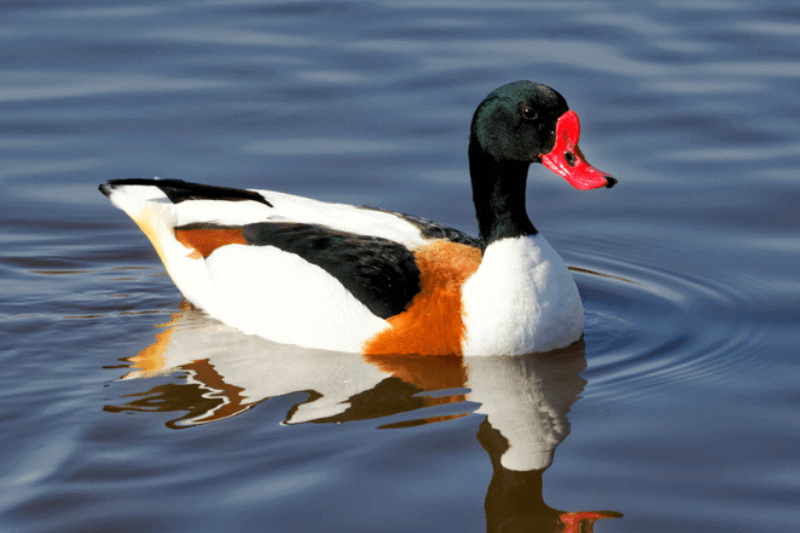
The Common Shelduck is a strikingly colorful duck and many birders consider it as one of the most beautiful ducks in the world. Its glossy green-black head shines beautifully above a white body and a wide chestnut band across the breast. It looks almost like a duck wearing formal clothes. You’ll often see them along coasts and estuaries, where they feed in the shallows or rest on sandy flats. Their bright red bills and colorful plumage make them easy to recognize even from afar. When they fly in groups over the sea, their bold colors seem to sparkle against the blue sky.
13. Red-breasted Merganser
Scientific Name: Mergus serrator
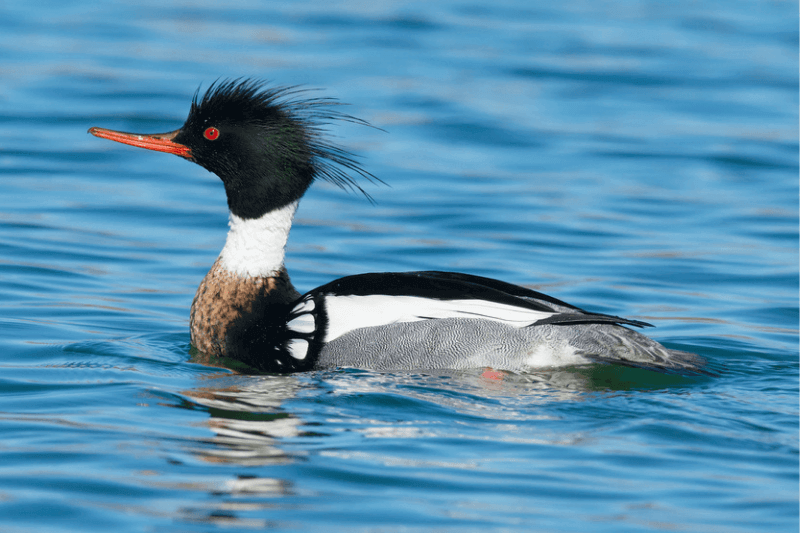
This energetic duck is easy to identify with its spiky crest and dark green head that glows like polished metal, especially when the light hits it right. The male also has a rusty chest, a long red bill, and bright white sides! Red-breasted Mergansers are expert fish hunters and are known to use their narrow, serrated bills to grab slippery prey underwater with a level of efficiency uncommon among most ducks. They prefer saltwater coasts and bays, where they are usually seen diving and chasing after small fish at incredible speeds.
13. Common Merganser
Scientific Name: Mergus merganser
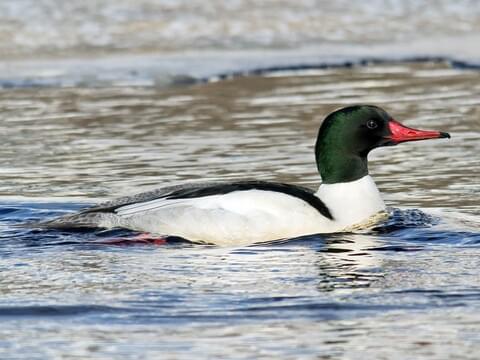
The Common Merganser is another merganser that shows an elegant green head. The male’s head may look black at first, but when hit by light, it gleams with a rich green, smooth, and glossy sheen. Its body is mostly white with a faint pink tint, and its long red bill adds a splash of color. Females wear warm reddish-brown heads with gray bodies, and always look sleek and graceful beside the males. Like other mergansers, these ducks are powerful swimmers and skilled divers that are often seen fishing in cool, fast-moving waters.
Never confuse mergansers with loons. Discover easy field ID guides here: Merganser vs Loon: Complete Comparison Guide
14. Wood Duck
Scientific Name: Aix sponsa
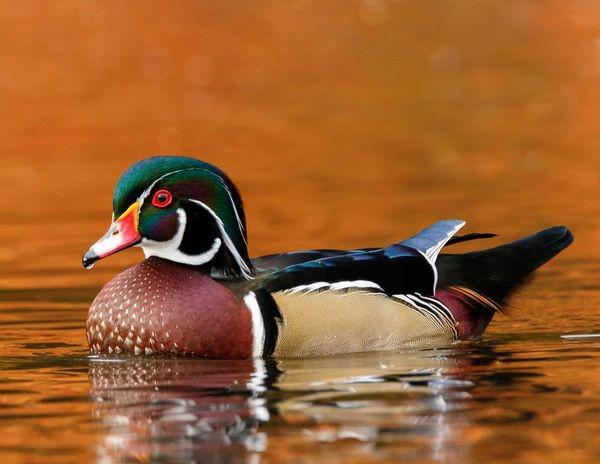
Another duck that’s often listed as one of the prettiest ducks in the world is the Wood Duck — and it’s easy to see why. The male’s glossy green and purple head features bold white stripes that make this duck look like it is painted. Its chest is deep chestnut, and its red eyes stand out vividly. These ducks like wooded ponds and quiet streams, where they nest in tree holes or nest boxes high above the water.
The Wood Duck closely resembles the Mandarin Duck, and many people may confuse the two, along with other similar species. Explore other Wood Duck lookalikes here: 5 Ducks That Look Like Wood Ducks
15. Chestnut Teal
Scientific Name: Anas castanea
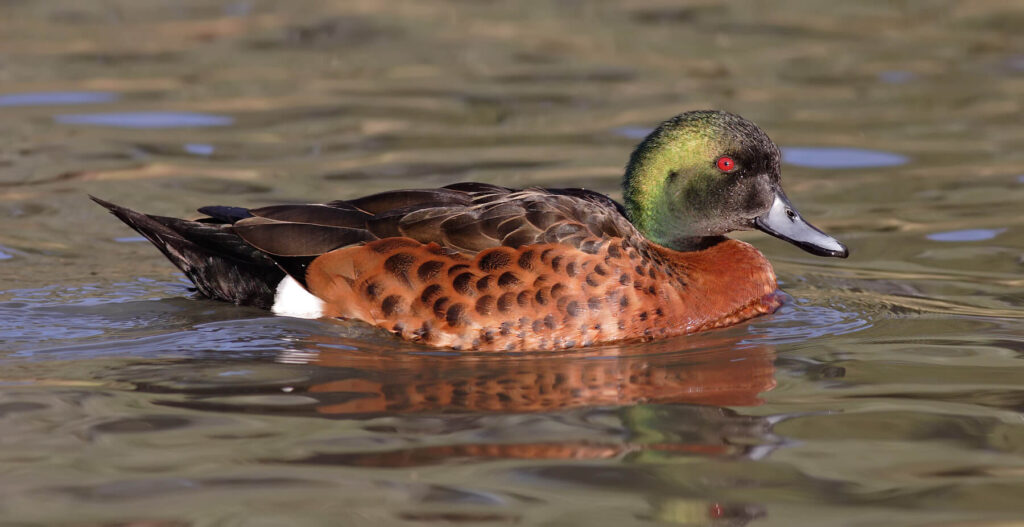
If you’re in Australia and spot a duck with a deep green head and a rich chestnut body, there is a good chance you are looking at the Chestnut Teal. The male’s green head glows beautifully against his reddish-brown feathers, while the female is dressed in mottled brown tones that help her blend into the wetlands. The female is known for its loud, penetrating “laughing” quack, which is often repeated nine times or more. While it is common in southeastern and southwestern Australia, it can occasionally appear as a vagrant in places such as Tasmania and southern Victoria, and even as far north as New Guinea and Lord Howe Island, and extending as far south as New Zealand.
16. Spectacled Eider
Scientific Name: Somateria fischeri
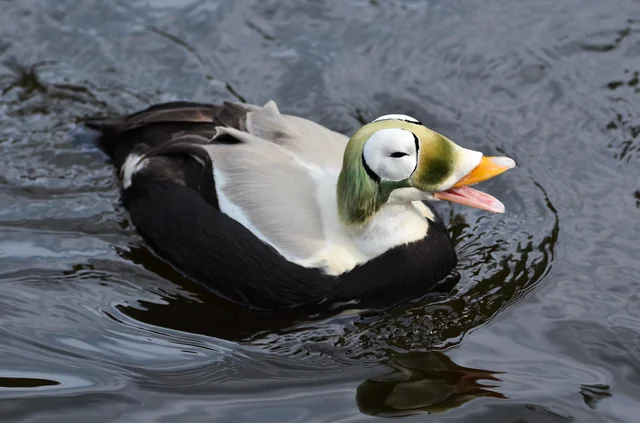
The Spectacled Eider is one of the most strange-looking ducks in the world, thanks to its yellow-green head with signature large circular white eye patches in males. Its body is black and white, and its bill glows yellow-orange, giving it a striking look against icy Arctic waters. The female is warmly brown, but if you look closely, you can still see its “spectacles” or paler goggles. These sea ducks live in the far north, and are known for their ability to stay submerged longer than most diving duck species. Their diet includes mollusks, crustaceans, aquatic insects, and plant material.
17. Tufted Duck
Scientific Name: Aythya fuligula
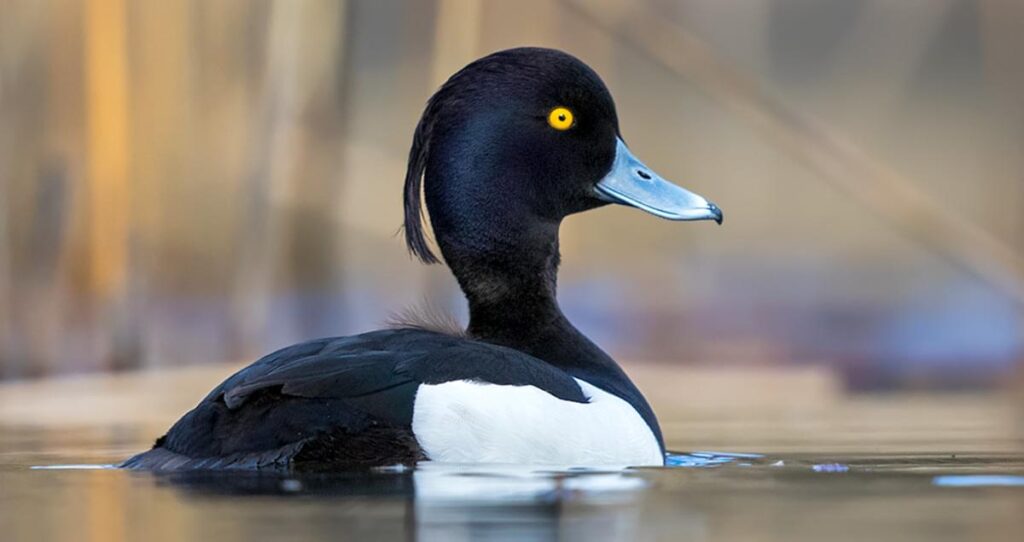
Meet the duck with the stylish hairdo or mohawk: the Tufted Duck! The male’s glossy black head often shines with green or purple tints, and a neat tuft of feathers droops from the back like a ponytail. Its golden eyes and crisp white sides make it easy to identify in the field (mostly lakes and ponds across Europe and Asia). The female is chocolate brown with softer colors, but it still carries that little tuft that gives the species its name. They’re excellent divers and love searching underwater for snails and plants.
Without the tuft, or when it is not visible like in Tufted duck drakes in eclipse plumage, these ducks can easily be mistaken for scaups. Here are some quick tips to tell them apart: Identifying Scaup vs Tufted Duck: Key Differences to Watch For
18. Baer’s Pochard
Scientific Name: Aythya baeri
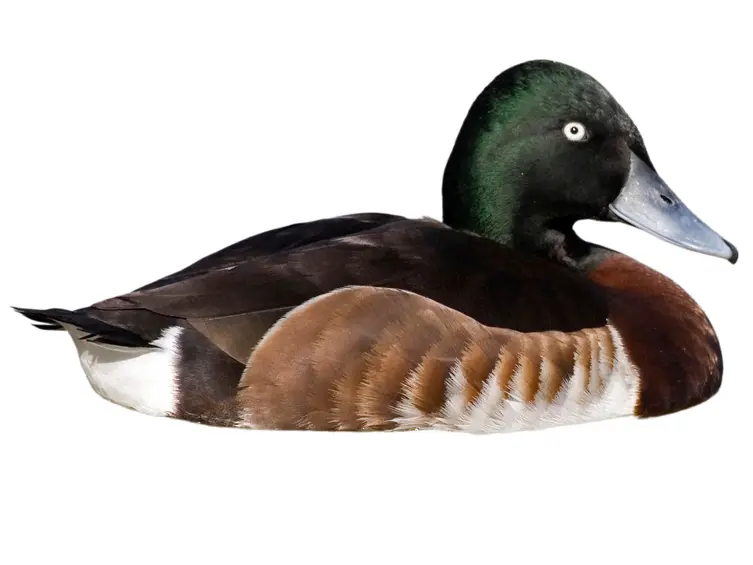
Finally, the male Baer’s Pochard’s head also glows with dark green sheen, which appears almost black in dim light, and shines like polished jade when the sun hits it right. Its chestnut breast and white belly add to its elegant appearance. These ducks nest in quiet wetlands, usually in hidden reeds, where males keep constant watch while females care for the eggs. Sadly, these beautiful East Asian ducks are now very rare and are listed among the world’s most endangered duck species.