15 Types of Black Ducks From Around the World You Didn’t Know About
It’s easy to overlook ducks that don’t have bright, flashy colors. Many people think these darker ducks are plain or boring, but black ducks actually have a lot to offer. They are smart, adaptable, and often have subtle details that make them just as fascinating as their more colorful relatives.
But how many black ducks do you really know? Most people will probably mention the famous Cayuga duck, which is fine, but what about black wild ducks? There are actually quite a few, and in this post, we’ll highlight some of the most popular ones. We’ll share their identifying features, interesting traits, and other important facts. To keep it simple, we’ve only included ducks that have predominantly black plumage.
Note: Not all ducks with the word “black” in their name are truly black. A good example is the Pacific Black Duck. Despite its name, it is mostly mottled brown, with lighter edges on its feathers. The only real “black” appears as bold dark stripes that run from the base of its bill, across its pale face, and over the top of its head.
1. African Black Duck
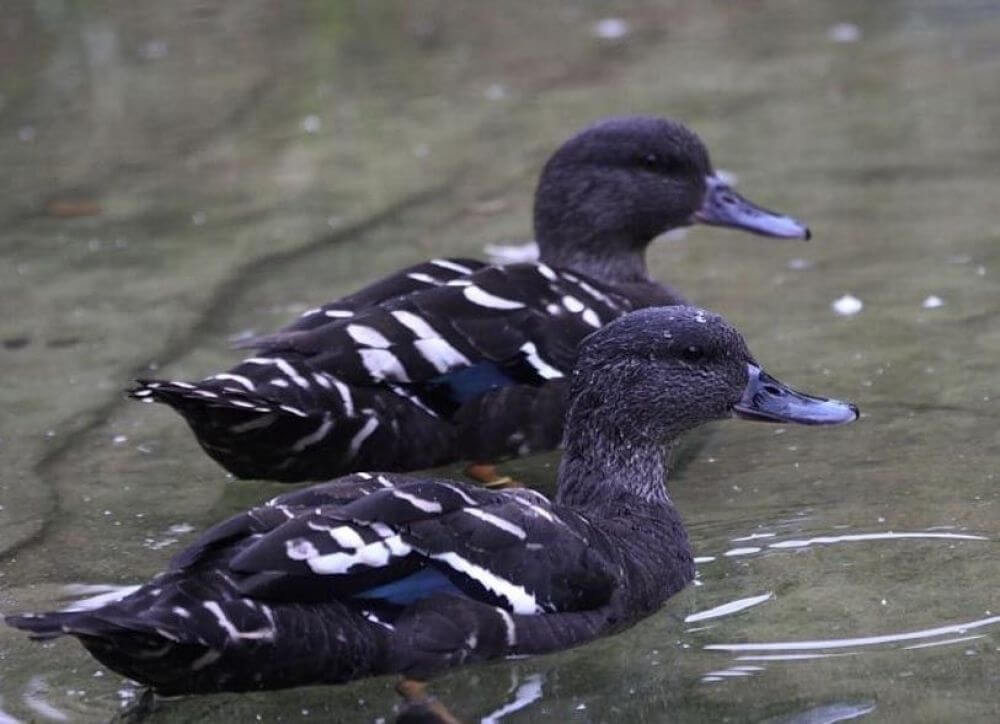
The African Black Duck is one of the most striking black ducks, with its deep, dark plumage accented by bold white spots on its wings. In flight, flashes of iridescent blue or purple on its wings creates a beautiful contrast against its otherwise dark body. Its bright orange legs and feet stand out vividly, especially in males, while females have slightly duller orange legs and a smaller build.
Native to eastern and southern Africa, and scattered in parts of western equatorial Africa, these ducks are usually seen in pairs or small groups along running rivers and streams. Unlike many other ducks, they are shy and secretive, and prefers the quiet of wooded or mountainous waterways.
African Black Ducks are omnivores, are often seen flipping rocks and searching riverbeds for larvae, snails, and small fish, but they also feed on plants and grains. Their feeding is often at dawn and dusk, when they can move stealthily across fast-flowing rivers or open waters.
2. American Black Duck
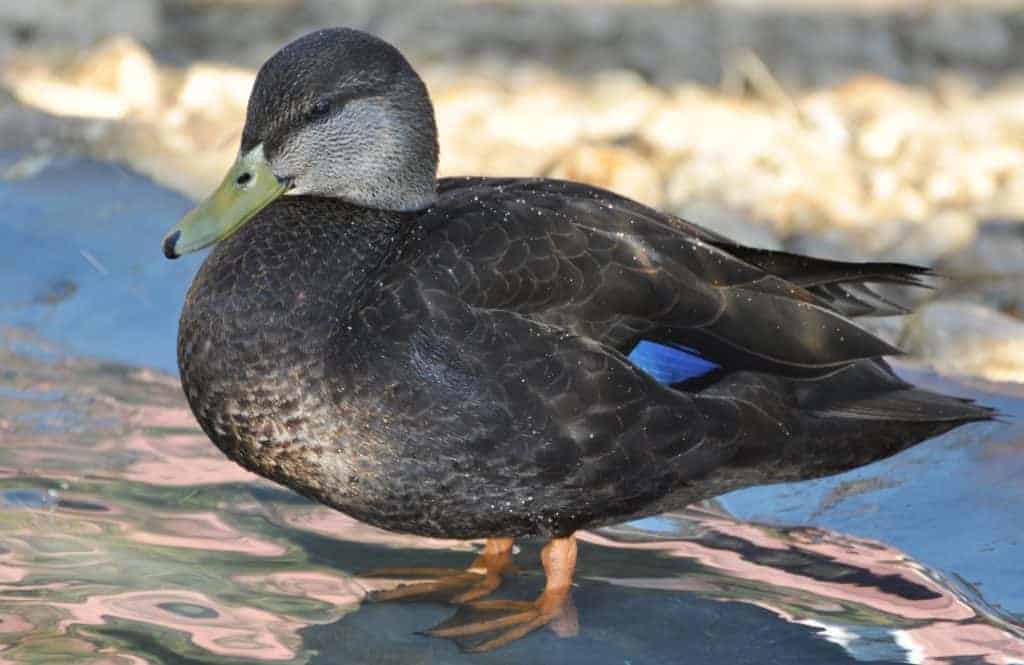
Once the most abundant dabbling duck in eastern North America, the American Black Duck is a large, elegant species with dark brown plumage that can look almost black from afar. Its pale gray-brown head and yellow-green bill provide a subtle contrast, while the white underwings create a striking flash in flight. The wings also reveal an iridescent purple-blue speculum, adding a hidden splash of color. Females are slightly paler with duller olive bills, while males show richer tones and brighter legs.
These ducks favor wetlands, saltmarshes, and protected bays, with breeding grounds stretching from eastern Canada down to coastal North Carolina. Sitting high in the water with lifted tails, they feed by dabbling on aquatic plants, small invertebrates, and grains. Once so common, they are now less abundant, making every sighting a special encounter.
3. New Zealand Scaup
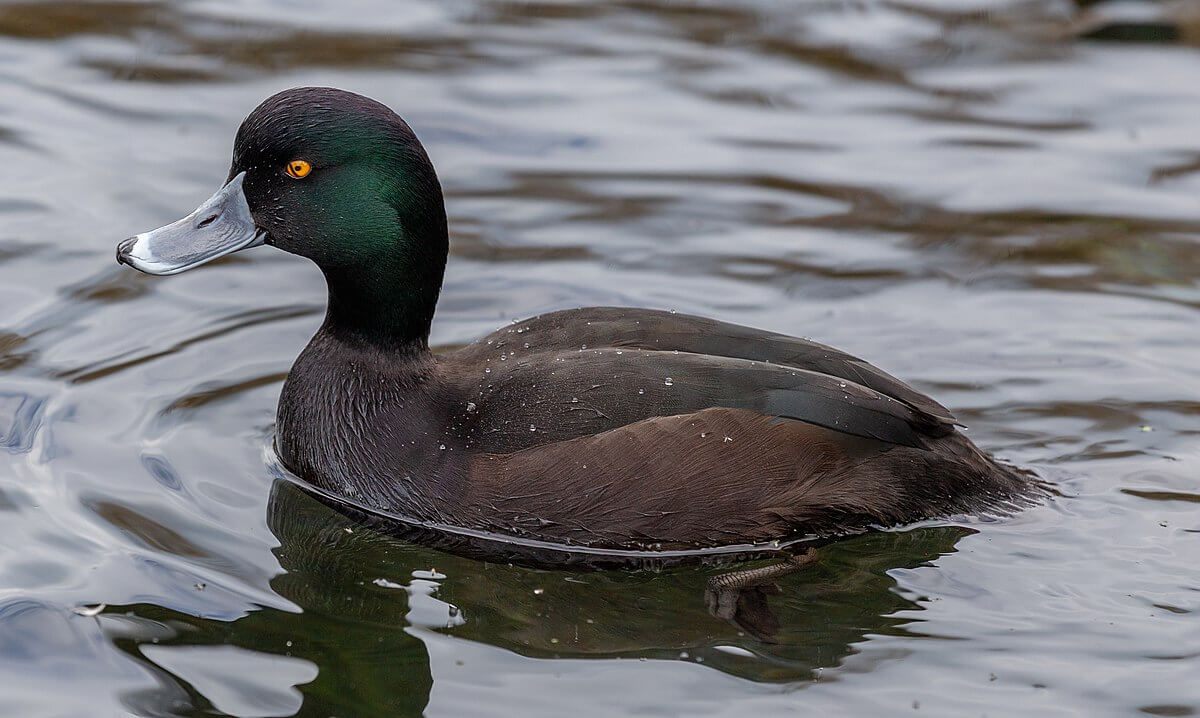
The New Zealand Scaup, also called the black teal or pāpango in Māori, is a small, round-bodied diving duck with dark, sleek plumage. Males are a striking black-brown with a greenish head and bright yellow eyes, while females are chocolate brown with brown eyes and a distinctive white face patch during the breeding season. Both sexes reveal a white wing bar in flight and have grey bills, while their black legs and webbed feet make them excellent swimmers and divers.
Endemic to New Zealand, these ducks thrive in deep lakes and ponds across both the North and South Islands, including natural, man-made, and even hydroelectric lakes. They are not migratory, though they may move to open waters if high-country lakes freeze in winter. Juvenile New Zealand Scaups resemble females but lack the white markings at the base of the bill.
4. Black Scoter
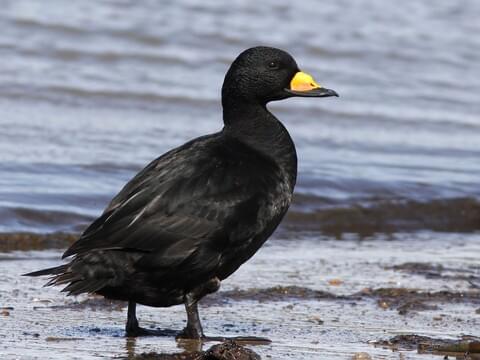
The Black Scoter is one of North America’s most mysterious waterfowl, partly because it breeds in remote northern regions and partly because it rarely draws attention from hunters. Adult males are strikingly black, with a bold yellow knob at the base of the bill, while females are warm brown with darker crowns and napes, contrasting with paler faces and throats.
These ducks breed in scattered northern habitats, from the tundra and boreal forests of Alaska and Northwest Territories to the lakes and wetlands of northern Quebec and Labrador. During migration and winter, they move to coastal waters along both the Pacific and Atlantic coasts, favoring sandy or pebble beaches over rocky shores. Some also spend the season in the Great Lakes.
5. Stejneger’s Scoter
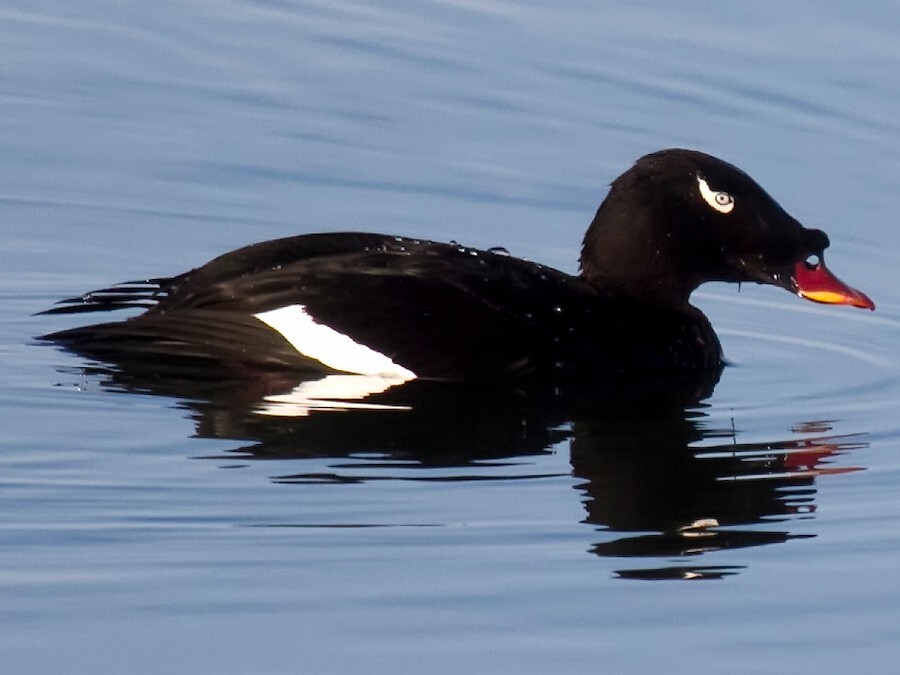
Stejneger’s Scoter is a striking black sea duck named in honor of the Norwegian-born ornithologist Leonhard Stejneger. Males are almost entirely black, with a tall, prominent knob at the base of their mostly orange-yellow bill, giving them a distinctive “Roman nose” profile that sets them apart from similar scoters. Females are more subtly colored but share the species’ characteristic compact, rounded shape.
This scoter breeds across the far north of Asia, from southeastern Siberia to the Kamchatka Peninsula, favoring small lakes and ponds in boreal forests and Arctic tundra. In winter, it moves south to coastal waters off China, Japan, the Korean Peninsula, and the Kamchatka Peninsula, often forming large, tightly packed flocks that take off together in unison.
6. Surf Scoter
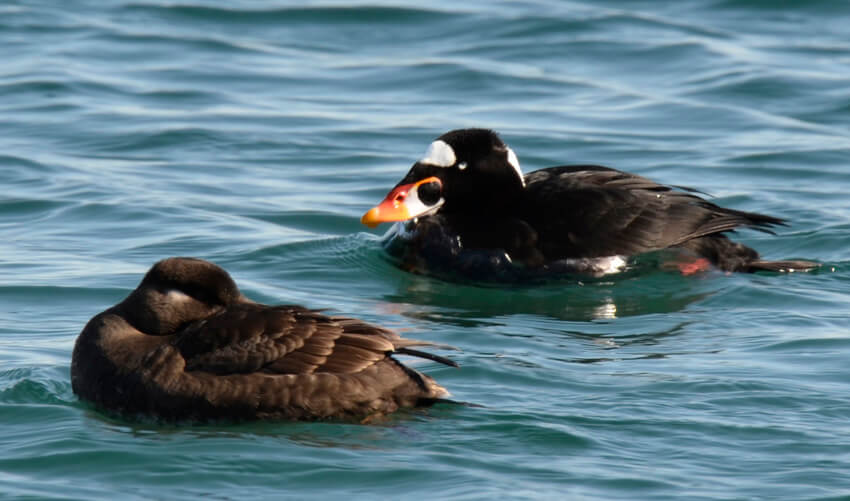
Native to North America, the Surf Scoter is a large, striking sea duck that is easy to recognize. Adult males are almost entirely black, with bold white patches on the forehead and nape and a bright, multi-colored bill in shades of red, white, and orange. Females are slightly smaller and brown, with subtle white cheek patches and grayish-blue or green bills.
These diving ducks breed at low densities across the boreal forests of Alaska and northern Canada, with the largest numbers in western regions. In winter, they move to coastal waters along both the Pacific and Atlantic coasts, often forming flocks on open sea. Surf Scoters feed mainly on benthic invertebrates, with mussels making up an important part of their diet, and are expert divers, spending much of their time underwater.
7. Velvet Scoter
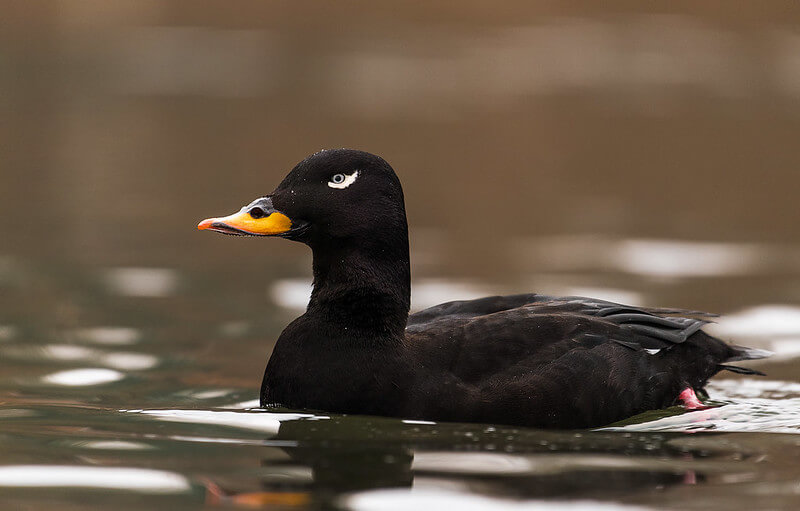
Another black scoter, the Velvet Scoter is a large, powerful sea duck found across northern Europe and the Palearctic region. Males are glossy black with striking white patches on their wings and small white markings behind the eyes, complemented by a partly orange bill. Females are similar in shape but duller in color, with brown plumage and a less shiny appearance.
Velvet Scoters breed in northern Europe, from Norway across to central Siberia and northeast Kazakhstan, and migrate south in winter to temperate coasts, including Great Britain, the Black Sea, and the Caspian Sea. They form large, tightly packed flocks on open waters, often taking off together in dramatic displays.
8. White-winged Scoter
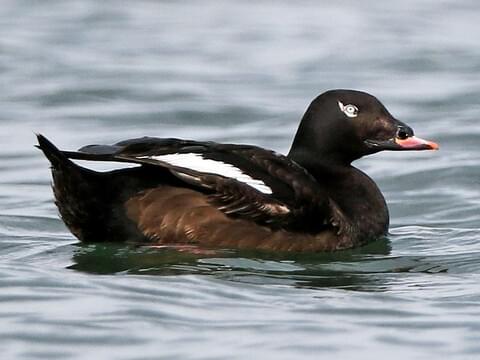
The final black scoter in our list is the White-winged Scoter, North America’s largest scoter species. Males are mostly black, with striking white around the eyes and on the wings, and a bright orange-red bill topped with a prominent black knob. Females are brown overall, with variable facial markings and a feathered gape that helps distinguish them from other scoters. Juveniles resemble females but often have more noticeable white patches and a mottled belly.
White-winged Scoters breed across boreal forests from Alaska to western Canada, with smaller populations east toward Hudson Bay and south into the Canadian Prairies. In winter, they migrate to temperate waters, including the Great Lakes and northern U.S. coasts, forming large, tightly packed flocks that often take off together in unison. Occasionally, they appear as rare visitors in Europe, including Scotland, Iceland, Norway, and Ireland.
9. Brazilian Merganser
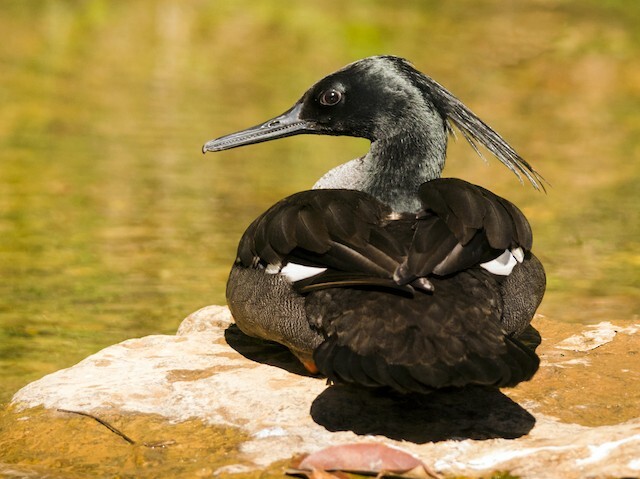
The Brazilian Merganser is a rare and striking diving duck, native to fast-flowing rivers of south-central Brazil. Both males and females share a dark, slender body with a shiny green hood and a long, spiky crest—shorter and more worn-looking in females. Its upperparts are dark grey, fading to a pale grey breast and whitish belly, and a white wing speculum becomes especially noticeable in flight.
This merganser is highly territorial, with pairs occupying 8-to-14-kilometre stretches of rivers, and nests in tree cavities, rock crevices, or abandoned burrows, often created by armadillos. A monogamous species, it is adapted to clear, rapid waters where it hunts for fish and other aquatic prey. Critically endangered, fewer than 250 are thought to survive in the wild, making sightings of this dark, elegant duck extremely rare and remarkable.
Recommended Guides:
7 Types of Mergansers You Should Know
17 Most Endangered Ducks in the World According To IUCN Red List
.
10. Southern Pochard
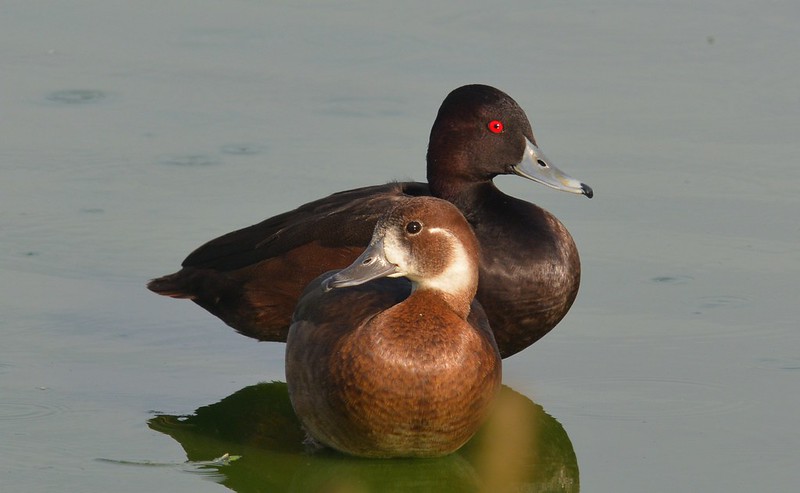
Also referred to as Red-eyed Pochard, the Southern Pochard is a medium-sized diving duck found across sub-Saharan Africa, from Ethiopia down to the Cape of Good Hope. Only the males display the striking red eyes that give the species its name, while their dark chestnut plumage remains consistent year-round, unlike some other pochards. Females and younger birds are browner, with a distinctive white “bridled” face pattern.
These ducks are versatile feeders, both diving and upending along the edges of emergent vegetation, and they swim low in the water with their heads held high, creating a unique silhouette. Southern Pochards are partially migratory, with some populations moving seasonally, and they can gather in large non-breeding flocks of thousands. Though once common, their numbers have been declining steadily, making them a species worth noticing for anyone exploring African wetlands.
11. Ring-necked Duck
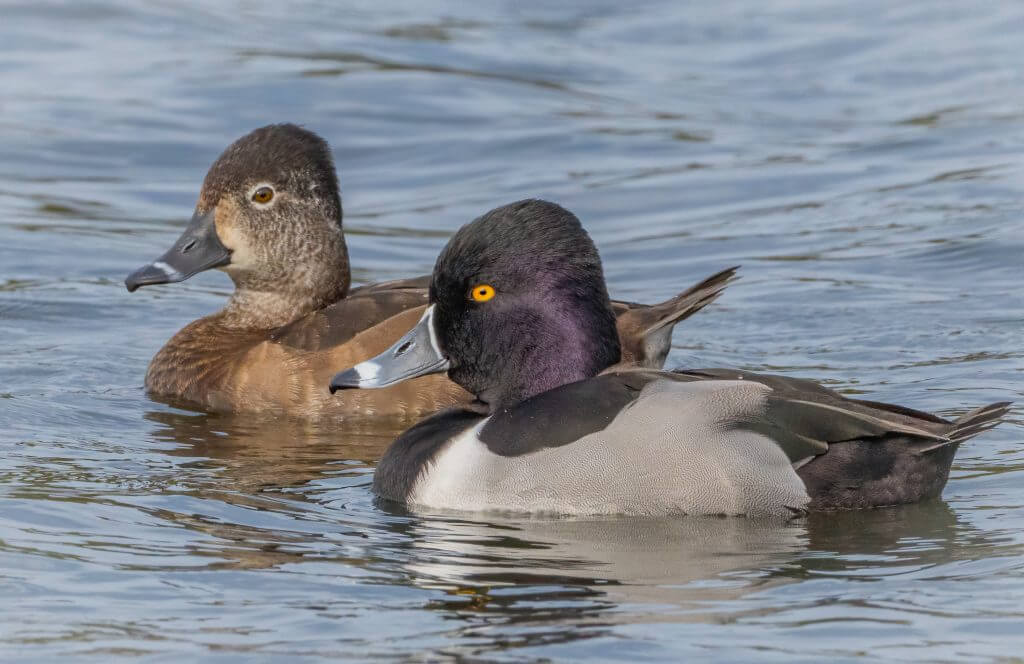
The Ring-necked Duck is a striking diving duck native to North America, commonly found in freshwater ponds and lakes. Adult males have glossy black heads and backs, white breasts, and sharp white wing lines, with a gray bill marked by two white rings and bright yellow eyes. Females are more subdued, with grayish-brown heads and bodies, dark backs, gray-blue feet, and subtle white markings on the face and bill. Both sexes are angular in shape, and females produce a soft trilling call.
This species breeds in wooded lakes and ponds across the northern United States and Canada, particularly in boreal forest regions. During winter, they migrate south to lakes, rivers, and bays throughout southern North America. The “ring” on the neck is often hard to see, which has led to the nickname “ringbill,” but their striking head and wing patterns make them easy to recognize.
12. Rosy-billed Pochard
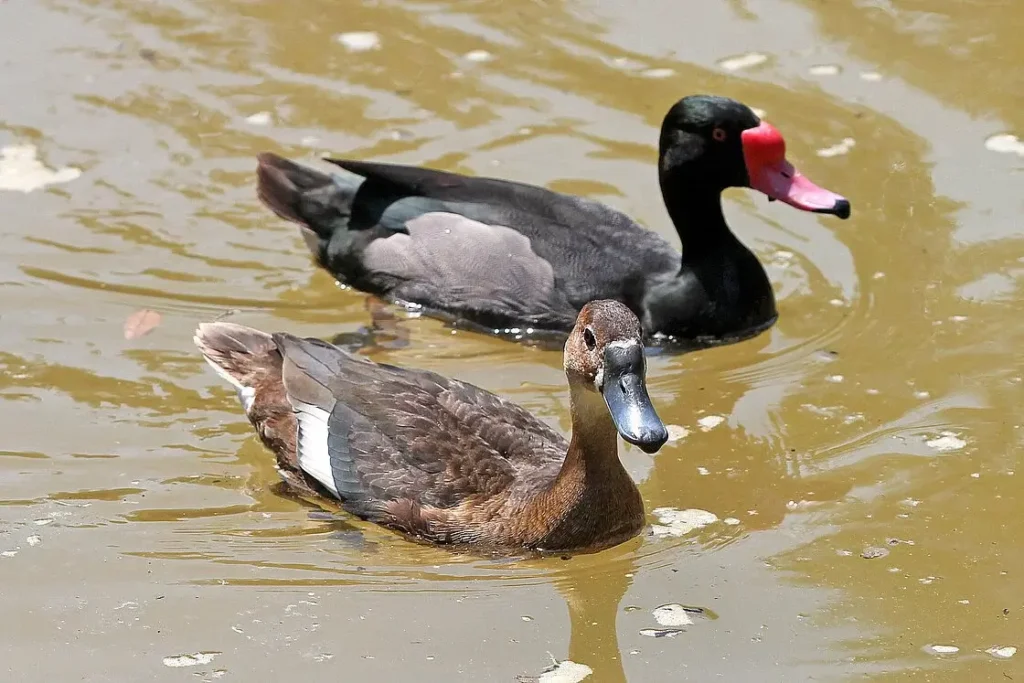
One of the largest South American pochards, the Rosy-billed Pochard is technically a diving duck, but often feeds like a dabbling duck, grazing on seeds, roots, sedges, and aquatic plants. Males are unmistakable, with a purplish-black head, neck, and breast, gray sides, bright red eyes, and a vivid red bill topped with a rounded knob that becomes even brighter during the mating season. In flight, the dark body contrasts sharply with the white wing stripes, making them easy to spot. Females are much duller, with brown plumage, bluish-gray bills with black tips, and yellow-orange to gray legs, though a white patch around the cloaca (crissum) is always visible.
Endemic to South America, Rosy-billed Pochards are found in Argentina, central Chile, Paraguay, Uruguay, and southern Brazil. Birds from southern Argentina migrate north during the austral winter, reaching Brazil and southern Bolivia.
13. Tufted Duck

Also called the Tufted Pochard, the Tufted Duck is a small, striking diving duck native to northern Eurasia. Adult males are mostly black with white flanks, a blue-gray bill, and bright yellow eyes, topped with a thin crest that forms a distinctive tuft on the back of the head, giving the species its name. Females are brown with lighter flanks, sometimes showing white around the base of the bill, and their harsh “karr” call is often heard in flight, while males remain mostly silent except for soft courtship whistles.
These ducks breed across temperate and northern Eurasia and migrate to milder southern regions in winter, including southern Europe and Asia. They have also expanded into open waters created by human activity, such as gravel pits, and feed heavily on freshwater mussels. Tufted Ducks often gather in large flocks on open water during winter, creating a striking contrast of black and white as they move together.
14. White-winged Duck
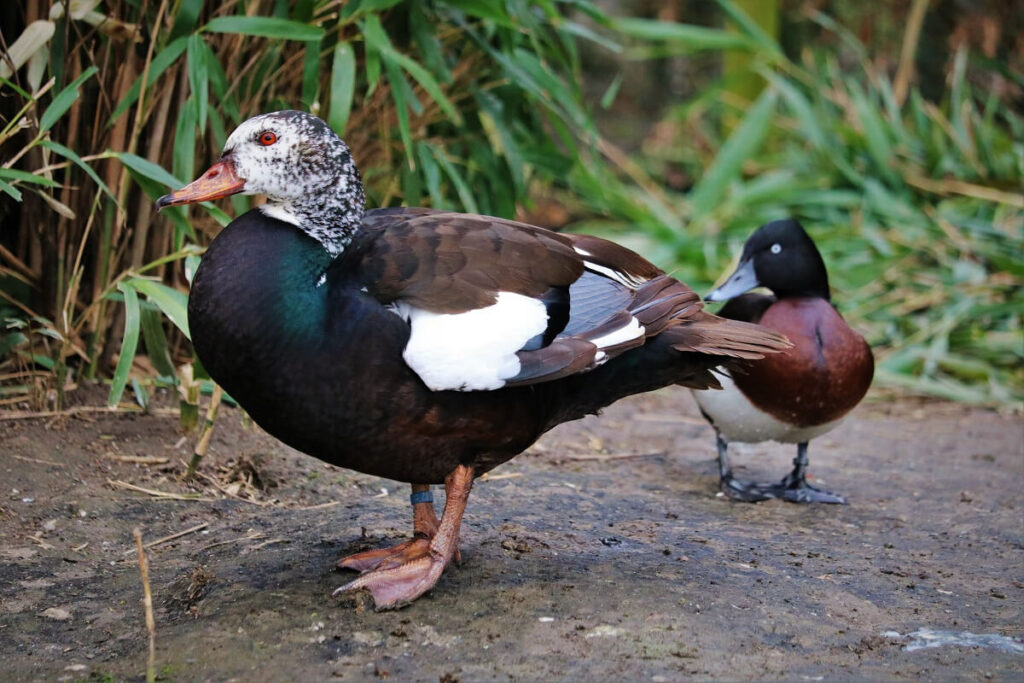
The White-winged Duck is one of the largest living duck species, second only to the heavy steamer ducks. Males are striking, with dark bodies contrasting against a pale, whitish head and neck, blackish mottling on the head, and bright white wing-coverts visible in flight. Females are smaller and more densely mottled, while juveniles are duller and browner. Both sexes have strong, broad wings and a solid, bulky body that commands attention.
This secretive duck is mostly nocturnal, feeding at night on seeds, aquatic plants, grains, rice, snails, small fish, and insects. It inhabits slow-moving or stagnant wetlands, often near evergreen, deciduous, or swamp forests, which provide vital roosting and nesting sites—usually in tree holes. While lowland areas below 200 meters offer ideal habitats, White-winged Ducks can occur at elevations up to 1,400 meters, favoring plateaus with slow rivers and pools.
15. Cayuga Duck
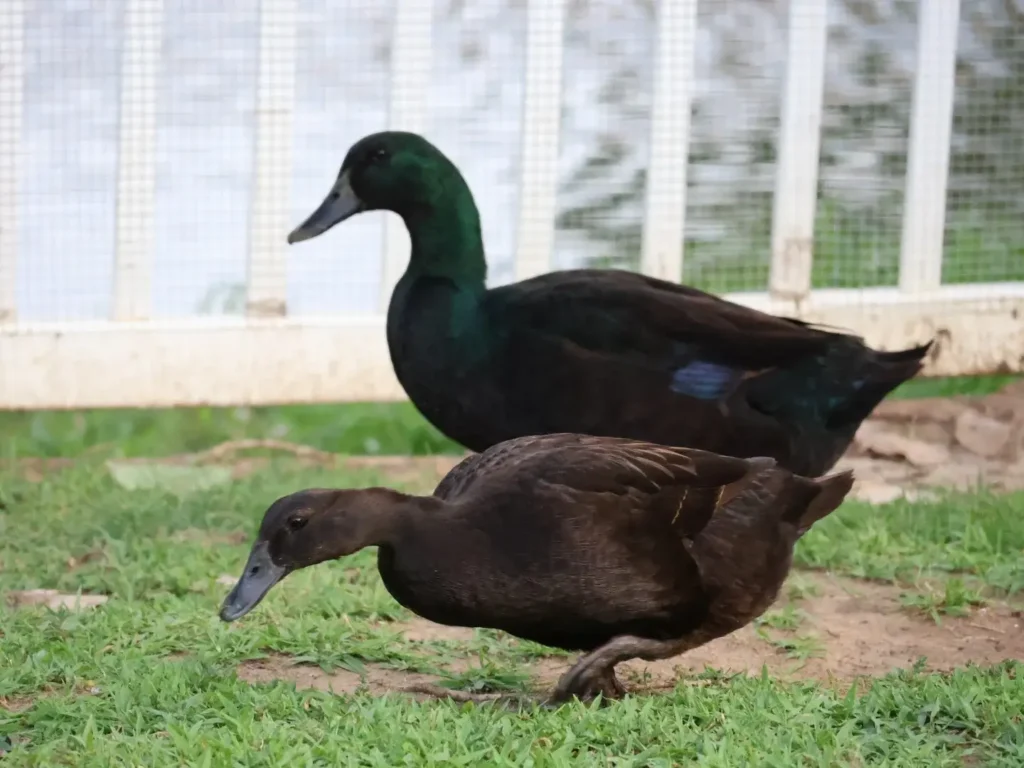
And now to the final black duck that many people are familiar with: the Cayuga Duck. This American domestic breed was introduced to New York’s Finger Lakes region around 1840 and named after the Cayuga people of the area. Once the principal duck raised for meat in the United States, the Cayuga is now mostly kept for ornamental purposes.
Cayugas are medium to heavy ducks, with males weighing around 3.6 kg (8 lb) and females about 3.2 kg (7 lb). Their glossy black plumage shines with iridescent beetle-green highlights, which can fade to gray or white as they age. Both the bill and legs are black, while the eyes are dark brown, giving the duck a sleek, elegant appearance.
Known for their calm temperament and striking dark feathers, Cayugas remain a favorite among domestic duck enthusiasts, standing out for their unique color and historical importance in American duck farming.