
15 Ducks With Red Beaks
Bill color is one of the most useful features birders rely on when identifying birds, including ducks. A red bill, in particular, draws a lot of attention, giving birds that have it a bold appearance that makes them stand out and unforgettable. Ducks with red beaks, for instance, always seem to stand out in the field. Whether it’s a soft pinkish-red or a bright fiery shade, that touch of color brings real character to their look.
But have you ever thought about why some ducks have red beaks? In many cases, it serves as a display and courtship signal, helping males attract attention during mating season. The red tone may also play a part in signaling the health and maturity of a duck. Whatever the reason, identifying or spotting ducks with red beaks always adds an extra spark of excitement to any birdwatching experience.
1. Muscovy Duck
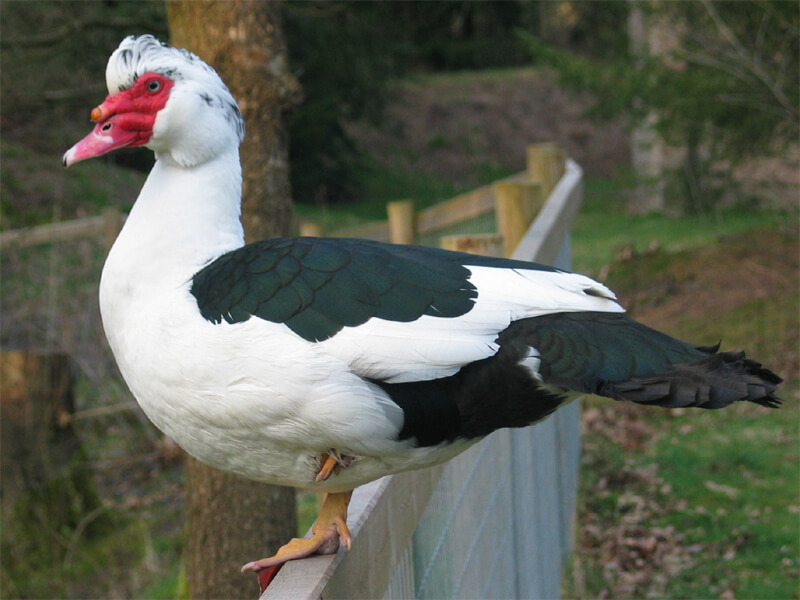
I bet the first duck that comes to mind for most duck lovers when identifying ducks with red beaks is the Muscovy ducks, thanks to their striking bright red, bumpy face and matching red bills. The males are much larger than the females and look almost like geese with their long necks and heavy bodies. Wild Muscovy Ducks are mostly black with white patches on their wings that shine green in good light, while domestic ones come in all kinds of colors. They often hang around farms, ponds, and parks, calmly dabbling for food or resting in the shade.
2. Common Merganser
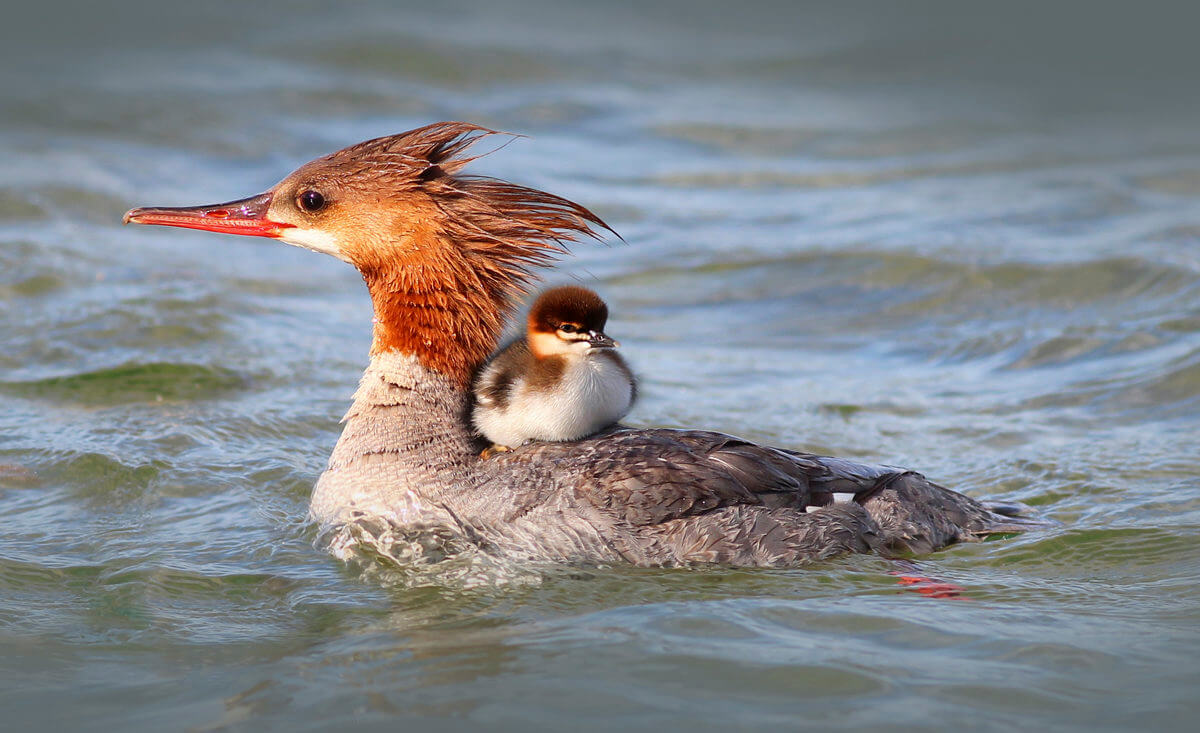
This elegant duck is often seen gliding on lakes and rivers, showing off its long, narrow red beak. The male has a dark green head and a white body with a black back, while the female has gray body with a rusty-red head and a sharp white throat. Both have the same striking red beak that stands out against their smooth feathers. You might spot them resting on rocks or swimming swiftly downstream as they dive for their next meal.
Never confuse a merganser with a loon: Merganser vs Loon: Complete Comparison Guide
3. Common Shelduck
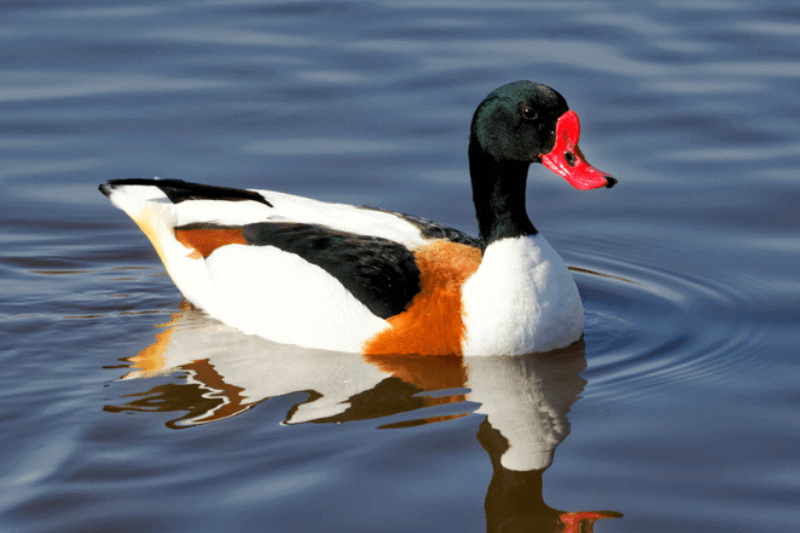
The Common Shelduck is large, graceful, and looks almost like a mix between a duck and a goose. What really makes it stand out is its bright red beak, which is easy to spot even from a distance. Males even have a little red knob at the base of their beak, giving them an extra touch of charm. Their body is mostly white with a bold chestnut band around the middle and black markings on the head and wings. You’ll often find them along sandy coasts and mudflats, where they feed on small creatures like snails and crabs.
4. Red-crested Pochard
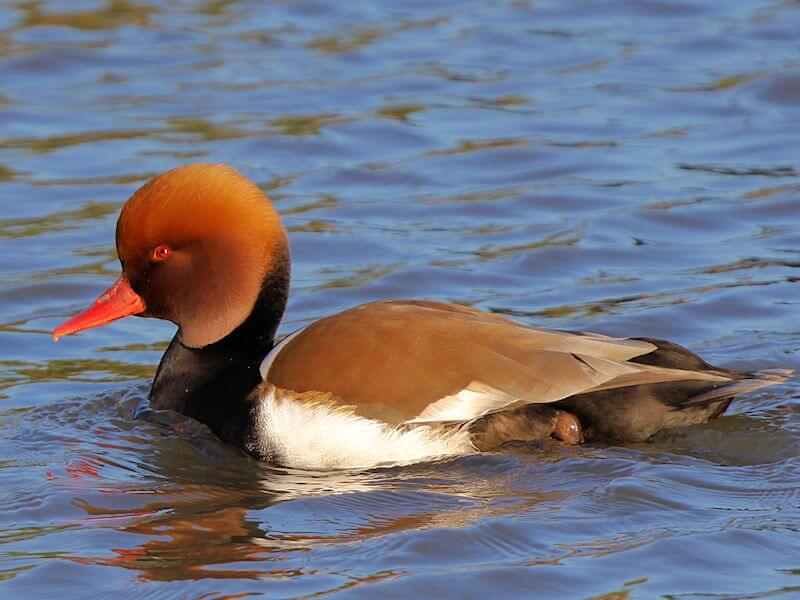
The male Red-crested Pochard has a round, orange head and a bright red beak that shines when light hits it just right. Its chest is black, its sides are white, and its back is brown. The female is more subdued in color, mostly brown with a pale face, but still has a graceful and elegant appearance. These ducks love calm lakes and ponds, where they dive or tip forward to eat plants underwater. In winter, you might see large flocks of them gathered together, looking like a splash of color against the cool water.
5. Black-bellied Whistling Duck
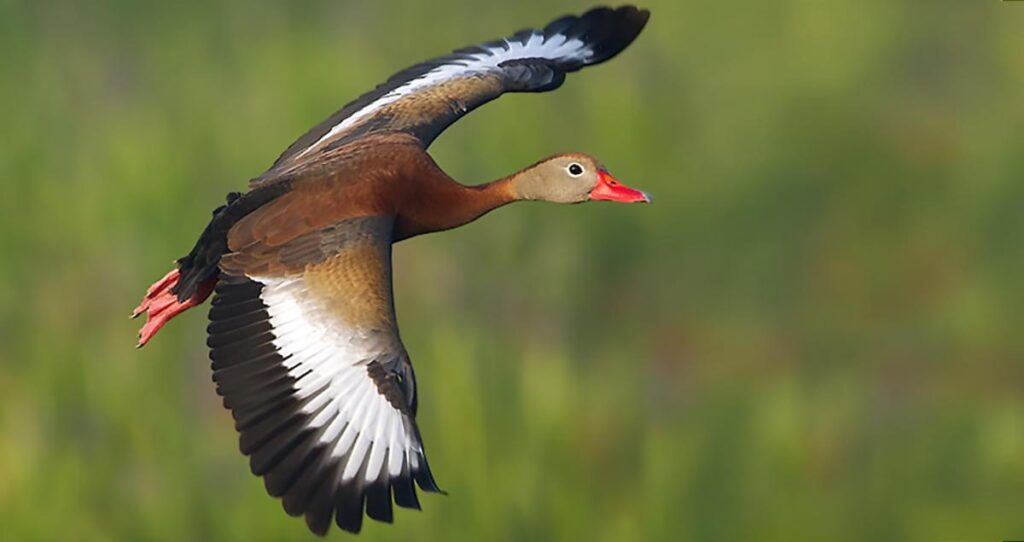
The Black-bellied Whistling Duck is one of the easiest ducks to recognize. It stands tall like a little heron and has a bright red-orange beak that really stands out against its chestnut-colored chest and gray face. Its belly is black and it has long pink legs that make it look even taller. They are often seen perched in trees or walking together near ponds and wetlands. When they fly, you can spot their white wing patches and red bills flashing in the air. Males and females look very similar, and telling them apart can be challenging, especially if you are not familiar with the species. Here’s a quick guide to help you easily sex these ducks: Vocal Sounds: The Key to Identifying Male vs Female Black-bellied Whistling Ducks
6. Red-breasted Merganser
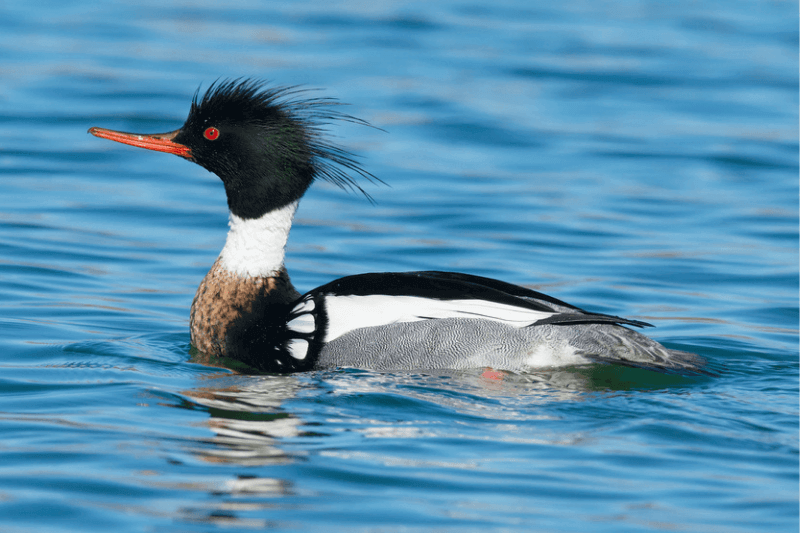
The Red-breasted Merganser is a sleek diving duck with a thin red beak, that’sadapted for catching fish with speed and precision. The male has a spiky greenish head, a white ring around the neck, and a reddish chest, while the female wears rusty-brown head feathers with a soft gray body. Both share that same narrow red bill. You can often see these ducks swimming fast in lakes, rivers, and coastal waters, diving underwater to chase their food.
How many types of mergansers do you know? Discover: 7 Types of Mergansers
7. Mandarin Duck
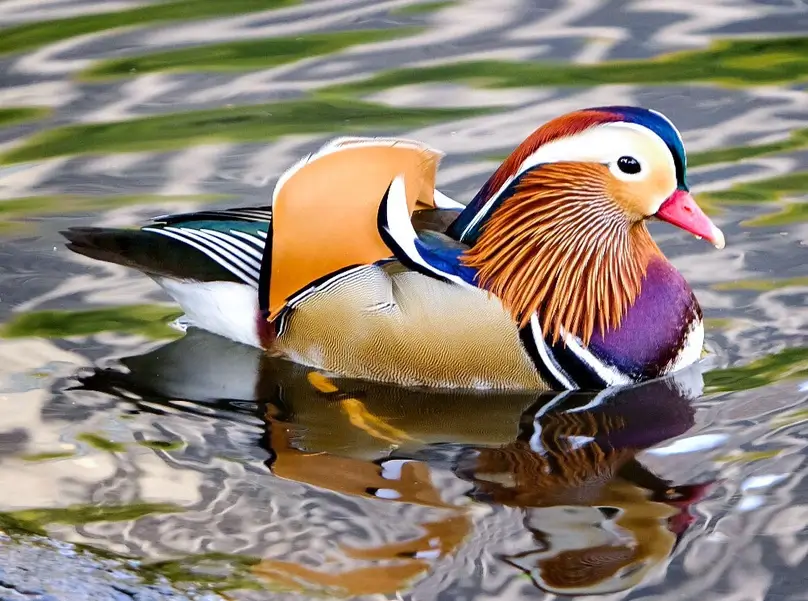
The Mandarin Duck might just be one of the most beautiful ducks in the world! The male looks like it’s wearing a fancy costume, with orange “sails” on its back, colorful feathers, and a bright red beak to complete the look. The female is much plainer, with soft gray and brown feathers and a white stripe by her eyes. Mandarins like quiet ponds surrounded by trees and often nest high up in tree holes. When the ducklings hatch, the mother calls them down and they bravely jump to the ground before heading to the water!
8. Red-billed Teal
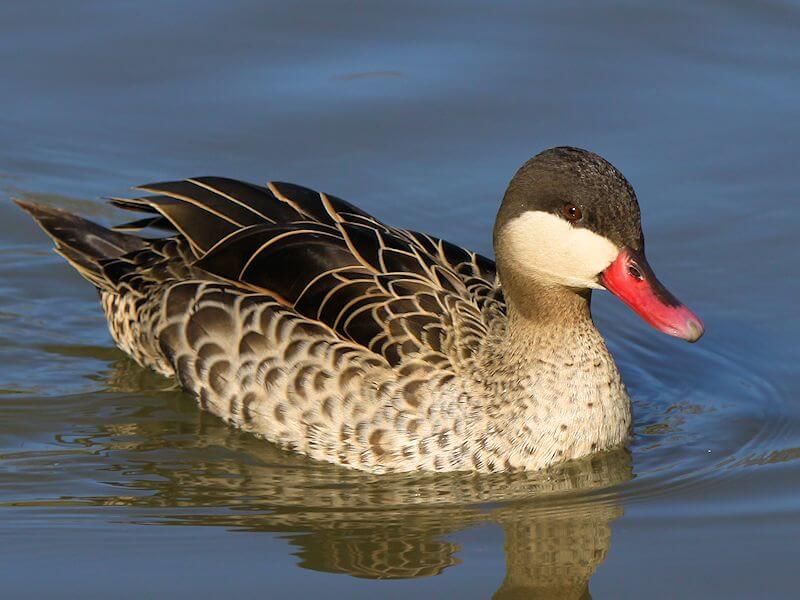
The Red-billed Teal is a graceful, soft-colored duck that gets its name from its bright red bill. Its body is covered in brown and white patterned feathers, and it has a black cap on its head that contrasts nicely with its pale face. Both males and females look the same, and they’re often found together in large flocks across Africa. These ducks love calm freshwater places and often feed in the evening, dabbling for plants or insects near the water’s edge.
Duck Identification Posters/Charts
Celebrate the beauty of ducks with detailed, high-resolution identification posters designed for both learning and decor. Each chart features vibrant colors, sharp details, and a smooth premium finish that’s perfect for classrooms, study spaces, living rooms, or offices.

9. King Eider
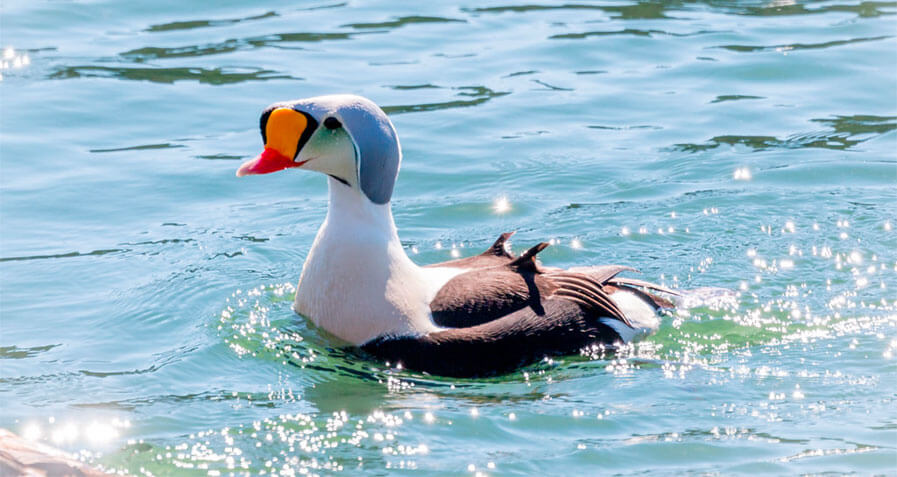
If you ever spot a King Eider, you’ll instantly see why it deserves its royal name! The male looks like it’s dressed for a parade, with a mix of black and white feathers and a brightly colored head. Its bold red orange bill, together with its round orange knob, makes it stand out as one of the most unusual looking ducks in the world. Females look completely different, wearing reddish-brown feathers patterned with black for camouflage. These ducks live in the cold Arctic regions and spend their winters near icy seas, where they dive to eat shellfish, crabs, and sea snails.
10. Cape Teal
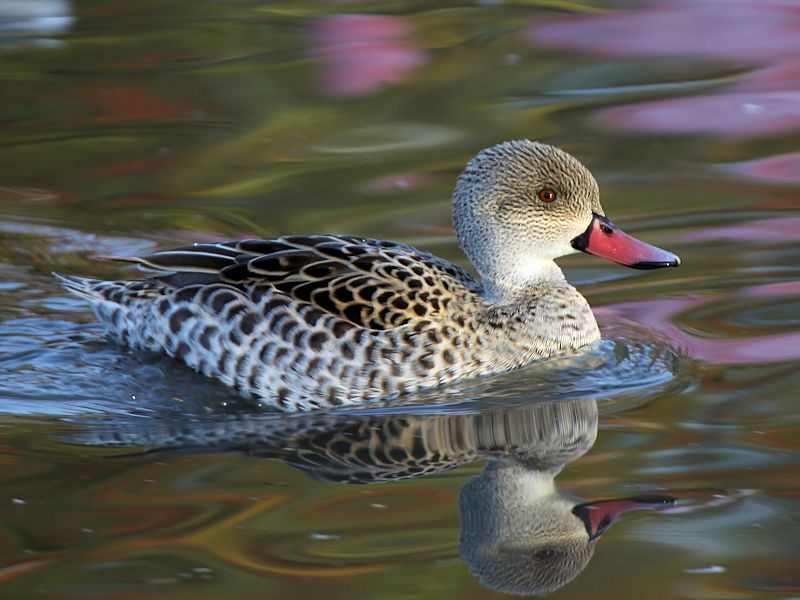
The Cape Teal is a gentle, soft-colored duck found in the open wetlands of southern Africa. Both the male and female look alike, with mostly pale gray feathers and a soft pink touch on their bills. These ducks love calm waters and are often seen feeding quietly on plants and small water creatures. Although they do not migrate over long distances, they still move around, especially in response to the rains. They may seem shy, but during the breeding season, you might hear the male’s cheerful whistle echoing across the water.
11. Torrent Duck
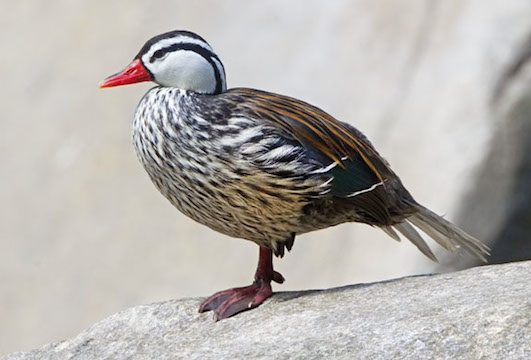
The Torrent Ducks live in the fast-moving mountain rivers of the Andes and always amaze people with how they thrive in such powerful, rushing waters. These ducks are powerful swimmers that can dive and paddle upstream through rushing white water like tiny feathered superheroes. Both males and females have striking red bills, but their bodies look very different. The male has bold black and white stripes on his head, while the female has rusty-orange underparts and a gray head. You’ll often find them perched on rocks in the middle of roaring streams, calmly watching the waters.
Discover other mountain ducks: 12 Mountain Ducks You Need to Know
12. Surf Scoter
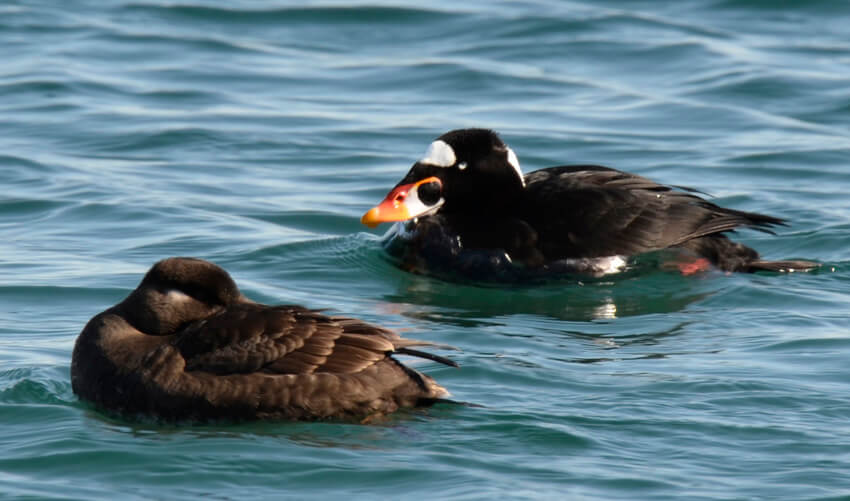
The Surf Scoter is a bold sea duck that always draw birders’ attention, thanks to its strange-looking bill pattern, which appears weirdly swollen and bulky compared to most ducks. Males have a thick, sloping bill that is mostly black but marked with a vivid splash of red, white, and orange near the base, almost like a painted mask on their face. Their velvety black body contrasts with white patches on the forehead and nape, giving them a strong, dramatic look on the water. Females are brown with softer facial markings but still show that distinctive two-toned bill pattern. These ducks are true ocean lovers, and are often seen riding waves along rocky coastlines, diving deep for mussels and other shellfish.
13. White-winged Scoter
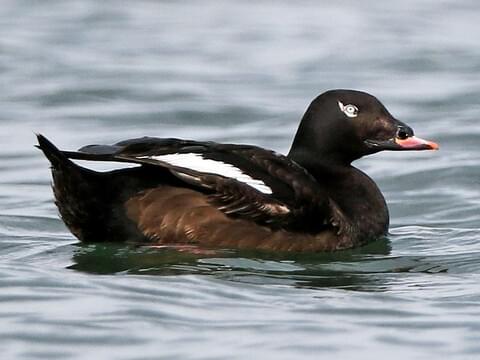
This is another a large, powerful sea duck that also shows subtle red tones mixed into dark orange base in its bill. The male White-winged Scoter is almost entirely black, but a small white eye mark and a white wing patch (visible in flight) break up its dark silhouette. The female is brown with two pale cheek patches and a similarly structured bill, sometimes showing faint reddish hues at the base. These scoters are built for cold, rough waters and are excellent divers, and often seen disappearing underwater for long periods as they hunt for mollusks and crustaceans along the seabed.
14. White-cheeked Pintail
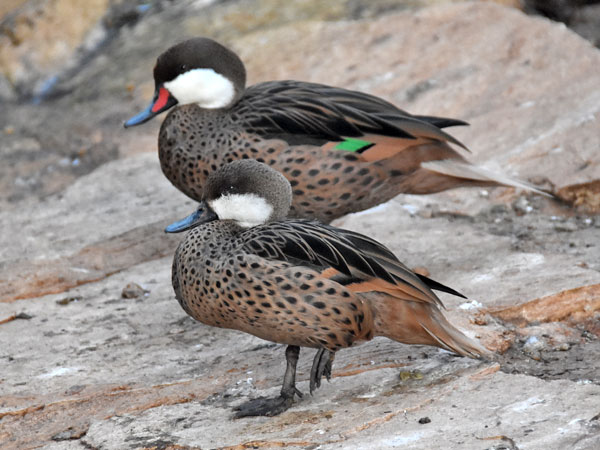
The White-cheeked Pintail is a sleek, elegant duck that derives its name from the clean white facial markings, which stand out sharply against the rest of its face. Both sexes look very similar, although females are slightly smaller and their plumage is a bit duller overall. The body is mostly soft brown with subtle patterning, keeping the species understated but refined. Their beaks are typically grey, but breeding males develop a noticeable reddish base, adding a subtle flash of color during the breeding season. Often found in coastal wetlands, lagoons, and mangrove areas, these ducks move gracefully through shallow waters as they feed on plant matter and small aquatic organisms.
15. Long-tailed Duck

The final duck species that also shows some reddish coloration in its beak is the Long-tailed Duck, a striking Arctic sea duck known for its unusual long tail and expressive coloration. Their bills are typically grey but the breeding male’s is crossed by a reddish-pinkish band, which stands out against its contrasting plumage. Males go through multiple seasonal looks, but in breeding plumage they display a dramatic mix of white, black, and gray, along with an unusually long tail. Females are more muted, with brown tones and a softer red-tinged bill. These ducks are exceptional divers and are capable of plunging deep into icy waters to hunt fish and invertebrates.
Identify more ducks by bill color: